Paul Potts
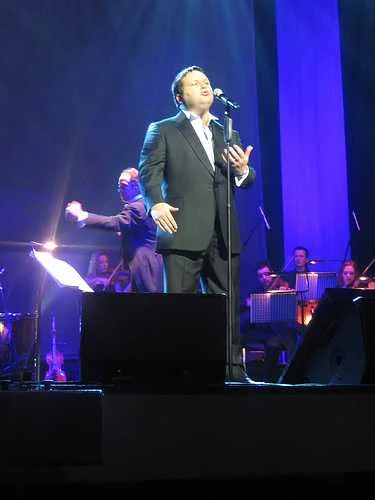
Image from Wikipedia
Image from Wikipedia
Paul Potts – The tenor who shaped a global career from a casting moment
From shy singer from Bristol to global classical star
Paul Potts is one of the most remarkable success stories in modern pop and classical music. The British tenor, born on October 13, 1970, in Bristol, became internationally known in 2007 thanks to his triumphant appearance on Britain’s Got Talent, transforming a single television performance into a music career of extraordinary reach. His story embodies artistic self-assertion, the power of voice, and the rare connection between classical discipline and mass-appeal stage presence.
From an early age, experiences of exclusion and insecurity shaped a reserved life path for him, while the church choir became a musical safe haven. At 16, Potts discovered his passion for opera, and this encounter with the genre would significantly influence his artistic development. The mobile phone salesman turned into an internationally sought-after tenor, whose rise became not only a musical journey but also one of the most well-known underdog stories of recent decades.
The early years: Music as refuge and pathway
The biography of Paul Potts does not begin with glamor but with resistance. Reports about his childhood describe a boy who was bullied at school and found a place of stability in music. The church choir gave him support, discipline, and a first form of stage presence long before he even considered a professional career.
This early imprint explains why his later performances possess a special authenticity. Potts does not embody a polished star metaphor but rather a real, hard-earned path into the music world. His musical development was not linear but took detours, breaks, and career stages, making his later breakthrough even more impressive.
The breakthrough on Britain’s Got Talent and the global impact
The moment that made Paul Potts world-famous was his performance in the first season of Britain’s Got Talent in 2007. With his rendition of “Nessun Dorma,” he struck a chord with a millions-strong audience and suddenly found himself at the center of a global media event. A casting performance became a cultural phenomenon that opened classical music to a new audience.
His victory in the competition was more than a television success. It led to performances on major TV shows, enormous media presence, and a rapid career boost that made Potts known in cities from Seoul to Hamburg. The British tenor became a symbol that a classical voice can also have immense radiance in the age of mainstream entertainment.
Debut album and international chart successes
With his debut album One Chance, Paul Potts immediately turned success into a sustainable discography. The album was released in 2007 and reached the top of the charts in 13 countries; in the UK, it secured the number 1 spot and was certified platinum. The release combined popular access with classical repertoire, making Potts one of the most visible crossover artists of his time.
This debut was also a massive commercial success. In Germany, Potts sold 3.5 million records according to Wikipedia, and the worldwide response to the album highlighted the exceptional reach of his name. For the music career of an opera tenor, this indicated a rare bridge between opera, pop, and mainstream entertainment culture.
The evolution of the discography: From Passione to Musica Non Proibita
After the debut, Potts consistently expanded his artistic work. Following releases include Passione (2009), Cinema Paradiso (2010), Home (2014), Greatest Hits (2013), On Stage (2017), Winter Dreams (2019), and the most recent release, Musica Non Proibita, a double album featuring arias from his "At Home" sessions during the lockdown. This discography showcases an artist who did not stop at a one-time breakthrough but expanded his profile over the years.
Particularly exciting is the stylistic line of these releases. Potts moves within the field of classical crossover, between opera arias, popular melodies, and orchestral arrangements. His albums bear the signature of a singer who wants not only to interpret but also to convey: between traditional opera culture and an audience that first encountered this sound world through talent shows, television, and streaming.
Stage experience, tours, and international presence
Paul Potts' live career developed into an independent chapter after the TV breakthrough. His official website mentions over 1,500 performances in 45 countries, highlighting his enormous international concert activity. This number indicates a stage presence that far exceeds the myth of being a former casting winner.
Currently, Potts remains on tour. The official website lists recent performances in South Korea, Taiwan, Japan, New Zealand, Fiji, Germany, Scandinavia, the UK, and Wales. A local German preview for 2025 also highlights that he will perform his biggest songs while interpreting new titles, including modern pop and ballad moments alongside his well-known arias.
Musical hallmark: Tenor, crossover, and emotional directness
Paul Potts' artistic identity is founded on the connection between operatic technique and immediate emotionality. His voice carries the classical training of a tenor, yet his repertoire choices and media presentation open the music to a broad audience. This tension between technical control and popular accessibility makes his recordings and concerts particularly distinctive.
The reception of his work also shows how strongly personality and performance intertwine. Potts is often perceived as a humble, relatable artist whose story further enriches his voice. In cultural perception, he is thus not just a singer but also a storyteller of a rags-to-riches tale that remains a reference point in music journalism for casting successes and classical crossover careers.
Critical reception, film adaptation, and cultural influence
The cultural influence of Paul Potts goes far beyond sales figures. His life story was adapted into the film One Chance in 2013, in which James Corden played the lead role. The film adaptation and the accompanying memoir made clear that Potts functions not only as a singer but also as a public figure with narrative power.
The press repeatedly emphasized the unusual character of his rise: an early shy man from Bristol, a mobile phone salesman, then a globally respected tenor. Critical voices often categorized him as a crossover phenomenon, while the popularity of his albums and concerts confirmed his enduring relevance. His influence lies primarily in bringing classical music into new life worlds.
Current projects and continued career
Even in 2024 and 2025, Paul Potts remains active. The official pages refer to ongoing tour activities and Musica Non Proibita as his latest album, created during the lockdown period, showcasing Potts’ engagement with arias in concentrated form. Additionally, current concert announcements document that he continues to be present with live programs and does not treat his career as a nostalgia project.
His public profile thus presents an artist who has translated the phase of worldwide fame into a lasting concert and recording practice. This very continuity gives weight to his music career: Paul Potts remains a tenor who not only reminds us of a historic casting evening but continually brings his story back to the stage.
Paul Potts fascinates because, in his career, biography and music are inextricably linked. He represents the rare combination of operatic skill, emotional directness, and a career trajectory that has reached millions. Those who experience him live encounter not merely a television star, but an international tenor with genuine stage presence, musical substance, and a story that continues to resonate today.
Official channels of Paul Potts:
- Instagram: https://www.instagram.com/paulpottsmusic
- Facebook: https://www.facebook.com/paulpottsmusic
- YouTube: https://www.youtube.com/user/paulpottstv
- Spotify: no official profile found
- TikTok: no official profile found
Sources:
- Paul Potts - Official Website
- Paul Potts - Official Biography
- Paul Potts - Tour / Current Information
- Paul Potts - Official YouTube Channel
- Paul Potts - Official Twitter/X Channel
- Paul Potts - Official Facebook Channel
- Paul Potts - Official Instagram Channel
- Wikipedia: Paul Potts
- Wikipedia: One Chance (Album)
- Wikipedia: Passione (Paul Potts album)
Upcoming Events
Paul Potts "Unforgettable Moments" in Bad Aibling
Paul Potts & Friends