Judith Hermann
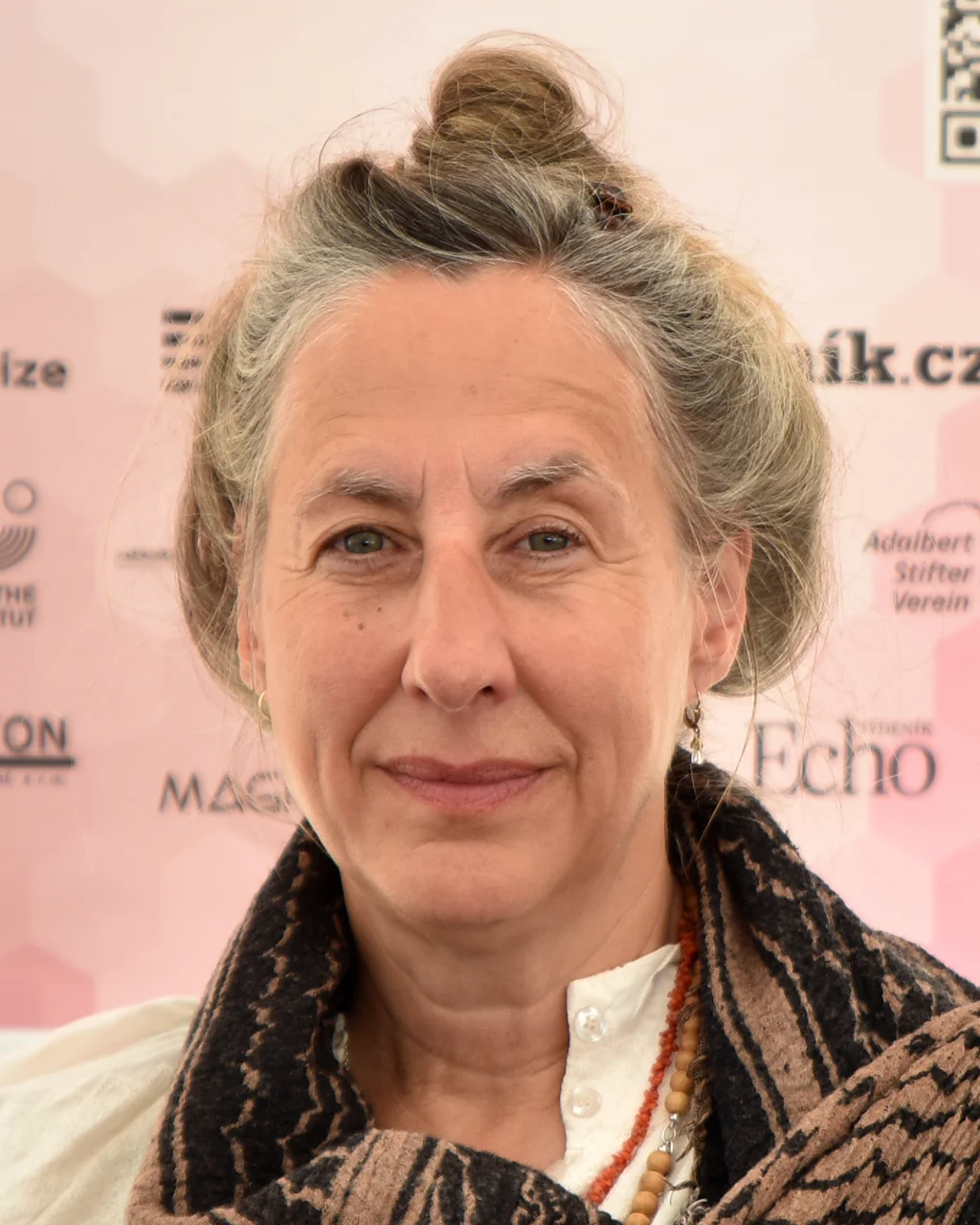
Image from Wikipedia
Image from Wikipedia
Judith Hermann: The Great Storyteller of Subtle Nuances
An author who has shaped entire generations with precision, atmosphere, and psychological depth
Judith Hermann is one of the defining voices in contemporary German literature. Since her debut in the late 1990s, she has combined linguistic clarity with an unmistakable atmospheric density that makes her texts instantly recognizable. Her stories revolve around relationships, memory, loss, intimacy, and the fragile order of everyday life.
Born in 1970 in Berlin, she has established a reputation as an author whose narratives meticulously measure inner worlds. Her work has been widely awarded, internationally recognized, and continually revisited. Judith Hermann writes literature that appears quiet yet resonates long after reading.
Biographical Roots: Berlin, Observation, and the Path to Literature
Judith Hermann was born in West Berlin and grew up in a city shaped by political, social, and cultural contrasts in the 1970s and 1980s. This experience of a divided yet open and contradictory urban space serves as a subtle resonance throughout her work. Berlin does not appear as a backdrop for her; rather, it exists as a psychological realm of possibilities.
Before establishing her career as a writer, she worked in various professions and was also involved in journalism. It was in this tension between observation and literary condensation that her distinctive perspective developed, which later shaped her prose. The focus on small gestures, casual encounters, and linguistic nuances became her hallmark.
The Breakthrough with “Sommerhaus, später”
Judith Hermann achieved literary breakthrough in 1998 with her short story collection “Sommerhaus, später.” The book was not only met with critical acclaim but quickly became a generational text. The stories struck a tone that was perceived as new, calm, and yet highly concentrated.
With this debut, Judith Hermann became an author who was widely discussed. Esteemed critics recognized her as a voice capturing the sound of a new era. The success of “Sommerhaus, später” was more than a commercial triumph: it marked the arrival of a storyteller who infuses the ordinary with literary tension.
The Poetic Evolution: from “Nichts als Gespenster” to “Alice”
In 2003, “Nichts als Gespenster” followed, another collection of stories that deepened and expanded Hermann's thematic world. Here too, transitions, losses, and emotional shifts are at the center. The texts achieve their effect not through grand plots but through density, moods, and precisely placed gaps.
In 2009, “Alice” was published, a collection of five stories that garnered much international attention. With this work, Judith Hermann demonstrated that her prose possesses a distinct literary strength beyond the fame of her early debut. Her stories open spaces where the unsaid feels louder than the spoken word.
The Shift to Novels: “Aller Liebe Anfang” and “Daheim”
In 2014, Judith Hermann published her first novel, “Aller Liebe Anfang.” The transition from short stories to a longer form showcased her stylistic confidence and her courage to expand inner conflicts. The novel focuses on threat, relationship, and self-assertion while remaining firmly anchored in Hermann's laconic and poetic language.
In 2021, “Daheim” was released, another novel that deals with origin, family, and the relationship between personal freedom and attachment. The book was nominated for the Leipzig Book Fair Prize and received the Bremen Literature Prize in 2022. In “Daheim,” Judith Hermann emerges as an author who productively engages with the inner compulsion to reflect on the past.
Current Phase: Memory, Family, and Literary Self-Examination
Most recently, in 2023, “Wir hätten uns alles gesagt” was published, based on the Frankfurt Poetics Lectures that Judith Hermann delivered in 2022. This work serves as both a space for poetic reflection and a personal thought space. It reveals an author who observes and comments on her own writing movement with great openness.
Currently, “Ich möchte zurückgehen in der Zeit” is also at the center of attention. The official author page describes the work as a search for familial origins and historical anchoring. Judith Hermann remains true to one of her central themes: writing about memory as something that is never complete.
Style and Artistic Signature
Judith Hermann's style is characterized by clarity, reduction, and psychological tension. Her sentences often seem simple, yet this very simplicity carries an enormous emotional weight. She works with subtle shifts, controlled repetition, and a composition that focuses more on atmosphere than on dramatic escalation.
In her prose, an almost musical rhythm combines with precise observation. Dialogues, glances, spaces, and pauses hold the same narrative rank as outer action. This form of literary composition makes her texts particularly enduring since they do not aim for effects but for inner resonance.
Critical Reception and Literary Influence
The reception of Judith Hermann has been intense from the very beginning. Her debut “Sommerhaus, später” was already described as an extraordinary literary event that visibly altered the literary landscape. Later stories and novels solidified her reputation as one of the foremost German authors of her generation.
Her work has been honored with numerous awards, including the Kleist Prize, the Friedrich Hölderlin Prize, the Blixen Prize, the Bremen Literature Prize, and the Wilhelm Raabe Literature Prize. These accolades not only underscore the quality of her books but also affirm her solid place in the contemporary literary canon. Judith Hermann has elevated storytelling about the unspectacular to a highly authoritative art form.
Why Judith Hermann Remains So Fascinating
Judith Hermann fascinates because she treats the quiet not as an aside but as the center of literary experience. Her books are precise observations of life in motion, full of emotional tension and linguistic elegance. Those who read her texts encounter an author who vividly depicts human vulnerability with great dignity.
It is precisely this combination of restraint, depth, and stylistic sovereignty that keeps Judith Hermann relevant today. Her literature invites readers to slow down, pay closer attention, and take the nuances seriously. Those who experience her works live at readings can feel immediately how powerful her language is in the space and how concentrated literature can be.
Official Channels of Judith Hermann:
- Instagram: No official profile found
- Facebook: No official profile found
- YouTube: No official profile found
- Spotify: No official profile found
- TikTok: No official profile found
Sources:
- S. Fischer Verlage – Judith Hermann Author Page: Biography
- S. Fischer Verlage – Judith Hermann Author Page: Home
- S. Fischer Verlage – Judith Hermann Author Page: Books
- S. Fischer Verlage – Judith Hermann Author Page: Links
- International Literature Festival Berlin – Judith Hermann
- Munzinger – Judith Hermann Biography
- Munzinger – Critical Lexicon of Contemporary German Literature
- Wikipedia: Image and text source
Upcoming Events
Judith Hermann reads in Bonn from I Want to Go Back in Time
Judith Hermann - I Want to Go Back in Time

Gala Evening of the Literature Festival Potsdam
Judith Hermann and Christoph Ransmayr: Gala Evening. A Celebration of Literature

Judith Hermann reads from 'I Want to Go Back in Time' in Göttingen