
İdil Üner
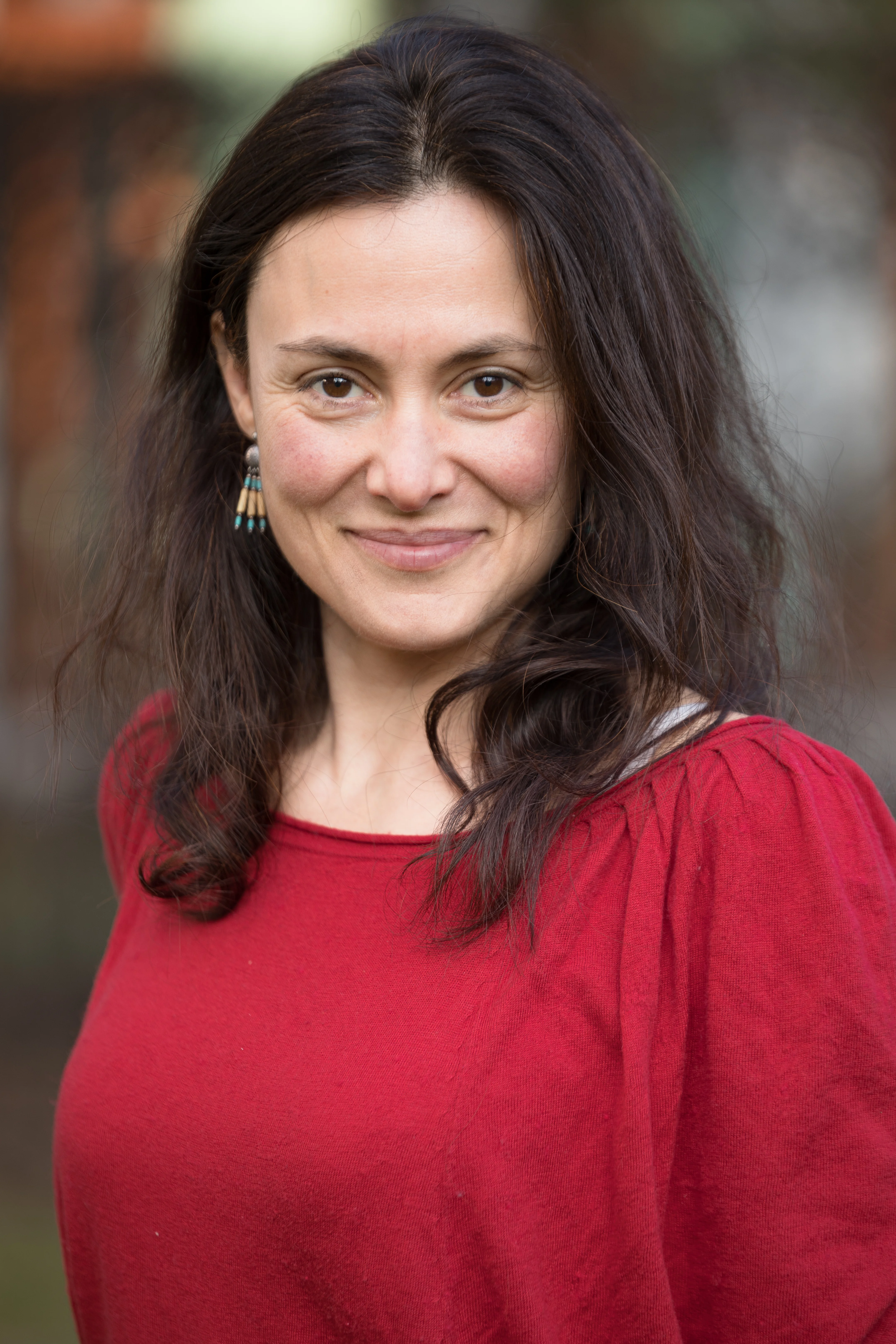
Image from Wikipedia
Image from Wikipedia
İdil Üner: German-Turkish Acting between Stage, Cinema, and Directing
A Defining Voice of German-Turkish Film and Theater
İdil Üner, born on August 1, 1971, in Berlin, is one of the most prominent German-Turkish artists of her generation. She became known as an actress and director, whose work early on spanned theater, television, and cinema, particularly gaining attention for her roles in the films of Fatih Akın and Thomas Arslan. Her biography combines a Berlin upbringing, Turkish family roots, and an artistic career that has consistently developed across multiple forms of expression. ([de.wikipedia.org](https://de.wikipedia.org/wiki/%C4%B0dil_%C3%9Cner?utm_source=openai))
Early Years: Berlin as an Artistic Resonance Space
Üner grew up in Berlin and attended the acting school at the University of Arts in Berlin from 1992 to 1996. Even before her formal training, the world of theater was not remote for her: she entered the Turkish-speaking theater Tiyatrom at an early age, whose founding context is closely tied to her family, as her father was one of the co-founders. This early proximity to the stage significantly shaped her approach to character work, language, and presence before an audience. ([de.wikipedia.org](https://de.wikipedia.org/wiki/%C4%B0dil_%C3%9Cner?utm_source=openai))
Her Berlin origins are central to Üner's artistic development, as she grew up in a city where migration, multilingualism, and cultural friction shaped everyday life. It is precisely from this reality that the particular credibility of many of her characters later emerges. Her work thus became not only acting but also a contribution to the portrayal of German-Turkish identity in contemporary cinema. ([de.wikipedia.org](https://de.wikipedia.org/wiki/%C4%B0dil_%C3%9Cner?utm_source=openai))
The Breakthrough in Cinema: From Tatort to In July
Üner made her television debut in 1993 in Tatort, and her film debut followed in 1995 with Rudolf Thome's Das Geheimnis. She gained wider recognition through productions such as Kurz und schmerzlos, Dealer, and Im Juli, in which she stood out with a mix of restraint, energy, and emotional precision. It was these roles that marked her transition from a young actress to an independent figure in German cinema. ([en.wikipedia.org](https://en.wikipedia.org/wiki/%C4%B0dil_%C3%9Cner?utm_source=openai))
Her collaboration with Fatih Akın and Thomas Arslan is considered a decisive chapter in her career. In these films, Üner became a key figure in a new urban German-Turkish narrative that neither seemed folkloric nor simplified, but instead intertwined everyday reality, code-switching, and social tensions. This established her as an actress whose stage presence and screen impact went far beyond classical supporting roles. ([de.wikipedia.org](https://de.wikipedia.org/wiki/%C4%B0dil_%C3%9Cner?utm_source=openai))
Directing, Short Film, and the View Behind the Camera
In 2001, Üner wrote and directed the short film Die Liebenden vom Hotel von Osman, in which she also played one of the lead roles. The film was awarded the Federal Short Film Prize and won the award for Best Short Film at the International Short Film Festival in Istanbul; additionally, it was nominated for Best Short Film at the Max Ophüls Festival. This directorial work marked a pivotal moment in her artistic development, as she was no longer just acting in front of the camera but also shaping the dramaturgy herself. ([ballhausnaunynstrasse.de](https://ballhausnaunynstrasse.de/person/idil_uner/?utm_source=openai))
Her directing work showcased Üner as an artist with a keen sense of tone, rhythm, and perspective. Her progression from acting to directing signifies a career that does not remain confined to a single discipline but intertwines various forms of storytelling. This is precisely where her particular value lies: she represents a generation that has actively expanded German film and theater culture. ([deutschlandfunkkultur.de](https://www.deutschlandfunkkultur.de/portraet-kuenstlerin-zwischen-orient-und-okzident-100.html?utm_source=openai))
Theater, Music, and Versatility in Performance
Üner has always remained connected to the theater, working among others at the Turkish-speaking theater Tiyatrom as well as later in various stage contexts. Her training and practice demonstrate an actress who views language not only as a means of communication but as aesthetic material. In addition to her acting work, she is noted to have taken piano lessons for 17 years and received two years of opera training, further expanding her artistic horizon. ([en.wikipedia.org](https://en.wikipedia.org/wiki/%C4%B0dil_%C3%9Cner?utm_source=openai))
Musical moments are also part of her profile: in Im Juli, she wrote the lyrics for Güneşim, and in Fatih Akın's Gegen die Wand, she sang in a cinematic context. Additionally, she appears in projects as a singer, for instance in stage and theater works where chanson and musical performance play a role. This showcases an artist who productively transcends the boundaries between play, voice, and musical expression. ([en.wikipedia.org](https://en.wikipedia.org/wiki/%C4%B0dil_%C3%9Cner?utm_source=openai))
Awards and Recognition in Cultural Public Life
Üner received early recognition for her work. In addition to awards for her short film, her acting performances are highlighted in industry profiles, including the Best Actress award at the Ankara Film Festival in 2004. Media and cultural coverage have also regularly emphasized her unique position between cultural spaces, which she utilizes not as a contradiction but as a creative tension. ([crew-united.com](https://www.crew-united.com/en/Idil-Uener_7215.html?utm_source=openai))
In public perception, Üner stands for a form of acting that is nuanced, attentive, and subtly strong. Critical portraits describe her as an artist who cannot be reduced to labels and, precisely because of this, gains profile. Her career is an example of how strongly individual biographies have shaped the German film and theater landscape. ([morgenpost.de](https://www.morgenpost.de/kultur/berlin-kultur/article128783664/Schauspielerin-Idil-Uener-will-nicht-immer-nur-die-Tuerkin-sein.html?utm_source=openai))
Current Projects and Later Works
Even in recent years, Üner has remained visible. Industry directories and current production notes record her works in film, television, and theater contexts up to the present, including projects mentioned for 2024 such as Yvonne and the Death and The Silence at the End of the Night, as well as the theater work Gazino Altınova from 2021 to 2022. Thus, she remains an active figure in the German-speaking cultural scene, continuing to switch between ensemble work, directing, and performance tasks. ([pro.imdb.com](https://pro.imdb.com/name/nm0960380/?utm_source=openai))
What is particularly remarkable is the continuity: Üner does not appear as a nostalgic figure from past cinema years, but as an artist with current presence in new formats and on different stages. Her career demonstrates how experience, artistic curiosity, and cultural polyphony can be sustained over decades. This is exactly what makes her biography so worth reading and so relevant for today's audience. ([pro.imdb.com](https://pro.imdb.com/name/nm0960380/?utm_source=openai))
Cultural Influence and Significance
İdil Üner has shaped the portrayal of German-Turkish life realities in film without being limited to a single role or image. Her characters often represent in-between spaces: between languages, environments, family images, and societal expectations. This has made her an important reference for cinema that understands diversity not as a marginal topic but as an aesthetic and social reality. ([de.wikipedia.org](https://de.wikipedia.org/wiki/%C4%B0dil_%C3%9Cner?utm_source=openai))
Her influence also lies in her versatility: acting, directing, theater, singing, and writing combine to form a clear artistic profile. For both the audience and the industry, she remains exciting because she does not just play roles but makes cultural spaces visible. Those who experience her live on stage encounter an artist with attitude, experience, and a distinctive presence. ([ballhausnaunynstrasse.de](https://ballhausnaunynstrasse.de/person/idil_uner/?utm_source=openai))
Conclusion: An Artist with Substance, Attitude, and Stage Presence
İdil Üner impresses with a career that comprises precise training, early theater practice, striking film roles, and independent directorial work. She stands for cultural complexity, credible character work, and artistic development that never stands still. Anyone interested in German-Turkish film history, strong acting, and intelligent directing should certainly follow her work and, if possible, experience it live. ([de.wikipedia.org](https://de.wikipedia.org/wiki/%C4%B0dil_%C3%9Cner?utm_source=openai))
Official Channels of İdil Üner:
- Instagram: no official profile found
- Facebook: no official profile found
- YouTube: no official profile found
- Spotify: no official profile found
- TikTok: no official profile found
Sources:
- Wikipedia - İdil Üner
- Ballhaus Naunynstraße - İdil Üner
- Berliner Zeitung - Actress Idil Üner directs a play about the psychoanalyst at the theater Tiyatrom
- Berliner Morgenpost - Actress Idil Üner does not want to always be just the Turkish woman
- Deutschlandfunk Kultur - Portrait: Artist between Orient and Occident
- Crew United - İdil Üner
- Wüste Film - Production press kit Im Juli
- NUR EINE FRAU - Press kit
- Agentur Schlag - Profile İdil Üner
- Wikipedia - İlke Üner