
Gotthard Graubner
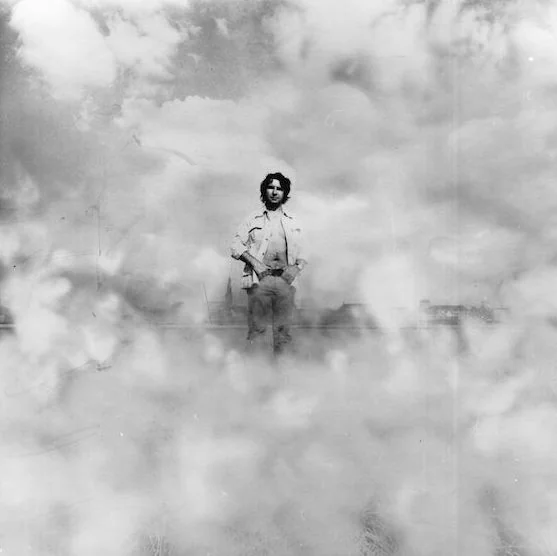
Image from Wikipedia
Image from Wikipedia
Gotthard Graubner – Painting as Space, Color, and Quiet Intensity
An Exceptional Artist of German Post-War Art
Gotthard Graubner is among the defining German painters of the 20th century. Born on June 13, 1930, in Erlbach in the Vogtland and passed away on May 24, 2013, in Düsseldorf, he developed a distinctive visual language in which color became not just surface, but physically experienceable space. His work represents a painting of concentration, reduction, and atmospheric depth that reaches far beyond traditional picture boundaries. ([moma.org](https://www.moma.org/artists/2303-gotthard-graubner?utm_source=openai))
Early Years and Artistic Influence
Graubner's biographical journey begins in Saxony and leads him into the educational circumstances of post-war Germany, characterized by upheaval, new beginnings, and institutional breaks. He initially studied at the Hochschule für Bildende Künste Berlin, then at the Dresden Academy of Fine Arts, and later from 1954 to 1959 at the Kunstakademie Düsseldorf under Georg Meistermann and Karl Otto Götz. These stages laid the foundation for an artistic development that quickly diverged from academic figuration and led to autonomous abstraction. ([suedwestgalerie.de](https://www.suedwestgalerie.de/kunstlexikon/kuenstler/graubner-gotthard?utm_source=openai))
The encounter with the Düsseldorf avant-garde, including contact with the ZERO movement around Otto Piene and Heinz Mack, opened Graubner's eyes to light, material, and the poetic power of reduction. Early on, it became clear that he was not interested in the depiction of objects, but rather in the inner effect of color, layering, and surface. From this attitude arose a painting that oscillates between silence and density and is still regarded as a key position in abstract art today. ([en.wikipedia.org](https://en.wikipedia.org/wiki/Gotthard_Graubner?utm_source=openai))
Teaching, Düsseldorf and the Formation of His Own Cosmos
After his years of study, Graubner initially worked as an art educator at the Lessing-Gymnasium in Düsseldorf before taking on a teaching position in 1965 and later a professorship at the Hochschule für bildende Künste Hamburg in 1969. From 1976 to 1998, he was a professor of free painting at the Kunstakademie Düsseldorf, where he influenced an entire generation of younger artists. His teaching underscores his authority in the German art landscape as well as his ability to not only pursue artistic development himself but also to pass it on. ([suedwestgalerie.de](https://www.suedwestgalerie.de/kunstlexikon/kuenstler/graubner-gotthard?utm_source=openai))
It was particularly in Düsseldorf that Graubner's work condensed into the radical form for which he became internationally known. Art for him became a realm of experience, where color takes on gravity, breath, density, and layering. His unique position lies in this consistency: Graubner does not conceive of painting as a motif, but as an energetic field that slowly binds the gaze and emotionally charges the space. ([galerie-karsten-greve.com](https://galerie-karsten-greve.com/en/artists/detail/gotthard-graubner?utm_source=openai))
The Color Space Bodies: When Painting Becomes Plastic
Graubner's central body of work consists of the so-called Color Space Bodies, which he developed in the early 1970s. He stretched canvas or nylon over soft-shaped carriers made of foam or synthetic cotton, so that the picture surface no longer remained flat but gained a body-like, sculptural presence. Color became the actual protagonist: not illustrative, not narrative, but as an autonomous carrier of space and atmosphere. ([galerie-karsten-greve.com](https://galerie-karsten-greve.com/en/artists/detail/gotthard-graubner?utm_source=openai))
This development made him one of the most important representatives of abstract painting in the post-war period. Graubner's works embody a quiet radicality that appears restrained at first glance but unfolds an enormous intensity upon contemplation. His painting thrives on transitions, densifications, and nuances; it demands slowness and rewards the gaze with an experience that mediates between image, object, and space. ([galerieschwarzer.com](https://galerieschwarzer.com/en/artists/42-gotthard-graubner/?utm_source=openai))
International Recognition and Institutional Presence
Graubner's work was early on anchored in significant collections and exhibitions. The Museum of Modern Art in New York, Galerie Karsten Greve, Stiftung Insel Hombroich, and the German Bundestag recognize him as an important artist of modernity and the post-war period. Notably, his participations in documenta 4 and documenta 6, as well as his presence in the German Pavilion of the Venice Biennale in 1982, stand out. These milestones mark not only museum recognition but also his international visibility. ([moma.org](https://www.moma.org/artists/2303-gotthard-graubner?utm_source=openai))
Awards also highlight his significance. Among the available artist collections and catalogues, the August Macke Prize from 1987 is mentioned; additionally, Graubner is noted as a member of the Saxon Academy of Arts and as a recipient of high state honors. Such accolades reflect the strong perception of his art as a contribution to German cultural history. ([wikidata.org](https://www.wikidata.org/wiki/Q880775?utm_source=openai))
Style, Technique, and Artistic Handwriting
Graubner's style is characterized by an uncompromising focus on color, layering, and light effects. His works blur the boundaries between painting and object, between surface and body, between distance and tactile closeness. Particularly striking is the way he employs color tones not as decoration but as psychological and spatial dimensions, so that the visual effect takes on a meditative character while remaining of high material presence. ([galerie-karsten-greve.com](https://galerie-karsten-greve.com/en/artists/detail/gotthard-graubner?utm_source=openai))
In art historical terms, Graubner connects European abstraction with a very own, sensual rigor. His works engage in a dialogue with color field painting but take an independent path in the plastic realization of the image body. It is precisely this combination of reduction and sensual abundance that makes his work so timelessly relevant: it is modern without being fashionable and austere without appearing cold. ([sammlungenonline.albertina.at](https://sammlungenonline.albertina.at/objects/315864/ohne-titel-farbraumkorper?utm_source=openai))
Reception, Impact, and Cultural Influence
Art criticism has recognized Graubner for decades as one of the outstanding German painters of contemporary art and as a central figure in abstract post-war art. His works are held in international collections and are repeatedly referenced in exhibitions as examples of painting that thinks beyond the canvas into space. Thus, he influenced not only painting but also the understanding of image bodies, materiality, and perception. ([galerieschwarzer.com](https://galerieschwarzer.com/en/artists/42-gotthard-graubner/?utm_source=openai))
His cultural influence is also evident in the ongoing museum and publishing presence. Museums, galleries, and art houses regularly refer to his significance for the development of abstract art in Germany. The fact that his works continue to be discussed in exhibitions, catalogues, and academic contexts speaks to the durability of an artistic position that consistently resists simplification. ([bundestag.de](https://www.bundestag.de/en/visittheBundestag/art/artists/graubner_inhalt-369948?utm_source=openai))
Conclusion: A Painter Who Transformed Color into Experience
Gotthard Graubner remains intriguing because he transformed painting into a sensitive, physically experienceable event. His color space bodies demonstrate how far a picture can open up when color, material, and space engage in a quiet dialogue. For those wanting to not only observe modern art but to experience it intensely, Graubner's work offers one of the most impressive invitations in German art history. ([galerie-karsten-greve.com](https://galerie-karsten-greve.com/en/artists/detail/gotthard-graubner?utm_source=openai))
His oeuvre deserves the encounter before the original, in the museum or gallery, where the nuances of his color worlds can unfold their full effect. It is precisely there that it becomes evident why Graubner is regarded as a master of quiet intensity: His art does not impose itself; it draws one into depth. Those who engage in this experience discover one of the most distinctive painters of the post-war period. ([moma.org](https://www.moma.org/artists/2303-gotthard-graubner?utm_source=openai))
Official Channels of Gotthard Graubner:
- Instagram: No official profile found
- Facebook: No official profile found
- YouTube: No official profile found
- Spotify: No official profile found
- TikTok: No official profile found
Sources:
- Wikipedia – Gotthard Graubner
- Museum of Modern Art – Gotthard Graubner
- Galerie Karsten Greve – Gotthard Graubner
- Galerie Schwarzer – Gotthard Graubner
- Deutscher Bundestag – Gotthard Graubner
- Stiftung Insel Hombroich – Gotthard Graubner
- documenta – documenta 6
- ifa – German Pavilion at the Venice Biennale