
Christian Gerhaher
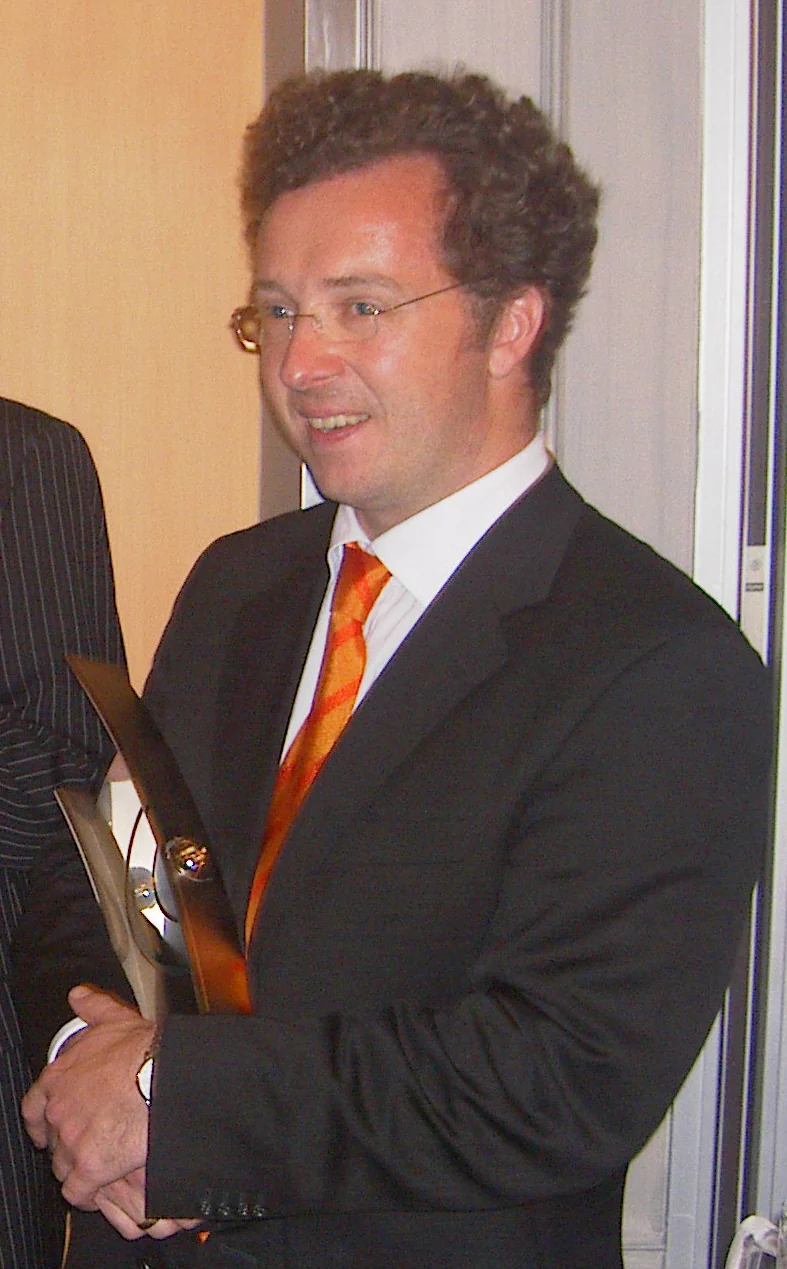
Image from Wikipedia
Image from Wikipedia
Christian Gerhaher: The Great Narrator of German Song
A Baritone Between Music History, Text Interpretation, and Global Career
Christian Gerhaher, born on July 24, 1969, in Straubing, is one of the most influential German baritones of his generation. His artistic profile combines song, concert, and opera in a rare way: with analytical precision, great linguistic awareness, and a stage presence that transforms restraint into tension. He early on chose a path that connects medical training, vocal study, and an uncompromising dedication to the art of singing. ([gerhaher.de](https://www.gerhaher.de/en/))
Biographical Roots: Education, Influences, and Artistic Ambition
From Medical Studies to Vocal Art
After graduating from high school, Gerhaher initially began studying medicine, but by the end of his education, his musical calling prevailed. In parallel, he took singing lessons with Paul Kuen and studied at the Munich University of Music and Theater with Raimund Grumbach; he learned art song performance at the opera school with Friedemann Berger. Master classes with Dietrich Fischer-Dieskau, Elisabeth Schwarzkopf, and Inge Borkh deepened the stylistic discipline that remains a hallmark of his artistry. ([munzinger.de](https://www.munzinger.de/register/portrait/biographien/gerhaher%20christian/00/28201))
The Partnership with Gerold Huber
One of the cornerstones of his career is his collaboration with pianist Gerold Huber. They have been making music together for over 30 years and are regarded as one of the outstanding song duos worldwide. Their interplay thrives on sonic equality, subtle control of breath, and a shared vision of the score, in which text, harmony, and musical rhetoric are intricately intertwined. ([gerhaher.de](https://www.gerhaher.de/en/))
Teaching and Transmitting the Song Tradition
Gerhaher serves not only as an interpreter but also as a mediator. Together with Gerold Huber, he leads a song interpretation class at the Munich University of Music and Theater and occasionally teaches at the Royal Academy of Music in London. In doing so, he stands in a direct lineage of the great German song culture that he both nurtures and develops. ([gerhaher.de](https://www.gerhaher.de/en/))
The Career: From Great Concert Halls to Opera Stages
International Song Art at the Highest Level
Gerhaher and Huber regularly perform at leading recital venues worldwide, including New York, Amsterdam, Paris, Vienna, Madrid, Milan, and London. The focus is clearly on art song, yet the impact extends far beyond: their repertoire includes classical, romantic, and contemporary works, and their appearances at festivals in Munich, Aix, Heidelberg, Salzburg, Granada, Berlin, Lucerne, Edinburgh, Rheingau, and Schleswig-Holstein highlight their international presence. ([gerhaher.de](https://www.gerhaher.de/en/))
Significant and Defined Opera Roles
On the opera stage, Gerhaher has also established himself as a prominent character baritone. Some of his most important roles include Posa in Verdi's Don Carlo, Germont in La traviata, Amfortas in Parsifal, Figaro and Count Almaviva in Mozart's Le nozze di Figaro, the title roles in Monteverdi's L’Orfeo, Mozart's Don Giovanni, Debussy's Pelléas et Mélisande, Verdi's Simon Boccanegra, and Henze's Der Prinz von Homburg. His interpretation of Wozzeck in 2015 in Zurich is regarded as a milestone that significantly expanded his dramatic range. ([gerhaher.de](https://www.gerhaher.de/en/))
Collaborations with Major Conductors and Orchestras
Gerhaher has worked with conductors such as Sir Simon Rattle, Daniel Harding, Herbert Blomstedt, Bernard Haitink, Pierre Boulez, Christian Thielemann, Kirill Petrenko, Nikolaus Harnoncourt, Sir Antonio Pappano, Daniel Barenboim, Andris Nelsons, and Mariss Jansons. The orchestras that invite him regularly include the London Symphony Orchestra, the Concertgebouw Orchestra Amsterdam, the Berlin Philharmonic, the Swedish Radio Symphony Orchestra, and particularly the Bavarian Radio Symphony Orchestra. Notably, he is the first singer ever in the Artist-in-Residence series of the Berlin Philharmonic. ([gerhaher.de](https://www.gerhaher.de/en/))
Current Projects and Artistic Presence
New Stage, New Impulses
The latest information on his official website displays an artist who continues to be present at the highest level. For 2026, performances including Les nuits d'été in Munich and several performances of Wagner's Tannhäuser in Zurich are announced. Additionally, it highlights that Gerhaher will perform as Wotan in Das Rheingold at the Salzburg Easter Festival, marking another significant expansion of his opera repertoire. ([gerhaher.de](https://www.gerhaher.de/en/))
Curator, Thinker, Song Advocate
Apart from the stage, Gerhaher also shapes program culture. The song week at Elmau, conceptualized by him and Gerold Huber, is one of his recent projects aimed at strengthening song as a vibrant, discursive art form. In the press, he is depicted not only as an exceptional singer but also as an artist who engages intensively with the relationship between text and music, conducting interpretive work under a magnifying glass. ([gerhaher.de](https://www.gerhaher.de/en/))
Discography: Schubert, Schumann, Mahler, and the Great Song Landscape
A Catalogue with Weight
Gerhaher's discography reveals a clear aesthetic line. His official site documents key releases such as Johannes Brahms' Lieder (2025), Gustav Mahler's Das Lied von der Erde (2023), Othmar Schoeck’s Elegie (2022), and especially Robert Schumann's Alle Lieder (2021). Additionally, earlier recordings such as Myrthen, Frage, Die schöne Müllerin, Pelléas et Mélisande, Die schöne Magelone, Mozart Arias, and War Requiem are also included. ([gerhaher.de](https://gerhaher.de/index.php/de/diskografie))
Schumann as a Lifelong Project
His engagement with Robert Schumann is particularly remarkable. The complete recording of all songs, released in 2021, is considered a grand project of exceptional rank and reflects Gerhaher’s interpretative meticulousness. The press has praised this work as an expression of a deep, detail-oriented reading of Schumann, in which expression, articulation, and musical structure merge into a dense unity. ([gerhaher.de](https://www.gerhaher.de/index.php/en/))
Collaboration with Sony Music and New Studio Works
His recordings are released exclusively by Sony Music and Sony Classical. The official website also mentions new releases such as Das Lied von der Erde with Piotr Beczała and Gerold Huber, as well as projects from 2022 featuring Schoeck, Holliger, and Rihm. This discography underscores an artist who does not merely manage the repertoire but continually expands and positions it historically. ([gerhaher.de](https://www.gerhaher.de/index.php/en/))
Style and Interpretation: Text, Sound, and Inner Dramaturgy
The Song as a Spiritual Art Form
Gerhaher's style is characterized by an extraordinary blend of clarity of speech, controlled legato, and carefully placed dynamics. His art aims less at vocal showiness and more at the precise unfolding of the inner architecture of a song. Especially in Schubert, Schumann, Brahms, and Mahler, his ability to render musical lines audible as thought movements can be observed. ([gerhaher.de](https://www.gerhaher.de/en/))
Respect for the Work, Intensity in Performance
Critics consistently highlight the organic collaboration between singer and pianist, the equality of both partners, and the subtle coordination of phrasing and atmosphere. Gerhaher’s interpretations never come across as distant; instead, they are focused and deeply present. This is where his authority lies: he combines scholarly precision with emotional authenticity. ([gerhaher.de](https://www.gerhaher.de/en/))
Cultural Influence and Recognition
Awards and Resonance
Christian Gerhaher has received several accolades, including the Laurence Olivier Award and the Theaterpreis Der Faust; he was also named Bavarian Kammersänger in 2015. His official website notes several significant awards, and the latest announcement refers to his receiving the Hugo-Wolf Medal in 2024. This underscores the stature of an artist whose impact extends far beyond a single specialized audience. ([gerhaher.de](https://www.gerhaher.de/en/))
A Defining Voice of German-Language Song Culture
Gerhaher represents an interpretive tradition in which musical intelligence, philological precision, and sonic nobility converge. His work as a singer, teacher, curator, and author has visibly and audibly redefined German art song in the 21st century. Those who listen to him experience not only a baritone of extraordinary stylistic confidence but also a musician who fulfills the repertoire with historical responsibility and artistic presence. ([gerhaher.de](https://www.gerhaher.de/en/))
Conclusion: Christian Gerhaher fascinates with his unique blend of intellect, sound culture, and dramatic presence. His career demonstrates how vibrant art song and demanding operatic roles can resonate in the present when an artist takes every detail seriously. Anyone wanting to experience great vocal art, deep text interpretation, and musical authenticity should certainly hear Christian Gerhaher live. ([gerhaher.de](https://www.gerhaher.de/en/))
Official Channels of Christian Gerhaher:
- Instagram: No official profile found
- Facebook: No official profile found
- YouTube: No official profile found
- Spotify: No official profile found
- TikTok: No official profile found
Sources:
- Christian Gerhaher – Official Website
- Christian Gerhaher – Discography
- Bavarian State Opera – Biography Christian Gerhaher
- Salzburg Festival – Christian Gerhaher
- Die Presse – Salzburg: How Christian Gerhaher Already Thinks of Wotan in Schumann
- Munzinger Biography – Christian Gerhaher
- Wikipedia: Image and text source
Upcoming Events
Landshuter Hofmusiktage 2026 - L'Orfeo
Experience Monteverdi's famous opera L’Orfeo with Christian Gerhaher in the magnificent Rathausprunksaal of Landshut. A highlight of the Hofmusiktage.
Landshuter Hofmusiktage 2026 - L'Orfeo by Claudio Monteverdi
An evening for opera lovers: Monteverdi's L'Orfeo with Christian Gerhaher in the festive Town Hall Festive Hall. Early music, great emotions, free entry. #Landshut #Opera