
Axel Schulz (Boxer)
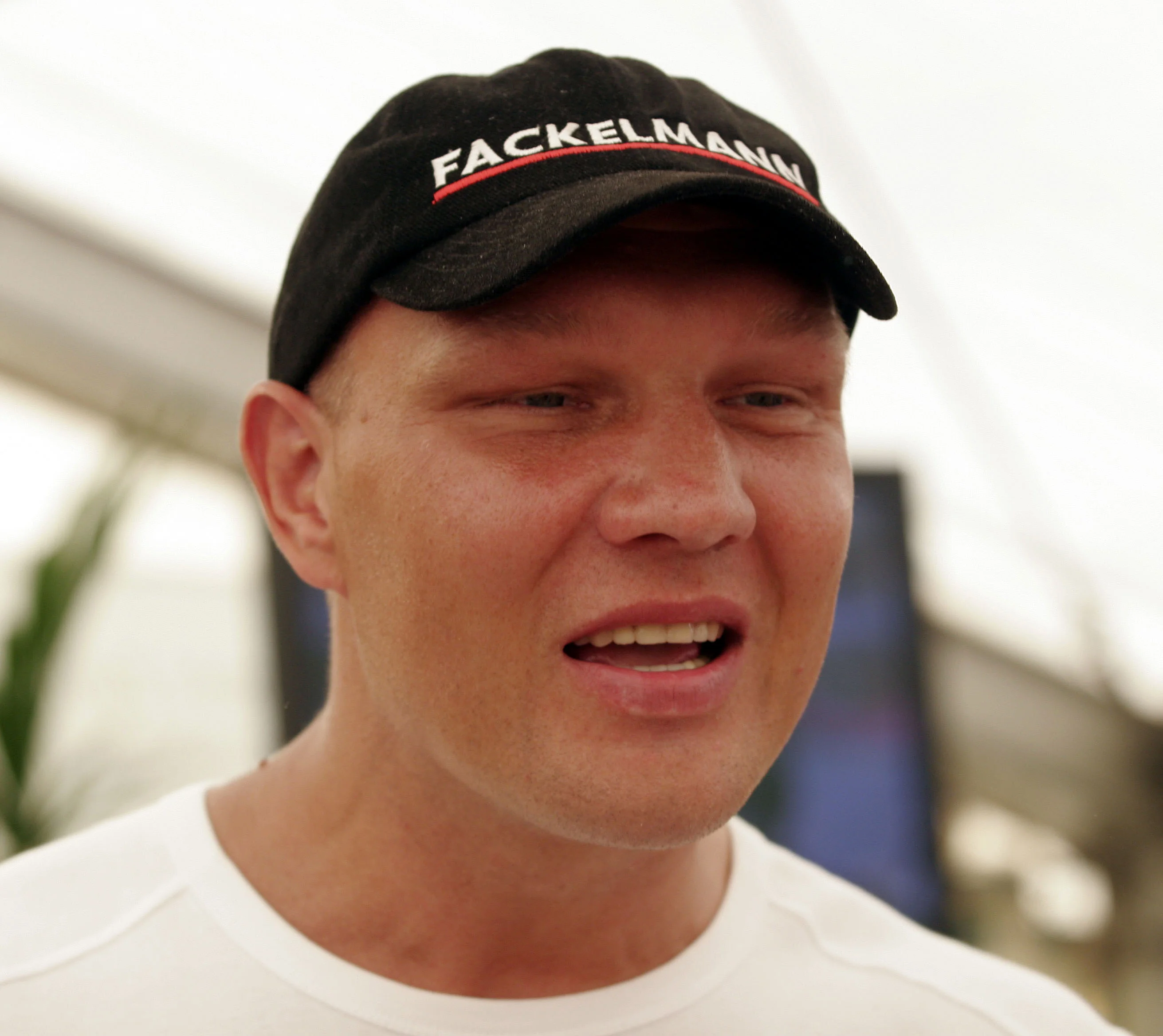
Image from Wikipedia
Image from Wikipedia
Axel Schulz: The Career of a German Boxer Between Popularity, World Championship Drama, and Cult Status
A Heavyweight Star Who Made an Impact Beyond the Ring
Axel Schulz, born on November 9, 1968, in Bad Saarow-Pieskow in the former GDR, is one of the best-known German heavyweight boxers of the 1990s. His career combines athletic toughness, remarkable popularity, and that rare mix of down-to-earth presence and stage charisma that made him relatable to a wide audience. Early on, a career shaped by talent, discipline, and strong public interest developed, leaving a lasting mark on German boxing. ([de.wikipedia.org](https://de.wikipedia.org/wiki/Axel_Schulz?utm_source=openai))
From the GDR School of Boxing to International Heavyweight
Schulz took up boxing as a child and was systematically developed in the GDR before fighting his way into the international spotlight through the amateur ranks. In his amateur career, he fought 98 matches, winning 78; he also achieved five consecutive GDR championship titles in his age group and the Junior European Championship title in 1986 in light heavyweight. This early phase showcases an athlete whose musical career may not be present here, but whose athletic development in its dramatic arc resembles a well-composed career piece: rise, maturity, breakthrough. ([de.wikipedia.org](https://de.wikipedia.org/wiki/Axel_Schulz_%28Boxer%29?utm_source=openai))
The turning point opened Schulz’s path to professional boxing and the big names of international heavyweight. Particularly influential was his collaboration with trainer Manfred Wolke, who also shaped Henry Maske and thus became a defining figure for a generation of German boxers. Schulz represented a robust, audience-friendly version of boxing: not a distant technician, but a fighter whose presence filled the room and whose appearances were always media events. ([fernweh-park.de](https://www.fernweh-park.de/2003/11/axel-schulz/?utm_source=openai))
The Big Breakthrough: George Foreman and the Night in Las Vegas
The fight against George Foreman in April 1995 became the culmination of his fame. Schulz lost the world championship fight by decision, but the encounter cemented his status as a public figure and a boxing idol with cult status in Germany. Contemporary reports describe this confrontation as one of the most significant events in German professional boxing of that era; in hindsight, this loss is especially seen as part of his legend. ([munzinger.de](https://www.munzinger.de/register/portrait/biographien/Axel%20Schulz/01/3981?utm_source=openai))
Even reflections on Foreman later show how profoundly this moment shaped Schulz's overall image. In interviews, he spoke about how this fight changed his life; at the same time, the reception today underscores that his name remains inseparably linked to the episode in which he stood up to a heavyweight legend and sparked a significant wave of national sympathy. For many fans, this was the moment when the boxer became a popular phenomenon. ([rtl.de](https://www.rtl.de/sport/axel-schulz-zum-tod-von-george-foreman-sein-vermaechtnis-wird-ewig-weiterleben-id2157091.html?utm_source=openai))
Title Opportunities, Setbacks, and a Career Full of Tension
After the Foreman duel, Schulz remained a significant hopeful figure in the public perception of German boxing, even if not every sporting evening met expectations. The fight against Francois Botha initially brought him a points victory, which, due to a positive doping test of his opponent, did not result in a regular title win. Such episodes reinforced the impression of a career marked by proximity to triumph, but also by bitter turns. ([munzinger.de](https://www.munzinger.de/register/portrait/biographien/Axel%20Schulz/01/3981?utm_source=openai))
Particularly, the fight against Wladimir Klitschko in September 1999 marked a turning point for many observers. While Schulz remained a brand and figure of identification, this was a significant break that influenced the further course of his professional career. The German press later described him as a boxer who "boxed into the hearts of the fans," succinctly summarizing his significance beyond mere statistics. ([welt.de](https://www.welt.de/print-welt/article95623/Der-Ruf-des-Boxens-steht-auf-dem-Spiel.html?utm_source=openai))
Style, Impact, and Public Perception
Axel Schulz was never just a statistic in the history of the heavyweight division. His impact came from a mix of physical presence, sympathy, and a very direct, down-to-earth communication style that made him equally interesting to the media and the audience. In a sport often characterized by distance, toughness, and calculated staging, Schulz brought an almost unusual approachability. ([welt.de](https://www.welt.de/print-welt/article95623/Der-Ruf-des-Boxens-steht-auf-dem-Spiel.html?utm_source=openai))
Critical voices were also part of his career, especially when boxing quality and media expectations diverged. Reports after individual appearances document that he was often measured against his performance and was not spared criticism, highlighting the ambivalence of his public role: a celebrated fan favorite, but at the same time a closely monitored professional athlete. This tension makes his biography still intriguing for sports and culture enthusiasts today. ([focus.de](https://www.focus.de/sport/boxen/schulz/ich-habe-beschissen-geboxt-axel-schulz_id_1766475.html?utm_source=openai))
Discography of Success: Fights, Titles, and Key Statistics
Axel Schulz doesn’t have a classic discography; rather, his listing corresponds to the list of decisive fights, titles, and career milestones in boxing. This includes 98 amateur fights, 78 wins, five GDR championship titles, the junior European title in 1986, the world championship opportunity against George Foreman, the controversial experience against Francois Botha, and the later fight against Wladimir Klitschko. These milestones form the backbone of a career that can be read as a series of significant chapters. ([de.wikipedia.org](https://de.wikipedia.org/wiki/Axel_Schulz_%28Boxer%29?utm_source=openai))
Even during his professional time, Schulz remained a constant figure in the German boxing boom of the 1990s, which he helped drive along with Henry Maske. Industry-related biographies and interviews highlight that he is regarded as one of the defining faces of that phase when boxing became a mass event in Germany. His career thus stands not only for individual successes but also for an important chapter in sports history. ([munzinger.de](https://www.munzinger.de/register/portrait/biographien/Axel%20Schulz/01/3981?utm_source=openai))
Current Projects and Later Public Presence
Even after the end of his active professional career, Schulz remained present. Media reports from the years 2024 and 2025 show him at public appearances, interviews, events, and as a commentator on boxing, entrepreneurship, and life after his active career. Additionally, he appears in current television formats where he is involved as a well-known personality. ([moz.de](https://www.moz.de/lokales/frankfurt-oder/kleist-forum-in-frankfurt-oder-so-schlug-sich-boxer-axel-schulz-auf-der-buehne-77584727.html?utm_source=openai))
Especially notable is that Schulz, even decades after his greatest fights, is still perceived as a voice of German boxing. Interviews from 2025 touch on both his memories of George Foreman and his assessments of today’s heavyweight boxing. Thus, he remains not just a historical figure but an active commentator in his sport. ([rtl.de](https://www.rtl.de/sport/axel-schulz-zum-tod-von-george-foreman-sein-vermaechtnis-wird-ewig-weiterleben-id2157091.html?utm_source=openai))
Cultural Influence: A Boxer as an Identifiable Figure
Axel Schulz embodies more than just athletic results. His career represents a piece of German popular culture, in which boxing suddenly stood at the center of public attention, and a heavyweight from Brandenburg became a familiar face on television. The mix of genuine understatement, fighting spirit, and media accessibility made him the "people's champion" for many. ([schulzens.info](https://www.schulzens.info/wp-content/uploads/2024/11/241126_Plakat_A1_Frauentag_25.pdf?utm_source=openai))
His influence is also evident in how he is discussed: not just as a boxer but as a personality embodying defeats, expectations, and comebacks. This makes Schulz long-term intriguing. Following his story means experiencing not just an athlete but a piece of German contemporary history through the lens of professional boxing. ([maz-online.de](https://www.maz-online.de/sport/regional/axel-schulz-im-interview-wie-es-um-den-deutschen-boxsport-steht-2CLWRMRQAZF7NPZBYZYRPGULH4.html?utm_source=openai))
Conclusion: Why Axel Schulz Remains Fascinating Today
Axel Schulz remains captivating because his career uniquely encapsulates sporting greatness, bitter setbacks, and immense popularity. He was a heavyweight boxer with genuine charisma, an athlete of identification, and the face of an entire boxing era in Germany. For those interested in boxing history, German sports icons, and significant public careers, he represents a figure who extends beyond statistics. ([munzinger.de](https://www.munzinger.de/register/portrait/biographien/Axel%20Schulz/01/3981?utm_source=openai))
It is precisely this mix of toughness and humanity that keeps his name alive today. Axel Schulz symbolizes the moment when sports became a national narrative, and that is why every glance at his biography is worthwhile. Anyone who experiences him live at an appearance, interview, or event quickly understands why this boxer has remained so enduringly in the collective memory. ([moz.de](https://www.moz.de/lokales/frankfurt-oder/kleist-forum-in-frankfurt-oder-so-schlug-sich-boxer-axel-schulz-auf-der-buehne-77584727.html?utm_source=openai))
Official Channels of Axel Schulz:
- Instagram: No official profile found
- Facebook: No official profile found
- YouTube: No official profile found
- Spotify: No official profile found
- TikTok: No official profile found
Sources:
- Wikipedia – Axel Schulz (Boxer)
- Munzinger Biography – Axel Schulz
- SPORT1 – The Career of Axel Schulz
- WELT – Foreman-Schulz and the Career of Axel Schulz
- rbb24 – Axel Schulz on George Foreman
- MAZ – Axel Schulz in Interview about German Boxing
- RTL – Axel Schulz on His Boxing Career
- RTL – Axel Schulz at an MMA Event
- Joyn – Axel Schulz on Celebrity Big Brother 2026