
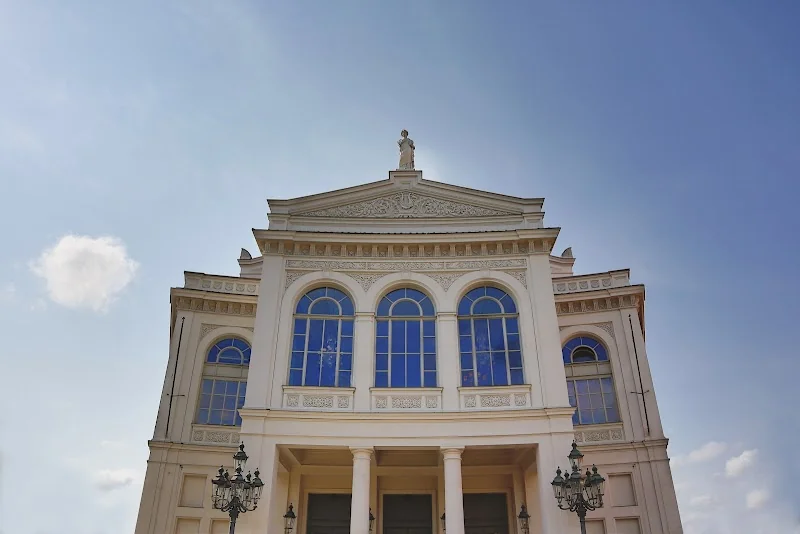
Gärtnerpl. 3, München-Ludwigsvorstadt-Isarvorstadt
Gärtnerpl. 3, 80469 München, Germany
State Theater at Gärtnerplatz | Tickets & Performance Schedule
The State Theater at Gärtnerplatz is one of the most prominent musical theater addresses in Munich, combining historic charm with a very lively, contemporary performance schedule. The building at Gärtnerplatz 3 in the Ludwigsvorstadt-Isarvorstadt represents a mix of tradition, proximity to the audience, and a repertoire that ranges from opera to operetta, musical, and ballet. Those looking for tickets, performance schedules, seating plans, or directions can quickly find the most important information on the official pages and go directly to ticket sales from there. The location is also a plus: the theater is situated in the middle of a district that combines culture, gastronomy, and urban atmosphere in a compact space. At the same time, the visit is practically organized, as the use of public transport (MVV) is included in the ticket, the connections to the subway, tram, and bus are good, and several nearby parking garages are mentioned for those arriving by car. Historically, the house is deeply rooted in Munich's theater history: its beginnings date back to the 1830s, the foundation stone was laid in 1864, it opened in 1865, and after several phases of upheaval, closure, reopening, and renewal, it has been named the State Theater at Gärtnerplatz since 1955. ([gaertnerplatztheater.de](https://www.gaertnerplatztheater.de/de/seiten/faq.html))
Tickets & Performance Schedule at the State Theater at Gärtnerplatz
Anyone accessing the performance schedule of the State Theater at Gärtnerplatz quickly realizes that the house consistently aligns its ticket sales with user guidance. From the desired performance or directly through the schedule, a ticket symbol leads to online ticket sales. This is particularly pleasant for visitors, as program planning and booking run together seamlessly. On the homepage and in the current pages for the 2025/2026 season, the theater shows that the stage is continuously filled with new productions, encompassing not only classical opera but also operetta, musical, ballet, and additional formats such as concerts and youth offerings. This aligns with the self-description of the house as a multi-genre venue that is not reduced to a single genre. For SEO, these search patterns are crucial: people search for performance schedules, tickets, upcoming events, or specific titles because they want a quick overview of dates, remaining tickets, and highlights of the season. The theater provides a clear structure for this. Those seeking information will find references to current premieres, revivals, and special formats on the official pages. It is also particularly practical that ticket sales open up several avenues: online, by phone, and in writing. This appeals to both spontaneous visitors and planning regular guests, subscribers, and school groups. ([gaertnerplatztheater.de](https://www.gaertnerplatztheater.de/))
Even during the booking process, the house remains transparent. According to the official sales page, regular advance sales start three months before the performance at 10 a.m.; if this date falls on a Sunday or public holiday, sales begin the preceding weekday. Tickets ordered online incur an additional €2 system fee per ticket, and there is also a processing fee of €2 per ticket for phone and written orders. Discounted tickets cannot be purchased online, which is important for planning if one expects reductions. The box office is located at Marstallplatz 5 and is open from Monday to Saturday from 10 a.m. to 7 p.m. For many visitors, this combination of an online bookable schedule and a classic box office is ideal, as one can respond flexibly both from home and on-site. In the SEO context, terms like tickets, performance schedule, remaining tickets, evening box office, advance sales, and ticket sales are particularly relevant because they accurately reflect the actual usage intent. This is where the Gärtnerplatz Theater showcases its strength: it appears traditional but not complicated, and it makes the path from interest to seat as short as possible. ([gaertnerplatztheater.de](https://www.gaertnerplatztheater.de/de/seiten/verkauf.html))
Seating Plan, Seats, and Sightlines in the Balcony Theater
When it comes to the seating plan, the State Theater at Gärtnerplatz is particularly sensitive, as the view can vary significantly depending on the seat. On the official seating plan page, the theater explicitly points out that the view from the side balconies can be slightly to heavily restricted, and the price groups are divided according to the quality of the sightline. This is an important note for visitors who are specifically looking for the best seats or who want to know where the stage is most fully visible when purchasing tickets. The house thus works not only with categories but also explains the relationship between price and view. Practically, this means that those who want to be safe should carefully check the seating plan before purchasing or seek advice from the box office. For this purpose, the theater also provides the corresponding phone number and email address. For SEO logic, search queries like seating plan, best seats, balcony, sight obstruction, or seats in the orchestra are central because they represent a clear information need. Visitors want to know whether they should sit in the middle, in the orchestra, or in a balcony, and whether certain seats are particularly suitable for opera, musical, or ballet. The theater provides the appropriate structure for this, rather than just offering a general seating plan without context. ([gaertnerplatztheater.de](https://www.gaertnerplatztheater.de/de/orte/index.html))
It is also particularly interesting that the Gärtnerplatz Theater consists not only of the classic auditorium but also has several performance venues within the building. The main stage is the large auditorium and balcony architecture, along with the studio stage in the basement, the foyer in the first balcony, and the orchestra rehearsal room for special formats as well as projects and workshops. The seating plan page also points out that the number and arrangement of seats in these areas can change depending on the event. This is important for visitors attending chamber operas, chamber musicals, song evenings, or special events. In the context of the seating plan, it is not only about pure seat selection but also about which space is used for which format. Therefore, those planning an evening at the Gärtnerplatz Theater should not only look at category and price but also at the specific type of room. This is where the search intentions behind terms like seating plan, seats, balcony, auditorium plan, and best seats lie. The theater answers them with a mix of detail depth and clear navigation, making the visit easier for both first-time guests and experienced opera and musical fans. ([gaertnerplatztheater.de](https://www.gaertnerplatztheater.de/de/orte/index.html))
Directions, Parking, and Accessible Visits
The directions to the State Theater at Gärtnerplatz are described quite concretely. According to the official FAQ, the use of public transport is already included in the ticket, making the theater visit particularly easy. The house is accessible via U1, U2, U7, and U8 to Fraunhoferstraße, with tram 18 also to Fraunhoferstraße, trams 16 and 17 to Reichenbachplatz, and bus lines 52 and 62 to Gärtnerplatztheater. For guests arriving by bicycle, the theater even mentions a very good situation directly in front of the house. Those arriving by car will find several parking options nearby: the CONTIPARK underground garage Oberanger, the Isar parking garage at Isartorplatz, and the Rieger City parking garage. Additionally, the house points out limited parking spaces for people with disabilities on Reichenbachstraße and Klenzestraße. For search queries like directions, parking, parking garage, or public transport, this is a very helpful information situation, as it not only refers generally to 'public transport' but also names specific stations, lines, and parking garages. This way, one can truly plan the theater evening instead of just hoping to find a spot in the city center spontaneously. ([gaertnerplatztheater.de](https://www.gaertnerplatztheater.de/de/seiten/faq.html))
Accessible use is also clearly regulated officially. The theater and the ticket office at Marstallplatz 5 are accessible. Wheelchair spaces are located in the orchestra in rows 12 and 13 on the right and left; a directly adjacent seat is reserved for accompanying persons. Additionally, the house has an induction loop for the hearing impaired, which is available in the balcony, in the balconies, and centrally in the orchestra. An accessible toilet is located in the orchestra on the left side, and there are elevators at both side entrances. For guests planning an accessible arrival and a relaxed visit, this is a significant advantage. Especially in a traditional theater, it is not a given that practical information is communicated so openly and concretely. In conjunction with the ticket and seating plan service, this creates a well-planned theater visit that caters to both mobility-impaired guests and accompanying persons, families, and older visitors. The topic of directions and accessibility is therefore one of the most important search needs surrounding the location. ([gaertnerplatztheater.de](https://www.gaertnerplatztheater.de/de/seiten/barrierefreiheit.html?utm_source=openai))
History, Architecture, and Unique Theater Identity
The history of the State Theater at Gärtnerplatz begins with the desire for a people-oriented music theater house in Munich. In the 1830s, initial plans were discussed, and in 1864, the foundation stone was laid in Munich's Isarvorstadt, financed by a private stock corporation. Even the original purpose shows how independently the house was conceived: it was to be a public theater for comedy, folk plays, and musical forms, while opera, grand opera, and ballet were initially expressly excluded. The opening took place on November 4, 1865, with an allegorical festival play and Jacques Offenbach's Salon Pitzelberger. Later, King Ludwig II prevented the impending auction, made the house the third Bavarian court stage in 1872, and named it the Royal Theater at Gärtnerplatz. This early phase explains why the theater still occupies a special position between popular proximity, repertoire house, and musical tradition. The later development is also remarkable: operetta increasingly came to the forefront from the end of the 19th century, and the house developed into one of the leading operetta theaters in the German-speaking world, while the 20th century was marked by closures, reopenings, and political upheavals that shaped the theater's path. ([gaertnerplatztheater.de](https://www.gaertnerplatztheater.de/de/seiten/geschichte.html))
Particularly formative were the years after World War II and the subsequent renovation. After the building was severely damaged on April 21, 1945, performances were initially held in a temporary location on Schornstraße, before operations resumed in the main house in 1948. Between 1952 and 1955, the theater was managed by Rudolf Hartmann together with the Bavarian State Opera; since then, the house has increasingly shown opera. Again under its own direction, it has been called the State Theater at Gärtnerplatz since 1955, and since the 2012/2013 season, Josef E. Köpplinger has led the house as state intendant. This historical line is not just background knowledge for visitors; it shapes the atmosphere: the theater is old enough to radiate history while being modern enough to be a versatile, contemporary music theater. The combination of classic balcony architecture, Munich's urban space, and the current performance season creates the charm of this location. Therefore, those seeking history, special features, or architectural character will find a house here that not only looks beautiful but has also culturally evolved. This is precisely what sets the Gärtnerplatz Theater apart from many other event and stage addresses. ([gaertnerplatztheater.de](https://www.gaertnerplatztheater.de/de/seiten/geschichte.html))
Current Events, Opera, Operetta, Musical, and Ballet
Content-wise, the Gärtnerplatz Theater is particularly attractive because it is not a narrow specialty house but a broadly positioned music theater. The official pages for the 2025/2026 season show that the house works with premieres, revivals, concert formats, and offerings for young audiences. The current programs feature titles such as The Pirates of Penzance as Comic Opera, The Marriage of Figaro as Opera buffa, The Circus Princess as Operetta, My Fair Lady as Musical, Prince Igor as Opera, and Waldmeister as Operetta. This selection already makes it clear how well the Gärtnerplatz Theater connects different genres. The homepage also refers to a New Year's concert and ongoing program points that will be back on the schedule in the 25/26 season. For the search intent behind upcoming events, this diversity is crucial: visitors do not just want any event but want to know what is currently happening, which genre is being performed, and whether there are remaining tickets. The theater provides a wide range of large evening performances to family-friendly or youth formats. Therefore, those searching for 'upcoming events' find not only a calendar here but a true repertoire house with constantly changing focuses. ([gaertnerplatztheater.de](https://www.gaertnerplatztheater.de/))
Moreover, the house programmatically positions itself as a place between entertainment, ambition, and musical tradition. The historical development towards operetta continues to shape its identity today, while the current season shows that opera, ballet, and musical are naturally part of the repertoire. For visitors, this is a significant advantage as one can book very different theater experiences at the same location: a grand opera evening, a light operetta, a popular musical, or a dance production. This is precisely one of the reasons why search terms like opera, ballet, musical, Les Misérables, or performance schedule appear in connection with the Gärtnerplatz Theater. Even if individual titles initially only represent a temporary program, they still showcase the fundamental diversity of the house. The theater thus remains interesting for both regular guests and new visitors, as it combines familiarity and surprise. Therefore, when planning an evening at Gärtnerplatz, one is not only choosing a location but a specific type of Munich theater culture that spans from grand opera to grand show to charming comedy. ([gaertnerplatztheater.de](https://www.gaertnerplatztheater.de/de/seiten/geschichte.html))
Orchestra, Jobs, and Opera Studio at Gärtnerplatz
The State Theater at Gärtnerplatz includes more than just the stage itself. The official website regularly mentions the house's orchestra in productions and special concerts, and the homepage refers to the New Year's concert with the orchestra of the State Theater at Gärtnerplatz, among other things. Additionally, the program overview for the 2025/2026 season lists several musical formats and orchestra dates. This makes it clear: those searching for orchestra, ensemble, or musical direction are not looking in the wrong place. The choir and children's choir are also an integral part of the house. The official choir page currently lists 44 singers, whose repertoire includes opera, operetta, musical, and concert literature. This is important for the house's external impact as it shows that not only guest performances take place here, but also a dedicated artistic apparatus is at work. At the same time, this strengthens the relevance of search terms like orchestra, staff, or ensemble, as many visitors want to know who is behind the productions. The Gärtnerplatz Theater is thus not only a beautiful address for an evening but a complex cultural organism with its own musical profile. ([gaertnerplatztheater.de](https://www.gaertnerplatztheater.de/?utm_source=openai))
The house is also visibly active in terms of jobs and talent development. On the official jobs page, the theater describes itself as a modern multi-genre house with around 500 employees and about 160 years of history. Benefits such as job tickets, employee discounts, cafeteria, and free dress rehearsals are mentioned, and open positions are regularly published. In parallel, the house maintains an opera studio with a unique international focus on play opera and operetta as a unique selling point. The opera studio was established at the beginning of the 2023/2024 season, lasts two years, and specifically prepares young talents for work in music theater. Such information is relevant for search queries related to jobs, staff, or opera studio, as it shows that the theater not only allows cultural consumption but also produces culture, trains, and provides jobs. From an SEO perspective, this topic block is therefore particularly valuable: it covers the search intent behind career questions and meaningfully links them with the artistic identity of the house. Those looking for a location with a strong stage, its own ensemble, and vibrant youth work will find a house at Gärtnerplatz with profile, substance, and clear public presence. ([gaertnerplatztheater.de](https://www.gaertnerplatztheater.de/de/seiten/jobs.html?utm_source=openai))
Sources:
Mehr anzeigenWeniger anzeigen
State Theater at Gärtnerplatz | Tickets & Performance Schedule
The State Theater at Gärtnerplatz is one of the most prominent musical theater addresses in Munich, combining historic charm with a very lively, contemporary performance schedule. The building at Gärtnerplatz 3 in the Ludwigsvorstadt-Isarvorstadt represents a mix of tradition, proximity to the audience, and a repertoire that ranges from opera to operetta, musical, and ballet. Those looking for tickets, performance schedules, seating plans, or directions can quickly find the most important information on the official pages and go directly to ticket sales from there. The location is also a plus: the theater is situated in the middle of a district that combines culture, gastronomy, and urban atmosphere in a compact space. At the same time, the visit is practically organized, as the use of public transport (MVV) is included in the ticket, the connections to the subway, tram, and bus are good, and several nearby parking garages are mentioned for those arriving by car. Historically, the house is deeply rooted in Munich's theater history: its beginnings date back to the 1830s, the foundation stone was laid in 1864, it opened in 1865, and after several phases of upheaval, closure, reopening, and renewal, it has been named the State Theater at Gärtnerplatz since 1955. ([gaertnerplatztheater.de](https://www.gaertnerplatztheater.de/de/seiten/faq.html))
Tickets & Performance Schedule at the State Theater at Gärtnerplatz
Anyone accessing the performance schedule of the State Theater at Gärtnerplatz quickly realizes that the house consistently aligns its ticket sales with user guidance. From the desired performance or directly through the schedule, a ticket symbol leads to online ticket sales. This is particularly pleasant for visitors, as program planning and booking run together seamlessly. On the homepage and in the current pages for the 2025/2026 season, the theater shows that the stage is continuously filled with new productions, encompassing not only classical opera but also operetta, musical, ballet, and additional formats such as concerts and youth offerings. This aligns with the self-description of the house as a multi-genre venue that is not reduced to a single genre. For SEO, these search patterns are crucial: people search for performance schedules, tickets, upcoming events, or specific titles because they want a quick overview of dates, remaining tickets, and highlights of the season. The theater provides a clear structure for this. Those seeking information will find references to current premieres, revivals, and special formats on the official pages. It is also particularly practical that ticket sales open up several avenues: online, by phone, and in writing. This appeals to both spontaneous visitors and planning regular guests, subscribers, and school groups. ([gaertnerplatztheater.de](https://www.gaertnerplatztheater.de/))
Even during the booking process, the house remains transparent. According to the official sales page, regular advance sales start three months before the performance at 10 a.m.; if this date falls on a Sunday or public holiday, sales begin the preceding weekday. Tickets ordered online incur an additional €2 system fee per ticket, and there is also a processing fee of €2 per ticket for phone and written orders. Discounted tickets cannot be purchased online, which is important for planning if one expects reductions. The box office is located at Marstallplatz 5 and is open from Monday to Saturday from 10 a.m. to 7 p.m. For many visitors, this combination of an online bookable schedule and a classic box office is ideal, as one can respond flexibly both from home and on-site. In the SEO context, terms like tickets, performance schedule, remaining tickets, evening box office, advance sales, and ticket sales are particularly relevant because they accurately reflect the actual usage intent. This is where the Gärtnerplatz Theater showcases its strength: it appears traditional but not complicated, and it makes the path from interest to seat as short as possible. ([gaertnerplatztheater.de](https://www.gaertnerplatztheater.de/de/seiten/verkauf.html))
Seating Plan, Seats, and Sightlines in the Balcony Theater
When it comes to the seating plan, the State Theater at Gärtnerplatz is particularly sensitive, as the view can vary significantly depending on the seat. On the official seating plan page, the theater explicitly points out that the view from the side balconies can be slightly to heavily restricted, and the price groups are divided according to the quality of the sightline. This is an important note for visitors who are specifically looking for the best seats or who want to know where the stage is most fully visible when purchasing tickets. The house thus works not only with categories but also explains the relationship between price and view. Practically, this means that those who want to be safe should carefully check the seating plan before purchasing or seek advice from the box office. For this purpose, the theater also provides the corresponding phone number and email address. For SEO logic, search queries like seating plan, best seats, balcony, sight obstruction, or seats in the orchestra are central because they represent a clear information need. Visitors want to know whether they should sit in the middle, in the orchestra, or in a balcony, and whether certain seats are particularly suitable for opera, musical, or ballet. The theater provides the appropriate structure for this, rather than just offering a general seating plan without context. ([gaertnerplatztheater.de](https://www.gaertnerplatztheater.de/de/orte/index.html))
It is also particularly interesting that the Gärtnerplatz Theater consists not only of the classic auditorium but also has several performance venues within the building. The main stage is the large auditorium and balcony architecture, along with the studio stage in the basement, the foyer in the first balcony, and the orchestra rehearsal room for special formats as well as projects and workshops. The seating plan page also points out that the number and arrangement of seats in these areas can change depending on the event. This is important for visitors attending chamber operas, chamber musicals, song evenings, or special events. In the context of the seating plan, it is not only about pure seat selection but also about which space is used for which format. Therefore, those planning an evening at the Gärtnerplatz Theater should not only look at category and price but also at the specific type of room. This is where the search intentions behind terms like seating plan, seats, balcony, auditorium plan, and best seats lie. The theater answers them with a mix of detail depth and clear navigation, making the visit easier for both first-time guests and experienced opera and musical fans. ([gaertnerplatztheater.de](https://www.gaertnerplatztheater.de/de/orte/index.html))
Directions, Parking, and Accessible Visits
The directions to the State Theater at Gärtnerplatz are described quite concretely. According to the official FAQ, the use of public transport is already included in the ticket, making the theater visit particularly easy. The house is accessible via U1, U2, U7, and U8 to Fraunhoferstraße, with tram 18 also to Fraunhoferstraße, trams 16 and 17 to Reichenbachplatz, and bus lines 52 and 62 to Gärtnerplatztheater. For guests arriving by bicycle, the theater even mentions a very good situation directly in front of the house. Those arriving by car will find several parking options nearby: the CONTIPARK underground garage Oberanger, the Isar parking garage at Isartorplatz, and the Rieger City parking garage. Additionally, the house points out limited parking spaces for people with disabilities on Reichenbachstraße and Klenzestraße. For search queries like directions, parking, parking garage, or public transport, this is a very helpful information situation, as it not only refers generally to 'public transport' but also names specific stations, lines, and parking garages. This way, one can truly plan the theater evening instead of just hoping to find a spot in the city center spontaneously. ([gaertnerplatztheater.de](https://www.gaertnerplatztheater.de/de/seiten/faq.html))
Accessible use is also clearly regulated officially. The theater and the ticket office at Marstallplatz 5 are accessible. Wheelchair spaces are located in the orchestra in rows 12 and 13 on the right and left; a directly adjacent seat is reserved for accompanying persons. Additionally, the house has an induction loop for the hearing impaired, which is available in the balcony, in the balconies, and centrally in the orchestra. An accessible toilet is located in the orchestra on the left side, and there are elevators at both side entrances. For guests planning an accessible arrival and a relaxed visit, this is a significant advantage. Especially in a traditional theater, it is not a given that practical information is communicated so openly and concretely. In conjunction with the ticket and seating plan service, this creates a well-planned theater visit that caters to both mobility-impaired guests and accompanying persons, families, and older visitors. The topic of directions and accessibility is therefore one of the most important search needs surrounding the location. ([gaertnerplatztheater.de](https://www.gaertnerplatztheater.de/de/seiten/barrierefreiheit.html?utm_source=openai))
History, Architecture, and Unique Theater Identity
The history of the State Theater at Gärtnerplatz begins with the desire for a people-oriented music theater house in Munich. In the 1830s, initial plans were discussed, and in 1864, the foundation stone was laid in Munich's Isarvorstadt, financed by a private stock corporation. Even the original purpose shows how independently the house was conceived: it was to be a public theater for comedy, folk plays, and musical forms, while opera, grand opera, and ballet were initially expressly excluded. The opening took place on November 4, 1865, with an allegorical festival play and Jacques Offenbach's Salon Pitzelberger. Later, King Ludwig II prevented the impending auction, made the house the third Bavarian court stage in 1872, and named it the Royal Theater at Gärtnerplatz. This early phase explains why the theater still occupies a special position between popular proximity, repertoire house, and musical tradition. The later development is also remarkable: operetta increasingly came to the forefront from the end of the 19th century, and the house developed into one of the leading operetta theaters in the German-speaking world, while the 20th century was marked by closures, reopenings, and political upheavals that shaped the theater's path. ([gaertnerplatztheater.de](https://www.gaertnerplatztheater.de/de/seiten/geschichte.html))
Particularly formative were the years after World War II and the subsequent renovation. After the building was severely damaged on April 21, 1945, performances were initially held in a temporary location on Schornstraße, before operations resumed in the main house in 1948. Between 1952 and 1955, the theater was managed by Rudolf Hartmann together with the Bavarian State Opera; since then, the house has increasingly shown opera. Again under its own direction, it has been called the State Theater at Gärtnerplatz since 1955, and since the 2012/2013 season, Josef E. Köpplinger has led the house as state intendant. This historical line is not just background knowledge for visitors; it shapes the atmosphere: the theater is old enough to radiate history while being modern enough to be a versatile, contemporary music theater. The combination of classic balcony architecture, Munich's urban space, and the current performance season creates the charm of this location. Therefore, those seeking history, special features, or architectural character will find a house here that not only looks beautiful but has also culturally evolved. This is precisely what sets the Gärtnerplatz Theater apart from many other event and stage addresses. ([gaertnerplatztheater.de](https://www.gaertnerplatztheater.de/de/seiten/geschichte.html))
Current Events, Opera, Operetta, Musical, and Ballet
Content-wise, the Gärtnerplatz Theater is particularly attractive because it is not a narrow specialty house but a broadly positioned music theater. The official pages for the 2025/2026 season show that the house works with premieres, revivals, concert formats, and offerings for young audiences. The current programs feature titles such as The Pirates of Penzance as Comic Opera, The Marriage of Figaro as Opera buffa, The Circus Princess as Operetta, My Fair Lady as Musical, Prince Igor as Opera, and Waldmeister as Operetta. This selection already makes it clear how well the Gärtnerplatz Theater connects different genres. The homepage also refers to a New Year's concert and ongoing program points that will be back on the schedule in the 25/26 season. For the search intent behind upcoming events, this diversity is crucial: visitors do not just want any event but want to know what is currently happening, which genre is being performed, and whether there are remaining tickets. The theater provides a wide range of large evening performances to family-friendly or youth formats. Therefore, those searching for 'upcoming events' find not only a calendar here but a true repertoire house with constantly changing focuses. ([gaertnerplatztheater.de](https://www.gaertnerplatztheater.de/))
Moreover, the house programmatically positions itself as a place between entertainment, ambition, and musical tradition. The historical development towards operetta continues to shape its identity today, while the current season shows that opera, ballet, and musical are naturally part of the repertoire. For visitors, this is a significant advantage as one can book very different theater experiences at the same location: a grand opera evening, a light operetta, a popular musical, or a dance production. This is precisely one of the reasons why search terms like opera, ballet, musical, Les Misérables, or performance schedule appear in connection with the Gärtnerplatz Theater. Even if individual titles initially only represent a temporary program, they still showcase the fundamental diversity of the house. The theater thus remains interesting for both regular guests and new visitors, as it combines familiarity and surprise. Therefore, when planning an evening at Gärtnerplatz, one is not only choosing a location but a specific type of Munich theater culture that spans from grand opera to grand show to charming comedy. ([gaertnerplatztheater.de](https://www.gaertnerplatztheater.de/de/seiten/geschichte.html))
Orchestra, Jobs, and Opera Studio at Gärtnerplatz
The State Theater at Gärtnerplatz includes more than just the stage itself. The official website regularly mentions the house's orchestra in productions and special concerts, and the homepage refers to the New Year's concert with the orchestra of the State Theater at Gärtnerplatz, among other things. Additionally, the program overview for the 2025/2026 season lists several musical formats and orchestra dates. This makes it clear: those searching for orchestra, ensemble, or musical direction are not looking in the wrong place. The choir and children's choir are also an integral part of the house. The official choir page currently lists 44 singers, whose repertoire includes opera, operetta, musical, and concert literature. This is important for the house's external impact as it shows that not only guest performances take place here, but also a dedicated artistic apparatus is at work. At the same time, this strengthens the relevance of search terms like orchestra, staff, or ensemble, as many visitors want to know who is behind the productions. The Gärtnerplatz Theater is thus not only a beautiful address for an evening but a complex cultural organism with its own musical profile. ([gaertnerplatztheater.de](https://www.gaertnerplatztheater.de/?utm_source=openai))
The house is also visibly active in terms of jobs and talent development. On the official jobs page, the theater describes itself as a modern multi-genre house with around 500 employees and about 160 years of history. Benefits such as job tickets, employee discounts, cafeteria, and free dress rehearsals are mentioned, and open positions are regularly published. In parallel, the house maintains an opera studio with a unique international focus on play opera and operetta as a unique selling point. The opera studio was established at the beginning of the 2023/2024 season, lasts two years, and specifically prepares young talents for work in music theater. Such information is relevant for search queries related to jobs, staff, or opera studio, as it shows that the theater not only allows cultural consumption but also produces culture, trains, and provides jobs. From an SEO perspective, this topic block is therefore particularly valuable: it covers the search intent behind career questions and meaningfully links them with the artistic identity of the house. Those looking for a location with a strong stage, its own ensemble, and vibrant youth work will find a house at Gärtnerplatz with profile, substance, and clear public presence. ([gaertnerplatztheater.de](https://www.gaertnerplatztheater.de/de/seiten/jobs.html?utm_source=openai))
Sources:
State Theater at Gärtnerplatz | Tickets & Performance Schedule
The State Theater at Gärtnerplatz is one of the most prominent musical theater addresses in Munich, combining historic charm with a very lively, contemporary performance schedule. The building at Gärtnerplatz 3 in the Ludwigsvorstadt-Isarvorstadt represents a mix of tradition, proximity to the audience, and a repertoire that ranges from opera to operetta, musical, and ballet. Those looking for tickets, performance schedules, seating plans, or directions can quickly find the most important information on the official pages and go directly to ticket sales from there. The location is also a plus: the theater is situated in the middle of a district that combines culture, gastronomy, and urban atmosphere in a compact space. At the same time, the visit is practically organized, as the use of public transport (MVV) is included in the ticket, the connections to the subway, tram, and bus are good, and several nearby parking garages are mentioned for those arriving by car. Historically, the house is deeply rooted in Munich's theater history: its beginnings date back to the 1830s, the foundation stone was laid in 1864, it opened in 1865, and after several phases of upheaval, closure, reopening, and renewal, it has been named the State Theater at Gärtnerplatz since 1955. ([gaertnerplatztheater.de](https://www.gaertnerplatztheater.de/de/seiten/faq.html))
Tickets & Performance Schedule at the State Theater at Gärtnerplatz
Anyone accessing the performance schedule of the State Theater at Gärtnerplatz quickly realizes that the house consistently aligns its ticket sales with user guidance. From the desired performance or directly through the schedule, a ticket symbol leads to online ticket sales. This is particularly pleasant for visitors, as program planning and booking run together seamlessly. On the homepage and in the current pages for the 2025/2026 season, the theater shows that the stage is continuously filled with new productions, encompassing not only classical opera but also operetta, musical, ballet, and additional formats such as concerts and youth offerings. This aligns with the self-description of the house as a multi-genre venue that is not reduced to a single genre. For SEO, these search patterns are crucial: people search for performance schedules, tickets, upcoming events, or specific titles because they want a quick overview of dates, remaining tickets, and highlights of the season. The theater provides a clear structure for this. Those seeking information will find references to current premieres, revivals, and special formats on the official pages. It is also particularly practical that ticket sales open up several avenues: online, by phone, and in writing. This appeals to both spontaneous visitors and planning regular guests, subscribers, and school groups. ([gaertnerplatztheater.de](https://www.gaertnerplatztheater.de/))
Even during the booking process, the house remains transparent. According to the official sales page, regular advance sales start three months before the performance at 10 a.m.; if this date falls on a Sunday or public holiday, sales begin the preceding weekday. Tickets ordered online incur an additional €2 system fee per ticket, and there is also a processing fee of €2 per ticket for phone and written orders. Discounted tickets cannot be purchased online, which is important for planning if one expects reductions. The box office is located at Marstallplatz 5 and is open from Monday to Saturday from 10 a.m. to 7 p.m. For many visitors, this combination of an online bookable schedule and a classic box office is ideal, as one can respond flexibly both from home and on-site. In the SEO context, terms like tickets, performance schedule, remaining tickets, evening box office, advance sales, and ticket sales are particularly relevant because they accurately reflect the actual usage intent. This is where the Gärtnerplatz Theater showcases its strength: it appears traditional but not complicated, and it makes the path from interest to seat as short as possible. ([gaertnerplatztheater.de](https://www.gaertnerplatztheater.de/de/seiten/verkauf.html))
Seating Plan, Seats, and Sightlines in the Balcony Theater
When it comes to the seating plan, the State Theater at Gärtnerplatz is particularly sensitive, as the view can vary significantly depending on the seat. On the official seating plan page, the theater explicitly points out that the view from the side balconies can be slightly to heavily restricted, and the price groups are divided according to the quality of the sightline. This is an important note for visitors who are specifically looking for the best seats or who want to know where the stage is most fully visible when purchasing tickets. The house thus works not only with categories but also explains the relationship between price and view. Practically, this means that those who want to be safe should carefully check the seating plan before purchasing or seek advice from the box office. For this purpose, the theater also provides the corresponding phone number and email address. For SEO logic, search queries like seating plan, best seats, balcony, sight obstruction, or seats in the orchestra are central because they represent a clear information need. Visitors want to know whether they should sit in the middle, in the orchestra, or in a balcony, and whether certain seats are particularly suitable for opera, musical, or ballet. The theater provides the appropriate structure for this, rather than just offering a general seating plan without context. ([gaertnerplatztheater.de](https://www.gaertnerplatztheater.de/de/orte/index.html))
It is also particularly interesting that the Gärtnerplatz Theater consists not only of the classic auditorium but also has several performance venues within the building. The main stage is the large auditorium and balcony architecture, along with the studio stage in the basement, the foyer in the first balcony, and the orchestra rehearsal room for special formats as well as projects and workshops. The seating plan page also points out that the number and arrangement of seats in these areas can change depending on the event. This is important for visitors attending chamber operas, chamber musicals, song evenings, or special events. In the context of the seating plan, it is not only about pure seat selection but also about which space is used for which format. Therefore, those planning an evening at the Gärtnerplatz Theater should not only look at category and price but also at the specific type of room. This is where the search intentions behind terms like seating plan, seats, balcony, auditorium plan, and best seats lie. The theater answers them with a mix of detail depth and clear navigation, making the visit easier for both first-time guests and experienced opera and musical fans. ([gaertnerplatztheater.de](https://www.gaertnerplatztheater.de/de/orte/index.html))
Directions, Parking, and Accessible Visits
The directions to the State Theater at Gärtnerplatz are described quite concretely. According to the official FAQ, the use of public transport is already included in the ticket, making the theater visit particularly easy. The house is accessible via U1, U2, U7, and U8 to Fraunhoferstraße, with tram 18 also to Fraunhoferstraße, trams 16 and 17 to Reichenbachplatz, and bus lines 52 and 62 to Gärtnerplatztheater. For guests arriving by bicycle, the theater even mentions a very good situation directly in front of the house. Those arriving by car will find several parking options nearby: the CONTIPARK underground garage Oberanger, the Isar parking garage at Isartorplatz, and the Rieger City parking garage. Additionally, the house points out limited parking spaces for people with disabilities on Reichenbachstraße and Klenzestraße. For search queries like directions, parking, parking garage, or public transport, this is a very helpful information situation, as it not only refers generally to 'public transport' but also names specific stations, lines, and parking garages. This way, one can truly plan the theater evening instead of just hoping to find a spot in the city center spontaneously. ([gaertnerplatztheater.de](https://www.gaertnerplatztheater.de/de/seiten/faq.html))
Accessible use is also clearly regulated officially. The theater and the ticket office at Marstallplatz 5 are accessible. Wheelchair spaces are located in the orchestra in rows 12 and 13 on the right and left; a directly adjacent seat is reserved for accompanying persons. Additionally, the house has an induction loop for the hearing impaired, which is available in the balcony, in the balconies, and centrally in the orchestra. An accessible toilet is located in the orchestra on the left side, and there are elevators at both side entrances. For guests planning an accessible arrival and a relaxed visit, this is a significant advantage. Especially in a traditional theater, it is not a given that practical information is communicated so openly and concretely. In conjunction with the ticket and seating plan service, this creates a well-planned theater visit that caters to both mobility-impaired guests and accompanying persons, families, and older visitors. The topic of directions and accessibility is therefore one of the most important search needs surrounding the location. ([gaertnerplatztheater.de](https://www.gaertnerplatztheater.de/de/seiten/barrierefreiheit.html?utm_source=openai))
History, Architecture, and Unique Theater Identity
The history of the State Theater at Gärtnerplatz begins with the desire for a people-oriented music theater house in Munich. In the 1830s, initial plans were discussed, and in 1864, the foundation stone was laid in Munich's Isarvorstadt, financed by a private stock corporation. Even the original purpose shows how independently the house was conceived: it was to be a public theater for comedy, folk plays, and musical forms, while opera, grand opera, and ballet were initially expressly excluded. The opening took place on November 4, 1865, with an allegorical festival play and Jacques Offenbach's Salon Pitzelberger. Later, King Ludwig II prevented the impending auction, made the house the third Bavarian court stage in 1872, and named it the Royal Theater at Gärtnerplatz. This early phase explains why the theater still occupies a special position between popular proximity, repertoire house, and musical tradition. The later development is also remarkable: operetta increasingly came to the forefront from the end of the 19th century, and the house developed into one of the leading operetta theaters in the German-speaking world, while the 20th century was marked by closures, reopenings, and political upheavals that shaped the theater's path. ([gaertnerplatztheater.de](https://www.gaertnerplatztheater.de/de/seiten/geschichte.html))
Particularly formative were the years after World War II and the subsequent renovation. After the building was severely damaged on April 21, 1945, performances were initially held in a temporary location on Schornstraße, before operations resumed in the main house in 1948. Between 1952 and 1955, the theater was managed by Rudolf Hartmann together with the Bavarian State Opera; since then, the house has increasingly shown opera. Again under its own direction, it has been called the State Theater at Gärtnerplatz since 1955, and since the 2012/2013 season, Josef E. Köpplinger has led the house as state intendant. This historical line is not just background knowledge for visitors; it shapes the atmosphere: the theater is old enough to radiate history while being modern enough to be a versatile, contemporary music theater. The combination of classic balcony architecture, Munich's urban space, and the current performance season creates the charm of this location. Therefore, those seeking history, special features, or architectural character will find a house here that not only looks beautiful but has also culturally evolved. This is precisely what sets the Gärtnerplatz Theater apart from many other event and stage addresses. ([gaertnerplatztheater.de](https://www.gaertnerplatztheater.de/de/seiten/geschichte.html))
Current Events, Opera, Operetta, Musical, and Ballet
Content-wise, the Gärtnerplatz Theater is particularly attractive because it is not a narrow specialty house but a broadly positioned music theater. The official pages for the 2025/2026 season show that the house works with premieres, revivals, concert formats, and offerings for young audiences. The current programs feature titles such as The Pirates of Penzance as Comic Opera, The Marriage of Figaro as Opera buffa, The Circus Princess as Operetta, My Fair Lady as Musical, Prince Igor as Opera, and Waldmeister as Operetta. This selection already makes it clear how well the Gärtnerplatz Theater connects different genres. The homepage also refers to a New Year's concert and ongoing program points that will be back on the schedule in the 25/26 season. For the search intent behind upcoming events, this diversity is crucial: visitors do not just want any event but want to know what is currently happening, which genre is being performed, and whether there are remaining tickets. The theater provides a wide range of large evening performances to family-friendly or youth formats. Therefore, those searching for 'upcoming events' find not only a calendar here but a true repertoire house with constantly changing focuses. ([gaertnerplatztheater.de](https://www.gaertnerplatztheater.de/))
Moreover, the house programmatically positions itself as a place between entertainment, ambition, and musical tradition. The historical development towards operetta continues to shape its identity today, while the current season shows that opera, ballet, and musical are naturally part of the repertoire. For visitors, this is a significant advantage as one can book very different theater experiences at the same location: a grand opera evening, a light operetta, a popular musical, or a dance production. This is precisely one of the reasons why search terms like opera, ballet, musical, Les Misérables, or performance schedule appear in connection with the Gärtnerplatz Theater. Even if individual titles initially only represent a temporary program, they still showcase the fundamental diversity of the house. The theater thus remains interesting for both regular guests and new visitors, as it combines familiarity and surprise. Therefore, when planning an evening at Gärtnerplatz, one is not only choosing a location but a specific type of Munich theater culture that spans from grand opera to grand show to charming comedy. ([gaertnerplatztheater.de](https://www.gaertnerplatztheater.de/de/seiten/geschichte.html))
Orchestra, Jobs, and Opera Studio at Gärtnerplatz
The State Theater at Gärtnerplatz includes more than just the stage itself. The official website regularly mentions the house's orchestra in productions and special concerts, and the homepage refers to the New Year's concert with the orchestra of the State Theater at Gärtnerplatz, among other things. Additionally, the program overview for the 2025/2026 season lists several musical formats and orchestra dates. This makes it clear: those searching for orchestra, ensemble, or musical direction are not looking in the wrong place. The choir and children's choir are also an integral part of the house. The official choir page currently lists 44 singers, whose repertoire includes opera, operetta, musical, and concert literature. This is important for the house's external impact as it shows that not only guest performances take place here, but also a dedicated artistic apparatus is at work. At the same time, this strengthens the relevance of search terms like orchestra, staff, or ensemble, as many visitors want to know who is behind the productions. The Gärtnerplatz Theater is thus not only a beautiful address for an evening but a complex cultural organism with its own musical profile. ([gaertnerplatztheater.de](https://www.gaertnerplatztheater.de/?utm_source=openai))
The house is also visibly active in terms of jobs and talent development. On the official jobs page, the theater describes itself as a modern multi-genre house with around 500 employees and about 160 years of history. Benefits such as job tickets, employee discounts, cafeteria, and free dress rehearsals are mentioned, and open positions are regularly published. In parallel, the house maintains an opera studio with a unique international focus on play opera and operetta as a unique selling point. The opera studio was established at the beginning of the 2023/2024 season, lasts two years, and specifically prepares young talents for work in music theater. Such information is relevant for search queries related to jobs, staff, or opera studio, as it shows that the theater not only allows cultural consumption but also produces culture, trains, and provides jobs. From an SEO perspective, this topic block is therefore particularly valuable: it covers the search intent behind career questions and meaningfully links them with the artistic identity of the house. Those looking for a location with a strong stage, its own ensemble, and vibrant youth work will find a house at Gärtnerplatz with profile, substance, and clear public presence. ([gaertnerplatztheater.de](https://www.gaertnerplatztheater.de/de/seiten/jobs.html?utm_source=openai))
Sources:
Upcoming Events
No events found
Frequently Asked Questions
Reviews
KinEst Fest
22. April 2025
Located in a beautiful square surrounded by very pleasant restaurants and bars, the second opera house for size is probably the first for architectural beauty. Excellent programming, some performances more convincing than others.
Wong Francis
7. December 2023
It's a beautiful and smaller sized theatre for opera and ballet. A very short walk from the U bahn station. The staff are super friendly, and the theatre is lovely and well maintained, with modern facilities. I came here to enjoy the Peer Gynt ballet, I had a fantastic evening.
S. HiSi
6. November 2024
In general, it is a beautiful theatre and has a royal vibe. We went for an opera and were located at Rang 2 Links, Row 2, Seats 25 to 23 and were only able to see half of the stage - especially when the first row guests were leaning on the balcony. Unfortunately, we were not able to see the full screen play, singers and partially we did not see anybody but only heard the songs as the view was too limited. 35 EUR per seat for such a limited view is too much in my opinion. Big improvement would be either to clearly state that the seats selected have a limited view or to drastically reduce the price for such.
özge bozkurt
4. October 2025
Whenever I come to visit the beautiful Münih, experiencing an opera/production at the historical Staatstheater am Gärtnerplatz, the Gärtnerplatztheater never seems to let me down. Lately, I saw Les Miserables on the 3rd October 2025. I was mesmerized by the whole cast, especially the lead actor/opera artist Armin Kahl; one of the best performers I've got to see lately. Amazing range and control. Had goosebumps on all the big scenes. The stage direction, lights, decor, turning mid stage, the orchestra's performance - the whole production was just AMAZING! The theatre building is a historic landmark and well renovated with well-kept original designs. I wish the cloakrooms on all floors were in service, in order to get the crowd moving more easily, and the AC would be well planned/designed, as the back rows at the balcony are always a bit hotter and in need of fresh air.
Siran
22. December 2023
It’s an active opera house with beautiful interiors, good acoustics, great stage visibility from ground floor seats where I enjoyed watching remarkable Peer Gynt Ballett. After the entrance you could submit your belongings at the cloakroom with your ticket number free of charge. Less than 5 minutes walk to the public transportation.