
Landshut
Nikolastraße 41, 84034 Landshut, Deutschland
St. Nikola Landshut | Alt-St. Nikola & Service Times
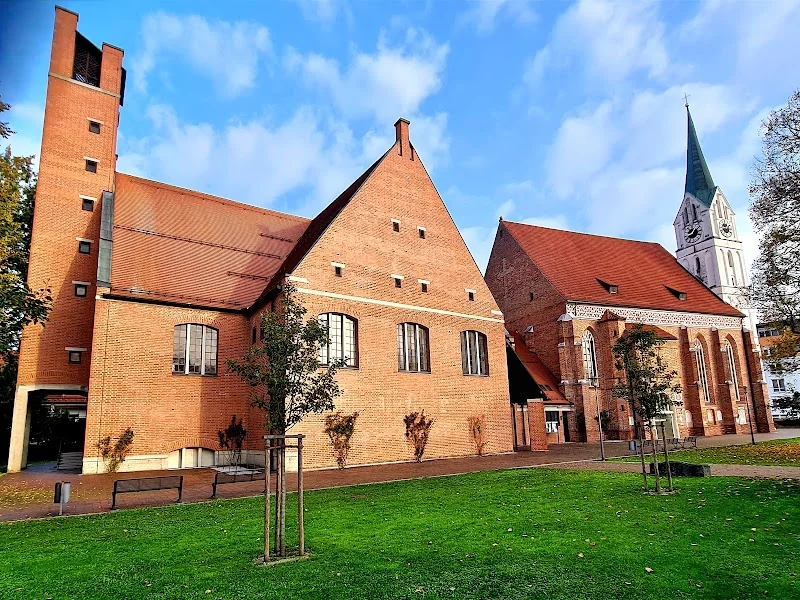
St. Nikola in Landshut is a place where city history, sacred architecture, and vibrant community life overlap in a special way. The parish connects two church spaces into an ensemble: Alt-St. Nikola as the historical parish church and Neu-St. Nikola as the current main church. This combination makes the location unique, as visitors experience not just a single church building, but a developed religious landscape with multiple time levels. Therefore, those searching for St. Nikola Landshut often mean much more than just an address: it refers to a church center in the Nikola district, shaped by services, rosary prayers, confession offerings, artworks, and its long history. The official parish describes St. Nikola as part of the Diocese of Regensburg, while the city of Landshut lists the complex as a Gothic hall church with important artworks. Thus, St. Nikola belongs to those places in Landshut that hold a strong appeal for both believers and culturally interested guests. ([st-nikola.de](https://st-nikola.de/Kirche/?utm_source=openai))
Particularly interesting is that several search intentions converge at St. Nikola: many look for service times, others for opening hours, directions, parish office, or the history of Alt-St. Nikola. Others are interested in the architectural development, the new building by Hans Döllgast, or the archaeological window in the old building. For this reason, St. Nikola as a search term is strongly shaped by practical and historical themes at the same time. The parish itself opens its churches daily, offers regular liturgical times, and provides specific information on confession, communion for the sick, baptism, confirmation, and other sacraments on its website. This shows: St. Nikola is not just a pure sight, but a real community location with everyday functions. At the same time, the ensemble is open to visitors and invites quiet reflection. Thus, when visiting the church, one enters not only a sacred space but a place where today's parish life and centuries-old history visibly belong together. ([st-nikola.de](https://st-nikola.de/Kirche/?utm_source=openai))
Double Church and Architecture of Alt-St. Nikola and Neu-St. Nikola
The most striking feature of St. Nikola is the juxtaposition of Alt-St. Nikola and Neu-St. Nikola. The parish explicitly states that this ensemble contains two churches: Alt-St. Nikola as the original Gothic parish church from the 15th century and the new parish church designed by Professor Hans Döllgast from Munich in 1967. This is crucial for the perception on-site, as both buildings serve different functions and tell different chapters of the same story. Alt-St. Nikola represents the long continuity of the place, the older building and piety tradition, as well as the archaeological depth of the site. In contrast, Neu-St. Nikola marks the expansion and renewal of parish life in the second half of the 20th century. It is precisely in the interplay that an architecture emerges that does not rely solely on monumentality but on legibility: the historical building remains visible, while the modern extension takes on the developed use. That the city of Landshut describes the complex as a Gothic hall church with Alt-St. Nikola and parish church Neu-St. Nikola also shows how closely church use and art-historical classification are connected. ([st-nikola.de](https://st-nikola.de/Kirche/?utm_source=openai))
Architecturally, this ensemble is more than the sum of its parts. Alt-St. Nikola preserves traces of various construction phases, while Neu-St. Nikola stands for the reorganization after war destruction, parish growth, and pastoral requirements. After the severe damage of World War II and the later structural problems of the old church, the historical space was renovated, reopened, and redesigned as a place of worship and culture. The outdoor facilities around both churches were completed in 2003, clearly defining the ensemble in the urban space. Particularly interesting is that the site does not appear museum-like isolated but remains embedded in the everyday life of the district. Those coming via Nikolastraße experience a church location with clear orientation, historical references, and an architecture that is designed not only for observation but for use. For seekers interested in seating arrangements or capacity, it is important: the official pages do not mention a published visitor number. Instead, St. Nikola emphasizes its use as a parish and prayer place, not as a classic event hall. This is precisely what defines the character of the place. ([st-nikola.de](https://st-nikola.de/Kirche/Chronik/))
History of the Parish of St. Nikola in Landshut
The chronicle of the parish shows how old the roots of St. Nikola actually are. The first secured data comes from the year 1157, when St. Nikola was mentioned as a filial church of Ergolding. Thus, the history of the settlement is older than the city of Landshut itself, which was founded only in 1204. The parish also refers to an even earlier settlement of the area and to the old Isar crossing, which is said to have played an important role as a traffic hub since late Roman times. The patron saint Nicholas, protector of travelers, fits remarkably well in this context to the location on a historical trade route. Later, the settlement was integrated into the urban structure during the city foundation and connected to the Cistercian convent Seligenthal, founded in 1232 by Ludmilla, the widow of Ludwig the Kehlheimer. This integration into the spiritual and political development of Landshut explains why St. Nikola is not just a local church but a historically significant building block of the city's history. ([st-nikola.de](https://st-nikola.de/Kirche/Chronik/))
The construction history itself is marked by several renovations. In Alt-St. Nikola, remains of a Romanesque predecessor building dating back to the 11th or 12th century were discovered during renovation work in the 1990s. In the 14th century, a Gothic reconstruction was added, and the church finally took on its current form through another renovation completed at the end of the 15th century. On the keystones in the choir vault, one can recognize Mary with the child, St. Nicholas, and the coats of arms of the city of Landshut, the Seligenthal monastery, and Duke Georg the Rich and his wife Hedwig of Poland. These details are not merely decorative but mark the close interplay of piety, rule, and urban representation. In the 20th century, war damage and foundation problems led to massive interventions: the cemetery around the church was closed in 1913, on March 19, 1945, bomb hits damaged the west facade, interior, and organ, and between 1993 and 2001, the church was closed for renovation work. After reopening on December 6, 2001, Alt-St. Nikola today presents itself as a restored space with a new usage profile and visible history. ([st-nikola.de](https://st-nikola.de/Kirche/Chronik/))
Service Times, Rosary, and Parish Life in St. Nikola
Those searching for St. Nikola Landshut often mean very specifically the service times. The parish publishes a clearly structured schedule that differentiates between summer and winter times. In summer, services take place on Mondays and Tuesdays at 7:00 PM, Wednesdays at 8:00 AM, Thursdays at 7:00 PM, Fridays at 8:00 AM, Saturdays at 7:00 PM, and Sundays at 9:00 AM and 10:30 AM, with the 10:30 AM service being canceled during the summer holidays. In winter, several times shift: Mondays and Thursdays to 6:30 PM, Tuesdays to 4:00 PM, Saturdays to 5:00 PM; Wednesdays and Fridays remain at 8:00 AM, Sundays continue to have 9:00 AM and 10:30 AM. This is supplemented by regular rosary prayers, which are prayed in winter on Mondays, Wednesdays, Thursdays, and Fridays at 5:55 PM, Tuesdays at 4:30 PM, and Saturdays at 4:25 PM; in summer, the rosary takes place regularly from Monday to Friday at 6:25 PM. There is no rosary prayer on Sundays. This specific rhythm is important for many visitors as it creates planning security and makes community life clearly visible. ([st-nikola.de](https://st-nikola.de/de/Praktisches/Gottesdienstzeiten/?utm_source=openai))
However, parish life in St. Nikola goes well beyond fixed mass times. The parish describes that Sunday and holiday services are celebrated in the parish church, while weekday masses take place in Alt-St. Nikola. Baptism celebrations, services at funerals, and May devotions also belong to the use of the parish church. In addition, there are offerings such as confession, communion for the sick, anointing of the sick, rosary for the deceased, and various group and association offerings. Particularly noteworthy is that the church is open not only as a liturgical place but explicitly also as a place for lingering and prayer. In both churches, candles can be lit with personal intentions; in Alt-St. Nikola, there is also holy water to take home at Christ in Rest. This mix of sacred practice, personal piety, and open church culture makes St. Nikola easily accessible for many people. Those seeking not just an appointment but a spiritual place find here a space suitable for everyday prayer as well as for special life moments from baptism to farewell. ([st-nikola.de](https://st-nikola.de/Kirche/?utm_source=openai))
Opening Hours, Contact, and Accessibility in the Nikola District
The practical data at St. Nikola are also clear and user-friendly. According to the parish, the churches are open daily from 8:00 AM until after the evening service or the rosary prayer. Access is via the main entrance of the parish church on the south side; Alt-St. Nikola is accessible through the parish church. This makes the visit well-planned not only for parish members but also for guests and interested parties. The parish office is located at Nikolastraße 41 in 84034 Landshut. The opening hours are Mondays, Tuesdays, Thursdays, and Fridays from 8:00 AM to 12:00 PM, additionally Fridays from 2:00 PM to 4:00 PM; the office is closed on Wednesdays. The parish can also be reached by phone and email. For seekers looking for church contact, confession times, or questions about sacraments, these official details provide the most important orientation. They also show that St. Nikola is not an anonymous sight but a clearly organized parish community with fixed contacts and understandable service times. ([st-nikola.de](https://st-nikola.de/Kirche/?utm_source=openai))
The location in the Nikola district makes the church additionally attractive. The city of Landshut describes Nikola as a district close to the old town with good infrastructure and good connections to the city center, train station, and other destinations. According to the renovation office, the district is located in the north of the historic city center between Flutmulde, Kleiner Isar, and Luitpoldstraße; the train station and center can be easily reached on foot, by bike, or by public transport. For visitors, this means: St. Nikola is not located right in the old town but is very well integrated into the urban everyday life. Especially those who want to combine church visits with a walk through the district will find suitable paths and an environment characterized by residential areas, greenways, and public facilities. There is no published capacity or hall plan model for the church, which is also logical since it is a parish and prayer place. The practical strength lies rather in the open accessibility, clear contact structure, and good reachability in the urban space. ([landshut.de](https://landshut.de/leben/planen-bauen-wohnen/bauaufsicht/sanierungsstelle))
Artworks, Archaeological Window, and Special Details
Among the major attractions of St. Nikola are the art-historically significant works that the city of Landshut explicitly lists. Mentioned are the crucifix by Christian Jorhan the Elder, the Christ in Rest by Hans Leinberger, and the Bethlehem nativity scene by Sebastian Osterrieder. These names are interesting not only for experts but also for anyone who wants to experience church spaces as places of imagery. Especially in Alt-St. Nikola, this creates an exciting impression of layers of religious art that have developed over centuries. Another important detail is the archaeological window: during the renovation, a roughly five square meter hole in the floor was left open, revealing remains of the old outer wall and the brick floor. Thus, history is not only told but directly shown in the space. Those visiting the church can literally read the transition from the Romanesque predecessor church to the Gothic and finally to the restored present on the ground. This connection of art, archaeology, and liturgical use makes St. Nikola in Landshut so characterful. ([landshut.de](https://landshut.de/node/1975))
Additionally, there are further details that enrich the visit. The parish points out that Alt-St. Nikola is also used as a cultural space after the renovation. This is an important note because it does not reduce the place to a single function. St. Nikola is on one hand a house of God, on the other hand, a space for cultural-historical perception and quiet observation. The memorial plaque on the south facade reminds of the war damage of 1945 and thus of the vulnerability of historical building substance, while the renovation completed in 2001 shows how carefully such places can be restored. The outdoor facilities, completed in 2003, also belong to the current appearance and create an appropriate frame for both churches. Those who pay attention to details will therefore find not only artworks inside but also a clearly readable culture of remembrance in the outdoor space. For seekers of a special church in Landshut, this is often the decisive point: St. Nikola is not smoothly modernized but preserves visible traces of its history and makes them immediately experienceable for visitors. ([st-nikola.de](https://st-nikola.de/Kirche/Chronik/))
St. Nikola in the Nikola District: Neighborhood, Paths, and Visiting Tips
St. Nikola is not just a church name but is also closely connected to the district of the same name. The city of Landshut describes Nikola as an area with many public facilities, including schools, Town Hall II, employment office, and churches, as well as greenways from Flutmulde and city park. This urban embedding is important for the visit because it explains why St. Nikola is so well integrated into the everyday life of the district. The Nikola district is close to the old town but not overcrowded; it combines residential use, mixed-use structures, and historical buildings. For this reason, the church location appears calm and yet central. Those coming from the city center or the train station can easily combine the way with a walk. The official city description emphasizes that the train station and center are easily accessible. For visitors, this means: St. Nikola is suitable not only for targeted visits but also as a stopping point on a tour through the northern part of the city. In combination with other Landshut churches, a very varied picture of the religious topography of the city emerges. ([landshut.de](https://landshut.de/leben/planen-bauen-wohnen/bauaufsicht/sanierungsstelle))
A good visiting tip is to plan enough time for both churches. Those who just stop by quickly will quickly notice the special double structure; those who stay a little longer can consciously compare the differences between the older old building and the newer parish church. It is also sensible to align the opening hours with the liturgical times if one seeks peace or wants to have a conversation in the parish office. Since the churches are open daily, a visit can usually be well integrated into the daily schedule. If you like historical details, it is worth looking at the archaeological window and the keystones in the choir vault. If you are looking for religious practice, the rosary, weekday mass, and confession times are the most important points of contact. And if you want to connect architecture and urban development, St. Nikola provides a rarely clear example of how a church location can be transformed, secured, and reinterpreted over many centuries without losing its identity. This is why St. Nikola Landshut remains interesting for Google searchers, locals, and guests alike. ([st-nikola.de](https://st-nikola.de/Kirche/?utm_source=openai))
Sources:
- St. Nikola Landshut - Church, st-nikola.de ([st-nikola.de](https://st-nikola.de/Kirche/?utm_source=openai))
- St. Nikola Landshut - Chronicle, st-nikola.de ([st-nikola.de](https://st-nikola.de/Kirche/Chronik/))
- St. Nikola Landshut - Contact, st-nikola.de ([st-nikola.de](https://st-nikola.de/Kontakt/))
- Service Times St. Nikola Landshut, st-nikola.de ([st-nikola.de](https://st-nikola.de/de/Praktisches/Gottesdienstzeiten/?utm_source=openai))
- Church - St. Nikola, City of Landshut, landshut.de ([landshut.de](https://landshut.de/node/1975))
- Renovation Office Nikola, City of Landshut, landshut.de ([landshut.de](https://landshut.de/leben/planen-bauen-wohnen/bauaufsicht/sanierungsstelle))
Mehr anzeigenWeniger anzeigen
St. Nikola Landshut | Alt-St. Nikola & Service Times
St. Nikola in Landshut is a place where city history, sacred architecture, and vibrant community life overlap in a special way. The parish connects two church spaces into an ensemble: Alt-St. Nikola as the historical parish church and Neu-St. Nikola as the current main church. This combination makes the location unique, as visitors experience not just a single church building, but a developed religious landscape with multiple time levels. Therefore, those searching for St. Nikola Landshut often mean much more than just an address: it refers to a church center in the Nikola district, shaped by services, rosary prayers, confession offerings, artworks, and its long history. The official parish describes St. Nikola as part of the Diocese of Regensburg, while the city of Landshut lists the complex as a Gothic hall church with important artworks. Thus, St. Nikola belongs to those places in Landshut that hold a strong appeal for both believers and culturally interested guests. ([st-nikola.de](https://st-nikola.de/Kirche/?utm_source=openai))
Particularly interesting is that several search intentions converge at St. Nikola: many look for service times, others for opening hours, directions, parish office, or the history of Alt-St. Nikola. Others are interested in the architectural development, the new building by Hans Döllgast, or the archaeological window in the old building. For this reason, St. Nikola as a search term is strongly shaped by practical and historical themes at the same time. The parish itself opens its churches daily, offers regular liturgical times, and provides specific information on confession, communion for the sick, baptism, confirmation, and other sacraments on its website. This shows: St. Nikola is not just a pure sight, but a real community location with everyday functions. At the same time, the ensemble is open to visitors and invites quiet reflection. Thus, when visiting the church, one enters not only a sacred space but a place where today's parish life and centuries-old history visibly belong together. ([st-nikola.de](https://st-nikola.de/Kirche/?utm_source=openai))
Double Church and Architecture of Alt-St. Nikola and Neu-St. Nikola
The most striking feature of St. Nikola is the juxtaposition of Alt-St. Nikola and Neu-St. Nikola. The parish explicitly states that this ensemble contains two churches: Alt-St. Nikola as the original Gothic parish church from the 15th century and the new parish church designed by Professor Hans Döllgast from Munich in 1967. This is crucial for the perception on-site, as both buildings serve different functions and tell different chapters of the same story. Alt-St. Nikola represents the long continuity of the place, the older building and piety tradition, as well as the archaeological depth of the site. In contrast, Neu-St. Nikola marks the expansion and renewal of parish life in the second half of the 20th century. It is precisely in the interplay that an architecture emerges that does not rely solely on monumentality but on legibility: the historical building remains visible, while the modern extension takes on the developed use. That the city of Landshut describes the complex as a Gothic hall church with Alt-St. Nikola and parish church Neu-St. Nikola also shows how closely church use and art-historical classification are connected. ([st-nikola.de](https://st-nikola.de/Kirche/?utm_source=openai))
Architecturally, this ensemble is more than the sum of its parts. Alt-St. Nikola preserves traces of various construction phases, while Neu-St. Nikola stands for the reorganization after war destruction, parish growth, and pastoral requirements. After the severe damage of World War II and the later structural problems of the old church, the historical space was renovated, reopened, and redesigned as a place of worship and culture. The outdoor facilities around both churches were completed in 2003, clearly defining the ensemble in the urban space. Particularly interesting is that the site does not appear museum-like isolated but remains embedded in the everyday life of the district. Those coming via Nikolastraße experience a church location with clear orientation, historical references, and an architecture that is designed not only for observation but for use. For seekers interested in seating arrangements or capacity, it is important: the official pages do not mention a published visitor number. Instead, St. Nikola emphasizes its use as a parish and prayer place, not as a classic event hall. This is precisely what defines the character of the place. ([st-nikola.de](https://st-nikola.de/Kirche/Chronik/))
History of the Parish of St. Nikola in Landshut
The chronicle of the parish shows how old the roots of St. Nikola actually are. The first secured data comes from the year 1157, when St. Nikola was mentioned as a filial church of Ergolding. Thus, the history of the settlement is older than the city of Landshut itself, which was founded only in 1204. The parish also refers to an even earlier settlement of the area and to the old Isar crossing, which is said to have played an important role as a traffic hub since late Roman times. The patron saint Nicholas, protector of travelers, fits remarkably well in this context to the location on a historical trade route. Later, the settlement was integrated into the urban structure during the city foundation and connected to the Cistercian convent Seligenthal, founded in 1232 by Ludmilla, the widow of Ludwig the Kehlheimer. This integration into the spiritual and political development of Landshut explains why St. Nikola is not just a local church but a historically significant building block of the city's history. ([st-nikola.de](https://st-nikola.de/Kirche/Chronik/))
The construction history itself is marked by several renovations. In Alt-St. Nikola, remains of a Romanesque predecessor building dating back to the 11th or 12th century were discovered during renovation work in the 1990s. In the 14th century, a Gothic reconstruction was added, and the church finally took on its current form through another renovation completed at the end of the 15th century. On the keystones in the choir vault, one can recognize Mary with the child, St. Nicholas, and the coats of arms of the city of Landshut, the Seligenthal monastery, and Duke Georg the Rich and his wife Hedwig of Poland. These details are not merely decorative but mark the close interplay of piety, rule, and urban representation. In the 20th century, war damage and foundation problems led to massive interventions: the cemetery around the church was closed in 1913, on March 19, 1945, bomb hits damaged the west facade, interior, and organ, and between 1993 and 2001, the church was closed for renovation work. After reopening on December 6, 2001, Alt-St. Nikola today presents itself as a restored space with a new usage profile and visible history. ([st-nikola.de](https://st-nikola.de/Kirche/Chronik/))
Service Times, Rosary, and Parish Life in St. Nikola
Those searching for St. Nikola Landshut often mean very specifically the service times. The parish publishes a clearly structured schedule that differentiates between summer and winter times. In summer, services take place on Mondays and Tuesdays at 7:00 PM, Wednesdays at 8:00 AM, Thursdays at 7:00 PM, Fridays at 8:00 AM, Saturdays at 7:00 PM, and Sundays at 9:00 AM and 10:30 AM, with the 10:30 AM service being canceled during the summer holidays. In winter, several times shift: Mondays and Thursdays to 6:30 PM, Tuesdays to 4:00 PM, Saturdays to 5:00 PM; Wednesdays and Fridays remain at 8:00 AM, Sundays continue to have 9:00 AM and 10:30 AM. This is supplemented by regular rosary prayers, which are prayed in winter on Mondays, Wednesdays, Thursdays, and Fridays at 5:55 PM, Tuesdays at 4:30 PM, and Saturdays at 4:25 PM; in summer, the rosary takes place regularly from Monday to Friday at 6:25 PM. There is no rosary prayer on Sundays. This specific rhythm is important for many visitors as it creates planning security and makes community life clearly visible. ([st-nikola.de](https://st-nikola.de/de/Praktisches/Gottesdienstzeiten/?utm_source=openai))
However, parish life in St. Nikola goes well beyond fixed mass times. The parish describes that Sunday and holiday services are celebrated in the parish church, while weekday masses take place in Alt-St. Nikola. Baptism celebrations, services at funerals, and May devotions also belong to the use of the parish church. In addition, there are offerings such as confession, communion for the sick, anointing of the sick, rosary for the deceased, and various group and association offerings. Particularly noteworthy is that the church is open not only as a liturgical place but explicitly also as a place for lingering and prayer. In both churches, candles can be lit with personal intentions; in Alt-St. Nikola, there is also holy water to take home at Christ in Rest. This mix of sacred practice, personal piety, and open church culture makes St. Nikola easily accessible for many people. Those seeking not just an appointment but a spiritual place find here a space suitable for everyday prayer as well as for special life moments from baptism to farewell. ([st-nikola.de](https://st-nikola.de/Kirche/?utm_source=openai))
Opening Hours, Contact, and Accessibility in the Nikola District
The practical data at St. Nikola are also clear and user-friendly. According to the parish, the churches are open daily from 8:00 AM until after the evening service or the rosary prayer. Access is via the main entrance of the parish church on the south side; Alt-St. Nikola is accessible through the parish church. This makes the visit well-planned not only for parish members but also for guests and interested parties. The parish office is located at Nikolastraße 41 in 84034 Landshut. The opening hours are Mondays, Tuesdays, Thursdays, and Fridays from 8:00 AM to 12:00 PM, additionally Fridays from 2:00 PM to 4:00 PM; the office is closed on Wednesdays. The parish can also be reached by phone and email. For seekers looking for church contact, confession times, or questions about sacraments, these official details provide the most important orientation. They also show that St. Nikola is not an anonymous sight but a clearly organized parish community with fixed contacts and understandable service times. ([st-nikola.de](https://st-nikola.de/Kirche/?utm_source=openai))
The location in the Nikola district makes the church additionally attractive. The city of Landshut describes Nikola as a district close to the old town with good infrastructure and good connections to the city center, train station, and other destinations. According to the renovation office, the district is located in the north of the historic city center between Flutmulde, Kleiner Isar, and Luitpoldstraße; the train station and center can be easily reached on foot, by bike, or by public transport. For visitors, this means: St. Nikola is not located right in the old town but is very well integrated into the urban everyday life. Especially those who want to combine church visits with a walk through the district will find suitable paths and an environment characterized by residential areas, greenways, and public facilities. There is no published capacity or hall plan model for the church, which is also logical since it is a parish and prayer place. The practical strength lies rather in the open accessibility, clear contact structure, and good reachability in the urban space. ([landshut.de](https://landshut.de/leben/planen-bauen-wohnen/bauaufsicht/sanierungsstelle))
Artworks, Archaeological Window, and Special Details
Among the major attractions of St. Nikola are the art-historically significant works that the city of Landshut explicitly lists. Mentioned are the crucifix by Christian Jorhan the Elder, the Christ in Rest by Hans Leinberger, and the Bethlehem nativity scene by Sebastian Osterrieder. These names are interesting not only for experts but also for anyone who wants to experience church spaces as places of imagery. Especially in Alt-St. Nikola, this creates an exciting impression of layers of religious art that have developed over centuries. Another important detail is the archaeological window: during the renovation, a roughly five square meter hole in the floor was left open, revealing remains of the old outer wall and the brick floor. Thus, history is not only told but directly shown in the space. Those visiting the church can literally read the transition from the Romanesque predecessor church to the Gothic and finally to the restored present on the ground. This connection of art, archaeology, and liturgical use makes St. Nikola in Landshut so characterful. ([landshut.de](https://landshut.de/node/1975))
Additionally, there are further details that enrich the visit. The parish points out that Alt-St. Nikola is also used as a cultural space after the renovation. This is an important note because it does not reduce the place to a single function. St. Nikola is on one hand a house of God, on the other hand, a space for cultural-historical perception and quiet observation. The memorial plaque on the south facade reminds of the war damage of 1945 and thus of the vulnerability of historical building substance, while the renovation completed in 2001 shows how carefully such places can be restored. The outdoor facilities, completed in 2003, also belong to the current appearance and create an appropriate frame for both churches. Those who pay attention to details will therefore find not only artworks inside but also a clearly readable culture of remembrance in the outdoor space. For seekers of a special church in Landshut, this is often the decisive point: St. Nikola is not smoothly modernized but preserves visible traces of its history and makes them immediately experienceable for visitors. ([st-nikola.de](https://st-nikola.de/Kirche/Chronik/))
St. Nikola in the Nikola District: Neighborhood, Paths, and Visiting Tips
St. Nikola is not just a church name but is also closely connected to the district of the same name. The city of Landshut describes Nikola as an area with many public facilities, including schools, Town Hall II, employment office, and churches, as well as greenways from Flutmulde and city park. This urban embedding is important for the visit because it explains why St. Nikola is so well integrated into the everyday life of the district. The Nikola district is close to the old town but not overcrowded; it combines residential use, mixed-use structures, and historical buildings. For this reason, the church location appears calm and yet central. Those coming from the city center or the train station can easily combine the way with a walk. The official city description emphasizes that the train station and center are easily accessible. For visitors, this means: St. Nikola is suitable not only for targeted visits but also as a stopping point on a tour through the northern part of the city. In combination with other Landshut churches, a very varied picture of the religious topography of the city emerges. ([landshut.de](https://landshut.de/leben/planen-bauen-wohnen/bauaufsicht/sanierungsstelle))
A good visiting tip is to plan enough time for both churches. Those who just stop by quickly will quickly notice the special double structure; those who stay a little longer can consciously compare the differences between the older old building and the newer parish church. It is also sensible to align the opening hours with the liturgical times if one seeks peace or wants to have a conversation in the parish office. Since the churches are open daily, a visit can usually be well integrated into the daily schedule. If you like historical details, it is worth looking at the archaeological window and the keystones in the choir vault. If you are looking for religious practice, the rosary, weekday mass, and confession times are the most important points of contact. And if you want to connect architecture and urban development, St. Nikola provides a rarely clear example of how a church location can be transformed, secured, and reinterpreted over many centuries without losing its identity. This is why St. Nikola Landshut remains interesting for Google searchers, locals, and guests alike. ([st-nikola.de](https://st-nikola.de/Kirche/?utm_source=openai))
Sources:
- St. Nikola Landshut - Church, st-nikola.de ([st-nikola.de](https://st-nikola.de/Kirche/?utm_source=openai))
- St. Nikola Landshut - Chronicle, st-nikola.de ([st-nikola.de](https://st-nikola.de/Kirche/Chronik/))
- St. Nikola Landshut - Contact, st-nikola.de ([st-nikola.de](https://st-nikola.de/Kontakt/))
- Service Times St. Nikola Landshut, st-nikola.de ([st-nikola.de](https://st-nikola.de/de/Praktisches/Gottesdienstzeiten/?utm_source=openai))
- Church - St. Nikola, City of Landshut, landshut.de ([landshut.de](https://landshut.de/node/1975))
- Renovation Office Nikola, City of Landshut, landshut.de ([landshut.de](https://landshut.de/leben/planen-bauen-wohnen/bauaufsicht/sanierungsstelle))
St. Nikola Landshut | Alt-St. Nikola & Service Times
St. Nikola in Landshut is a place where city history, sacred architecture, and vibrant community life overlap in a special way. The parish connects two church spaces into an ensemble: Alt-St. Nikola as the historical parish church and Neu-St. Nikola as the current main church. This combination makes the location unique, as visitors experience not just a single church building, but a developed religious landscape with multiple time levels. Therefore, those searching for St. Nikola Landshut often mean much more than just an address: it refers to a church center in the Nikola district, shaped by services, rosary prayers, confession offerings, artworks, and its long history. The official parish describes St. Nikola as part of the Diocese of Regensburg, while the city of Landshut lists the complex as a Gothic hall church with important artworks. Thus, St. Nikola belongs to those places in Landshut that hold a strong appeal for both believers and culturally interested guests. ([st-nikola.de](https://st-nikola.de/Kirche/?utm_source=openai))
Particularly interesting is that several search intentions converge at St. Nikola: many look for service times, others for opening hours, directions, parish office, or the history of Alt-St. Nikola. Others are interested in the architectural development, the new building by Hans Döllgast, or the archaeological window in the old building. For this reason, St. Nikola as a search term is strongly shaped by practical and historical themes at the same time. The parish itself opens its churches daily, offers regular liturgical times, and provides specific information on confession, communion for the sick, baptism, confirmation, and other sacraments on its website. This shows: St. Nikola is not just a pure sight, but a real community location with everyday functions. At the same time, the ensemble is open to visitors and invites quiet reflection. Thus, when visiting the church, one enters not only a sacred space but a place where today's parish life and centuries-old history visibly belong together. ([st-nikola.de](https://st-nikola.de/Kirche/?utm_source=openai))
Double Church and Architecture of Alt-St. Nikola and Neu-St. Nikola
The most striking feature of St. Nikola is the juxtaposition of Alt-St. Nikola and Neu-St. Nikola. The parish explicitly states that this ensemble contains two churches: Alt-St. Nikola as the original Gothic parish church from the 15th century and the new parish church designed by Professor Hans Döllgast from Munich in 1967. This is crucial for the perception on-site, as both buildings serve different functions and tell different chapters of the same story. Alt-St. Nikola represents the long continuity of the place, the older building and piety tradition, as well as the archaeological depth of the site. In contrast, Neu-St. Nikola marks the expansion and renewal of parish life in the second half of the 20th century. It is precisely in the interplay that an architecture emerges that does not rely solely on monumentality but on legibility: the historical building remains visible, while the modern extension takes on the developed use. That the city of Landshut describes the complex as a Gothic hall church with Alt-St. Nikola and parish church Neu-St. Nikola also shows how closely church use and art-historical classification are connected. ([st-nikola.de](https://st-nikola.de/Kirche/?utm_source=openai))
Architecturally, this ensemble is more than the sum of its parts. Alt-St. Nikola preserves traces of various construction phases, while Neu-St. Nikola stands for the reorganization after war destruction, parish growth, and pastoral requirements. After the severe damage of World War II and the later structural problems of the old church, the historical space was renovated, reopened, and redesigned as a place of worship and culture. The outdoor facilities around both churches were completed in 2003, clearly defining the ensemble in the urban space. Particularly interesting is that the site does not appear museum-like isolated but remains embedded in the everyday life of the district. Those coming via Nikolastraße experience a church location with clear orientation, historical references, and an architecture that is designed not only for observation but for use. For seekers interested in seating arrangements or capacity, it is important: the official pages do not mention a published visitor number. Instead, St. Nikola emphasizes its use as a parish and prayer place, not as a classic event hall. This is precisely what defines the character of the place. ([st-nikola.de](https://st-nikola.de/Kirche/Chronik/))
History of the Parish of St. Nikola in Landshut
The chronicle of the parish shows how old the roots of St. Nikola actually are. The first secured data comes from the year 1157, when St. Nikola was mentioned as a filial church of Ergolding. Thus, the history of the settlement is older than the city of Landshut itself, which was founded only in 1204. The parish also refers to an even earlier settlement of the area and to the old Isar crossing, which is said to have played an important role as a traffic hub since late Roman times. The patron saint Nicholas, protector of travelers, fits remarkably well in this context to the location on a historical trade route. Later, the settlement was integrated into the urban structure during the city foundation and connected to the Cistercian convent Seligenthal, founded in 1232 by Ludmilla, the widow of Ludwig the Kehlheimer. This integration into the spiritual and political development of Landshut explains why St. Nikola is not just a local church but a historically significant building block of the city's history. ([st-nikola.de](https://st-nikola.de/Kirche/Chronik/))
The construction history itself is marked by several renovations. In Alt-St. Nikola, remains of a Romanesque predecessor building dating back to the 11th or 12th century were discovered during renovation work in the 1990s. In the 14th century, a Gothic reconstruction was added, and the church finally took on its current form through another renovation completed at the end of the 15th century. On the keystones in the choir vault, one can recognize Mary with the child, St. Nicholas, and the coats of arms of the city of Landshut, the Seligenthal monastery, and Duke Georg the Rich and his wife Hedwig of Poland. These details are not merely decorative but mark the close interplay of piety, rule, and urban representation. In the 20th century, war damage and foundation problems led to massive interventions: the cemetery around the church was closed in 1913, on March 19, 1945, bomb hits damaged the west facade, interior, and organ, and between 1993 and 2001, the church was closed for renovation work. After reopening on December 6, 2001, Alt-St. Nikola today presents itself as a restored space with a new usage profile and visible history. ([st-nikola.de](https://st-nikola.de/Kirche/Chronik/))
Service Times, Rosary, and Parish Life in St. Nikola
Those searching for St. Nikola Landshut often mean very specifically the service times. The parish publishes a clearly structured schedule that differentiates between summer and winter times. In summer, services take place on Mondays and Tuesdays at 7:00 PM, Wednesdays at 8:00 AM, Thursdays at 7:00 PM, Fridays at 8:00 AM, Saturdays at 7:00 PM, and Sundays at 9:00 AM and 10:30 AM, with the 10:30 AM service being canceled during the summer holidays. In winter, several times shift: Mondays and Thursdays to 6:30 PM, Tuesdays to 4:00 PM, Saturdays to 5:00 PM; Wednesdays and Fridays remain at 8:00 AM, Sundays continue to have 9:00 AM and 10:30 AM. This is supplemented by regular rosary prayers, which are prayed in winter on Mondays, Wednesdays, Thursdays, and Fridays at 5:55 PM, Tuesdays at 4:30 PM, and Saturdays at 4:25 PM; in summer, the rosary takes place regularly from Monday to Friday at 6:25 PM. There is no rosary prayer on Sundays. This specific rhythm is important for many visitors as it creates planning security and makes community life clearly visible. ([st-nikola.de](https://st-nikola.de/de/Praktisches/Gottesdienstzeiten/?utm_source=openai))
However, parish life in St. Nikola goes well beyond fixed mass times. The parish describes that Sunday and holiday services are celebrated in the parish church, while weekday masses take place in Alt-St. Nikola. Baptism celebrations, services at funerals, and May devotions also belong to the use of the parish church. In addition, there are offerings such as confession, communion for the sick, anointing of the sick, rosary for the deceased, and various group and association offerings. Particularly noteworthy is that the church is open not only as a liturgical place but explicitly also as a place for lingering and prayer. In both churches, candles can be lit with personal intentions; in Alt-St. Nikola, there is also holy water to take home at Christ in Rest. This mix of sacred practice, personal piety, and open church culture makes St. Nikola easily accessible for many people. Those seeking not just an appointment but a spiritual place find here a space suitable for everyday prayer as well as for special life moments from baptism to farewell. ([st-nikola.de](https://st-nikola.de/Kirche/?utm_source=openai))
Opening Hours, Contact, and Accessibility in the Nikola District
The practical data at St. Nikola are also clear and user-friendly. According to the parish, the churches are open daily from 8:00 AM until after the evening service or the rosary prayer. Access is via the main entrance of the parish church on the south side; Alt-St. Nikola is accessible through the parish church. This makes the visit well-planned not only for parish members but also for guests and interested parties. The parish office is located at Nikolastraße 41 in 84034 Landshut. The opening hours are Mondays, Tuesdays, Thursdays, and Fridays from 8:00 AM to 12:00 PM, additionally Fridays from 2:00 PM to 4:00 PM; the office is closed on Wednesdays. The parish can also be reached by phone and email. For seekers looking for church contact, confession times, or questions about sacraments, these official details provide the most important orientation. They also show that St. Nikola is not an anonymous sight but a clearly organized parish community with fixed contacts and understandable service times. ([st-nikola.de](https://st-nikola.de/Kirche/?utm_source=openai))
The location in the Nikola district makes the church additionally attractive. The city of Landshut describes Nikola as a district close to the old town with good infrastructure and good connections to the city center, train station, and other destinations. According to the renovation office, the district is located in the north of the historic city center between Flutmulde, Kleiner Isar, and Luitpoldstraße; the train station and center can be easily reached on foot, by bike, or by public transport. For visitors, this means: St. Nikola is not located right in the old town but is very well integrated into the urban everyday life. Especially those who want to combine church visits with a walk through the district will find suitable paths and an environment characterized by residential areas, greenways, and public facilities. There is no published capacity or hall plan model for the church, which is also logical since it is a parish and prayer place. The practical strength lies rather in the open accessibility, clear contact structure, and good reachability in the urban space. ([landshut.de](https://landshut.de/leben/planen-bauen-wohnen/bauaufsicht/sanierungsstelle))
Artworks, Archaeological Window, and Special Details
Among the major attractions of St. Nikola are the art-historically significant works that the city of Landshut explicitly lists. Mentioned are the crucifix by Christian Jorhan the Elder, the Christ in Rest by Hans Leinberger, and the Bethlehem nativity scene by Sebastian Osterrieder. These names are interesting not only for experts but also for anyone who wants to experience church spaces as places of imagery. Especially in Alt-St. Nikola, this creates an exciting impression of layers of religious art that have developed over centuries. Another important detail is the archaeological window: during the renovation, a roughly five square meter hole in the floor was left open, revealing remains of the old outer wall and the brick floor. Thus, history is not only told but directly shown in the space. Those visiting the church can literally read the transition from the Romanesque predecessor church to the Gothic and finally to the restored present on the ground. This connection of art, archaeology, and liturgical use makes St. Nikola in Landshut so characterful. ([landshut.de](https://landshut.de/node/1975))
Additionally, there are further details that enrich the visit. The parish points out that Alt-St. Nikola is also used as a cultural space after the renovation. This is an important note because it does not reduce the place to a single function. St. Nikola is on one hand a house of God, on the other hand, a space for cultural-historical perception and quiet observation. The memorial plaque on the south facade reminds of the war damage of 1945 and thus of the vulnerability of historical building substance, while the renovation completed in 2001 shows how carefully such places can be restored. The outdoor facilities, completed in 2003, also belong to the current appearance and create an appropriate frame for both churches. Those who pay attention to details will therefore find not only artworks inside but also a clearly readable culture of remembrance in the outdoor space. For seekers of a special church in Landshut, this is often the decisive point: St. Nikola is not smoothly modernized but preserves visible traces of its history and makes them immediately experienceable for visitors. ([st-nikola.de](https://st-nikola.de/Kirche/Chronik/))
St. Nikola in the Nikola District: Neighborhood, Paths, and Visiting Tips
St. Nikola is not just a church name but is also closely connected to the district of the same name. The city of Landshut describes Nikola as an area with many public facilities, including schools, Town Hall II, employment office, and churches, as well as greenways from Flutmulde and city park. This urban embedding is important for the visit because it explains why St. Nikola is so well integrated into the everyday life of the district. The Nikola district is close to the old town but not overcrowded; it combines residential use, mixed-use structures, and historical buildings. For this reason, the church location appears calm and yet central. Those coming from the city center or the train station can easily combine the way with a walk. The official city description emphasizes that the train station and center are easily accessible. For visitors, this means: St. Nikola is suitable not only for targeted visits but also as a stopping point on a tour through the northern part of the city. In combination with other Landshut churches, a very varied picture of the religious topography of the city emerges. ([landshut.de](https://landshut.de/leben/planen-bauen-wohnen/bauaufsicht/sanierungsstelle))
A good visiting tip is to plan enough time for both churches. Those who just stop by quickly will quickly notice the special double structure; those who stay a little longer can consciously compare the differences between the older old building and the newer parish church. It is also sensible to align the opening hours with the liturgical times if one seeks peace or wants to have a conversation in the parish office. Since the churches are open daily, a visit can usually be well integrated into the daily schedule. If you like historical details, it is worth looking at the archaeological window and the keystones in the choir vault. If you are looking for religious practice, the rosary, weekday mass, and confession times are the most important points of contact. And if you want to connect architecture and urban development, St. Nikola provides a rarely clear example of how a church location can be transformed, secured, and reinterpreted over many centuries without losing its identity. This is why St. Nikola Landshut remains interesting for Google searchers, locals, and guests alike. ([st-nikola.de](https://st-nikola.de/Kirche/?utm_source=openai))
Sources:
- St. Nikola Landshut - Church, st-nikola.de ([st-nikola.de](https://st-nikola.de/Kirche/?utm_source=openai))
- St. Nikola Landshut - Chronicle, st-nikola.de ([st-nikola.de](https://st-nikola.de/Kirche/Chronik/))
- St. Nikola Landshut - Contact, st-nikola.de ([st-nikola.de](https://st-nikola.de/Kontakt/))
- Service Times St. Nikola Landshut, st-nikola.de ([st-nikola.de](https://st-nikola.de/de/Praktisches/Gottesdienstzeiten/?utm_source=openai))
- Church - St. Nikola, City of Landshut, landshut.de ([landshut.de](https://landshut.de/node/1975))
- Renovation Office Nikola, City of Landshut, landshut.de ([landshut.de](https://landshut.de/leben/planen-bauen-wohnen/bauaufsicht/sanierungsstelle))
Frequently Asked Questions
Reviews
Philipp Neubauer
11. July 2019
Nice garden
Mary Lu
29. December 2022
Sehr schöne Kirche bestehend aus altem und modernen Teil. Der Pfarrer ist sehr sympathisch und hält einen tollen Gottesdienst ab. Das Highlight am 24.12 ist immer das Lied "stille Nacht" zum Schluss.
Rico Henning
10. February 2025
Unfortunately, today only the Catholic church is open and the parish church is locked... The modern one is open, the ancient one is not accessible... A graceful house of worship...
Adel Armanous
13. June 2021
A day trip to Landshut. It's a beautiful church, very many visitors, simply stunning.
Stephan Geiner
27. May 2023
Church in the oldest part of Landshut's settlement history. New and old in one building, community center. Especially in times of war, it becomes clear that peace resides more in our churches than in our 'war-participating' state forms. I am glad that there are still Christian churches, as monasteries and with them the monastic Christianity are fading more and more. Hopefully, the Christian influence will remain in our city for a long time.