
Landshut
Theaterstraße, 84028 Landshut, Deutschland
Ländtor Landshut | Photos & Address
The Ländtor in Landshut is much more than a pretty city gate on the edge of the old town. It is a visible piece of city history, a distinctive landmark, and for many visitors, the first impression of Landshut's historic center. Those looking for photos, images, or an exact address quickly end up at this structure, as its location at Ländtorplatz and its proximity to Theaterstraße immediately remind one of the transition between the present and the Middle Ages. The official city website describes the Ländtor as a medieval gate that got its name from the landing place of the rafters on the Isar; the tourism site adds that it is now preserved only as the outer gate of the former Zwinger. This combination of city entrance, architecture, and history makes the site so interesting for visitors. The Ländtor is a good starting point for a city stroll, for photos, and for anyone who wants to not just see Landshut but understand it. ([landshut.de](https://landshut.de/node/2969))
Photos and Images of Ländtor Landshut
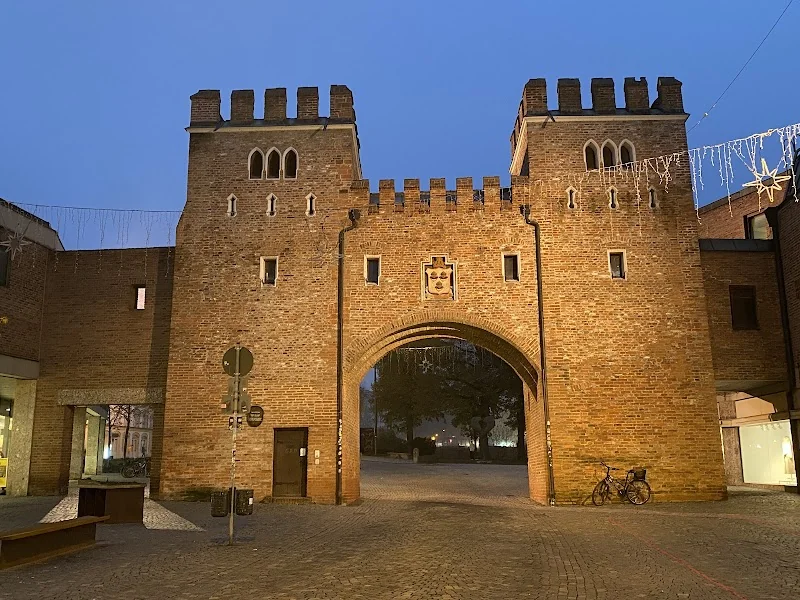
Those searching for ländtor landshut photos or images of ländtor landshut are usually looking for two things: a clear exterior view and a place with strong recognition value. The Ländtor offers both very clearly. The Landshut Experience site shows the gate from both the Isar side and the city side, emphasizing that the structure works from multiple angles. With its Gothic brick towers, the archway as a passage, and the city coat of arms sitting above it, it appears compact, tall, and very historic in photos. This vertical form makes it striking in images, as the archway directs the gaze into the old town, and the two towers frame it. It is visually strong without being overloaded, which is why the Ländtor is suitable for quick mobile photos as well as for consciously composed shots. ([erleben.landshut.de](https://erleben.landshut.de/blog/laendtor-das-tor-zur-stadt/))
What is particularly exciting is that the Ländtor is not only photographed as an object but also as a transitional scene. On one side stands the open city with traffic, pedestrians, and today's uses of the square; on the other side begins the historic core with its alleys, facades, and sightlines. Therefore, those who want to take good pictures should not only photograph from the front but also play with perspectives: once slightly sideways, once from a bit further away, and once in motion while looking through the archway towards the old town. The official tourism site also mentions many shopping opportunities and dining options around the Ländtor, explaining why there is always life there and why images frequently mix people, paths, and city atmosphere. This creates shots that do not appear as empty architecture but as a real piece of the city. For those searching with the keyword döner, it is important to note: The search interest indicates more about the surroundings than the monument itself, as there is a lively environment with gastronomy and shopping options around the Ländtor, according to the tourism site. ([erleben.landshut.de](https://erleben.landshut.de/blog/laendtor-das-tor-zur-stadt/))
Address, Location, and Orientation at Ländtorplatz
The official city website lists the Ländtor at the address Ländtorplatz in 84028 Landshut and names the coordinates 48.53531, 12.1492. This is useful for practical orientation, as it precisely locates the site in the city center. The name Theaterstraße is also closely associated with the structure, as the former inner gate stood a few meters further into the city and was demolished in the 19th century because Theaterstraße became too narrow. So today, when one arrives at the Ländtor, one is not standing at a detached monument but at an urban transition that has developed from historical traffic and square conditions. This makes the address particularly interesting for visitors: Ländtorplatz, Theaterstraße, and the historic old town form a cohesive orientation zone here. ([landshut.de](https://landshut.de/node/2969))
The location is also important for the search intent behind ländtorplatz 2 5 landshut. Even if a specific house number is being sought, the inquiry usually targets the immediate surroundings of the city gate, meaning the square, the adjacent buildings, and the transition to the old town. The Ländtor stands on the right bank of the Isar and serves as access to the historic city center. The tourism site explicitly describes it as an archway between two Gothic brick towers that leads into Landshut's historic core. Thus, it is not only a place to look at but also a functional entry point into the city center. Those who want to orient themselves on-site quickly realize: The Ländtor is part of a network of paths, not just a square. The proximity to gastronomy, shops, and city tours ensures that visitors hardly stand alone for long but are directly led onward. This is a plus for anyone searching for an address, location, or a simple meeting point in Landshut. ([erleben.landshut.de](https://erleben.landshut.de/blog/laendtor-das-tor-zur-stadt/))
History of the Ländtor and the Medieval City Wall
The history of the Ländtor begins in medieval Landshut when the city was shaped by trade, rafting, and its location on the Isar. The name refers to the so-called Lände, meaning the landing place of the rafters. There, wood from the Alpine region was transported downstream, unloaded, and brought into the city. The tourism site describes Landshut during this time as a prosperous trading city with active turnover, while the city site directly connects the origin of the name with the landing place on the Isar. Thus, the Ländtor was not just any decorative building but part of an economic infrastructure: it marked the threshold between river, trade, and city. For a historical city gate, this is particularly significant because here, traffic history, economic history, and urban form directly intersect. ([erleben.landshut.de](https://erleben.landshut.de/blog/laendtor-das-tor-zur-stadt/))
Equally important is the role of the Ländtor in the system of the Landshut city wall. According to the official city site, only the Ländtor and the Burghauser Tor remain from the former eight city gates. The tourism site adds that, unlike other gates, the Ländtor had a Zwinger, meaning a large courtyard space in front of the inner gate. This inner gate was demolished in the 19th century; the outer gate we see today was preserved. This architectural layering explains why the Ländtor appears different from many pure archways: it is not an isolated remnant but the last visible element of a more complex defense and access system. For visitors, this is an important context because the current form can only be fully understood when considering the earlier double-gate situation. ([landshut.de](https://landshut.de/node/2969))
Architecturally, the Ländtor is also remarkable. The tourism site describes it as built of bricks and emphasizes the massive reddish-brown towers as well as the strategically advantageous location by the river. These features fit well with Landshut's urban profile as a historical trading and residential site. The city was founded in 1204 and early on developed into an important center, as the tourism site explains in connection with the Ländtor. The gate thus stands not only for fortification but also for the representation of a city that wanted to make its economic strength visible. Therefore, when standing before the Ländtor, one does not simply see an old building but a condensed narrative about trade, walls, urban development, and identity. This mixture makes the site still so appealing today for city walks, history enthusiasts, and anyone wanting to learn about Landshut through its buildings. ([erleben.landshut.de](https://erleben.landshut.de/blog/laendtor-das-tor-zur-stadt/))
Access, Parking, and Public Mobility
For getting to the Ländtor, the official tourism site clearly recommends the city bus or bicycle. This is practical for visitors because the Ländtor is located right in the city center and is thus well integrated into the network of short distances. Those arriving by bike can park it directly at the bike racks by the Ländtor. Those using public transport benefit from being able to reach the city center immediately without searching for parking. The advantage of this location is also important for search queries like anfahrt ländtor landshut: The Ländtor is not on the outskirts but in the center of footpaths, excursion routes, and city tours. This is ideal for short stays; for longer visits, it is worth knowing the city logic and planning the route in advance. ([erleben.landshut.de](https://erleben.landshut.de/blog/laendtor-das-tor-zur-stadt/))
By car, the tourism site mentions municipal parking spaces from Bernlochner to Grieserwiese as well as one of the two parking garages on Wittstraße as sensible options. Additionally, the city refers to its parking guidance system and the ability to check for available spaces online. During the Advent season, additional options in the city center are even mentioned: the city describes free parking opportunities on certain weekends and a free Bockerlbahn every 15 minutes between the old town, Ländtorplatz, and the Christmas market. This shows that Ländtorplatz is particularly well integrated into the urban mobility planning during events. This is also part of realistic visitor information, as good connectivity often determines whether a short visit is relaxed or stressful, especially during popular events. Therefore, those searching for parking at the ländtor should not plan directly in front of the gate itself but consider the surrounding city center parking spaces. ([erleben.landshut.de](https://erleben.landshut.de/blog/laendtor-das-tor-zur-stadt/))
For everyday life around the Ländtor, it is also important that the square is heavily used during larger events and the city then relies on additional infrastructure. The public notices regarding parking space, shuttle traffic, and city center paths show that the area around Ländtorplatz is a heavily visited urban space that functions not only as a monument but also as a functional hub. Therefore, anyone preparing for a city stroll can very well choose the Ländtor as a starting point: first park or arrive, then walk through the gate towards the old town and continue on foot. This is often the most pleasant way, as one not only looks at the historic city gate but experiences it as a real threshold into the city center. Thus, the journey itself becomes part of the visit experience. ([landshut.de](https://landshut.de/news/landshut-erleben/parkmoeglichkeiten-im-advent))
Events and Life at Ländtorplatz
Ländtorplatz is not only a historic space but also a lively event venue. The city reports on the Festival of Cultures at Ländtorplatz, where international food, a stage program, and offerings for children and young people shape the square. This is important for the perception of the place because the Ländtor does not remain in a museum-like standstill but exists in a current urban context. Visitors searching for ländtorplatz 2 5 landshut or for events nearby will find a place where history and the present visibly come together. The square is thus not just a passage but also a stage. This is a decisive reason why it keeps appearing in urban programs and why it remains important for Landshut as a public meeting point. ([landshut.de](https://landshut.de/news/kultur/fest-der-kulturen-am-laendtorplatz))
Another example is the French Market, which the city also organizes at Ländtorplatz. There, the square transforms into a French gourmet market with products from various regions of France. For the surroundings, this means: depending on the occasion, Ländtorplatz can take on very different moods, from cultural festivals to culinary markets. Those seeking new impressions will thus experience not only architecture here but also programs and atmosphere. This is relevant for search queries related to events at the Ländtor, as it shows that the square is regularly used as an event venue. At the same time, it always remains closely connected to the historic gate, so that each event receives a special spatial context. ([landshut.de](https://landshut.de/veranstaltungen/franzoesischer-markt))
Around the square, there are also, as the tourism site states, numerous shopping opportunities and dining options. This also explains search patterns that indicate food, snacks, or local supply: the place is not an enclosed monument space but a lively piece of the city center. For visitors, this is practical because a photo stop, a café visit, and a small city stroll can be easily combined. The Ländtor thus becomes a place where one does not just pass by briefly but where one can linger before continuing into the old town, to the Isar, or to the surrounding sights. This variety of uses makes the square so valuable in the public space and ensures that it keeps appearing on posters, in tourism, and in the event calendar. ([erleben.landshut.de](https://erleben.landshut.de/blog/laendtor-das-tor-zur-stadt/))
City Tour, Sightlines, and Practical Visitor Tips
The Ländtor is an ideal starting point for a city tour because it leads directly into the historic core. The tourism site describes it as an archway that guides into Landshut's old town and mentions the surroundings with promenades, eateries, and other sights. Those who walk further from the Ländtor can very naturally explore the historic city center without long detours or complicated route planning. Particularly practical is also the blind city model at the foot of the Ländtor: the tourism site describes it as a bronze miniature view of the city center that makes historic rows of houses tangible and provides important information in Braille. This gives the place an additional layer that goes beyond mere photography. The Ländtor is thus not only pretty but also a place of orientation, mediation, and access to the city's history. ([erleben.landshut.de](https://erleben.landshut.de/blog/laendtor-das-tor-zur-stadt/))
For the visit, it is worthwhile to connect the Ländtor with other landmarks of the city. The tourism site refers to the view of St. Martin's Church and notes that the Ländtor was completed about 200 years earlier than St. Martin's Church. This also makes the place exciting: one stands at a structure that can be read not only as a gate but also as a precursor to the great brick Gothic in the cityscape. Those wanting to photograph Landshut will find here the strong combination of foreground, passage, and background. Those wanting to understand Landshut will find here the connection between river, trade, city wall, and old town. And those simply looking for a nice place for a short stop will also find exactly that. The Ländtor is therefore a location that fulfills many search intents: photos, images, address, history, access, and a clean entry into the city. ([erleben.landshut.de](https://erleben.landshut.de/blog/laendtor-das-tor-zur-stadt/))
Practically speaking, the best visit is often the simplest: arrive, walk briefly around the gate, view both sides, enjoy the view into the old town, and then continue on. Since the Ländtor is currently only accessible from the outside, the focus automatically remains on the outer form, the masonry, and the surroundings. This is an advantage because the structure is perceived very clearly as a city silhouette, photo motif, and point of orientation. Those visiting the site at different times of the day also experience different light moods and a different effect of the archway in the cityscape. The official classification as a landmark and as a stop for city tours shows that the Ländtor plays a fixed role not only for individual visitors but also in tourist mediation. Thus, it is a classic place where a city visit in Landshut can sensibly begin. ([erleben.landshut.de](https://erleben.landshut.de/blog/laendtor-das-tor-zur-stadt/))
Sources:
Mehr anzeigenWeniger anzeigen
Ländtor Landshut | Photos & Address
The Ländtor in Landshut is much more than a pretty city gate on the edge of the old town. It is a visible piece of city history, a distinctive landmark, and for many visitors, the first impression of Landshut's historic center. Those looking for photos, images, or an exact address quickly end up at this structure, as its location at Ländtorplatz and its proximity to Theaterstraße immediately remind one of the transition between the present and the Middle Ages. The official city website describes the Ländtor as a medieval gate that got its name from the landing place of the rafters on the Isar; the tourism site adds that it is now preserved only as the outer gate of the former Zwinger. This combination of city entrance, architecture, and history makes the site so interesting for visitors. The Ländtor is a good starting point for a city stroll, for photos, and for anyone who wants to not just see Landshut but understand it. ([landshut.de](https://landshut.de/node/2969))
Photos and Images of Ländtor Landshut
Those searching for ländtor landshut photos or images of ländtor landshut are usually looking for two things: a clear exterior view and a place with strong recognition value. The Ländtor offers both very clearly. The Landshut Experience site shows the gate from both the Isar side and the city side, emphasizing that the structure works from multiple angles. With its Gothic brick towers, the archway as a passage, and the city coat of arms sitting above it, it appears compact, tall, and very historic in photos. This vertical form makes it striking in images, as the archway directs the gaze into the old town, and the two towers frame it. It is visually strong without being overloaded, which is why the Ländtor is suitable for quick mobile photos as well as for consciously composed shots. ([erleben.landshut.de](https://erleben.landshut.de/blog/laendtor-das-tor-zur-stadt/))
What is particularly exciting is that the Ländtor is not only photographed as an object but also as a transitional scene. On one side stands the open city with traffic, pedestrians, and today's uses of the square; on the other side begins the historic core with its alleys, facades, and sightlines. Therefore, those who want to take good pictures should not only photograph from the front but also play with perspectives: once slightly sideways, once from a bit further away, and once in motion while looking through the archway towards the old town. The official tourism site also mentions many shopping opportunities and dining options around the Ländtor, explaining why there is always life there and why images frequently mix people, paths, and city atmosphere. This creates shots that do not appear as empty architecture but as a real piece of the city. For those searching with the keyword döner, it is important to note: The search interest indicates more about the surroundings than the monument itself, as there is a lively environment with gastronomy and shopping options around the Ländtor, according to the tourism site. ([erleben.landshut.de](https://erleben.landshut.de/blog/laendtor-das-tor-zur-stadt/))
Address, Location, and Orientation at Ländtorplatz
The official city website lists the Ländtor at the address Ländtorplatz in 84028 Landshut and names the coordinates 48.53531, 12.1492. This is useful for practical orientation, as it precisely locates the site in the city center. The name Theaterstraße is also closely associated with the structure, as the former inner gate stood a few meters further into the city and was demolished in the 19th century because Theaterstraße became too narrow. So today, when one arrives at the Ländtor, one is not standing at a detached monument but at an urban transition that has developed from historical traffic and square conditions. This makes the address particularly interesting for visitors: Ländtorplatz, Theaterstraße, and the historic old town form a cohesive orientation zone here. ([landshut.de](https://landshut.de/node/2969))
The location is also important for the search intent behind ländtorplatz 2 5 landshut. Even if a specific house number is being sought, the inquiry usually targets the immediate surroundings of the city gate, meaning the square, the adjacent buildings, and the transition to the old town. The Ländtor stands on the right bank of the Isar and serves as access to the historic city center. The tourism site explicitly describes it as an archway between two Gothic brick towers that leads into Landshut's historic core. Thus, it is not only a place to look at but also a functional entry point into the city center. Those who want to orient themselves on-site quickly realize: The Ländtor is part of a network of paths, not just a square. The proximity to gastronomy, shops, and city tours ensures that visitors hardly stand alone for long but are directly led onward. This is a plus for anyone searching for an address, location, or a simple meeting point in Landshut. ([erleben.landshut.de](https://erleben.landshut.de/blog/laendtor-das-tor-zur-stadt/))
History of the Ländtor and the Medieval City Wall
The history of the Ländtor begins in medieval Landshut when the city was shaped by trade, rafting, and its location on the Isar. The name refers to the so-called Lände, meaning the landing place of the rafters. There, wood from the Alpine region was transported downstream, unloaded, and brought into the city. The tourism site describes Landshut during this time as a prosperous trading city with active turnover, while the city site directly connects the origin of the name with the landing place on the Isar. Thus, the Ländtor was not just any decorative building but part of an economic infrastructure: it marked the threshold between river, trade, and city. For a historical city gate, this is particularly significant because here, traffic history, economic history, and urban form directly intersect. ([erleben.landshut.de](https://erleben.landshut.de/blog/laendtor-das-tor-zur-stadt/))
Equally important is the role of the Ländtor in the system of the Landshut city wall. According to the official city site, only the Ländtor and the Burghauser Tor remain from the former eight city gates. The tourism site adds that, unlike other gates, the Ländtor had a Zwinger, meaning a large courtyard space in front of the inner gate. This inner gate was demolished in the 19th century; the outer gate we see today was preserved. This architectural layering explains why the Ländtor appears different from many pure archways: it is not an isolated remnant but the last visible element of a more complex defense and access system. For visitors, this is an important context because the current form can only be fully understood when considering the earlier double-gate situation. ([landshut.de](https://landshut.de/node/2969))
Architecturally, the Ländtor is also remarkable. The tourism site describes it as built of bricks and emphasizes the massive reddish-brown towers as well as the strategically advantageous location by the river. These features fit well with Landshut's urban profile as a historical trading and residential site. The city was founded in 1204 and early on developed into an important center, as the tourism site explains in connection with the Ländtor. The gate thus stands not only for fortification but also for the representation of a city that wanted to make its economic strength visible. Therefore, when standing before the Ländtor, one does not simply see an old building but a condensed narrative about trade, walls, urban development, and identity. This mixture makes the site still so appealing today for city walks, history enthusiasts, and anyone wanting to learn about Landshut through its buildings. ([erleben.landshut.de](https://erleben.landshut.de/blog/laendtor-das-tor-zur-stadt/))
Access, Parking, and Public Mobility
For getting to the Ländtor, the official tourism site clearly recommends the city bus or bicycle. This is practical for visitors because the Ländtor is located right in the city center and is thus well integrated into the network of short distances. Those arriving by bike can park it directly at the bike racks by the Ländtor. Those using public transport benefit from being able to reach the city center immediately without searching for parking. The advantage of this location is also important for search queries like anfahrt ländtor landshut: The Ländtor is not on the outskirts but in the center of footpaths, excursion routes, and city tours. This is ideal for short stays; for longer visits, it is worth knowing the city logic and planning the route in advance. ([erleben.landshut.de](https://erleben.landshut.de/blog/laendtor-das-tor-zur-stadt/))
By car, the tourism site mentions municipal parking spaces from Bernlochner to Grieserwiese as well as one of the two parking garages on Wittstraße as sensible options. Additionally, the city refers to its parking guidance system and the ability to check for available spaces online. During the Advent season, additional options in the city center are even mentioned: the city describes free parking opportunities on certain weekends and a free Bockerlbahn every 15 minutes between the old town, Ländtorplatz, and the Christmas market. This shows that Ländtorplatz is particularly well integrated into the urban mobility planning during events. This is also part of realistic visitor information, as good connectivity often determines whether a short visit is relaxed or stressful, especially during popular events. Therefore, those searching for parking at the ländtor should not plan directly in front of the gate itself but consider the surrounding city center parking spaces. ([erleben.landshut.de](https://erleben.landshut.de/blog/laendtor-das-tor-zur-stadt/))
For everyday life around the Ländtor, it is also important that the square is heavily used during larger events and the city then relies on additional infrastructure. The public notices regarding parking space, shuttle traffic, and city center paths show that the area around Ländtorplatz is a heavily visited urban space that functions not only as a monument but also as a functional hub. Therefore, anyone preparing for a city stroll can very well choose the Ländtor as a starting point: first park or arrive, then walk through the gate towards the old town and continue on foot. This is often the most pleasant way, as one not only looks at the historic city gate but experiences it as a real threshold into the city center. Thus, the journey itself becomes part of the visit experience. ([landshut.de](https://landshut.de/news/landshut-erleben/parkmoeglichkeiten-im-advent))
Events and Life at Ländtorplatz
Ländtorplatz is not only a historic space but also a lively event venue. The city reports on the Festival of Cultures at Ländtorplatz, where international food, a stage program, and offerings for children and young people shape the square. This is important for the perception of the place because the Ländtor does not remain in a museum-like standstill but exists in a current urban context. Visitors searching for ländtorplatz 2 5 landshut or for events nearby will find a place where history and the present visibly come together. The square is thus not just a passage but also a stage. This is a decisive reason why it keeps appearing in urban programs and why it remains important for Landshut as a public meeting point. ([landshut.de](https://landshut.de/news/kultur/fest-der-kulturen-am-laendtorplatz))
Another example is the French Market, which the city also organizes at Ländtorplatz. There, the square transforms into a French gourmet market with products from various regions of France. For the surroundings, this means: depending on the occasion, Ländtorplatz can take on very different moods, from cultural festivals to culinary markets. Those seeking new impressions will thus experience not only architecture here but also programs and atmosphere. This is relevant for search queries related to events at the Ländtor, as it shows that the square is regularly used as an event venue. At the same time, it always remains closely connected to the historic gate, so that each event receives a special spatial context. ([landshut.de](https://landshut.de/veranstaltungen/franzoesischer-markt))
Around the square, there are also, as the tourism site states, numerous shopping opportunities and dining options. This also explains search patterns that indicate food, snacks, or local supply: the place is not an enclosed monument space but a lively piece of the city center. For visitors, this is practical because a photo stop, a café visit, and a small city stroll can be easily combined. The Ländtor thus becomes a place where one does not just pass by briefly but where one can linger before continuing into the old town, to the Isar, or to the surrounding sights. This variety of uses makes the square so valuable in the public space and ensures that it keeps appearing on posters, in tourism, and in the event calendar. ([erleben.landshut.de](https://erleben.landshut.de/blog/laendtor-das-tor-zur-stadt/))
City Tour, Sightlines, and Practical Visitor Tips
The Ländtor is an ideal starting point for a city tour because it leads directly into the historic core. The tourism site describes it as an archway that guides into Landshut's old town and mentions the surroundings with promenades, eateries, and other sights. Those who walk further from the Ländtor can very naturally explore the historic city center without long detours or complicated route planning. Particularly practical is also the blind city model at the foot of the Ländtor: the tourism site describes it as a bronze miniature view of the city center that makes historic rows of houses tangible and provides important information in Braille. This gives the place an additional layer that goes beyond mere photography. The Ländtor is thus not only pretty but also a place of orientation, mediation, and access to the city's history. ([erleben.landshut.de](https://erleben.landshut.de/blog/laendtor-das-tor-zur-stadt/))
For the visit, it is worthwhile to connect the Ländtor with other landmarks of the city. The tourism site refers to the view of St. Martin's Church and notes that the Ländtor was completed about 200 years earlier than St. Martin's Church. This also makes the place exciting: one stands at a structure that can be read not only as a gate but also as a precursor to the great brick Gothic in the cityscape. Those wanting to photograph Landshut will find here the strong combination of foreground, passage, and background. Those wanting to understand Landshut will find here the connection between river, trade, city wall, and old town. And those simply looking for a nice place for a short stop will also find exactly that. The Ländtor is therefore a location that fulfills many search intents: photos, images, address, history, access, and a clean entry into the city. ([erleben.landshut.de](https://erleben.landshut.de/blog/laendtor-das-tor-zur-stadt/))
Practically speaking, the best visit is often the simplest: arrive, walk briefly around the gate, view both sides, enjoy the view into the old town, and then continue on. Since the Ländtor is currently only accessible from the outside, the focus automatically remains on the outer form, the masonry, and the surroundings. This is an advantage because the structure is perceived very clearly as a city silhouette, photo motif, and point of orientation. Those visiting the site at different times of the day also experience different light moods and a different effect of the archway in the cityscape. The official classification as a landmark and as a stop for city tours shows that the Ländtor plays a fixed role not only for individual visitors but also in tourist mediation. Thus, it is a classic place where a city visit in Landshut can sensibly begin. ([erleben.landshut.de](https://erleben.landshut.de/blog/laendtor-das-tor-zur-stadt/))
Sources:
Ländtor Landshut | Photos & Address
The Ländtor in Landshut is much more than a pretty city gate on the edge of the old town. It is a visible piece of city history, a distinctive landmark, and for many visitors, the first impression of Landshut's historic center. Those looking for photos, images, or an exact address quickly end up at this structure, as its location at Ländtorplatz and its proximity to Theaterstraße immediately remind one of the transition between the present and the Middle Ages. The official city website describes the Ländtor as a medieval gate that got its name from the landing place of the rafters on the Isar; the tourism site adds that it is now preserved only as the outer gate of the former Zwinger. This combination of city entrance, architecture, and history makes the site so interesting for visitors. The Ländtor is a good starting point for a city stroll, for photos, and for anyone who wants to not just see Landshut but understand it. ([landshut.de](https://landshut.de/node/2969))
Photos and Images of Ländtor Landshut
Those searching for ländtor landshut photos or images of ländtor landshut are usually looking for two things: a clear exterior view and a place with strong recognition value. The Ländtor offers both very clearly. The Landshut Experience site shows the gate from both the Isar side and the city side, emphasizing that the structure works from multiple angles. With its Gothic brick towers, the archway as a passage, and the city coat of arms sitting above it, it appears compact, tall, and very historic in photos. This vertical form makes it striking in images, as the archway directs the gaze into the old town, and the two towers frame it. It is visually strong without being overloaded, which is why the Ländtor is suitable for quick mobile photos as well as for consciously composed shots. ([erleben.landshut.de](https://erleben.landshut.de/blog/laendtor-das-tor-zur-stadt/))
What is particularly exciting is that the Ländtor is not only photographed as an object but also as a transitional scene. On one side stands the open city with traffic, pedestrians, and today's uses of the square; on the other side begins the historic core with its alleys, facades, and sightlines. Therefore, those who want to take good pictures should not only photograph from the front but also play with perspectives: once slightly sideways, once from a bit further away, and once in motion while looking through the archway towards the old town. The official tourism site also mentions many shopping opportunities and dining options around the Ländtor, explaining why there is always life there and why images frequently mix people, paths, and city atmosphere. This creates shots that do not appear as empty architecture but as a real piece of the city. For those searching with the keyword döner, it is important to note: The search interest indicates more about the surroundings than the monument itself, as there is a lively environment with gastronomy and shopping options around the Ländtor, according to the tourism site. ([erleben.landshut.de](https://erleben.landshut.de/blog/laendtor-das-tor-zur-stadt/))
Address, Location, and Orientation at Ländtorplatz
The official city website lists the Ländtor at the address Ländtorplatz in 84028 Landshut and names the coordinates 48.53531, 12.1492. This is useful for practical orientation, as it precisely locates the site in the city center. The name Theaterstraße is also closely associated with the structure, as the former inner gate stood a few meters further into the city and was demolished in the 19th century because Theaterstraße became too narrow. So today, when one arrives at the Ländtor, one is not standing at a detached monument but at an urban transition that has developed from historical traffic and square conditions. This makes the address particularly interesting for visitors: Ländtorplatz, Theaterstraße, and the historic old town form a cohesive orientation zone here. ([landshut.de](https://landshut.de/node/2969))
The location is also important for the search intent behind ländtorplatz 2 5 landshut. Even if a specific house number is being sought, the inquiry usually targets the immediate surroundings of the city gate, meaning the square, the adjacent buildings, and the transition to the old town. The Ländtor stands on the right bank of the Isar and serves as access to the historic city center. The tourism site explicitly describes it as an archway between two Gothic brick towers that leads into Landshut's historic core. Thus, it is not only a place to look at but also a functional entry point into the city center. Those who want to orient themselves on-site quickly realize: The Ländtor is part of a network of paths, not just a square. The proximity to gastronomy, shops, and city tours ensures that visitors hardly stand alone for long but are directly led onward. This is a plus for anyone searching for an address, location, or a simple meeting point in Landshut. ([erleben.landshut.de](https://erleben.landshut.de/blog/laendtor-das-tor-zur-stadt/))
History of the Ländtor and the Medieval City Wall
The history of the Ländtor begins in medieval Landshut when the city was shaped by trade, rafting, and its location on the Isar. The name refers to the so-called Lände, meaning the landing place of the rafters. There, wood from the Alpine region was transported downstream, unloaded, and brought into the city. The tourism site describes Landshut during this time as a prosperous trading city with active turnover, while the city site directly connects the origin of the name with the landing place on the Isar. Thus, the Ländtor was not just any decorative building but part of an economic infrastructure: it marked the threshold between river, trade, and city. For a historical city gate, this is particularly significant because here, traffic history, economic history, and urban form directly intersect. ([erleben.landshut.de](https://erleben.landshut.de/blog/laendtor-das-tor-zur-stadt/))
Equally important is the role of the Ländtor in the system of the Landshut city wall. According to the official city site, only the Ländtor and the Burghauser Tor remain from the former eight city gates. The tourism site adds that, unlike other gates, the Ländtor had a Zwinger, meaning a large courtyard space in front of the inner gate. This inner gate was demolished in the 19th century; the outer gate we see today was preserved. This architectural layering explains why the Ländtor appears different from many pure archways: it is not an isolated remnant but the last visible element of a more complex defense and access system. For visitors, this is an important context because the current form can only be fully understood when considering the earlier double-gate situation. ([landshut.de](https://landshut.de/node/2969))
Architecturally, the Ländtor is also remarkable. The tourism site describes it as built of bricks and emphasizes the massive reddish-brown towers as well as the strategically advantageous location by the river. These features fit well with Landshut's urban profile as a historical trading and residential site. The city was founded in 1204 and early on developed into an important center, as the tourism site explains in connection with the Ländtor. The gate thus stands not only for fortification but also for the representation of a city that wanted to make its economic strength visible. Therefore, when standing before the Ländtor, one does not simply see an old building but a condensed narrative about trade, walls, urban development, and identity. This mixture makes the site still so appealing today for city walks, history enthusiasts, and anyone wanting to learn about Landshut through its buildings. ([erleben.landshut.de](https://erleben.landshut.de/blog/laendtor-das-tor-zur-stadt/))
Access, Parking, and Public Mobility
For getting to the Ländtor, the official tourism site clearly recommends the city bus or bicycle. This is practical for visitors because the Ländtor is located right in the city center and is thus well integrated into the network of short distances. Those arriving by bike can park it directly at the bike racks by the Ländtor. Those using public transport benefit from being able to reach the city center immediately without searching for parking. The advantage of this location is also important for search queries like anfahrt ländtor landshut: The Ländtor is not on the outskirts but in the center of footpaths, excursion routes, and city tours. This is ideal for short stays; for longer visits, it is worth knowing the city logic and planning the route in advance. ([erleben.landshut.de](https://erleben.landshut.de/blog/laendtor-das-tor-zur-stadt/))
By car, the tourism site mentions municipal parking spaces from Bernlochner to Grieserwiese as well as one of the two parking garages on Wittstraße as sensible options. Additionally, the city refers to its parking guidance system and the ability to check for available spaces online. During the Advent season, additional options in the city center are even mentioned: the city describes free parking opportunities on certain weekends and a free Bockerlbahn every 15 minutes between the old town, Ländtorplatz, and the Christmas market. This shows that Ländtorplatz is particularly well integrated into the urban mobility planning during events. This is also part of realistic visitor information, as good connectivity often determines whether a short visit is relaxed or stressful, especially during popular events. Therefore, those searching for parking at the ländtor should not plan directly in front of the gate itself but consider the surrounding city center parking spaces. ([erleben.landshut.de](https://erleben.landshut.de/blog/laendtor-das-tor-zur-stadt/))
For everyday life around the Ländtor, it is also important that the square is heavily used during larger events and the city then relies on additional infrastructure. The public notices regarding parking space, shuttle traffic, and city center paths show that the area around Ländtorplatz is a heavily visited urban space that functions not only as a monument but also as a functional hub. Therefore, anyone preparing for a city stroll can very well choose the Ländtor as a starting point: first park or arrive, then walk through the gate towards the old town and continue on foot. This is often the most pleasant way, as one not only looks at the historic city gate but experiences it as a real threshold into the city center. Thus, the journey itself becomes part of the visit experience. ([landshut.de](https://landshut.de/news/landshut-erleben/parkmoeglichkeiten-im-advent))
Events and Life at Ländtorplatz
Ländtorplatz is not only a historic space but also a lively event venue. The city reports on the Festival of Cultures at Ländtorplatz, where international food, a stage program, and offerings for children and young people shape the square. This is important for the perception of the place because the Ländtor does not remain in a museum-like standstill but exists in a current urban context. Visitors searching for ländtorplatz 2 5 landshut or for events nearby will find a place where history and the present visibly come together. The square is thus not just a passage but also a stage. This is a decisive reason why it keeps appearing in urban programs and why it remains important for Landshut as a public meeting point. ([landshut.de](https://landshut.de/news/kultur/fest-der-kulturen-am-laendtorplatz))
Another example is the French Market, which the city also organizes at Ländtorplatz. There, the square transforms into a French gourmet market with products from various regions of France. For the surroundings, this means: depending on the occasion, Ländtorplatz can take on very different moods, from cultural festivals to culinary markets. Those seeking new impressions will thus experience not only architecture here but also programs and atmosphere. This is relevant for search queries related to events at the Ländtor, as it shows that the square is regularly used as an event venue. At the same time, it always remains closely connected to the historic gate, so that each event receives a special spatial context. ([landshut.de](https://landshut.de/veranstaltungen/franzoesischer-markt))
Around the square, there are also, as the tourism site states, numerous shopping opportunities and dining options. This also explains search patterns that indicate food, snacks, or local supply: the place is not an enclosed monument space but a lively piece of the city center. For visitors, this is practical because a photo stop, a café visit, and a small city stroll can be easily combined. The Ländtor thus becomes a place where one does not just pass by briefly but where one can linger before continuing into the old town, to the Isar, or to the surrounding sights. This variety of uses makes the square so valuable in the public space and ensures that it keeps appearing on posters, in tourism, and in the event calendar. ([erleben.landshut.de](https://erleben.landshut.de/blog/laendtor-das-tor-zur-stadt/))
City Tour, Sightlines, and Practical Visitor Tips
The Ländtor is an ideal starting point for a city tour because it leads directly into the historic core. The tourism site describes it as an archway that guides into Landshut's old town and mentions the surroundings with promenades, eateries, and other sights. Those who walk further from the Ländtor can very naturally explore the historic city center without long detours or complicated route planning. Particularly practical is also the blind city model at the foot of the Ländtor: the tourism site describes it as a bronze miniature view of the city center that makes historic rows of houses tangible and provides important information in Braille. This gives the place an additional layer that goes beyond mere photography. The Ländtor is thus not only pretty but also a place of orientation, mediation, and access to the city's history. ([erleben.landshut.de](https://erleben.landshut.de/blog/laendtor-das-tor-zur-stadt/))
For the visit, it is worthwhile to connect the Ländtor with other landmarks of the city. The tourism site refers to the view of St. Martin's Church and notes that the Ländtor was completed about 200 years earlier than St. Martin's Church. This also makes the place exciting: one stands at a structure that can be read not only as a gate but also as a precursor to the great brick Gothic in the cityscape. Those wanting to photograph Landshut will find here the strong combination of foreground, passage, and background. Those wanting to understand Landshut will find here the connection between river, trade, city wall, and old town. And those simply looking for a nice place for a short stop will also find exactly that. The Ländtor is therefore a location that fulfills many search intents: photos, images, address, history, access, and a clean entry into the city. ([erleben.landshut.de](https://erleben.landshut.de/blog/laendtor-das-tor-zur-stadt/))
Practically speaking, the best visit is often the simplest: arrive, walk briefly around the gate, view both sides, enjoy the view into the old town, and then continue on. Since the Ländtor is currently only accessible from the outside, the focus automatically remains on the outer form, the masonry, and the surroundings. This is an advantage because the structure is perceived very clearly as a city silhouette, photo motif, and point of orientation. Those visiting the site at different times of the day also experience different light moods and a different effect of the archway in the cityscape. The official classification as a landmark and as a stop for city tours shows that the Ländtor plays a fixed role not only for individual visitors but also in tourist mediation. Thus, it is a classic place where a city visit in Landshut can sensibly begin. ([erleben.landshut.de](https://erleben.landshut.de/blog/laendtor-das-tor-zur-stadt/))
Sources:
Upcoming Events
Landshut Old Town Festival 2026
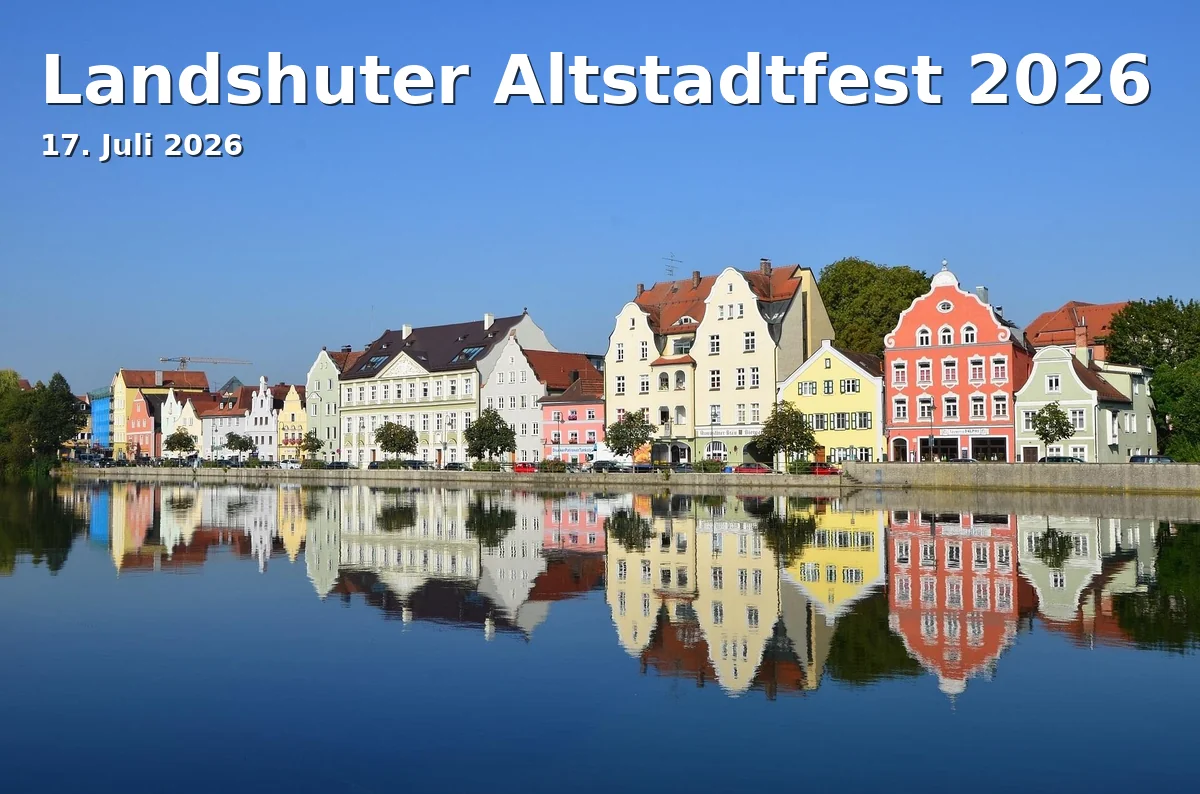
Enjoy the traditional Old Town Festival in Landshut with live music and culinary experiences over two days.
City Tour: The Good Tone
Discover Landshut with all senses: forms, colors, and sounds come together on 11.09.2026 for a special city tour. #Landshut #CityTour
21st Landshut Duck Race
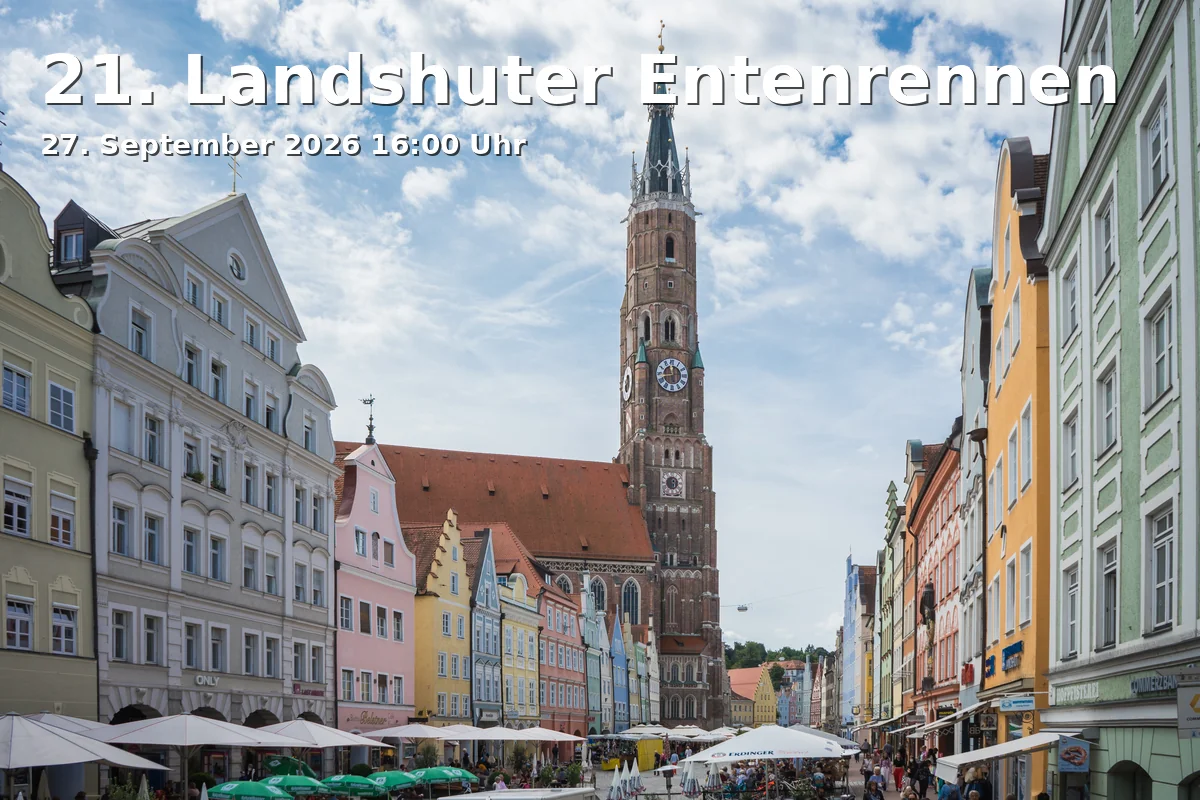
Yellow racing ducks, Isar current, and great anticipation in Landshut: The 21st Duck Race promises excitement, fun, and good vibes. #Landshut
Frequently Asked Questions
Reviews
Euderl Laryea
12. April 2023
You do not need a ticket to visit this place. The view of St. Martin's Church from here is also great. Just opposite this place is a river.
Anne H
23. September 2023
Very nice area to see while visiting the city. The gate is located next to the river promenade and through the gate you are into the altstadt area with food and shopping. There are WC’s next to the river here. The medieval Ländtor and the Burghauser Tor on the Alte Bergstraße are the only gate buildings that have survived from once 8 city gates.
Comy
9. October 2025
Super little place.
Ravi Pathak
14. July 2023
Very pleasant feeling.
Peter von Hecht
7. August 2024
OK