
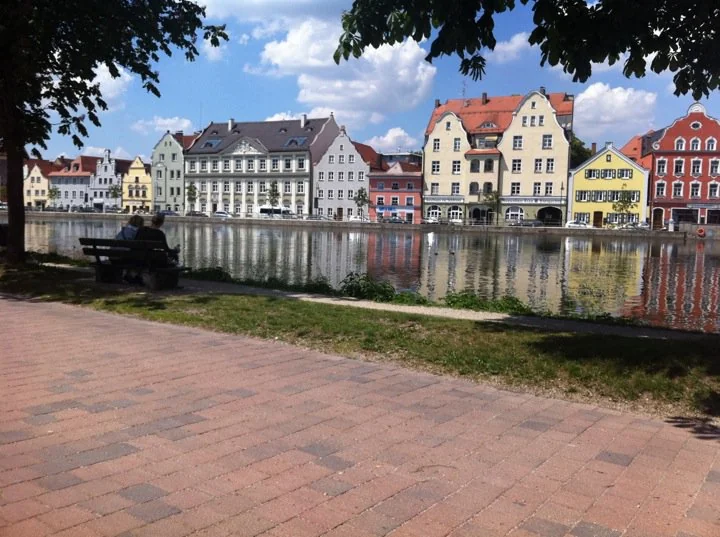
Landshut
Orbankai 3, 84028 Landshut, Deutschland
Haus International Landshut | Events & Tickets
Haus International Landshut is more than just a classic event venue: At Orbankai 3-4, the non-profit association combines Café International, Rochuskapelle, educational offerings, and counseling work into an open space in the historic center of Landshut. Those looking for events or tickets at Haus International Landshut will not find a rigid admission system like in a conventional concert hall, but a diverse program with concerts, exhibitions, lectures, regulars' tables, participatory formats, and meeting points for different target groups. The location by the Great Isar, the proximity to the old town, and the close connection with volunteer work, integration, and culture make the place as exciting for visitors as it is for engaged individuals, artists, and groups. At the same time, the house has been established in Landshut for decades and works with a multicultural team that understands encounters not as a buzzword but as a daily mission. ([haus-int.de](https://www.haus-int.de/kontakt/))
Events and Program at Haus International Landshut
The heart of the location is the continuously updated event program. The website displays the current dates under the Events section and in the Café International area, allowing interested parties to quickly see what is happening and which formats meet at which location. Particularly noticeable is the mix of regular meeting offers and individual cultural evenings. For example, the current calendar features chanting - singing in community - heartfelt songs from around the world in the Rochuskapelle, Café grenzenlos in Café International, the exhibition Dressed to resist, the International Women's Café, a karaoke night, the spring concert Viviremos!, French regulars' table, Spanish regulars' table, and the spring festival Tausch & Tanz. This diversity makes Haus International Landshut particularly interesting for search queries regarding events, programs, calendars, and tickets, as not only a single event takes place here, but a continuous flow of culture and encounters is created. Additionally, according to the website, there are open cultural events and meeting events at the Café International every Friday, except for the last Friday of the month and on public holidays. This includes openings, concerts, lectures, cultural festivals, themed evenings, and participatory formats such as open stage, karaoke singing, game nights, and dance workshops. So, anyone looking for a vibrant cultural venue in Landshut will find not only individual dates but a program that is fed by various formats and often thought interculturally. ([haus-int.de](https://www.haus-int.de/veranstaltungen/))
Tickets, Admission, and Registration
When it comes to the keyword tickets, it is important to understand that Haus International Landshut is not a classic ticketing provider with a large advance sale system, but consciously works at a low threshold in many areas. For the offerings in Café International, the website states that admission to all offerings is free or based on donations; additionally, there is the option to sponsor deferred drinks. For Café grenzenlos, it is explicitly described that the open meeting for communal dining is based on donations. At concerts in Café International, musicians generally perform for a hat fee, and many other formats do not operate with a rigid admission logic. This is practical for visitors because the barrier remains low and spontaneous visits are facilitated. At the same time, this also means that one should pay close attention to each individual date: The respective calendar page often specifies the location, time, and participation fee or notes free admission. The current program is published monthly according to the website, and apart from the weekly projects, there are no fixed opening hours for Café International. So, anyone coming with the intention of tickets should rather think of the terms registration, participation, or donation basis. For some educational offerings, there are also specific counseling and registration pathways, such as for the integration courses, which are explained on a separate page with counseling and registration. Thus, the search term tickets in practice becomes an invitation to individually check the respective event rather than assuming a centralized advance sales point. ([haus-int.de](https://www.haus-int.de/begegnungsstaette?utm_source=openai))
Café International as a Meeting Place
Café International is perhaps the most important social and cultural space in the entire house. It is described as an intercultural meeting place where people can meet informally, come into contact with various people, cultures, and languages, and experience concerts, lectures, openings, and festivals. The operation is non-commercial, the offerings are designed by a full-time coordinator and a team of volunteers, and in summer, the picturesque street café directly by the Isar opens. The low-threshold character is particularly strong: Admission is free or based on donations, and this creates a space that does not operate on the basis of tickets or consumption pressure, but rather on encounters and participation. In content, Café International is closely linked to the self-understanding of Haus International, building bridges between migrants and locals and supporting people in arriving in society. Regular meeting points such as Café grenzenlos, the International Women's Café, and language regulars' tables or cultural cafés fit into this. Café grenzenlos takes place every Wednesday at 7:00 PM and is an open meeting with dinner based on donations; the International Women's Café invites women from around the world to get to know each other, exchange ideas, and participate in joint activities every Friday during school hours from 10:00 AM to 12:00 PM. Childcare is even provided for women. Additionally, open events such as karaoke nights, game nights, themed evenings, and cultural festivals make the place a meeting point where not only consumption takes place but also co-creation. This mix of openness, regularity, and cultural diversity is a central reason why Café International in Landshut is so highly sought after and well-rated. ([haus-int.de](https://www.haus-int.de/begegnungsstaette?utm_source=openai))
Rochuskapelle: Concerts, Exhibitions, and Cultural Space
The Rochuskapelle is the historical stage of the house and an extraordinary cultural space in Landshut. According to the official website, the listed Gothic chapel has been used by Haus International as a cultural and meeting space since 2009. Various events take place there, including exhibitions, lectures, concerts, and performances; additionally, a chant group meets there once a month. The use is deliberately concept-bound: The Rochuskapelle can also be used for cultural or informative events of third parties upon request, provided the use fits the concept. A jury decides on the program, which gives the place a curated quality and prevents the special atmosphere from becoming arbitrary. Practically, it is also important that the Rochuskapelle is open from March to November and is located at Bauhofstr. 3d in Landshut. The historical dimension enhances the appeal: The history of the chapel makes it clear that here stands a late Gothic building with a long Landshut tradition, which has received a second, very lively life cycle since its restoration and later cultural use. This also explains why the place appears so frequently in the current dates, such as at chanting - singing in community, at the exhibition Dressed to resist, or at the spring concert Viviremos!. So, anyone searching for concerts Landshut, exhibitions Landshut, or Rochuskapelle Landshut will find here a culturally charged space that connects history, present, and encounters. Especially for those seeking a place with atmosphere instead of an anonymous event hall, the Rochuskapelle is a strong argument for a visit. ([haus-int.de](https://www.haus-int.de/kulturraum-rochuskapelle/))
Directions, Parking, History, and Mission Statement
Practically speaking, getting to Haus International Landshut is uncomplicated. The office and the central address are located at Orbankai 3-4, 84028 Landshut. On the contact page, the association clearly names the most affordable parking option: the underground garage in City Center Landshut (CCL), which is in immediate proximity to Haus International, Café International, and Rochuskapelle. Those arriving by bus can reach the location via the stop Am Alten Viehmarkt/CCL with city lines 5 and 14 as well as evening lines 106 and 109 or via the stop Zweibrückenstraße with city lines 3, 4, 6, 7, 8, 9, and 12 as well as evening lines 104 and 108. The location is also attractive for those walking or cycling, as the café, Rochuskapelle, and Haus International are located at the northern edge of the historic city center by the Great Isar and can be reached from the old town, new town, and Freyung in just a few minutes. The central office at Orbankai is open on Mondays from 2:00 PM to 5:00 PM, Tuesdays to Thursdays from 9:00 AM to 12:00 PM and 2:00 PM to 5:00 PM, and Fridays from 9:00 AM to 12:00 PM. In terms of content, the organization is deeply rooted in Landshut: From a project in the mid-1970s, the citizens' initiative developed in 1977, the association was registered in 1979, and in 2027 Haus International can celebrate its 50th anniversary. The association describes itself as non-profit, active in intercultural work for almost 50 years, with more than 200 members and a three-member board. The website also mentions memberships in VIA, the Bavarian Refugee Council, and as a corporate member of the Workers' Welfare Association District Association Landshut, as well as recognition as a provider of free youth welfare and several awards for innovative integration work. The mission statement is directed at all people, especially those with a migration background, and emphasizes a multicultural team, equal opportunities, equal participation, education, counseling, children's and youth work, and the strengthening of a cosmopolitan and discrimination-free coexistence. This is precisely why the offerings are so broad: German courses, integration courses, job-related German courses, childcare, leisure groups, homework help, asylum social work, asylum procedure counseling, migration counseling, and projects such as intercultural weeks against racism or MiMi - Intercultural Health. So, anyone looking for a location that not only organizes events but also connects social responsibility and culture will find a very clear answer here. ([haus-int.de](https://www.haus-int.de/kontakt/))
Sources:
Mehr anzeigenWeniger anzeigen
Haus International Landshut | Events & Tickets
Haus International Landshut is more than just a classic event venue: At Orbankai 3-4, the non-profit association combines Café International, Rochuskapelle, educational offerings, and counseling work into an open space in the historic center of Landshut. Those looking for events or tickets at Haus International Landshut will not find a rigid admission system like in a conventional concert hall, but a diverse program with concerts, exhibitions, lectures, regulars' tables, participatory formats, and meeting points for different target groups. The location by the Great Isar, the proximity to the old town, and the close connection with volunteer work, integration, and culture make the place as exciting for visitors as it is for engaged individuals, artists, and groups. At the same time, the house has been established in Landshut for decades and works with a multicultural team that understands encounters not as a buzzword but as a daily mission. ([haus-int.de](https://www.haus-int.de/kontakt/))
Events and Program at Haus International Landshut
The heart of the location is the continuously updated event program. The website displays the current dates under the Events section and in the Café International area, allowing interested parties to quickly see what is happening and which formats meet at which location. Particularly noticeable is the mix of regular meeting offers and individual cultural evenings. For example, the current calendar features chanting - singing in community - heartfelt songs from around the world in the Rochuskapelle, Café grenzenlos in Café International, the exhibition Dressed to resist, the International Women's Café, a karaoke night, the spring concert Viviremos!, French regulars' table, Spanish regulars' table, and the spring festival Tausch & Tanz. This diversity makes Haus International Landshut particularly interesting for search queries regarding events, programs, calendars, and tickets, as not only a single event takes place here, but a continuous flow of culture and encounters is created. Additionally, according to the website, there are open cultural events and meeting events at the Café International every Friday, except for the last Friday of the month and on public holidays. This includes openings, concerts, lectures, cultural festivals, themed evenings, and participatory formats such as open stage, karaoke singing, game nights, and dance workshops. So, anyone looking for a vibrant cultural venue in Landshut will find not only individual dates but a program that is fed by various formats and often thought interculturally. ([haus-int.de](https://www.haus-int.de/veranstaltungen/))
Tickets, Admission, and Registration
When it comes to the keyword tickets, it is important to understand that Haus International Landshut is not a classic ticketing provider with a large advance sale system, but consciously works at a low threshold in many areas. For the offerings in Café International, the website states that admission to all offerings is free or based on donations; additionally, there is the option to sponsor deferred drinks. For Café grenzenlos, it is explicitly described that the open meeting for communal dining is based on donations. At concerts in Café International, musicians generally perform for a hat fee, and many other formats do not operate with a rigid admission logic. This is practical for visitors because the barrier remains low and spontaneous visits are facilitated. At the same time, this also means that one should pay close attention to each individual date: The respective calendar page often specifies the location, time, and participation fee or notes free admission. The current program is published monthly according to the website, and apart from the weekly projects, there are no fixed opening hours for Café International. So, anyone coming with the intention of tickets should rather think of the terms registration, participation, or donation basis. For some educational offerings, there are also specific counseling and registration pathways, such as for the integration courses, which are explained on a separate page with counseling and registration. Thus, the search term tickets in practice becomes an invitation to individually check the respective event rather than assuming a centralized advance sales point. ([haus-int.de](https://www.haus-int.de/begegnungsstaette?utm_source=openai))
Café International as a Meeting Place
Café International is perhaps the most important social and cultural space in the entire house. It is described as an intercultural meeting place where people can meet informally, come into contact with various people, cultures, and languages, and experience concerts, lectures, openings, and festivals. The operation is non-commercial, the offerings are designed by a full-time coordinator and a team of volunteers, and in summer, the picturesque street café directly by the Isar opens. The low-threshold character is particularly strong: Admission is free or based on donations, and this creates a space that does not operate on the basis of tickets or consumption pressure, but rather on encounters and participation. In content, Café International is closely linked to the self-understanding of Haus International, building bridges between migrants and locals and supporting people in arriving in society. Regular meeting points such as Café grenzenlos, the International Women's Café, and language regulars' tables or cultural cafés fit into this. Café grenzenlos takes place every Wednesday at 7:00 PM and is an open meeting with dinner based on donations; the International Women's Café invites women from around the world to get to know each other, exchange ideas, and participate in joint activities every Friday during school hours from 10:00 AM to 12:00 PM. Childcare is even provided for women. Additionally, open events such as karaoke nights, game nights, themed evenings, and cultural festivals make the place a meeting point where not only consumption takes place but also co-creation. This mix of openness, regularity, and cultural diversity is a central reason why Café International in Landshut is so highly sought after and well-rated. ([haus-int.de](https://www.haus-int.de/begegnungsstaette?utm_source=openai))
Rochuskapelle: Concerts, Exhibitions, and Cultural Space
The Rochuskapelle is the historical stage of the house and an extraordinary cultural space in Landshut. According to the official website, the listed Gothic chapel has been used by Haus International as a cultural and meeting space since 2009. Various events take place there, including exhibitions, lectures, concerts, and performances; additionally, a chant group meets there once a month. The use is deliberately concept-bound: The Rochuskapelle can also be used for cultural or informative events of third parties upon request, provided the use fits the concept. A jury decides on the program, which gives the place a curated quality and prevents the special atmosphere from becoming arbitrary. Practically, it is also important that the Rochuskapelle is open from March to November and is located at Bauhofstr. 3d in Landshut. The historical dimension enhances the appeal: The history of the chapel makes it clear that here stands a late Gothic building with a long Landshut tradition, which has received a second, very lively life cycle since its restoration and later cultural use. This also explains why the place appears so frequently in the current dates, such as at chanting - singing in community, at the exhibition Dressed to resist, or at the spring concert Viviremos!. So, anyone searching for concerts Landshut, exhibitions Landshut, or Rochuskapelle Landshut will find here a culturally charged space that connects history, present, and encounters. Especially for those seeking a place with atmosphere instead of an anonymous event hall, the Rochuskapelle is a strong argument for a visit. ([haus-int.de](https://www.haus-int.de/kulturraum-rochuskapelle/))
Directions, Parking, History, and Mission Statement
Practically speaking, getting to Haus International Landshut is uncomplicated. The office and the central address are located at Orbankai 3-4, 84028 Landshut. On the contact page, the association clearly names the most affordable parking option: the underground garage in City Center Landshut (CCL), which is in immediate proximity to Haus International, Café International, and Rochuskapelle. Those arriving by bus can reach the location via the stop Am Alten Viehmarkt/CCL with city lines 5 and 14 as well as evening lines 106 and 109 or via the stop Zweibrückenstraße with city lines 3, 4, 6, 7, 8, 9, and 12 as well as evening lines 104 and 108. The location is also attractive for those walking or cycling, as the café, Rochuskapelle, and Haus International are located at the northern edge of the historic city center by the Great Isar and can be reached from the old town, new town, and Freyung in just a few minutes. The central office at Orbankai is open on Mondays from 2:00 PM to 5:00 PM, Tuesdays to Thursdays from 9:00 AM to 12:00 PM and 2:00 PM to 5:00 PM, and Fridays from 9:00 AM to 12:00 PM. In terms of content, the organization is deeply rooted in Landshut: From a project in the mid-1970s, the citizens' initiative developed in 1977, the association was registered in 1979, and in 2027 Haus International can celebrate its 50th anniversary. The association describes itself as non-profit, active in intercultural work for almost 50 years, with more than 200 members and a three-member board. The website also mentions memberships in VIA, the Bavarian Refugee Council, and as a corporate member of the Workers' Welfare Association District Association Landshut, as well as recognition as a provider of free youth welfare and several awards for innovative integration work. The mission statement is directed at all people, especially those with a migration background, and emphasizes a multicultural team, equal opportunities, equal participation, education, counseling, children's and youth work, and the strengthening of a cosmopolitan and discrimination-free coexistence. This is precisely why the offerings are so broad: German courses, integration courses, job-related German courses, childcare, leisure groups, homework help, asylum social work, asylum procedure counseling, migration counseling, and projects such as intercultural weeks against racism or MiMi - Intercultural Health. So, anyone looking for a location that not only organizes events but also connects social responsibility and culture will find a very clear answer here. ([haus-int.de](https://www.haus-int.de/kontakt/))
Sources:
Haus International Landshut | Events & Tickets
Haus International Landshut is more than just a classic event venue: At Orbankai 3-4, the non-profit association combines Café International, Rochuskapelle, educational offerings, and counseling work into an open space in the historic center of Landshut. Those looking for events or tickets at Haus International Landshut will not find a rigid admission system like in a conventional concert hall, but a diverse program with concerts, exhibitions, lectures, regulars' tables, participatory formats, and meeting points for different target groups. The location by the Great Isar, the proximity to the old town, and the close connection with volunteer work, integration, and culture make the place as exciting for visitors as it is for engaged individuals, artists, and groups. At the same time, the house has been established in Landshut for decades and works with a multicultural team that understands encounters not as a buzzword but as a daily mission. ([haus-int.de](https://www.haus-int.de/kontakt/))
Events and Program at Haus International Landshut
The heart of the location is the continuously updated event program. The website displays the current dates under the Events section and in the Café International area, allowing interested parties to quickly see what is happening and which formats meet at which location. Particularly noticeable is the mix of regular meeting offers and individual cultural evenings. For example, the current calendar features chanting - singing in community - heartfelt songs from around the world in the Rochuskapelle, Café grenzenlos in Café International, the exhibition Dressed to resist, the International Women's Café, a karaoke night, the spring concert Viviremos!, French regulars' table, Spanish regulars' table, and the spring festival Tausch & Tanz. This diversity makes Haus International Landshut particularly interesting for search queries regarding events, programs, calendars, and tickets, as not only a single event takes place here, but a continuous flow of culture and encounters is created. Additionally, according to the website, there are open cultural events and meeting events at the Café International every Friday, except for the last Friday of the month and on public holidays. This includes openings, concerts, lectures, cultural festivals, themed evenings, and participatory formats such as open stage, karaoke singing, game nights, and dance workshops. So, anyone looking for a vibrant cultural venue in Landshut will find not only individual dates but a program that is fed by various formats and often thought interculturally. ([haus-int.de](https://www.haus-int.de/veranstaltungen/))
Tickets, Admission, and Registration
When it comes to the keyword tickets, it is important to understand that Haus International Landshut is not a classic ticketing provider with a large advance sale system, but consciously works at a low threshold in many areas. For the offerings in Café International, the website states that admission to all offerings is free or based on donations; additionally, there is the option to sponsor deferred drinks. For Café grenzenlos, it is explicitly described that the open meeting for communal dining is based on donations. At concerts in Café International, musicians generally perform for a hat fee, and many other formats do not operate with a rigid admission logic. This is practical for visitors because the barrier remains low and spontaneous visits are facilitated. At the same time, this also means that one should pay close attention to each individual date: The respective calendar page often specifies the location, time, and participation fee or notes free admission. The current program is published monthly according to the website, and apart from the weekly projects, there are no fixed opening hours for Café International. So, anyone coming with the intention of tickets should rather think of the terms registration, participation, or donation basis. For some educational offerings, there are also specific counseling and registration pathways, such as for the integration courses, which are explained on a separate page with counseling and registration. Thus, the search term tickets in practice becomes an invitation to individually check the respective event rather than assuming a centralized advance sales point. ([haus-int.de](https://www.haus-int.de/begegnungsstaette?utm_source=openai))
Café International as a Meeting Place
Café International is perhaps the most important social and cultural space in the entire house. It is described as an intercultural meeting place where people can meet informally, come into contact with various people, cultures, and languages, and experience concerts, lectures, openings, and festivals. The operation is non-commercial, the offerings are designed by a full-time coordinator and a team of volunteers, and in summer, the picturesque street café directly by the Isar opens. The low-threshold character is particularly strong: Admission is free or based on donations, and this creates a space that does not operate on the basis of tickets or consumption pressure, but rather on encounters and participation. In content, Café International is closely linked to the self-understanding of Haus International, building bridges between migrants and locals and supporting people in arriving in society. Regular meeting points such as Café grenzenlos, the International Women's Café, and language regulars' tables or cultural cafés fit into this. Café grenzenlos takes place every Wednesday at 7:00 PM and is an open meeting with dinner based on donations; the International Women's Café invites women from around the world to get to know each other, exchange ideas, and participate in joint activities every Friday during school hours from 10:00 AM to 12:00 PM. Childcare is even provided for women. Additionally, open events such as karaoke nights, game nights, themed evenings, and cultural festivals make the place a meeting point where not only consumption takes place but also co-creation. This mix of openness, regularity, and cultural diversity is a central reason why Café International in Landshut is so highly sought after and well-rated. ([haus-int.de](https://www.haus-int.de/begegnungsstaette?utm_source=openai))
Rochuskapelle: Concerts, Exhibitions, and Cultural Space
The Rochuskapelle is the historical stage of the house and an extraordinary cultural space in Landshut. According to the official website, the listed Gothic chapel has been used by Haus International as a cultural and meeting space since 2009. Various events take place there, including exhibitions, lectures, concerts, and performances; additionally, a chant group meets there once a month. The use is deliberately concept-bound: The Rochuskapelle can also be used for cultural or informative events of third parties upon request, provided the use fits the concept. A jury decides on the program, which gives the place a curated quality and prevents the special atmosphere from becoming arbitrary. Practically, it is also important that the Rochuskapelle is open from March to November and is located at Bauhofstr. 3d in Landshut. The historical dimension enhances the appeal: The history of the chapel makes it clear that here stands a late Gothic building with a long Landshut tradition, which has received a second, very lively life cycle since its restoration and later cultural use. This also explains why the place appears so frequently in the current dates, such as at chanting - singing in community, at the exhibition Dressed to resist, or at the spring concert Viviremos!. So, anyone searching for concerts Landshut, exhibitions Landshut, or Rochuskapelle Landshut will find here a culturally charged space that connects history, present, and encounters. Especially for those seeking a place with atmosphere instead of an anonymous event hall, the Rochuskapelle is a strong argument for a visit. ([haus-int.de](https://www.haus-int.de/kulturraum-rochuskapelle/))
Directions, Parking, History, and Mission Statement
Practically speaking, getting to Haus International Landshut is uncomplicated. The office and the central address are located at Orbankai 3-4, 84028 Landshut. On the contact page, the association clearly names the most affordable parking option: the underground garage in City Center Landshut (CCL), which is in immediate proximity to Haus International, Café International, and Rochuskapelle. Those arriving by bus can reach the location via the stop Am Alten Viehmarkt/CCL with city lines 5 and 14 as well as evening lines 106 and 109 or via the stop Zweibrückenstraße with city lines 3, 4, 6, 7, 8, 9, and 12 as well as evening lines 104 and 108. The location is also attractive for those walking or cycling, as the café, Rochuskapelle, and Haus International are located at the northern edge of the historic city center by the Great Isar and can be reached from the old town, new town, and Freyung in just a few minutes. The central office at Orbankai is open on Mondays from 2:00 PM to 5:00 PM, Tuesdays to Thursdays from 9:00 AM to 12:00 PM and 2:00 PM to 5:00 PM, and Fridays from 9:00 AM to 12:00 PM. In terms of content, the organization is deeply rooted in Landshut: From a project in the mid-1970s, the citizens' initiative developed in 1977, the association was registered in 1979, and in 2027 Haus International can celebrate its 50th anniversary. The association describes itself as non-profit, active in intercultural work for almost 50 years, with more than 200 members and a three-member board. The website also mentions memberships in VIA, the Bavarian Refugee Council, and as a corporate member of the Workers' Welfare Association District Association Landshut, as well as recognition as a provider of free youth welfare and several awards for innovative integration work. The mission statement is directed at all people, especially those with a migration background, and emphasizes a multicultural team, equal opportunities, equal participation, education, counseling, children's and youth work, and the strengthening of a cosmopolitan and discrimination-free coexistence. This is precisely why the offerings are so broad: German courses, integration courses, job-related German courses, childcare, leisure groups, homework help, asylum social work, asylum procedure counseling, migration counseling, and projects such as intercultural weeks against racism or MiMi - Intercultural Health. So, anyone looking for a location that not only organizes events but also connects social responsibility and culture will find a very clear answer here. ([haus-int.de](https://www.haus-int.de/kontakt/))
Sources:
Upcoming Events
No events found
Frequently Asked Questions
Reviews
Ana Arguedas
3. June 2024
Did you know that you can hold your meetings here for you and your friends if you register in advance? There’s a kitchen and a coffee machine. The staff is very friendly with children and adults.
Juergen Hartlmueller
5. January 2018
Great events again and again, but in my opinion, there’s too little support for such places here in Landshut because you can meet people from all countries and all kinds of events.
Gavino Schintu
17. December 2016
Non-profit, people-friendly social institution with great people.
Mariam
1. September 2020
Charity organization, if you have difficulties living in Germany or any questions about integration, schools, etc., you can easily go there and inquire about anything.
Cordula Dobos
18. July 2019
A popular place, varied evening entertainment, there’s nothing better than this in nice weather!