
Thomas Maurer
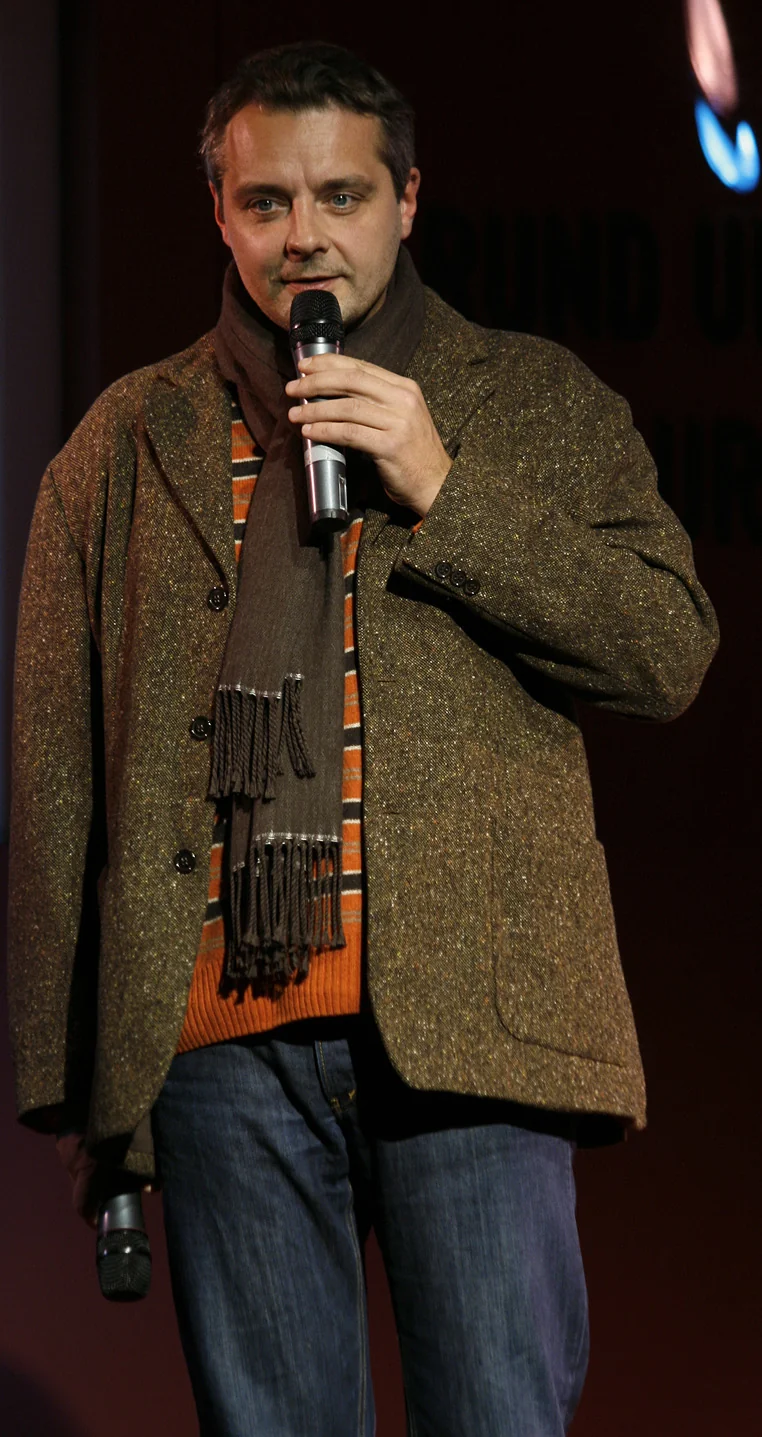
Image from Wikipedia
Image from Wikipedia
Thomas Maurer – Satirical Precision, Viennese Wit, and Sharp Social Diagnoses
An Austrian cabaret artist with attitude: Thomas Maurer has been captivating audiences since the late 1980s with sharp humor and confident stage presence
Thomas Maurer, born on June 27, 1967, in Vienna, is one of the defining voices of Austrian cabaret. Since 1988, he has been performing solo shows, dissecting social phenomena with razor-sharp observational skills and merging political satire with relatable storytelling. His music career in the narrower sense is secondary – what matters for him are the composition and arrangement of thoughts, timing, language rhythm, and the dramaturgical placement of punchlines. As an actor, author, and part of collective satire projects such as “Wir Staatskünstler,” he continuously expands his artistic development while remaining committed to the tradition of sophisticated Viennese cabaret.
Early Years and First Steps: From Bookstore to the Stage
After graduating from school in 1985, Maurer initially completed an apprenticeship as a bookseller – an environment that solidified his affinity for literature, language, and precisely formulated expressions. In 1988, he emerged at the talent contest in Kabarett Niedermair and presented his first solo program that same year, “Unterm Farkas hätt’s des net geben.” His unique blend of hedonistic criticism of civilization, empirical observations of everyday life, and linguistic virtuosity became evident early on. With a stage presence that combines intellect and wit, he quickly attracted an audience that appreciates clever comedy and subtle observations.
Breakthrough with Solo Programs: The 1990s as a Laboratory for Form, Voice, and Attitude
The 1990s marked a period of creative intensification. Maurer experimented with the spectrum between political sharpness and personal miniatures, for instance in “Dschungel,” “Freibier!” and “Unter uns – Die Verschwörungstheorie.” Collaborations – for example with Josef Hader, Leo Lukas, and later Florian Scheuba – sharpened his profile as an author-performer who not only interprets material but also conceptualizes and arranges it. His discography in the broader sense – understood as a sequence of independent stage works – documents an artistic evolution in which theme selection, text, tone, and performative dynamics are precisely coordinated.
Television, Writing, Ensemble Work: Versatility as a Trademark
In addition to solo programs, television projects shape his career. In “Die 4 da” and particularly in “Wir Staatskünstler,” Maurer demonstrated how effectively satirical composition and ensemble arrangement function when research, character portrayal, and political commentary merge. Simultaneously, he published columns and short prose, reflecting his sense for economical phrasing and argumentative rigor. This multidimensionality – stage, TV, print – added weight to his authority: Maurer is regarded as an artist who thoroughly works through material, contextualizes it socially, and develops it live with improvisational wit.
Awards and Recognition: From “Salzburger Stier” to Cabaret Prizes
The awards document his continuity at a high level. He received the “Salzburger Stier” as early as 1991, followed by awards like the German Cabaret Prize (Program Prize) and the German Small Arts Prize (Promotion Prize, later Cabaret category). In 2003, he was awarded the Nestroy Special Prize; with “Die 4 da,” he won a Romy for Best Script. Later, the German Small Arts Prize (Cabaret category, 2016) and the Austrian Cabaret Prize (2016) enhanced his reputation. In 2024, the Austrian Cabaret Prize honored the trio “Wir Staatskünstler” with a special prize – a clear signal of the societal relevance of their satirical work.
The Major Programs of the 2000s and 2010s: Style, Content, Subtexts
With “Die neue Selbstständigkeit” (2003), Maurer linked economic and everyday observations into a bitterly comedic social diagnosis. “Menschenfreund,” “Papiertiger,” and “Àodìlì” showcased him as a form innovator between essays and scene play, who enjoys quoting media codes and transforming them into pointed stage arrangements. Starting from the 2010s, he mixed best-of formats (“Out of the Dark”) with conceptually sharpened new works. “Der Tolerator” marked a phase in 2015/16 where attitude, social analysis, and character speaking interlinked particularly compactly – an example of finely balanced composition, precise timing, and the economy of punchlines.
Current Projects 2024–2026: “Trotzdem,” “Maurer.Kafka.Komisch,” and “Im falschen Film”
In 2024, Maurer started with two strong accents: “Maurer.Kafka.Komisch” approached the world classic with literary humor; “Trotzdem” targeted deepfakes, social media dynamics, and the handling of disinformation. In both works, he sharpens his expertise as a social observer who processes digital phenomena not with cultural pessimism, but analytically and stage-effectively. In 2025, he remained present with tour dates, also in the collective “Wir Staatskünstler – Alte Hunde, neue Tricks.” On February 17, 2026, he celebrated the premiere of his new solo program “Im falschen Film” at the Wiener Stadtsaal. There, he addresses the discomfort with a present that feels like an over-the-top mix of apocalypse melodrama and meta-ironic blockbuster – a subject that optimally consolidates Maurer's satirical precision, his arrangement of conceptual motifs, and his calm, focused stage presence.
Style and Method: Language Rhythm, Research, and the Art of Precise Sharpness
Maurer's genre is political and socially critical cabaret with essayistic influences. His “composition” consists of finely structured argumentative arcs, dramaturgically set repetitions, and counterpoints between anecdote and analysis. In the “production” of his evenings, one can see journalistic research, literary references, and performative condensation; the “arrangements” alternate between associative narration, dialogical role speech, and staged miniatures. Musicality is demonstrated here in the precise language rhythm: Maurer uses pauses as a tempo guide, breaking the sound colors of Viennese against conceptual sharpness and thus creating a distinctive narrative voice.
Biographical Stations as a Work Catalog: Programs, TV, Literature
His “work catalog” – in the sense of a discography of live programs – includes more than twenty solo evenings, from his debut in 1988 to “Im falschen Film” (2026). In between are pieces that have shaped the canon of contemporary Austrian cabaret. There are also TV formats (“Die 4 da,” “Wir Staatskünstler”), regular annual reviews, as well as literary and journalistic works, such as columns and audiobooks. This diversity underlines Maurer's authority: he is not just an interpreter but an artist who develops materials, shapes them, and continuously rebalances them in the staging process.
Critical Reception: Press Voices and Public Perception
The media have long attested to Maurer’s analytical sharpness, substance, and a tone that balances wit and worldly relevance. Reviews of “Trotzdem” highlighted his reflective view on AI, deepfakes, and digital agitation cycles – without alarmism, but with curious, craft-smart access. At the premiere of “Im falschen Film” in 2026, the press emphasized the sovereign way in which Maurer bundles cultural references, pop culture sounds, and contemporary satire into a coherent narrative. His programs show how cabaret can open discursive spaces by structuring complexity musically – with recurring motifs, varying tempos, and thematic development.
Cultural Influence and Classification: Viennese Cabaret in the 21st Century
Maurer stands in a line with satirists who understand language as a precise instrument: he continues the Viennese tradition of laconic sharpness, but anchors it in current topics from media literacy to democratic critique. In ensembles like “Wir Staatskünstler,” he shows how collective division of labor – investigative groundwork, scenic condensation, and acting brilliance – leads to “total artworks” of political satire. His performances thus act as seismographs of social moods; they contribute to public self-understanding and demonstrate that cabaret is not merely commentary, but a curated experience: a live format that choreographs thinking, feeling, and laughter.
Voices of the Fans
The reactions from fans clearly show: Thomas Maurer delights people throughout the German-speaking world. On Facebook, a listener writes: “Maurer’s new evening hits the nail on the head – clever, funny, comforting.” Another comment puts it succinctly: “So much substance, so much timing – that is cabaret as an art form.”
Conclusion: Why Thomas Maurer Endures – and Why You Should Experience Him Live
Thomas Maurer combines expertise and experience: he brings three decades of music career in a figurative sense – as a “composer” of ideas, as an arranger of arguments, and as a producer of live experiences – to the stage. His artistic development shows consistency without routine, and his understanding of genre ranges from classic satire to media-critical modern analysis. “Im falschen Film” (premiering on February 17, 2026) confirms how vibrant, relevant, and compelling cabaret can be. Anyone wanting to understand how our time feels – harsh, contradictory, funny – should see Maurer live. It’s worth it because his evenings unite insight, empathy, and elegance of tone.
Official Channels of Thomas Maurer:
- Instagram: No official profile found
- Facebook: http://www.facebook.com/thomasMaurerOffiziell
- YouTube: No official profile found
- Spotify: No official profile found
- TikTok: No official profile found
Sources:
- Thomas Maurer – Official Website
- Kabarett.at – Artist Profile and Dates
- Kabarett.at – Program Page “Im falschen Film”
- Stadtsaal Wien – Program Newspaper January–April 2026
- Salzburger Nachrichten – Review of the Premiere “Im falschen Film”, February 2026
- Der Standard – Review “Trotzdem”, October 2024
- ORF – Austrian Cabaret Prize 2024 (Special Prize “Wir Staatskünstler”)
- Austrian Cabaret Prize – Information & History, Award Winners 2024
- Wikipedia – Thomas Maurer: Image and Text Source
Upcoming Events
Thomas Maurer – In the Wrong Movie
Great cinema in the mind at Lustspielhaus: Thomas Maurer with In the Wrong Movie. Thu., 02.04.2026, 20:00, from €26. Sharp punchlines, strong audience reactions – secure tickets now! #CabaretMunich
Thomas Maurer – In the Wrong Film
Munich will receive an evening full of satire, pace, and clever punchlines on April 22, 2026. Thomas Maurer plays In the Wrong Film at the Lustspielhaus. Secure your tickets now! #Cabaret
Thomas Maurer – Maurer.Kafka.Comical in Munich
Experience Kafka comically: Thomas Maurer brings literary cabaret to the stage in the community center Munich. 05.05.2026, 19:30, 27.50 €. #Comedy #Munich