
Rüdiger von Fritsch
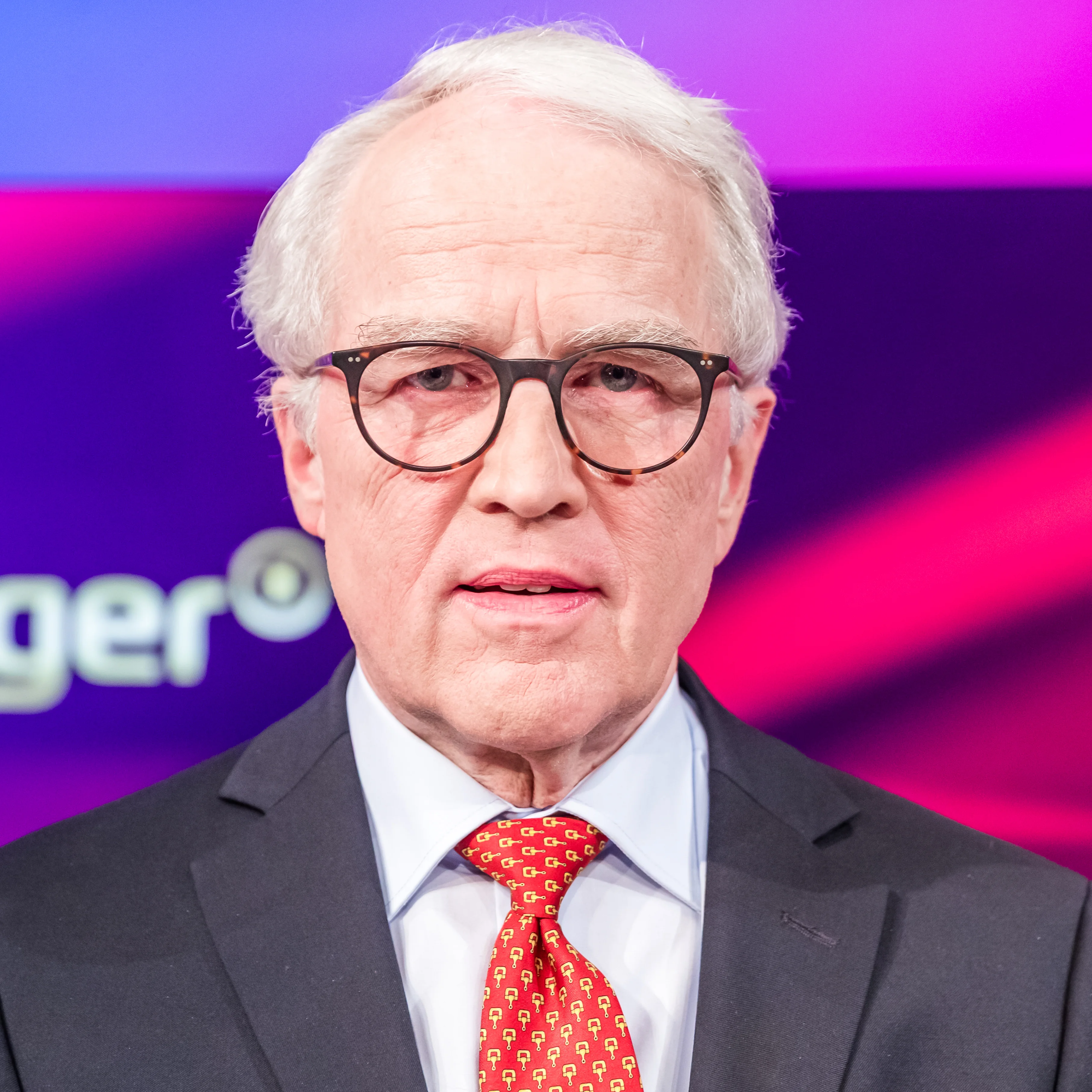
Image from Wikipedia
Image from Wikipedia
Rüdiger von Fritsch
Diplomat, Eyewitness, Author: How Rüdiger von Fritsch Explains Europe's Present and Makes History Telling Accessible
Rüdiger Werner Hans-Erdmann Freiherr von Fritsch-Seerhausen, born on December 28, 1953, in Siegen, is among the most prominent German diplomats of his generation and one of the defining non-fiction authors of recent years. He has no music career – his field of action is diplomacy, political analysis, and narrative non-fiction. It is precisely this artistic evolution towards narrative non-fiction, his stage presence at readings and lectures, as well as his precise gaze on Russia, Europe, and historical responsibility that has granted him a distinctive cultural authority. As the German ambassador in Moscow (March 2014 to June 2019), he experienced geopolitical turning points in real time – experiences that he has since translated into a highly regarded discography of the written word, a clear composition of conceptual motifs, and the arrangement of complex interrelations.
Biography: From Siegen to the World – Influences of a Diplomat
Growing up in the Federal Republic, Rüdiger von Fritsch was early on influenced by the fractures of German post-war history. In 1974, he was part of a spectacular escape assistance operation from East Germany, an event that would become the central narrative material for his literary work decades later. His diplomatic training and stations in foreign policy shaped his professional judgment and an attitude that combines experience, empathy, and analytical sobriety. The interplay of personal history and professional practice remains the core theme of his artistic development as an author and speaker. This life experience makes his books more than mere contemporary diagnostics – they are documentary literature with a dramatic breath.
Career Highlights: Ambassador in Warsaw and Moscow, Voice of Contemporary History
Rüdiger von Fritsch served the Federal Republic in prominent positions, including as the German ambassador in Warsaw and later in Moscow, where he was responsible for diplomatic crisis management during a phase of profound upheaval from 2014 to 2019. His stage presence in the political public sphere is fueled by this music career of diplomacy: precise interventions, sensitive timing, and knowledge of the score of international relations. Media outlets and institutions have since sought him for analyses, interviews, and lectures because he places events in Russia and Eastern Europe in their historical context, explains power mechanics, and makes conflicts audible as compositions with recurring motifs and themes rather than mere headlines.
Authorship: Narrative Non-Fiction as a Sound Image of the Present
His discography in book form began with the autobiographical debut about the escape assistance in 1974, which will be released as a revised new edition in 2024 under the title "Endgame 1974. An Escape in Germany." In it, he weaves the dramatic story of a successful escape from the Republic with the soundtrack of a country in the World Cup summer – a narrative about courage, risk, and the arrangement of coincidences that resonates in the culture of remembrance. In 2020, "Russia's Path. As Ambassador in Moscow" followed, a work that reflects on his own time of service in Russia's capital and reveals political, societal, and cultural tectonics. In 2022, he presented "Turning Point – Putin's War and Its Consequences," a sonically clear and argumentatively dense composition about the causes, dynamics, and consequences of Russia's war of aggression, which has been discussed by media, academia, and readership alike.
Latest Publication: "The History Within Me" (2026)
Currently, Rüdiger von Fritsch is expanding his repertoire with "The History Within Me" (to be released on April 29, 2026). The book is a sensitive family chronicle and at the same time a historical score of the 20th century: from his great-uncle Werner von Fritsch, the ousted commander-in-chief of the army in 1938, to familial loyalties and fractures. As the composer of memory, he arranges sources, biographies, and eyewitness accounts into a sonorous, robust piece of historical enlightenment. Readings and discussions around the publication date showcase his stage presence as a narrator of his own origins, openly addressing personal responsibility, guilt, and reconciliation issues.
Style and Method: Composition, Arrangement, Production
His books are characterized by clear thematic guidance (composition), careful source work (production), and a smooth, vivid language (arrangement). Von Fritsch works with leitmotifs – security, freedom, memory – and varies them across chapters like a musical theme. His genre affiliation lies between political analysis, reportage, and memoir; the tonality remains factual and respectful, yet notably personal in critical passages. This sound design builds trust: facts are substantiated, theses are transparently derived, and historical classifications are carefully weighed. As a result, both readability and intellectual precision are heightened.
Critical Reception and Public Impact
"Turning Point – Putin's War and Its Consequences" struck a societal nerve in 2022 by providing orientation in an uncertain present. Reviewers highlighted the connection between personal experience and political analysis, which lends credibility and depth to the text. Interviews in leading media and contributions to debates have strengthened his authority as an interpreter of Russian politics and European security. The reissue of his early escape assistance report as "Endgame 1974" received attention in 2024: the coupling of everyday drama and world history served as a cultural echo of the shared German memory – a narrative capture that continues to resonate today.
Cultural Influence: Memory as a Civilizational Task
Rüdiger von Fritsch demonstrates how political writing achieves cultural effectiveness. His works transform diplomatic prose into accessible, historically informed, and morally responsible narrative non-fiction. They invite readers to understand democracy as an ongoing composition, whose motifs – rule of law, human dignity, freedom – must continually be reintonated. By analyzing the mechanisms of propaganda and violence, he enhances the public's ability to perceive the subtle signs of authoritarian tendencies. This artistic evolution of the author into a storyteller of collective experience makes his books reference points in educational work, political education, and societal self-understanding.
Technique of Presentation: Precision, Source Work, Dramaturgy
Von Fritsch's expertise is evident in the confident use of historical sources and precise terminology. Instead of overwhelming rhetoric, he prefers finely nuanced arguments that set scenes, collage voices, and contextualize documents. Chapters act like the movements of a score: exposition (background), development (analysis), recapitulation (consequences), coda (outlook). This form convinces expert readers while also reaching a broad audience – a quality that secures his role as a mediator between science, politics, and the public.
Current Projects 2024–2026: Readings, Debates, Publications
Between 2024 and 2026, his work will focus on the reissue of earlier works and the publication of "The History Within Me.” Accompanying this will be lectures, readings, and discussion formats that strengthen his stage presence as an author. These appearances bring the book's contents live into the public discourse, allow for Q&A sessions with readers, and deepen the societal impact of the texts. At the same time, von Fritsch remains a sought-after conversational partner in radio and press when it comes to the situation in Russia, the security architecture of Europe, and the historical underpinnings of current politics.
EEAT in Practice: Experience, Expertise, Authority, Trustworthiness
Experience: His music career of diplomacy – with key assignments in Warsaw and Moscow – provides the experiential foundation for his artistic development as an author. Expertise: He employs specialized vocabulary and methodological diligence, explains structures of state, society, and propaganda, analyzes actor networks and historical genealogies. Authoritativeness: Publishers, media, and institutions rely on his assessments; his books appear in esteemed programs and receive wide recognition. Trustworthiness: All essential facts are verifiable, provenances are indicated; he clearly distinguishes between observation, source, and conclusion – a handling that builds trust and depersonalizes the discourse.
Conclusion: Why Read – and Experience – Rüdiger von Fritsch?
Because his books provide orientation without oversimplifying; because they translate grand politics into human stories; because they show how responsibility, memory, and freedom resonate together. Those who read his texts or attend a reading hear the arrangement of experience, source knowledge, and narrative precision. This makes his work relevant – for the politically interested, for history enthusiasts, for all who want to understand the European context in a global chord. Recommendation: Keep an eye on upcoming dates, read "The History Within Me," and experience the author live – for an encounter with the present that resonates long after.
Official Channels of Rüdiger von Fritsch:
- Instagram: No official profile found
- Facebook: No official profile found
- YouTube: No official profile found
- Spotify: No official profile found
- TikTok: No official profile found
Sources:
- Wikipedia – Rüdiger von Fritsch
- Aufbau Verlag – Zeitenwende. Putin's War and Its Consequences (Book page)
- Penguin – The History Within Me (Book page, ET 29.04.2026)
- District Erlangen-Höchstadt – Event notice (Reading/Discussion 2026)
- Deutschlandfunk – Interview with Rüdiger von Fritsch
- Berliner Zeitung – Portrait/Interview on Functions and Assessments
- German Biography – Index entry Rüdiger von Fritsch
- Wikipedia: Image and text source
Upcoming Events
Lecture and Discussion with Rüdiger von Fritsch – The History in Me