
Meryl Streep
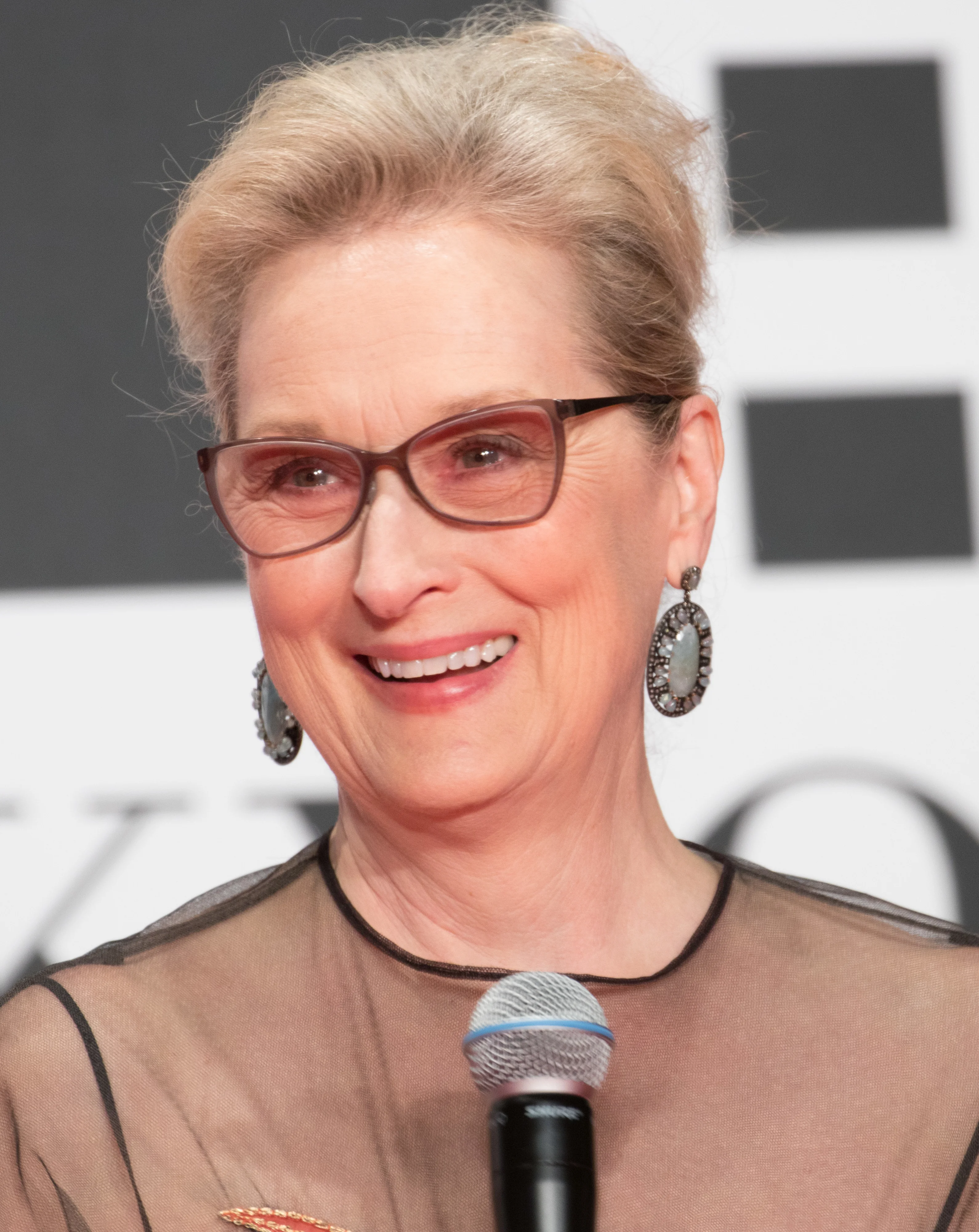
Image from Wikipedia
Image from Wikipedia
Meryl Streep – the versatile icon of modern film
An actress who turns every role into an event
Mary Louise "Meryl" Streep is among the most influential actresses in film history. Since her breakthrough in the late 1970s, she has shaped her acting career with an exceptional quality that still seems hardly attainable today. Born in Summit, New Jersey, the American combines technical precision, emotional depth, and an unmistakable stage and screen presence into a style that has long been regarded as a reference. Early on, her talent for transformation, vocal coloration, and psychological nuance was evident, which later developed into one of the most impactful careers in international cinema. ([britannica.com](https://www.britannica.com/biography/Meryl-Streep?utm_source=openai))
Biography: From the stage to international acclaim
Streep began her career on stage before establishing herself as an extraordinary presence in film and television. The decisive boost came with the television miniseries Holocaust and the films Manhattan, The Deer Hunter, and Kramer vs. Kramer, which allowed her to transition from a promising talent to an internationally acclaimed figure. This phase marked not only her breakthrough but also the birth of a repertoire that went far beyond typecasting: Streep became a master of complex characters, whose inner conflicts she made visible with great clarity. ([britannica.com](https://www.britannica.com/biography/Meryl-Streep?utm_source=openai))
By the early 1980s, it was clear that she did not simply become absorbed in a role, but instead imbued each character with its own logic, voice, and attitude. Films like The French Lieutenant's Woman, Sophie's Choice, and Out of Africa solidified her reputation as an actress of extraordinary versatility. The combination of dramatic authority and a keen sense for nuances made her an actress who appealed to both art house audiences and mainstream viewers alike. ([britannica.com](https://www.britannica.com/biography/Meryl-Streep?utm_source=openai))
Career trajectory: From character actress to global benchmark
Meryl Streep has set a kind of gold standard for quality and consistency in her long acting career. With a total of 21 Oscar nominations and three Academy Awards, she occupies an exceptional category that underscores her status as one of the most sought-after and artistically successful actresses in the world. Her career does not follow a linear path but rather resembles a series of significant peaks, in which she continually explores new registers: from intense melodrama to political themes and biting social satire. ([britannica.com](https://www.britannica.com/biography/Meryl-Streep?utm_source=openai))
Especially her ability to master comedy and tragedy with the same sovereignty makes her name a hallmark of quality. In Death Becomes Her, The Devil Wears Prada, and Mamma Mia!, she demonstrated that commanding star presence and ironic self-reflection are not contradictions. In later years, works like Julie & Julia, It's Complicated, The Iron Lady, and Into the Woods further showcased her range between popular cinema, character study, and musical storytelling. ([britannica.com](https://www.britannica.com/biography/Meryl-Streep?utm_source=openai))
The great diversity of roles: Composition, attitude, and precision
Streep works with a remarkable mix of compositional discipline and emotional openness. Each character gets its own body language, rhythm, and distinctive voice. This is particularly evident in roles such as Katharine Graham in The Post, Emmeline Pankhurst in Suffragette, or Margaret Thatcher in The Iron Lady, where political significance, historical relevance, and personal vulnerability intertwine. ([britannica.com](https://www.britannica.com/biography/Meryl-Streep?utm_source=openai))
Her portrayal of historical and fictional characters never merely follows external resemblance. Instead, she shapes characters through voice patterns, pauses, glances, and minimal facial expressions. This is where her authority lies: she plays not effects but the structures of power, shame, ambition, loss, and assertion. This artistic development has elevated her work far beyond classical star worship and turned it into a lesson in modern acting. ([britannica.com](https://www.britannica.com/biography/Meryl-Streep?utm_source=openai))
Filmography of exceptional cultural richness
Although Streep does not have a discography in the musical sense, her film work has a density similar to that of a great interpretive artist. Her most commercially significant and culturally influential films include Sophie's Choice, Out of Africa, The Devil Wears Prada, Mamma Mia!, Julie & Julia, The Iron Lady, and Into the Woods. These titles not only represent box office success but also connect with an audience that has recognized her over decades as a guarantor of quality, presence, and identification. ([britannica.com](https://www.britannica.com/biography/Meryl-Streep?utm_source=openai))
In the 21st century, Streep has remained a fixture in the awards and festival landscape. Her performances have been honored with awards from around the world, including the Palme d’Or at Cannes, the TIFF Tribute Acting Award, the Chaplin Award from the Film Society of Lincoln Center, the Donostia Award from the San Sebastian Film Festival, and a Career Tribute from the Gotham Awards. In 2002, the French government also honored her with the title Commander in the Order of Arts and Letters, further affirming her status as a cultural institution. ([womenshistory.org](https://www.womenshistory.org/women-making-history-awards/meryl-streep?utm_source=openai))
Critical Reception: An actress who sets standards
For decades, film critics have described Meryl Streep as an extraordinary phenomenon, and for good reason. Her work is regularly seen as a benchmark for the entire profession: she combines precision, intelligence, and emotional authenticity in a way that has become rare. Even in roles that are formally popular or genre-oriented, she lends her characters weight, ambivalence, and an almost literary depth. ([britannica.com](https://www.britannica.com/biography/Meryl-Streep?utm_source=openai))
This is particularly evident in films like The Iron Lady, whose reception fluctuated between admiration for Streep's performance and criticism of the film's overall structure, but precisely this highlighted her exceptional status. Critical voices continually praised her transformative prowess, even when the film's dramaturgy did not fully convince. This form of reception shows how much Streep is perceived as an actress beyond individual projects: as a standard against which film quality can be measured. ([en.wikipedia.org](https://en.wikipedia.org/wiki/The_Iron_Lady_%28film%29?utm_source=openai))
Current projects and new visibility in 2025/2026
Meryl Streep remains present in current film activity. Particularly visible is her return as Miranda Priestly in The Devil Wears Prada 2, whose production began in 2025 and is reportedly scheduled for 2026. Several news sources captured Streep during filming in New York and later in Milan, where scenes were shot during the fashion week. This connects her to one of her most iconic roles and continues a character that has long become part of pop culture. ([apnews.com](https://apnews.com/article/6ca310e7a295c9fe95831020360e8522?utm_source=openai))
The renewed attention surrounding the sequel shows how deeply Streep's characters continue to resonate today. That a character like Miranda Priestly can spark worldwide discussions almost two decades after the first film says a lot about the cultural reach of her work. For the audience, this means: Meryl Streep remains not just a legend of the past but a vibrant force in contemporary cinema. ([vanityfair.com](https://www.vanityfair.com/hollywood/story/meryl-streep-miranda-priestly-devil-wears-prada-2?utm_source=openai))
Cultural influence: Why Meryl Streep has set standards
Streep is more than a successful actress; she is a cultural reference point. Her films shape the image of strong female characters, power and vulnerability, professional authority and personal turmoil. Especially in a medium that often relies on recognizability and typification, she has shown how radically individual a role can become when technique, intuition, and discipline come together. ([womenshistory.org](https://www.womenshistory.org/women-making-history-awards/meryl-streep?utm_source=openai))
Her influence extends far beyond Hollywood. For subsequent generations of actors, she represents linguistic precision, emotional truthfulness, and a career strategy that never pits art against audience. Be it drama, comedy, musical, or biopic: Meryl Streep has treated every form with the same seriousness, thereby sustainably shaping the modern understanding of stardom. ([womenshistory.org](https://www.womenshistory.org/women-making-history-awards/meryl-streep?utm_source=openai))
What makes Meryl Streep so captivating is the rare combination of greatness and humility. She dominates a scene without ever merely overwhelming it, and she remains precise, surprising, and credible throughout. Those who want to experience acting in its purest form should not only watch her films but study them. Experiencing Meryl Streep on screen means witnessing a living chapter of film history. ([britannica.com](https://www.britannica.com/biography/Meryl-Streep?utm_source=openai))
Official channels of Meryl Streep:
- Instagram: No official profile found
- Facebook: No official profile found
- YouTube: No official profile found
- Spotify: No official profile found
- TikTok: No official profile found
Sources:
- Britannica – Meryl Streep
- National Women's History Museum – Meryl Streep
- Wikipedia – Meryl Streep
- AP News – The devil wears Dolce & Gabbana in Milan as Meryl Streep is filmed at runway show for movie sequel
- The Guardian – The Devil Wears Prada 2: Kenneth Branagh joins cast as sequel begins filming
- The Wrap – Meryl Streep: First Look as Miranda Priestly in Devil Wears Prada 2
- Vanity Fair – Miranda Priestly Returns: See Meryl Streep in Devil Wears Prada 2
Upcoming Events
Ladykino: The Devil Wears Prada 2
The Devil Wears Prada 2 at filmforum Duisburg