
Jürgen Becker (Kabarettist)
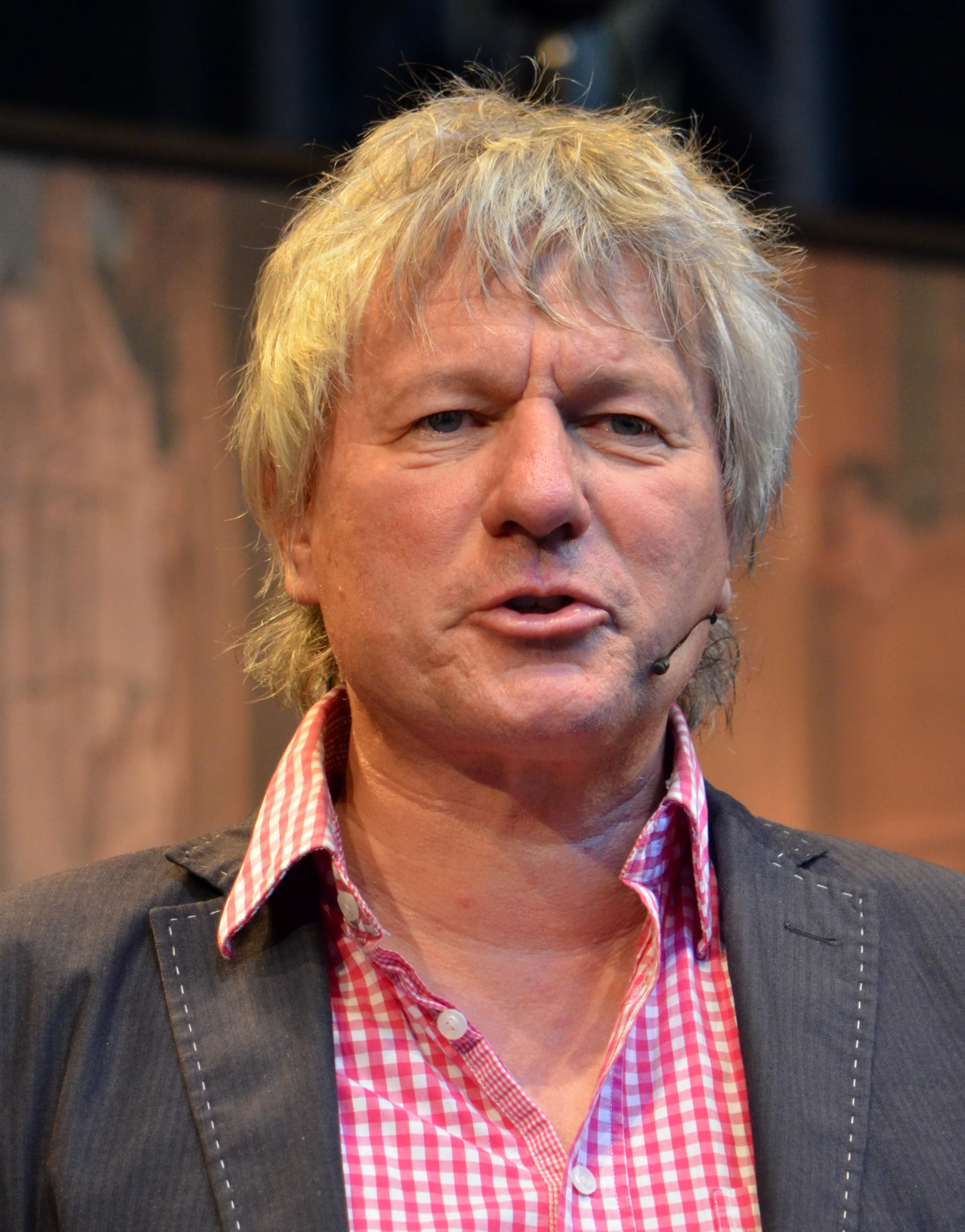
Image from Wikipedia
Image from Wikipedia
Jürgen Becker (Cabaret Artist)
Satire with Soundtrack: How Jürgen Becker Condenses Politics, Pop Culture, and Rheinland Humor into Great Cabaret Art
Jürgen Becker, born on August 27, 1959, in Cologne, is one of the defining voices of German cabaret. His music career, in the narrower sense, is a stage life as a satirist: an author, host, and comedian who blends political analysis with pop cultural references, music history, and the storytelling joy of the Rhineland. Trained as a graphic designer at 4711, later becoming a social worker through a second educational pathway, Becker found his way to the stage early on and developed a stage presence that virtuously unites social observation, timing, and scenic composition. Today, his name stands for political cabaret that translates themes such as democracy, religion, art, and climate into pointed, often music-infused narrative arcs – always with attitude, humor, and artisanal precision.
Origin and Early Steps: From Drawing Board to Spotlight
Becker's artistic development does not begin at drama school, but in the everyday life of the Rhineland: After completing secondary school, he trained as a graphic designer, worked in a printing shop, and studied social work. This biographical grounding shapes his perspective to this day: he observes milieus, ceremonies, and everyday rituals – shaping them into cabaret compositions where dramaturgy and arrangement are clearly structured. His early gaze at image, text, and layout is reflected in stage designs, visualizations, and precisely placed linguistic "motifs" that function as recurring themes within a program.
Breakthrough in Cologne Carnival: Stunksitzung and 3Gestirn Köln 1
In 1983, Becker was one of the founders of the alternative Cologne Stunksitzung, of which he was president from 1984 to 1995. This project marks a paradigm shift: Carnival as critical, contemporary cabaret with a political subtext. In 1989, he founded the cabaret trio 3Gestirn Köln 1 with Heiner Kämmer and Wolfgang Nitschke – an ensemble that emancipated Rhineland humor from traditional carnival jokes and enriched it with sociopolitical sharpness. From 1991 onwards, Becker toured as a solo cabaret artist and began composing longer dramaturgies in which he programmatically unfolds thematic fields – from “Rhineland capitalism” to art history.
Television, Radio, Cult Status: Mitternachtsspitzen and “Becker & Jünemann”
Since 1992, Becker has hosted the WDR cult show Mitternachtsspitzen, shaping its satirical tone for decades. Together with colleagues, he developed a distinctive style that oscillates between current politics and fundamental questions. Concurrently, his long-term collaboration with Didi Jünemann in radio emerged: Under the label “Becker & Jünemann,” a pointedly political radio comedy has been airing on WDR 2 since November 1990 – an acoustic cabaret arrangement that stages exchanges, parody of slogans, and everyday observations as concise, regularly recurring “tracks.” Between 2008 and 2018, Becker presented knowledge satire in the TV series Der dritte Bildungsweg – a format in which he combines didactics, parody, and social analysis. From 2011 to 2015, he hosted the WDR series Baustelle Deutschland, a mix of talk, documentary, and cabaret.
Programs with Profile: From “Biotop für Bekloppte” to “Volksbegehren”
In Becker’s stage biography, refined solo pieces form the cornerstones of his discography in a broader sense. Early milestones include Biotop für Bekloppte, a ridiculous journey through 2000 years of Cologne city history – a local theme artfully translated into universal questions of identity and community. Da wissen Sie mehr als ich! dissected the “mystery of Rhineland capitalism” as a cultural-historical treasure hunt. Ja, was glauben Sie denn? distilled religious history into a “cabaret deity dish” that employs textual motifs, language rhythms, and satirical refrains. Der Künstler ist anwesend interrogated art history regarding its myths and mechanisms. Since 2016, Volksbegehren – Die Kulturgeschichte der Fortpflanzung has been running: a thematic panorama from evolutionary biology, morality, church to sexual politics – knowledge-based, pointed, and always with a human-friendly tone.
“Deine Disco – Geschichte in Scheiben”: Music, Politics, and the Invention of the Electric Guitar
With “Deine Disco – Geschichte in Scheiben” (Premiere year 2024/2025), Becker sharpens his liaison with pop culture. The program – musically arranged by Mike Herting, dramaturgically supported by Dietmar Jacobs – connects protest history and pop music: from the 1968ers to Hendrix, Woodstock, and Janis Joplin to BAP, Ton Steine Scherben, or Patti Smith. Becker mixes politics, records, protest, and punchlines into a stage radio show and questions why movements without their own sound – such as the climate movement – struggle to gain resonance. His stage presence here becomes the “DJ of political discourses”: he lays sound traces, samples memories, and transfers them into contemporary issues. From 2025/2026, “Deine Disco” will be touring nationwide, with stops from Cologne and Bonn to Frankfurt, Düsseldorf, and Stuttgart.
Discography, Books, Publications
Becker’s discography includes, among others, Jürgen Becker darf nicht singen (CD, 1995) and Deine Disco (CD, 2024). Additionally, Becker has published several books that accompany his programs and deepen the themes – including Da wissen Sie mehr als ich! (2004) and Ja, was glauben Sie denn? (2007). These publications function like expanded “liner notes” to the stage works: they archive research, punchlines, and cultural-historical classification, making the composition and arrangement of the thought process visible and contributing to the authority of his work.
Style and Signature: Political Cabaret as Acoustic Dramaturgy
Becker’s genre is politically literary cabaret. He composes evenings like albums: a prologue, thematic “tracks,” refrains, crossover motifs. His mode of production is based on research, satirical condensation, and performative variation. Language rhythm, dialectal hues, the “Rhineland groove,” and a fine ear for pop cultural codes make his programs accessible yet complex. Technically, he works with clear arrangements: recurring thematic motifs, cleverly placed cesuras, interludes of everyday observations. The effect: long tension arcs that transport knowledge without losing lightness.
Cultural Influence, Resonance, and Awards
In the music and cabaret landscape of the West, Becker is a fixed constant. His hosting of Mitternachtsspitzen has shaped the TV satire scene, and his radio work at WDR 2 has made political cabaret a weekly ritual. For his lifetime achievements and program work, he has received numerous awards, including the Prix Pantheon (category "Mature & Crazy") in 2006, the Recklinghausen Hurz (Honorary Hurz) in 2023, and the Ehrenring des Rheinlandes in 2024. The media's response to “Deine Disco” highlights his innovative approach: instead of nostalgia, Becker engages in political sound research – pop as an archive of social movements, refined into a stage show with audience-friendly insights.
Current Projects 2024–2026: Tour, Radio, Repertoire
Between 2024 and 2026, “Deine Disco – Geschichte in Scheiben” will be at the center: a tour through theaters, churches, community halls, and small art stages. Concurrently, Becker continues his radio comedy “Becker & Jünemann” at WDR 2. The repertoire of his “classics” – from Der Künstler ist anwesend to Volksbegehren – remains present in media libraries and on recordings, emphasizing the range of his oeuvre between art history, religious satire, and social analysis. The artistic development remains organic: new programs arise from long-term material maintenance, research, and a reliable sense for contemporary diagnoses.
Classification: Between Cabaret, Pop Culture, and Educational Entertainment
Becker’s expertise lies in bridging gaps: he connects political cabaret with pop history, everyday anthropology, and cultural-historical depth. In terms of music history, he thinks in epochs, scenes, sounds, but he applies this musical matrix satirically to make political energy perceptible. This creates a form of “educational entertainment” that does not teach, but involves: an audience that laughs, recognizes, contradicts – and leaves the hall with a new ear for historical rhythms. “Deine Disco” exemplifies this ideally: arrangement, storytelling, timing – all follow a musical logic that transforms knowledge into experience.
Reception of the Programs: Reviews, Audience, Impact
Regional and national cultural sections honor Becker’s mix of knowledge, wit, and warmth. Reviews emphasize his ability to translate complex themes into easily digestible scenes. Audience feedback speaks of “highlights,” “soaring above the usual,” and a show that “dares something completely new.” For the cabaret scene, Becker’s approach signifies a productive opening: political satire does not merely become a pure sharpening, but a resonance space where musical citations, memories, and contemporary diagnoses intertwine – an aesthetic that intertwines historical listening and contemporary thinking.
Conclusion
Jürgen Becker is exciting because he does not understand cabaret as isolated punchlines but as a complete composition: an evening like a concept album, rich in motifs, surprising in transitions, warm in tone. He shows that humor and insight are not opposites, but mutually reinforcing – especially when pop history, as a resonant archive of political movements, takes to the stage. Anyone wanting to experience political cabaret with depth should see Becker live: it is the rare combination of attitude, craftsmanship, and passion that continues to resonate.
Official Channels of Jürgen Becker:
- Instagram: No official profile found
- Facebook: No official profile found
- YouTube: No official profile found
- Spotify: No official profile found
- TikTok: No official profile found
Sources:
- Jürgen Becker – Official Website
- Jürgen Becker – Program “Deine Disco”
- Wikipedia – Jürgen Becker (Cabaret Artist)
- Kölner Stadt-Anzeiger – “Deine Disco” Premiere, 14.04.2024
- ARD Mediathek – “Der Künstler ist anwesend,” Broadcast 08.09.2024
- come-on.de – Review “Jürgen Becker Enthralls Kierspe”, 2025
- Wikipedia: Image and text source
Upcoming Events
Jürgen Becker - Your Disco
Jürgen Becker: YOUR DISCO in Duisburg
Jürgen Becker - Your Disco - Cabaret
Jürgen Becker - Your Disco - History in Slices
Jürgen Becker - Your Disco - History in Slices
Jürgen Becker: The Cause Lies in the Future
Jürgen Becker