
Dietrich Bonhoeffer
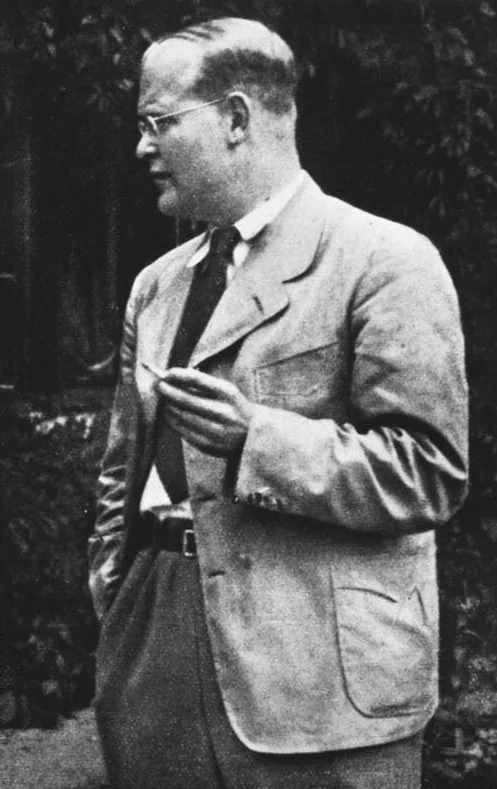
Image from Wikipedia
Image from Wikipedia
Dietrich Bonhoeffer – Thought, Resistance, and a Biography of Historical Significance
A Life Between Theology, Conscience, and Resistance
Dietrich Bonhoeffer is one of the defining German voices of the 20th century. Born on February 4, 1906, in Breslau and murdered on April 9, 1945, in the Flossenbürg concentration camp, he combined academic brilliance with personal conviction and became one of the most prominent representatives of the Confessing Church. His biography exemplifies the rare case where thought, attitude, and action are inextricably linked. ([en.wikipedia.org](https://en.wikipedia.org/wiki/Dietrich_Bonhoeffer?utm_source=openai))
Bonhoeffer emerged not only as a Lutheran theologian but also as a prominent opponent of National Socialism. He publicly reacted to the persecution of the Jews early on, opposed the Aryan paragraph, and took over the leadership of the Confessing Church's seminary in Finkenwalde in 1935. These milestones represent not marginal notes but the core of his public and spiritual impact. ([de.wikipedia.org](https://de.wikipedia.org/wiki/Dietrich_Bonhoeffer?utm_source=openai))
Background, Education, and Intellectual Ascendancy
Bonhoeffer came from an educated family and developed an independent theological approach early on. By the age of 24, he had earned his habilitation and, after a period abroad, became a private lecturer for Protestant theology in Berlin, as well as a youth advisor in a predecessor organization of the World Council of Churches. His academic rise was rapid, yet he never remained in an ivory tower. ([de.wikipedia.org](https://de.wikipedia.org/wiki/Dietrich_Bonhoeffer?utm_source=openai))
Even in this early phase, the profile of a thinker who did not understand faith as an abstract theory began to take shape. Bonhoeffer emphasized the presence of Jesus Christ in the global community of Christians, the Sermon on the Mount, and the discipleship of Jesus, as well as the unity of faith and action. This line runs through his work and explains why he is still considered theologically and morally exceptional today. ([de.wikipedia.org](https://de.wikipedia.org/wiki/Dietrich_Bonhoeffer?utm_source=openai))
The Church Struggle and the Intensification of Resistance
With the rise of the National Socialists, Bonhoeffer's professional career was not interrupted but rather drastically sharpened. From April 1933, he publicly took a stand against the persecution of the Jews and engaged against the German Christians as well as the Aryan paragraph. His position was clear, uncomfortable, and highly controversial in the church politics of the time. ([de.wikipedia.org](https://de.wikipedia.org/wiki/Dietrich_Bonhoeffer?utm_source=openai))
In 1935, he took over the Confessing Church's seminary in Finkenwalde, which initially continued to operate legally and later illegally. There, his ideas about community, discipline, and spiritual practice crystallized, which he not only taught but also lived. These years are considered one of the most important phases of his artistically non-existent, but spiritually and historically significant development. ([bonhoeffer.ch](https://www.bonhoeffer.ch/kurzbiografie?utm_source=openai))
Finkenwalde: School of Discipleship and Spiritual Maturation
Finkenwalde became a place of intensive theological training that went far beyond a mere church educational institution. Here, Bonhoeffer reflected on Christian communio, discipleship, and the responsibility of the church in a destructive political order. Later texts and letters from this time show how closely his teaching was connected to his way of life. ([bonhoeffer.ch](https://www.bonhoeffer.ch/texte-zu-bonhoeffer/dietrich-bonhoeffer-ein-evangelischer-heiliger?utm_source=openai))
His thinking gained both clarity and depth in Finkenwalde. The community of Christians, the concrete practice of faith, and the willingness to sacrifice became guiding themes that extend even into his prison writings. It is precisely this connection between spirituality and worldly responsibility that makes Bonhoeffer an exceptionally relevant figure to this day. ([bonhoeffer.ch](https://www.bonhoeffer.ch/texte-zu-bonhoeffer/dietrich-bonhoeffer-ein-evangelischer-heiliger?utm_source=openai))
Resistance, Imprisonment, and Death
Around 1938, Bonhoeffer joined the resistance around Admiral Wilhelm Canaris. In 1940 he received a speaking ban, and in 1941 a writing ban; he was arrested on April 5, 1943. Two years later, on April 9, 1945, he was executed on the direct order of Adolf Hitler—as one of the last opponents of the Nazis linked to the assassination attempt of July 20, 1944. ([de.wikipedia.org](https://de.wikipedia.org/wiki/Dietrich_Bonhoeffer?utm_source=openai))
His death transformed the theologian into a historical figure of conscience. The accounts of his death, his prison writings, and the memory of his steadfastness contributed to Bonhoeffer being recognized internationally as a symbol of Christian resistance and responsibility. The later rehabilitation of his conviction further underscores the historical dimension of his fate. ([bonhoeffer.ch](https://www.bonhoeffer.ch/texte-zu-bonhoeffer/bonhoeffer-ein-v-mann-gottes?utm_source=openai))
Works, Letters, and Spiritual Legacy
Bonhoeffer's most significant writings range from Sanctorum Communio to The Cost of Discipleship and Life Together, including his prison letters. Especially the thoughts he produced while imprisoned resonate to this day, as they conceptualize the church not only as an inward-looking institution but also in solidarity with the needy and in responsibility before the world. His texts combine theological precision with existential urgency. ([en.wikipedia.org](https://en.wikipedia.org/wiki/The_Cost_of_Discipleship?utm_source=openai))
A central echo of his thought is the idea of a church that does not exist for itself but is there for others. Particularly the fragmentary prison letters have had a significant impact because they outline a future orientation of the church outward. Bonhoeffer thus remains not just a name in memory, but an author whose work is continually revisited. ([de.wikipedia.org](https://de.wikipedia.org/wiki/Dietrich_Bonhoeffer?utm_source=openai))
Discography in a Broader Sense: Formative Texts and Reception
In the narrower musical sense, Bonhoeffer does not have a discography. However, as a literary and theological work, a clearly defined history of his texts exists, with the most notable milestones in reception being consistently emphasized: The Cost of Discipleship, Life Together, Ethics, and the prison letters. These works constitute the center of his intellectual legacy and continue to shape ecclesiastical, academic, and public debates today. ([bonhoeffer.ch](https://www.bonhoeffer.ch/buecher-von-bonhoeffer?utm_source=openai))
Bonhoeffer remains present in cultural-historical reception as well. Institutions, memorial sites, and church initiatives refer to his texts, his attitude, and his death; current programs and materials show that his name has not become museum-like or static. Critical reception particularly acknowledges his integrity, theological independence, and his consistency in the face of political violence. ([bonhoeffer.ch](https://www.bonhoeffer.ch/downloads/gd-reihe-bonhoeffer-textheft-text.pdf?utm_source=openai))
Cultural Influence and Contemporary Significance
Bonhoeffer's influence extends far beyond Protestant theology. He embodies the question of how conscience, faith, and political responsibility should behave under extreme pressure. For this reason, he is repeatedly invoked in historical, ecclesiastical, and moral perspectives when discussing resistance, civil courage, and responsibility. ([de.wikipedia.org](https://de.wikipedia.org/wiki/Dietrich_Bonhoeffer?utm_source=openai))
His language remains remarkably precise and accessible. It links personal faith experience with a clear ethical perspective that is still relevant today. Bonhoeffer demonstrates that spiritual authority does not arise from loudness but from the willingness to stand firm for one's beliefs. ([bonhoeffer.ch](https://www.bonhoeffer.ch/texte-zu-bonhoeffer/gegen-die-veraechter-des-leibes?utm_source=openai))
Conclusion: A Thinker Who Set Standards
Dietrich Bonhoeffer fascinates because he uniquely unites theological depth, historical relevance, and personal steadfastness. His life tells a story of academic excellence, spiritual independence, and courageous resistance against injustice. Engaging with Bonhoeffer reveals not an abstract system of teachings but an existence that demanded consistency until its very end. ([de.wikipedia.org](https://de.wikipedia.org/wiki/Dietrich_Bonhoeffer?utm_source=openai))
In this lies his enduring tension: Bonhoeffer remains relevant because his questions are not resolved. His writings invite us to take responsibility seriously and to never separate faith from action. Anyone seeking to understand his biography, his work, and his impact discovers a figure of extraordinary historical power who should not only be read but continually rethought. ([bonhoeffer.ch](https://www.bonhoeffer.ch/texte-zu-bonhoeffer/dietrich-bonhoeffer-ein-evangelischer-heiliger?utm_source=openai))
Official Channels of Dietrich Bonhoeffer:
- Instagram: no official profile found
- Facebook: no official profile found
- YouTube: no official profile found
- Spotify: no official profile found
- TikTok: no official profile found
Sources:
- Wikipedia – Dietrich Bonhoeffer
- German Biography – Bonhoeffer, Dietrich
- bonhoeffer.ch – Short Biography
- bonhoeffer.ch – Dietrich Bonhoeffer – a Protestant Saint
- bonhoeffer.ch – Bonhoeffer – a Super Informant of God
- bonhoeffer.ch – Against the Scorners of the Body
- bonhoeffer.ch – Books by Bonhoeffer
- bonhoeffer.ch – Worship Series Bonhoeffer (Text Book)
- Wikipedia: Image and Text Source