
Philip Roth
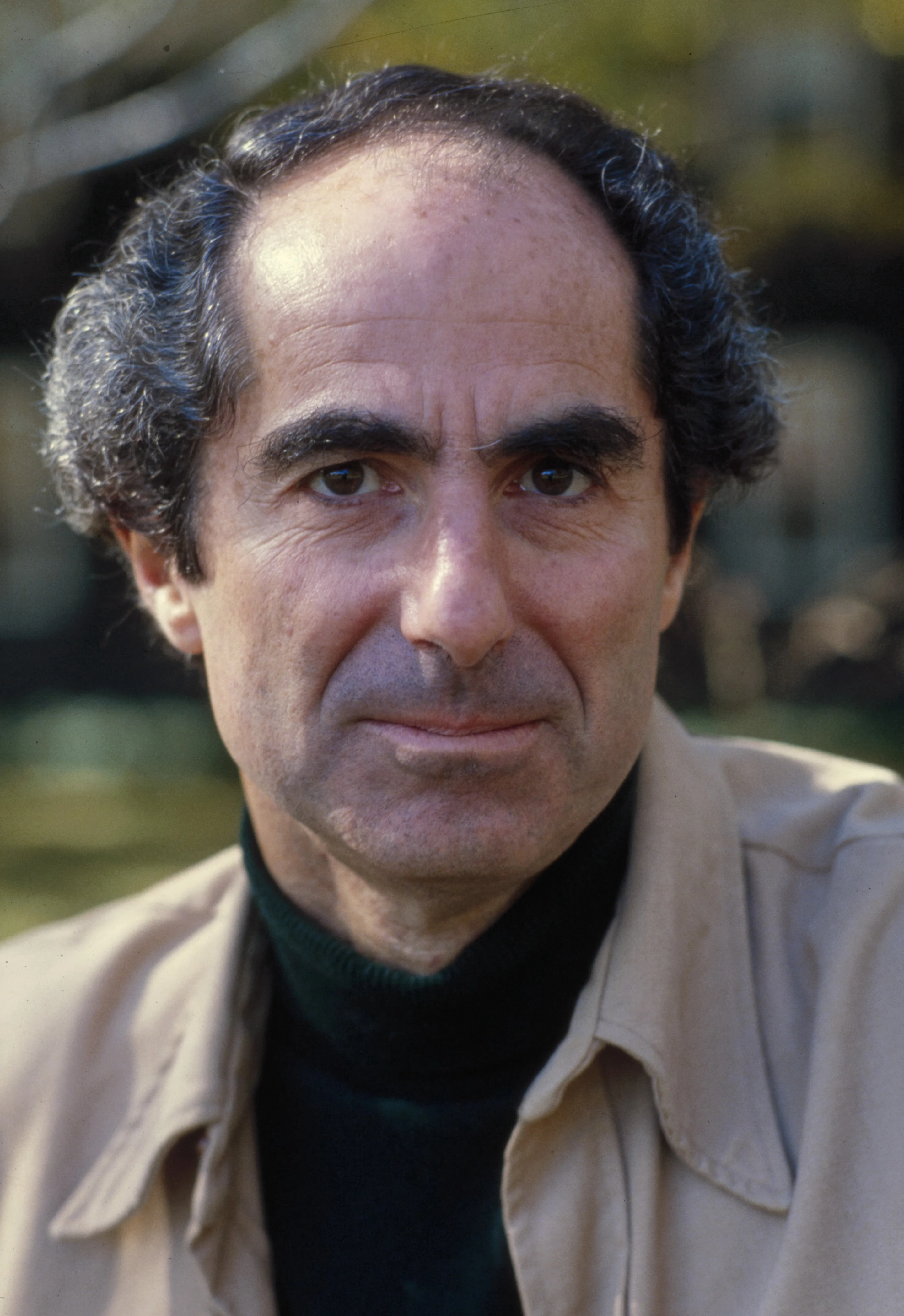
Image from Wikipedia
Image from Wikipedia
Philip Roth: The Great Chronicler of the American Experience
A Writer Who Made Private Life a Literary Grand Form
Philip Milton Roth is one of the most influential American authors of the 20th and early 21st centuries. Born on March 19, 1933, in Newark, New Jersey, and died on May 22, 2018, in New York City, he developed a body of work that combines autobiographical experience, Jewish-American identity, social provocation, and formal mastery with exceptional density. His novels, stories, and essays earned him numerous awards and made him one of the most discussed candidates for the Nobel Prize in Literature for decades. (britannica.com)
Biographical Beginnings in Newark
Roth's background in a lower-middle-class Jewish family in Newark profoundly influenced his literary imagination. The city serves not only as a backdrop in his work but also as an emotional and social coordinate system: a place where aspirations, shame, desire, and belonging collide in close quarters. This early rooting in a concrete American everyday world gave his novels a harshness and precision that soon became his hallmark. (philiprothsociety.org)
His career began with remarkably swift literary recognition. His debut collection, Goodbye, Columbus and Five Short Stories, won the National Book Award for Fiction in 1959, signaling that a new, idiosyncratic voice had entered American literature. The early resonance of this book laid the foundation for a career that never settled for conventional realism but constantly explored the boundaries of satire, self-examination, and social observation. (loc.gov)
The Breakthrough with Scandal Potential
Roth's actual cultural breakthrough came in 1969 with Portnoy’s Complaint, a novel that abruptly thrust him into the spotlight of American public life. The book became a scandalous success due to its ruthlessly direct handling of intimate, sexual, and psychological themes, evoking both outrage and enthusiasm. It was precisely this friction between public provocation and literary precision that made Roth a figure not only to be read but also to be debated. (philiprothsociety.org)
His works are often autobiographically tinted, without exhausting themselves in mere self-presentation. Roth transformed personal conflicts, familial tensions, and the experiences of two marriages into an art form that exemplifies the personal. In doing so, he created literature that reveals and conceals, confesses and stages, generating its tension precisely therein. (philiprothsociety.org)
Nathan Zuckerman and the Great Form of the Recurring Self
Beginning in the 1970s, the character Nathan Zuckerman accompanied Roth’s work through two trilogies and several standalone novels. Zuckerman became one of the most distinctive narrative figures in modern American literature: an alter ego, an observer, a writer caught in the tension between fame, fiction, and identity loss. Through this character, Roth deepened his central inquiry into the relationship between life and invention, creating a novel architecture of high internal coherence. (philiprothsociety.org)
The Zuckerman novels particularly highlight Roth’s literary development. They intertwine self-reflection with social diagnosis and showcase an author who never views narrative perspective as a static form but as an instrument of critical insight. In this phase, Roth's style condensed into prose that is both analytical and emotionally charged, with ironic nuances. (britannica.com)
Prominent Works, Themes, and Literary Maturity
Among Roth's best-known and most widely received books are The Counterlife, Patrimony: A True Story, Sabbath’s Theater, American Pastoral, and The Plot Against America. These titles mark different phases of his creation: from playful formal experimentation with identities to autobiographically inspired family narratives and the grand social novel that interprets America itself as a contradictory narrative. His literature remained dynamic and gained historical breadth, especially in his later works. (britannica.com)
American Pastoral earned him the Pulitzer Prize in 1998, while Sabbath’s Theater won the National Book Award. The Counterlife also received accolades and exemplifies Roth's fascination with counter-narratives, alternative life paths, and narrative uncertainty. His books were not only read but also debated, taught, and utilized as benchmarks for contemporary American literature. (philiprothsociety.org)
Style, Voice, and Artistic Development
Roth’s style combines intellectual sharpness with stark directness. His prose works with dialogical energy, inner monologues, satirical sharpness, and a pronounced sense of psychological friction. He wrote not to smooth over but to expose conflicts: between the individual and family, desire and morality, public roles and private truths. (britannica.com)
The artistic development of his work reveals an author who moved increasingly away from mere contemporary narration while also making its social and political upheavals more precisely visible. His later novels, in particular, engage with historical tensions and transform them into literary compression. Thus emerged a body of work that perceives American history not as a backdrop but as a living force in the consciousness of the characters. (neh.gov)
Awards, Recognition, and Literary Authority
Roth received an extraordinary number of awards and honors. These include two National Book Awards, two National Book Critics Circle Awards, three PEN/Faulkner Awards, the PEN/Nabokov Award, the PEN/Saul Bellow Award, the Pulitzer Prize, and the Gold Medal of the American Academy of Arts and Letters. The Library of Congress and the National Endowment for the Humanities also honored his entire body of work at the highest level. (neh.gov)
These accolades reflect not only success but also institutional authority. Roth was regarded as one of the great stylists in US literature, as an author of formal discipline and radical self-examination, as a chronicler of American-Jewish life, and as a novelist who permanently shaped contemporary fiction. His status as a long-standing candidate for the Nobel Prize is a testament to this exceptional position. (britannica.com)
Cultural Influence and Lasting Impact
Roth's influence extends far beyond literary studies. His books have shaped the image of the American novel as they portray intimacy, politics, sexuality, and history not as separate entities but as interconnected forces. The adaptation of The Plot Against America into a television series in 2020 further demonstrates how strongly his themes resonate in the audiovisual present. (en.wikipedia.org)
Even after he stepped back from writing in October 2012, his work remained alive because it poses questions that do not age: How much self can be narrated? How greatly do origins and desires shape a life? And how accurately can a nation be described in the language of its conflicts? Roth's literature does not provide definitive answers but instead makes their unease productive. (en.wikipedia.org)
Conclusion: Why Philip Roth continues to Fascinate
Philip Roth remains captivating because his books blend literary brilliance with unsparing self-examination. He was an author who took American life in all its complexity seriously, crafting novels of great emotional and intellectual force. Anyone wishing to understand how personal obsessions, social tensions, and historical traumas transform into great literature cannot overlook Roth. (britannica.com)
His work invites continual rediscovery, unfolding new layers of irony, melancholy, and insight with each reading. Those who read Philip Roth encounter one of the most powerful voices in the history of American literature. It is precisely the uncompromising nature and precision of his prose that makes him an author to not only read but to take seriously time and again. (britannica.com)
Official Channels of Philip Roth:
- Instagram: No official profile found
- Facebook: No official profile found
- YouTube: No official profile found
- Spotify: No official profile found
- TikTok: No official profile found