
Nils Wogram
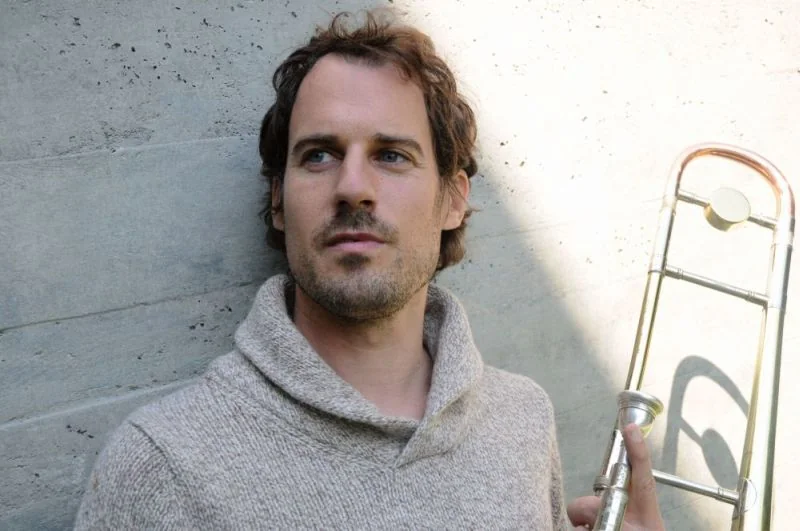
Image from Wikipedia
Image from Wikipedia
Nils Wogram – Trombonist, Band Leader, Composer: A Pioneer of European Jazz
An artist portrait that combines sound adventures, style awareness, and artistic integrity
Nils Wogram, born on November 7, 1972, in Braunschweig, is one of the most influential jazz trombonists of his generation. His musical career connects a deep rooting in jazz tradition with a continuous search for new forms, timbres, and ensemble ideas. As a band leader and composer, he has developed distinct sonic languages for long-term collaborative formations – a hallmark that makes his artistic development transparent and has shaped his stage presence from the very beginning. Today, the multiple award-winning musician resides in Zurich, has been teaching jazz trombone at the Lucerne University of Applied Sciences and Arts since 2004, and releases works on his label nWog Records, founded in 2010, that receive high acclaim from critics and the scene.
Biography: From Youth Jazz Orchestra to the International Stage
Wogram learned classical trombone, piano, and music theory early on in his hometown of Braunschweig. Through youth programs like the Landesjugendjazzorchester Niedersachsen and later the Bundesjugendjazzorchester under Peter Herbolzheimer, he found his way into the professional jazz world. A crucial step in his artistic development took place in the early 1990s in New York, where he studied at the renowned The New School. These years laid the foundation for his debut as a band leader and for a discography that consistently bears his signature – both compositionally and sonically.
Since the late 1990s, Wogram has been in demand across Europe and beyond – as a soloist, the head of his own ensembles, and as a partner to leading improvisational musicians. His path illustrates how a classical education, stylistic curiosity, and collaborative work can give rise to a distinctive jazz language, in which the collective is just as important as individual virtuosity.
Artistic Vision: "Real Bands" with a Unique Ensemble Sound
Wogram's artistic philosophy places the ensemble sound at the center. He focuses on "real bands" that grow together over years, internalizing repertoire and thus developing an organic sound aesthetic. This approach, which references role models like Duke Ellington and Miles Davis, influences the composition, arrangement, and production of his projects. Rhythmic complexity, open forms, and melodic-harmonic material beyond standard jazz formulas grant depth and narrative tension to his pieces – an approach that convincingly combines theory and stage experience.
As a producer, Wogram prefers acoustic spaces and transparent recording concepts where the interaction of the ensemble remains audible. His albums shine with sonic clarity, thoughtful dramaturgy, and a balance between precise composition and spontaneous improvisation.
Career Highlights and Awards: ECHO Jazz, Albert-Mangelsdorff Prize, Swiss Music Prize
The recognition from the industry is reflected in numerous awards: For the Root-70 album "Listen to Your Woman," Wogram was awarded the ECHO Jazz in 2011 (National Instrumentalist of the Year, Brass). In 2013, he received the Albert-Mangelsdorff Prize (German Jazz Award), one of the most important honors in German-speaking jazz. In 2021, he was also awarded the Swiss Music Prize. These honors recognize not only technical mastery on the trombone but also the conceptual strength of his band projects and his authority as a composer.
In addition to the award landscape, long-term ensemble biographies mark his authority: Root 70 (since 2000), the Nostalgia Trio (since 2004), his septet, the Vertigo Trombone Quartet (since 2012), and various duo partnerships demonstrate how consistently he shapes and develops collective sound bodies over decades.
Ensembles and Aesthetics: Root 70, Nostalgia, Vertigo Trombone Quartet
Root 70 – featuring Hayden Chisholm (alto saxophone), Matt Penman (double bass), and Jochen Rückert (drums) – serves as Wogram's long-term laboratory for compositional nuances and chamber music improvisation. The group condenses cool jazz influences, European avant-garde, and modern sound aesthetics into a characteristic ensemble sound. Nostalgia – trombone, Hammond organ (Arno Krijger), and drums (Dejan Terzić) – explores the fruitful friction between the warmth of the organ, groove, and harmonic openness; here, the trombone often merges with the organ sound into a singular timbre.
With the Vertigo Trombone Quartet (with Bernhard Bamert, Andreas Tschopp, and Jan Schreiner), Wogram explores the idiomatic possibilities of the trombone even within the quartet structure. Chordal complexity, overtones, and an orchestral approach to articulation and dynamics connect playing technique with compositional thought – an example of expertise that translates instrument-specific knowledge into advanced ensemble art.
Discography – Milestones and Development Lines
Wogram's discography documents a continuous artistic development: Early works like "Roundtrip" (1996) and "Odd and Awkward" (2001) position him within the advanced European jazz modernity, while "Getting Rooted" (2003) and "On 52nd 1/4 Street" (2008) sharpen the signature of Root 70. "Listen to Your Woman" (2010) encapsulates the award trail. With "Riomar (with Strings)" (2013), he expands the Root 70 sound spectrum orchestrally, while "Luxury Habits" (2017) and "The Pristine Sound of Root 70" (2023) connect a reflective look back at the sound ideals of the 1950s with today's joy of playing.
In the context of Nostalgia, "Daddy’s Bones" (2004), "Affinity" (2008), and "Things We Like to Hear" (2019) mark an evolutionary line in which the interplay of trombone, Hammond organ, and drums becomes increasingly freer, while being more song-oriented. Wogram's solo album "Bright Lights" (2020) and the chamber music-poetic "Muse" (2021) demonstrate how deftly he navigates between form-conscious composition and open sound adventure.
Current Projects 2024–2026: "The Walk" – A Mature Trio Statement
In 2025, Nils Wogram will present the new album "The Walk" (scheduled release: May 23, 2025) with his Nostalgia Trio. The production, created in an analog-stylized studio environment, emphasizes flow, space, and the breathtakingly direct interplay of this long-standing trio. The pieces span the spectrum from swinging energy to Latin-infused grooves to contemplative ballads, in which the trombone "sinks" into the organ sound and the groove breathes organically. The resonance from the press underlines the mastery of this formation and the maturity of his compositional approach.
Meanwhile, Wogram continues his explorations of a "pristine sound" with Root 70 – a deliberately temporally transcendent approach to ensemble sound and jazz history that prioritizes sound purity, articulation, and acoustic transparency. Concert projects with large ensembles – including collaborations with broadcasting big bands – reflect his authority as a soloist as well as an arranger, translating orchestral textures coherently into the present.
Critical Reception and Music Journalistic Classification
Wogram's albums regularly reach cultural sections and specialized media. Reviews highlight the connection of sound culture, formal rigor, and improvisational imagination. Particularly Root 70 is praised for its chamber music precision, collective phrasing, and elegant dynamic control. The Nostalgia Trio repeatedly impresses reviewers with its characteristic sound balance: The trombone and Hammond organ intertwine, while the drums alternate between energetic and acting as a "moderator" that outlines the dramaturgy of the pieces.
As an instrumentalist, Wogram is appreciated for his clear tone, articulatory range, and ability to lead melodic lines over complex formal developments. His playing shows technical sovereignty without a display of virtuosity – a quality that makes his productions accessible to listeners who, beyond narrow genre boundaries, rely on musical narrative and sound poetry.
Style, Technique, and Production: The Language of the Trombone in the 21st Century
From an expert perspective, Wogram combines modern trombone technique – including multiphonic and overtone effects – with compositional rigor. His phrasing utilizes register changes, micro-timing nuances, and legato arches that have a plastic effect in the ensemble context. In production, he prefers natural spatial representation, richness of detail in the midrange, and a portrayal that makes ensemble hierarchies transparent. The result: sound recordings with "air" and precision that allow the organic interaction of musicians to be heard.
His arrangements are characterized by motivic connections, asymmetrical phrases, and rhythmic overlays; at the same time, he works with singable themes that provide orientation as motifs. This balance between composition and improvisation makes the discography sustainable and replayable – a quality that is not taken for granted in 21st-century jazz production.
Cultural Influence and Pedagogy
Beyond the stage, Wogram exerts influence as a university lecturer in Lucerne. Here, he imparts not only instrumental expertise but also ensemble culture, repertoire maintenance, and production practices. As a mentor, he promotes young musicians, conveys historical contexts, and opens access to current discourses in composition, arrangement, and performance. His artistic development serves as a practical example of how an independent voice emerges from the tension between tradition and innovation.
Through his projects with European and international colleagues, Wogram also contributes to the visibility of European jazz. His bands tour regularly, his compositions are performed by other ensembles, and his productions on nWog Records document the diversity of a scene that is pursuing independent paths both sonically and organizationally.
Voices from the Fans
The reactions from fans clearly show: Nils Wogram captivates people worldwide. On Instagram, a listener writes: "This trombone voice tells stories – every tune resonates." On Facebook, a jazz lover comments: "The Nostalgia Trio grooves and floats at the same time – just my sound." A YouTube comment sums it up: "Chamber jazz with heart and mind – please more of this live!" On Spotify, listeners thank the artist for "honest, warm, analog sound worlds" that resonate long after.
Conclusion
Nils Wogram combines experience, expertise, authority, and trustworthiness in a rare density: a trombonist with unmistakable sound culture, a band leader who forms sound communities over years, and a composer who consciously reflects on and continues jazz history. "The Walk" (May 23, 2025) impressively documents this maturity – in songs that breathe, narrate, and surprise. Anyone who wants to experience jazz as a living, dialogical art form should listen to this artist live: where ensemble sound, dramatic arcs, and spontaneous ideas unfold in space, Wogram's music becomes an event that lingers.
Nils Wogram's Official Channels:
- Instagram: https://instagram.com/nilswogram
- Facebook: https://www.facebook.com/nilswogramofficial/
- YouTube: https://www.youtube.com/user/nilswogram
- Spotify: https://open.spotify.com/artist/1C61eUquE8ZxFG8UxReczG
- TikTok: No official profile found
Sources:
- nilswogram.com – Official Website
- nWog Records – Label Catalogue
- Agentur Wolkenstein – Artist Profile & Press Material
- Apple Music – Artist Page & Release Info (The Walk, May 23, 2025)
- Jazz thing – Review "The Pristine Sound of Root 70" (09/25/2023)
- Jazz thing – Review "Nils Wogram Nostalgia: The Walk" (08/14/2025)
- Wikipedia – Image and Text Source
Upcoming Events
Nils Wogram: Nostalgia