
Nena
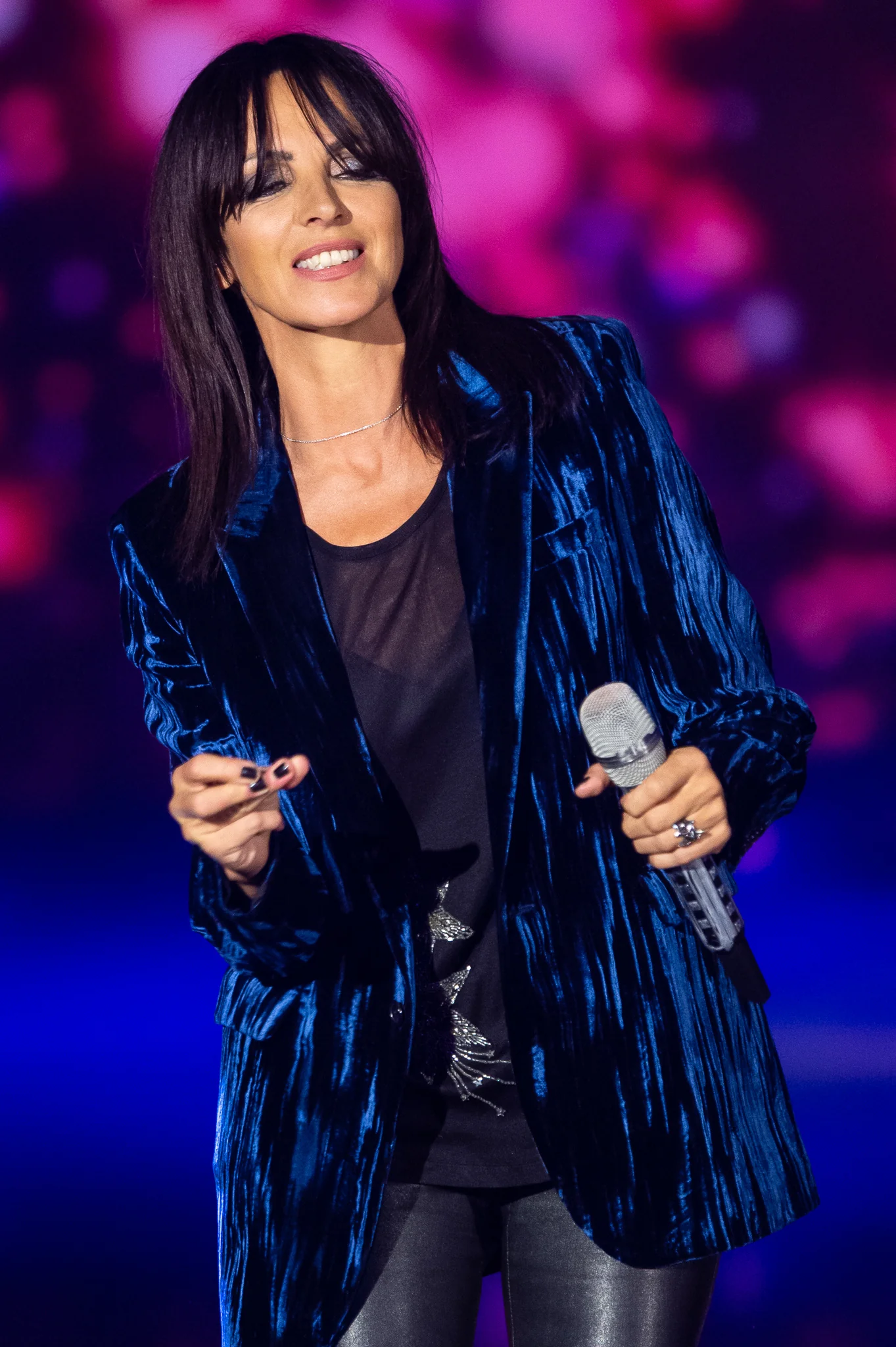
Image from Wikipedia
Image from Wikipedia
Nena – The German Pop Icon Between Neue Deutsche Welle and Timeless Stage Presence
From NDW Phenomenon to Enduring Artist: Why Nena Connects Generations
Nena, born Gabriele Susanne Kerner on March 24, 1960, in Hagen, has shaped German pop history like few other singers. With the band Nena, she conquered the Neue Deutsche Welle in 1982/83 and penned a global anthem with 99 Luftballons that resonates to this day. Her music career began in the late 1970s, with rapid international breakthrough following – and despite changing trends, her artistic development has remained consistently visible. Over 25 million records sold and a lasting stage presence underscore her exceptional status.
The journey from early club stages in Berlin to sold-out venues across Europe shows that Nena is more than an 80s symbol. As a solo artist, she started building an independent discography from 1989, impressively returning to the charts in 2002 with Nena feat. Nena and releasing Licht in 2020, a late work that updates the essence of her artistic signature. Her live productions, arrangements, and energetic performances continue to demonstrate a vital pop artist who constantly seeks the here and now.
Biography: From Hagen to West Berlin – The Formative Years
After her first steps with The Stripes, Nena moved to West Berlin in 1982. There, she founded the band Nena together with Rolf Brendel, Carlo Karges, Jürgen Dehmel, and Uwe Fahrenkrog-Petersen. The city’s music culture – new wave, synth-pop, post-punk – shaped their sound. The production framework was significantly influenced by Manne Praeker and Reinhold Heil (Spliff), whose studio sound shaped the early recordings. Even the debut single Nur geträumt made a bold statement in 1982; the stage became the catalyst: television, tours, and a rapidly growing fan base.
The self-titled debut album Nena (1983) combined NDW style with pop-rock drive, melodic hooks, and keyboard arrangements. Thematically, the songs ranged from youthful exuberance to the societal moods of the Cold War. With Fragezeichen (1984), the band refined their identity – and added further signature songs with Leuchtturm and Irgendwie, irgendwo, irgendwann.
The International Breakthrough: 99 Luftballons
99 Luftballons became a global phenomenon in 1983/84 – a German-language song at the top of the world. In the USA, the German version reached No. 2 on the Hot 100; in the UK, the English-language version, 99 Red Balloons, topped the charts. The song captured the zeitgeist – anti-war metaphors, a catchy melody, a compact arrangement design between new wave and pop. Numerous music magazines and interviews have since traced the creation of this classic; the band insisted on releasing the single despite label doubts – an artistic decision that made music history.
More than four decades later, 99 Luftballons remains an "evergreen" of the 80s canon. Anniversary editions, newly remastered videos, and chart-returning successes attest to its lasting allure. The cultural impact – from soundtrack to stadium chorus – is globally felt, without losing the political dimension of the lyrics.
Solo Career Starting in 1989: Independence, Comeback, and Continuity
With Wunder gescheh’n, Nena launched her solo career in 1989. This was followed by albums such as Bongo Girl, Du bist gut, Oldschool, and Made in Germany – works that combine pop ballads, contemporary production aesthetics, and collaborative impulses. In 2002, Nena revived her classics on Nena feat. Nena – an arrangement update that led to a multiplatinum revival and reestablished her authority in the pop landscape. In 2005, she achieved a number-one single as a solo artist in Germany with Liebe ist – 22 years after 99 Luftballons – a rare proof of lasting relevance.
Her label Laugh & Peas has allowed more artistic autonomy since 2009: from repertoire decisions to production partners to live staging. Collaborations with Kim Wilde, Schiller, and producers from rap and pop contexts demonstrate Nena's openness to cross-genre work.
Current Projects 2024–2026: Reissues, Tours, New Chapters
To celebrate the 40th anniversary of her debut album, a remastered edition with rarities, B-sides, live recordings from 1984, and a French version of Nur geträumt will be released in 2024 – a curated audio showcase between archival finds and audiophile present. This edition pushed the band album back into the German charts and rekindled the discussion about Nena's early sound and its production legacy (Spliff school).
Meanwhile, her stage presence remains of central importance. A large tour under the banner NENA LIVE 2026 has been announced for 2026 – a clear signal for the live continuity of her career. In interviews over the past few years, Nena has also hinted at working on new material. Although release dates naturally remain volatile, the creative process marks the next phase after Licht (2020).
Discography – Cornerstones and Development Lines
Band Era: Nena (1983), Fragezeichen (1984), Feuer und Flamme (1985), and Eisbrecher (1986) form the core quartet of the NDW/New Wave phase. International Album/99 Luftballons (1984) bundled German originals and English versions for markets outside the German-speaking world. The sonic signature: synth riffs, driving drums, bass lines with pop appeal, guitar accents between post-punk and power pop.
Solo Time: Highlights such as Nena feat. Nena (2002), Willst du mit mir gehn (2005), Made in Germany (2009), Du bist gut (2012), Oldschool (2015), and Licht (2020) showcase a consistent redefinition of her pop language. Liebe ist (2005) became a benchmark for her solo career; live releases like Made in Germany Live document the stage aesthetics: dynamic tempos, dramaturgically set refrain builds, audience responses as part of the arrangement.
Style and Production: From NDW Codes to Contemporary Pop Architecture
Nena's voice is distinctive: smoky, energetic, with clear diction and a slight vibrato that unfolds power in higher ranges. In the 1980s, synth layers, analog drums, and raw guitar colors dominated – an arrangement foundation that places melodic directness in the foreground. Later productions incorporate more modern sound aesthetics: broader stereo images, deeper sub-bass, punchier snare designs, without sacrificing hook-oriented focus.
Compositionally, Nena's work thrives on refrain economy and concise motifs: call-and-response moments, syncopated synth figures that push the metric framework forward. Ballads focus on harmonic warmth, often featuring piano-driven voicings, while uptempo songs prefer percussive guitars and synth arpeggios. This combination has made her pop sound recognizable.
Cultural Influence: Pop Memory, Politics, and Generational Soundtrack
99 Luftballons is long more than just a hit: the song serves as a cultural memory of the Cold War in pop form and as an evergreen that circulates today in series, films, stadiums, and TikTok reels. That a German-language title reached No. 2 on the US charts and has remained permanently present in the Anglo-American sphere is a remarkable case in pop history. Nena's artistic development also demonstrates how NDW aesthetics have seeped into global pop culture – from arrangement design to imagery.
At the same time, Nena represents an independent German pop tradition that understands internationality not as a language switch but as a question of sound and attitude. Her later repertoire, including collaborations, shows pop as an open system: stylistically plural, audience-friendly, live-oriented. Awards like the LEA for the Nichts versäumt tour in 2018 and ongoing ticket demand underline this relevance.
Reception and Market: Charts, Catalog, Reissues
The return of the debut album to the charts (anniversary edition 2024) illustrates the catalyst effect of careful remastering and curation. Catalog movements – such as rights expansions for 99 Luftballons – also show how stable Nena's repertoire is valued in international rights trading. Music press and industry portals honor both the historical significance and the production details of the early albums, whose sound aesthetics were shaped through Spliff connections and Berlin studio work.
At the same time, live demand remains high: media reports document recent concerts and the audience response, which creates a dramatic unity from classics and newer songs. As a solo artist, Nena also confirmed her 21st-century chart stability with Licht (2020) – a late chapter with considerable appeal.
Conclusion: Why Nena Is More Worth Listening to Than Ever
Nena combines historical weight with contemporary energy. Her music career tells of artistic development, bold single decisions, and live presentations that captivate generations. Those who experience her live feel the immediate connection between band, audience, and song – a pop communication that has endured from 1982 to today. Whether NDW classics or new material: Nena's concerts are the best invitation to rediscover one's own pop history.
Official Channels of Nena:
- Instagram: No official profile found
- Facebook: No official profile found
- YouTube: No official profile found
- Spotify: No official profile found
- TikTok: No official profile found
Sources:
- Nena – Official Website (Tour & Biography Overview)
- Nena – Official Website (Management & Contact)
- MusicRadar – Nena on the Creation of 99 Red Balloons (Interview, 2025)
- Merkur – Nena's Debut Storms the Charts Again (Anniversary Edition, 2024)
- POP-HIMMEL.de – Reissue of the Debut "Nena" (Announcement, 2024)
- Deutsche Mugge – Reissue of "Nena" with Production Teams (2024)
- ARD Mediathek – Hamburg Journal: Nena Live (2024)
- BMG – Rights Expansion for "99 Luftballons" (Catalog News)
- Wikipedia – Nena (Biography, Discography, Awards)
- Wikipedia: Image and text source
Upcoming Events
NENA Live 2026 - Open Air
NENA Live 2026 - Open Air in Braunschweig
The 80s Live at Schalke 2026
NENA - Open Air 2026
Nena - Open Air 2026 - Freilichtbühne Schlossgarten
NENA – Open Air 2026
NENA - Open Air 2026
NENA – Open Air 2026 in Schwerin
NENA - Live 2026