
Monika Baumgartner
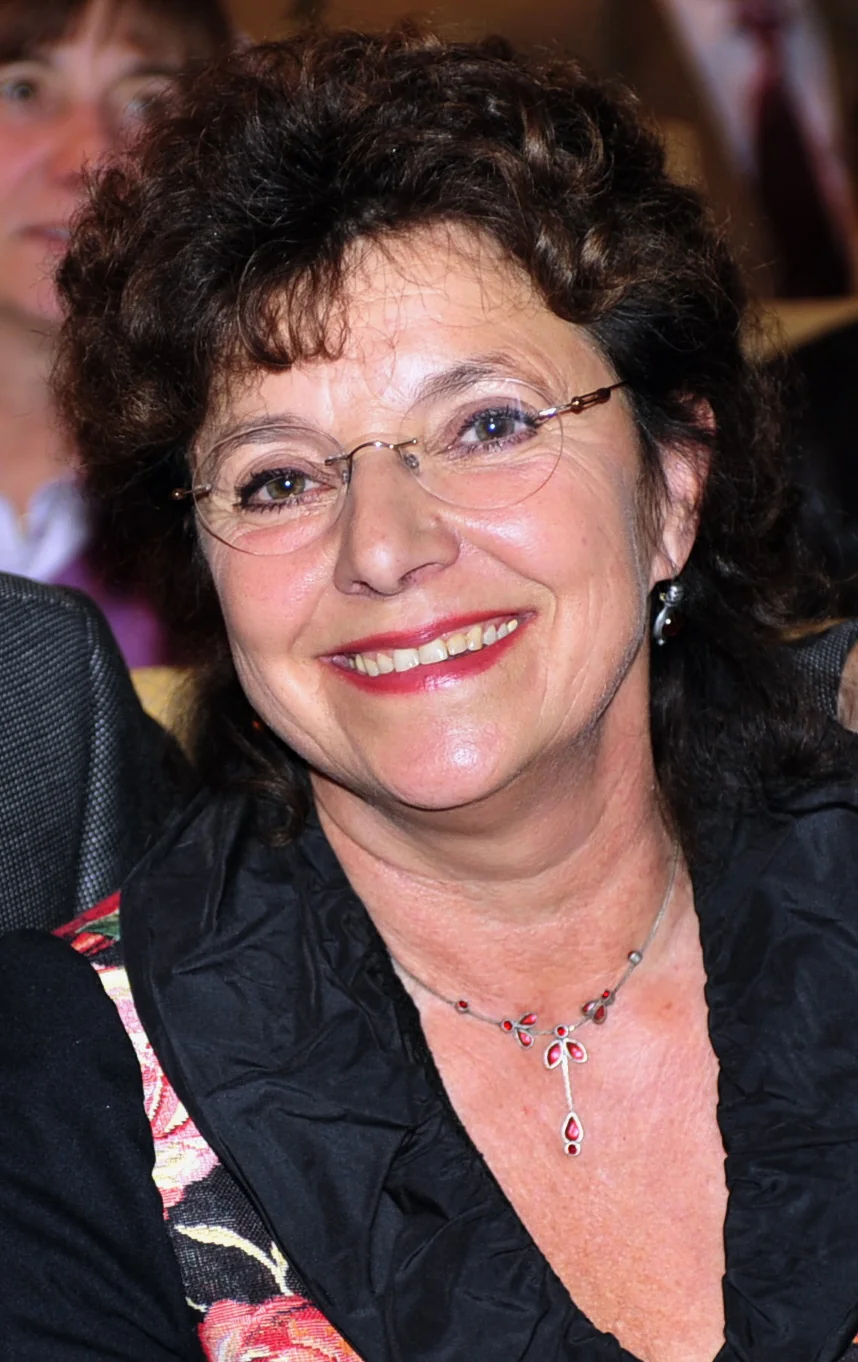
Image from Wikipedia
Image from Wikipedia
Monika Baumgartner: The Great Bavarian Folk Actress Between Stage, Television, and Home
A Munich Actress with Strong Presence and Distinctive Attitude
Monika Baumgartner is one of the defining faces of German-speaking folk theatre. Born on July 19, 1951, in Munich, she evolved from a theatre actress with classical training to a highly sought-after film and television actress, director, and educator. Her name stands for Bavarian down-to-earthiness, emotional credibility, and a stage presence that has endured for decades.
Her career connects theatrical artistry, popular television, and cultural roots in a remarkable way. Particularly in Bavaria, she enjoys high esteem because she does not treat regional themes as mere folklore but plays them as a vibrant present. This is precisely where the strength of her artistic development lies: she lends depth, dignity, and human friction to familiar characters.
The Early Years: Training, Theatre, and the Path to Professionalism
From Munich to the Great Stages
Her training at the Otto Falckenberg School in Munich from 1969 to 1972 laid the foundation for a career that would soon reach far beyond the city limits. Her first engagement took her to the National Theatre Mannheim in 1973, where she performed in classics and repertoire pieces. There, she played Polly in The Threepenny Opera, Hermia in A Midsummer Night's Dream, Christoferl in He Wants to Make a Joke, and Julie in Liliom.
These early stages reveal an actress who was not confined to a single type. Even then, Baumgartner combined linguistic precision with physical presence and a keen sense of ensemble work. In 1978, she moved to the Thalia Theatre in Hamburg under Boy Gobert and made her debut there as Simba in The Marquis of Keith.
Munich Kammerspiele and Artistic Maturity
From 1983 to 1986, Monika Baumgartner was a member of the ensemble at the Munich Kammerspiele. There, she collaborated with Franz Xaver Kroetz, embodying Helga in Neither Fish nor Flesh in 1983 and the daughter in the world premiere of Farmers Die in 1985. These works clearly anchor her in a theatrical tradition that takes social milieus, linguistic authenticity, and psychological precision seriously.
It was precisely during this phase that it became evident how much her acting relies on observation and inner tension. She does not rely on loud gestures but develops roles through attitude, rhythm, and text comprehension. This makes her stage work particularly credible today and establishes her as an important representative of contemporary folk theatre.
The Breakthrough on Television: From the Bavarian Chronicle to a Cultural Icon
The Success with Die Rumplhanni
Since the late 1970s, Baumgartner had also been present in film and television, but her actual breakthrough came in 1981 with the two-part television film Die Rumplhanni. In the title role, she crafted a character that remains associated with her name to this day. The production brought her the attention of a wide audience and solidified her reputation as a significant actress for Bavarian themes.
This success was no coincidence but the result of a work ethic that had matured over years. Baumgartner connects regionality with universal themes such as social mobility, self-assertion, and female strength. As a result, her portrayal resonates not only with Heimatfilm audiences but also with viewers who seek credible, strong characters.
Presence in Series, Shows, and Popular Formats
In the following decades, Baumgartner became a familiar face across numerous television series. She appeared in Our Most Beautiful Years, To Freedom, Police Station 1, The Million Builder, Munich 7, Master Eder and His Pumuckl, Crime Scene, The Rosenheim Cops, The Old Man, SOKO Munich, Derrick, Ordinary Madness, The Cop from Tölz, and in Komödienstadel. This breadth showcases an actress who has shaped television with continuity over decades.
Since 2008, she is particularly well-known as Elisabeth Gruber in Der Bergdoktor. This role grants her lasting visibility and connects her to one of the most successful German-speaking Heimat series. Her character embodies familial warmth, inner strength, and a humorous, down-to-earth perspective on life in the Alps.
Directing, Readings, and New Artistic Paths
The Other Side of a Musical Career? No: The Spoken Word as an Art Form
Monika Baumgartner has not only acted but also directed. In 1998, she made her television directing debut with Die Ehrabschneider; in 1999, she directed Peter Turrini's Love in Madagascar at the National Theatre Mannheim. This demonstrated her sense of dramaturgy and ensemble leadership, expanding her expertise beyond pure acting practice.
Additionally, her readings have taken her on tours, especially around the Christmas season, with programs like Alpine Christmas, Holy Night, and Mountain Christmas, showcasing her mastery of language, rhythm, and atmosphere. Her artistic profile thus extends from the stage to television and literary performance.
Autobiography and Personal Self-Interpretation
In 2020, Baumgartner published her autobiography Everything is a Matter of Attitude – My Life Between Mountain and Valley. The book offers insights into her childhood, career choices, successes, and life challenges. It complements the public image of an actress who relies not on effects but on attitude, experience, and authentic storytelling.
Such biographical works are essential for understanding her career. They reveal how closely her personal experiences, professional discipline, and artistic development are intertwined. Baumgartner does not present herself as a star figure, but as a reliable narrator of a long, industrious life dedicated to her roles.
Style, Impact, and Cultural Influence
Folk Theatre with Substance
Monika Baumgartner belongs to that rare generation of actresses who do not diminish but rather refine regional identity. Her acting thrives on clarity, linguistic sensitivity, and a calm authority. This makes her equally convincing in comedies as well as in more serious subjects, on television series just as on stage.
Her cultural influence also lies in her ability to bring the Bavarian dialect, social observation, and psychological accuracy of folk theatre into the present. She represents a form of popularity based on substance, distinguishing her from ephemeral television personalities and making her career enduring and relevant.
Awards and Recognition
For her achievements, Monika Baumgartner has received numerous awards, including the Bavarian Merit Order in 2011 and the Upper Bavarian Culture Prize in 2014. In 2019, Der Bergdoktor was honored with the GOLDEN KAMERA as the most popular Heimat series by viewer voting. In 2024, she received the Sigi-Sommer-Taler from the Munich Carnival Society Narrhalla, and in 2025, the Tassilo Medal for her contributions to the Bavarian dialect.
Her teaching role at the Bavarian Theatre Academy August Everding further underscores her authority in the field. She conveys not only knowledge of roles but also an understanding of discipline, text work, and scenic presence. This allows her to impact the next generation far beyond her own productions.
Current Works and Enduring Presence
Between Stage, Camera, and Readings
In her later years, Baumgartner has remained artistically active. In the 2010s and 2020s, she appeared in various film productions and episodic roles, including Die Gruberin, Von Kerlen und Kühen, Let's go, Grüner wird’s nicht, Bettys Diagnose, Rosamunde Pilcher: The Secret of the Rose Island, SOKO Munich, SOKO Danube Vienna, Hubert ohne Staller, and Kanzlei Berger. This continuity illustrates a career that cannot be reduced to a singular peak.
Her return to the stage is also noteworthy, for instance at the Operettensommer Kufstein as Empress Maria Theresa in The Gypsy Baron and as Golde in Anatevka. Such performances demonstrate an acting versatility that spans classical theatre tradition to popular musical theatre. Baumgartner remains a prominent figure in German-speaking cultural life.
Conclusion: An Actress with Attitude, Heart, and a Sense of Home
Monika Baumgartner captivates because she credibly connects tradition and present, stage and television, humor and seriousness. Her career narrates a story of craftsmanship, regional identity, and an artistic development that has grown over decades. Those who experience her feel immediately: Here stands no interchangeable TV personality, but a true folk actress with character.
For this reason, it is worthwhile to observe her performances – whether on stage, on television, or in readings. Monika Baumgartner remains compelling because she consistently imbues the characters she portrays with dignity, warmth, and truth. Anyone who experiences her presence live quickly understands why she is among the most distinctive voices in Bavarian acting.
Official Channels of Monika Baumgartner:
- Instagram: no official profile found
- Facebook: no official profile found
- YouTube: no official profile found
- Spotify: no official profile found
- TikTok: no official profile found
Sources:
- Wikipedia – Monika Baumgartner
- Agentur Dietrich – Monika Baumgartner
- Der Bergdoktor Fanclub – Monika Baumgartner
- Verlagsgruppe Droemer Knaur – Press Release on the Autobiography
- TV Spielfilm – “5 Facts About Monika Baumgartner”
- Süddeutsche Zeitung – Interview with Monika Baumgartner
- Wikipedia: Image and Text Source