
Lena Gorelik
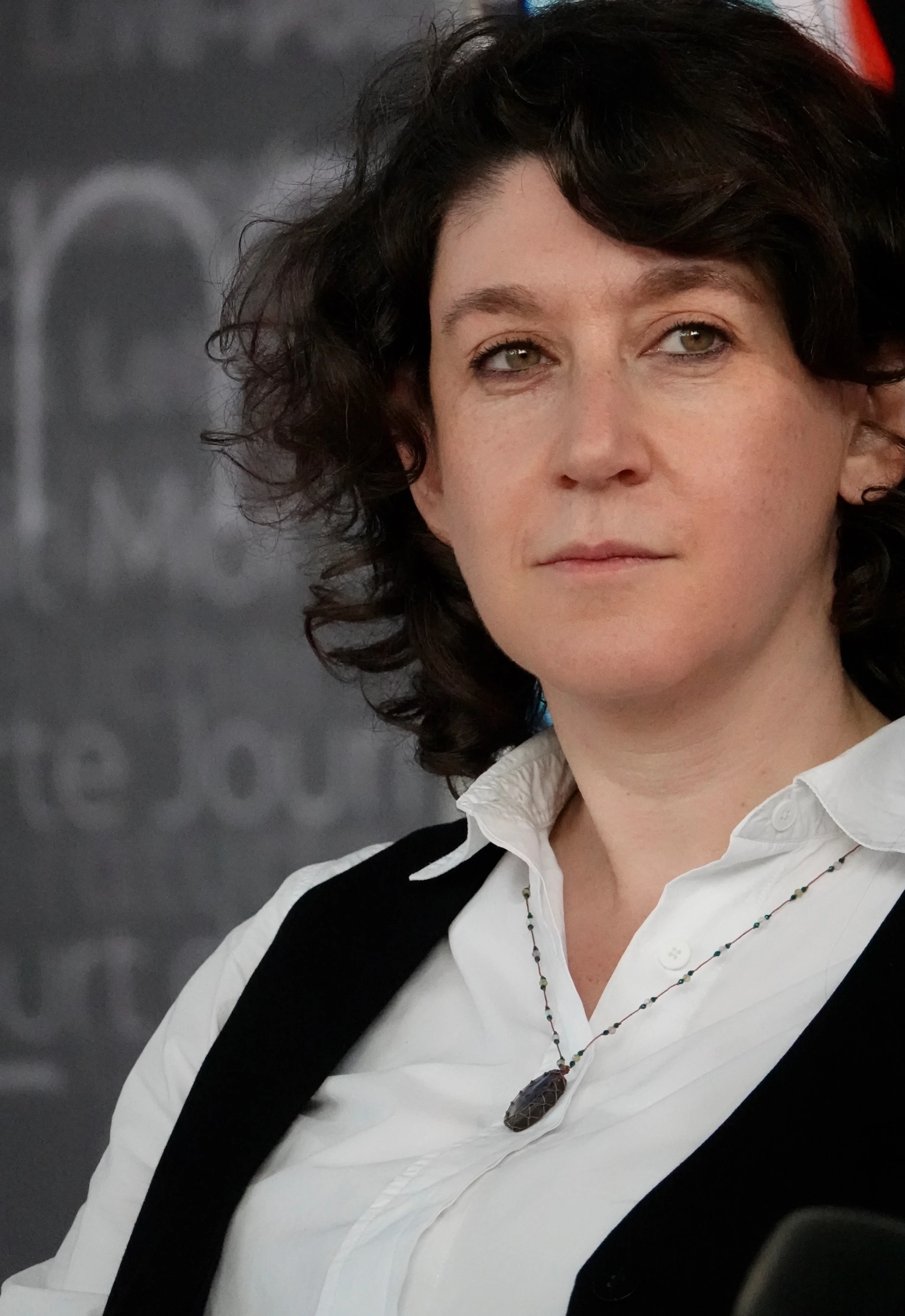
Image from Wikipedia
Image from Wikipedia
Lena Gorelik: A literary voice between memory, migration, and the present
Between Russian heritage and German present: The profile of a formative author
Lena Gorelik is one of the most distinctive voices in contemporary German literature. Born in 1981 in Leningrad and moving to Germany in 1992 with her Russian-Jewish family, she explores experiences of estrangement, belonging, language, and identity with great narrative precision in her work. As a journalist, essayist, and author, she combines personal experience with societal observation, securing her a significant place in the literary discourse.
Her name stands for texts that blend biographical depth with political awareness. Lena Gorelik writes about migration not as an abstract theme but as a lived reality that shapes families, separates generations, and simultaneously opens new horizons. This connection between personal memory and analytical sharpness makes her books both worthwhile and relevant.
Biography: Origins, fractures, and the German readership biography
Lena Gorelik was born in 1981 in Leningrad and grew up in a Russian-Jewish family before emigrating to Germany as a contingent refugee in 1992. The years spent in her new surroundings, her school years in Baden-Württemberg, and the experience of positioning herself in a foreign language and society form a central foundation of her writing. It is from this biographical tension that she draws the emotional and thematic power of her literature.
After finishing school, she attended the German School of Journalism in Munich and subsequently studied Eastern European Studies at Ludwig Maximilian University of Munich. Later, she spent time in Israel as part of a journalism scholarship and studied politics at the Hebrew University of Jerusalem. This academic and journalistic training shapes her precise observational skills, her view of historical contexts, and her ability to condense social reality into literary form.
Literary breakthrough: The success of "My White Nights"
Lena Gorelik achieved her literary breakthrough in 2004 with her debut novel "My White Nights." The book earned her the Bavarian Art Promotion Prize in 2005, making it clear that a writer with her unique tone and thematic clarity had debuted. She early on combined narrative elegance with a keen eye for cultural boundary experiences.
Since this debut, Gorelik has published numerous essays, reports, and books. Her texts do not appear in isolation but as part of a larger literary project: she examines how people cope with heritage, language, migration, and family history. This continuity lends authority and recognizability to her career.
Important works: Family novels, essays, and societal observations
Among her significant books are "Wedding in Jerusalem" (2007), "In Love with St. Petersburg: My Russian Journey" (2008), "Dear Mischa" (2011), "But They Speak Good German" (2012), and "The List Collector" (2015). Each of these works expands her literary spectrum and shifts the focus between novel, nonfiction, and essayistic reflection. Gorelik writes with narrative openness without losing sight of the political dimension of her subjects.
"The List Collector" was awarded the Book Prize of the Ravensburger Verlag Foundation and praised by critics as warm-hearted, lively, and linguistically sovereign. "More Black than Purple" (2018) also received significant attention and was nominated for the German Youth Literature Prize. With "Who We Are" (2021), she continued her exploration of family, memory, and contemporary German reality in particularly personal form.
Current projects and new resonance in 2026
Her official website highlights that 2026 will be strongly marked by the novel "All My Mothers," which has received intense media resonance. The voices collected there emphasize the emotional impact, thematic openness, and literary precision of the book. At the same time, the website lists numerous readings and appearances in spring 2026, including in Isny, Stuttgart, Basel, Freiburg, Heilbronn, Frankfurt, Halle, Bonn, Göttingen, Hanover, Ulm, and Crailsheim.
Additionally, the website reports that Lena Gorelik will receive the prize of the Literature Houses in 2026. Her recent public appearances showcase an author who not only publishes but actively engages with her texts in the literary space. She thus remains at the center of the German-language debate on family, identity, and female self-identification.
Style and themes: Language as a site of self-empowerment
Lena Gorelik's prose is characterized by clarity, empathy, and a high density of observation. She works with precise scenes, carefully placed shifts in perspective, and a language that combines everyday observation with existential depth. Her keen focus on family dynamics, the friction between generations, and the internal tension of belonging and distance is particularly strong.
Her texts often operate at the intersection of autobiographical experience and socio-political analysis. Whether novel, essay, or report: Gorelik develops her subjects from concrete biographical and historical situations. This results in books that feel personal yet simultaneously unfold a larger cultural dimension.
Critical reception: Recognition in the literary scene and feuilleton
The reception of Lena Gorelik’s work is marked by high regard. Reviews regularly highlight her stylistic confidence, emotional precision, and her adept handling of complex themes. For "Who We Are," numerous commendations appeared in the press describing the book as touching, intelligent, and literarily coherent.
Institutionally, her significance is also undeniable. In 2020, she was elected a full member of the Bavarian Academy of Fine Arts, and since 2024, she has been part of the Literature Section of the Academy of Arts Berlin. Such memberships not only confirm her literary relevance but also her lasting presence in the cultural memory of the present.
Cultural influence: An author shaping debates
Lena Gorelik's work holds particular significance in contemporary German literature as it treats migration not as a marginal theme but as the center of social experience. Her books demonstrate how language can become home, how memory shapes identity, and how family stories reach into larger historical contexts. In doing so, she engages readers far beyond the traditional literary audience.
Additionally, she regularly works as an essayist and journalist for media such as Süddeutsche Zeitung, Deutschlandradio, Die Zeit, and Der Freitag. Her monthly column "The Cosmopolitan" amplifies this influence by discussing current social issues in a personal, reflective language. It is precisely this that constitutes her particular strength: she writes both literarily and discursively, precisely and accessibly.
Conclusion: Why Lena Gorelik remains so fascinating
Lena Gorelik is fascinating because she transforms personal experience into great literature while maintaining awareness of the present and social realities. Her books tell stories of origin and new beginnings, of family and memory, of loss and self-assertion. For those seeking depth in German literature, she stands out as an author of extraordinary clarity and sensitivity.
Her readings and public appearances further demonstrate how lively and relevant her work remains. Lena Gorelik is not an author for quick effects but for enduring reading, for conversations, and for books that resonate. Those who experience her texts live encounter a voice that moves, challenges, and lingers in memory.
Official channels of Lena Gorelik:
- Instagram: No official profile found
- Facebook: No official profile found
- YouTube: No official profile found
- Spotify: No official profile found
- TikTok: No official profile found
Sources:
Upcoming Events
38. Weiden Literature Days: Reading with Lena Gorelik
38. Weidener Literaturtage 2026 – All My Mothers
Lena Gorelik reads in Bonn from “All My Mothers”
Lena Gorelik reads from All My Mothers in Bonn
Reading and Conversation with Lena Gorelik: »All My Mothers«