
Julius Drake
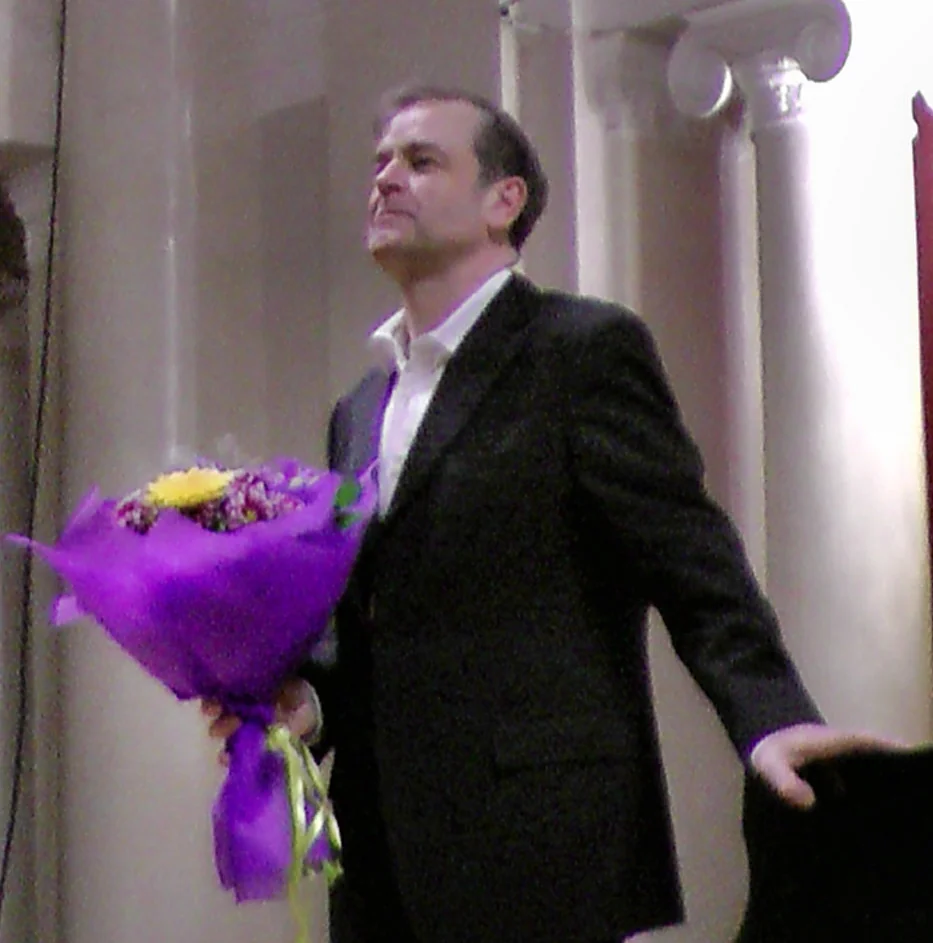
Image from Wikipedia
Image from Wikipedia
Julius Drake – The Great Lied Pianist Between Intimacy, Precision, and World-Class
A Pianist Who Reimagines the Song
Julius Drake is one of the defining figures in the international art song and chamber music scene. The English pianist, based in London and born on April 5, 1959, has dedicated his career entirely to the art of collaboration, and is regarded as one of the finest instrumentalists in his field. His work combines technical sovereignty with an extraordinary sensitivity to language, color, and musical dramaturgy. ([juliusdrake.com](https://www.juliusdrake.com/about/))
From an early age, Drake developed an artistic identity that focuses not on solo self-expression, but on dialogue in music. In the tradition of great British song accompanists like Gerald Moore and Graham Johnson, he represents a form of piano artistry where the instrument does not merely accompany, but tells, comments, and deepens. This is precisely where the tension of his musical career lies: he transforms each song evening into a chamber music event of great emotional density. ([juliusdrake.com](https://www.juliusdrake.com/?utm_source=openai))
Biography: London as the Starting Point of an International Career
Julius Drake hails from London and has been firmly anchored in the British music landscape for decades, without ever being confined to it. His international reputation is built on a career that has taken him to the major stages of Europe, North America, and Asia. His profile remains clearly defined: he is not a virtuosic jack-of-all-trades, but a specialist in art song, vocal chamber music, and finely crafted ensemble work. ([juliusdrake.com](https://www.juliusdrake.com/about/))
The official artist biography describes him as a “collaborative pianist nonpareil,” and this designation precisely reflects his significance. Drake collaborates with some of the most prominent singers of his time and has earned a reputation as a reliable artistic partner who supports form, breath, and textual understanding with exceptional certainty. His career also serves as a testament to the art of listening at the piano. ([juliusdrake.com](https://www.juliusdrake.com/about/))
Career Highlights: From Wigmore Hall to the Concertgebouw
Drake’s concert life is closely tied to the most important venues and festivals of classical music. He regularly performs at major festivals and music centers, including Aldeburgh, Edinburgh, Munich, Schubertiade, and Salzburg, as well as at Carnegie Hall, Lincoln Center, the Royal Concertgebouw, the Berlin Philharmonic, La Scala in Milan, and Wigmore Hall in London. This geographical reach not only demonstrates his activity but also the trust he has built within the scene. ([juliusdrake.com](https://www.juliusdrake.com/about/))
A central thread of his career is his curatorial work. Drake developed song series for Wigmore Hall, the Concertgebouw Amsterdam, the 92nd Street Y in New York, and the Pierre Boulez Saal in Berlin. Additionally, he has been curating the series “Julius Drake and Friends” in the historic Middle Temple Hall in London for many years. In doing so, he influences song culture not only as an interpreter but also as a program dramaturge with a fine sense for context and repertoire. ([juliusdrake.com](https://www.juliusdrake.com/about/))
Collaboration with the Great Voices of the Field
A key to understanding his artistic significance lies in the partnerships with leading vocalists. The official biography lists, among others, Sir Thomas Allen, Olaf Bär, Ian Bostridge, Sarah Connolly, Alice Coote, Lucy Crowe, Veronique Gens, Simon Keenlyside, Christopher Maltman, and Willard White. Such names mark not just career connections but a network of artistic trust spanning decades. ([juliusdrake.com](https://www.juliusdrake.com/about/))
Drake’s connection to the repertoire of Schubert, Schumann, Brahms, Fauré, Mahler, Britten, and Janáček is particularly close. It is precisely within this repertoire that a form of chamber music emerges where the piano embodies neither dominance nor restraint but creates a second narrative level. Drake possesses the rare ability to shape phrases like speech gestures and make harmonic transitions audible as dramatic turning points. ([juliusdrake.com](https://www.juliusdrake.com/recordings/))
Discography: A Catalogue of Art Song at the Highest Level
The discography of Julius Drake is extensive yet aesthetically cohesive. Among his significant recordings is the celebrated series with Gerald Finley for Hyperion, including “Songs by Samuel Barber,” “Schumann: Dichterliebe & Other Heine Settings,” and “Britten: Songs & Proverbs of William Blake,” which received Gramophone Awards in 2007, 2009, and 2011. These accolades underscore that Drake sets standards not only on stage but also in the studio. ([juliusdrake.com](https://www.juliusdrake.com/about/))
Other important milestones in his recording history include collaborations with Ian Bostridge and Alice Coote for EMI, with Joyce DiDonato, Lorraine Hunt Lieberson, and Matthew Polenzani for Wigmore Hall Live, as well as with Anna Prohaska for Alpha. Additional recordings include French sonatas with Nicholas Daniel, cello sonatas by Kodály and Schoeck with Natalie Clein and Christian Poltéra, Tchaikovsky and Mahler songs with Christianne Stotijn, and Schubert's “Poetical Diary” with Christoph Prégardien, which was awarded the Annual Prize of the German Record Critics in 2016. ([juliusdrake.com](https://www.juliusdrake.com/about/))
In recent years, Drake has further expanded his artistic range. His official site lists newer releases including Janáček’s “The Diary of One Who Disappeared” with Nicky Spence and Václava Housková, “Paradise Lost” with Anna Prohaska, and “Liszt Complete Songs, Vol. 6” with Julia Kleiter. These productions showcase him as a pianist who not only masters the classical core repertoire but also engages in a precise, stylistically differentiated exploration of less obvious works. ([juliusdrake.com](https://www.juliusdrake.com/about/))
Current Projects: New Programs, New Partnerships, New Perspectives
Julius Drake remains highly active even today. His official website and management list recitals for the 2025/26 season with Ludovic Tézier, Ian Bostridge, Günther Groissböck, Axelle Fanyo, and Alice Coote, as well as a recital tour in America and further programs in London, Paris, Berlin, and Amsterdam. The reach of these engagements demonstrates how consistent the demand for his artistic signature remains. ([askonasholt.com](https://askonasholt.com/artist/julius-drake))
His thematic curiosity is particularly evident. Projects like “Song and Lyric” at the Boulez Saal, the Mahler cycle at the Concertgebouw, or new program combinations with various singer personalities suggest an artist who perceives the song evening repertoire as a vibrant present. Drake thinks in cycles, constellations, and arcs of tension, not merely in program lists. ([juliusdrake.com](https://www.juliusdrake.com/))
Awards, Authority, and Critical Reception
Drake’s authority in the music scene stems from awards, reputation, and a remarkably consistent press perception. The official biography documents several Gramophone Awards, BBC Music Magazine Awards, and other honors, including the Annual Prize of the German Record Critics. Additionally, his work has been highlighted in reviews by The New Yorker, The Guardian, Le Monde, Bachtrack, and BBC Music Magazine. ([juliusdrake.com](https://www.juliusdrake.com/about/))
The reviews repeatedly describe him as a musician of extraordinary empathy, stylistic intelligence, and colorful sound culture. The New Yorker calls him the “collaborative pianist nonpareil,” Le Monde praises his “masterful” pianism, and Bachtrack speaks of assured, idiomatic playing and great generosity towards singers and partners. Such reactions confirm that Drake is not only respected in the field of song but is also perceived as a reference point. ([juliusdrake.com](https://www.juliusdrake.com/))
Musical Development and Style: The Piano as a Narrative Voice
Julius Drake’s style combines clarity, breathing rubato culture, and an extraordinarily nuanced sense of timbres. His playing is never in service of mere brilliance, but rather of the architecture of the musical phrase. This attitude manifests particularly impressively in the song repertoire: every modulation, every pause, and every repetition gain significance within the interpretation of the text. ([juliusdrake.com](https://www.juliusdrake.com/about/))
The official website emphasizes his passionate engagement with song, and this passion also shapes his programming. Schubert, Mahler, Fauré, Britten, and Janáček form a stylistic core that ranges from the romantic art song to expressive modernism. Drake masters the art of combining musical transparency with emotional density, making his interpretations often feel like a conversation between voice, text, and harmony. ([juliusdrake.com](https://www.juliusdrake.com/about/))
Teaching, Mentoring, and Cultural Influence
His influence extends well beyond concert stages and recordings. Julius Drake is a professor at the Guildhall School of Music in London and served until 2024 as a professor at the University of the Arts Graz, where he taught a class for song pianists. This teaching role is complemented by worldwide masterclasses, including in Aldeburgh, Brussels, Utrecht, Cincinnati, Toronto, Minneapolis, Ann Arbor, Vienna, and at the Schubert Institute in Baden bei Vienna. ([juliusdrake.com](https://www.juliusdrake.com/))
Herein lies his cultural value: Drake imparts not just interpretations but a understanding of musical partnership. He represents a tradition in which the song is not seen as a minor form but as a high form of chamber music. For young pianists, he is thus a role model for concentration, stylistic awareness, and artistic integrity. ([juliusdrake.com](https://www.juliusdrake.com/about/))
Conclusion: Why Julius Drake Remains So Fascinating
Julius Drake captivates because he transforms restraint into presence and companionship into art of the highest independence. His musical career tells of consistency, curiosity, and stylistic depth, of great partnerships and a rare fidelity to the art song. Those who experience him live not only hear an excellent pianist but a storyteller at the piano who brings the repertoire to life with sensitivity, knowledge, and personality. ([juliusdrake.com](https://www.juliusdrake.com/about/))
Especially on stage, that blend of authority and intimacy that makes Julius Drake unique unfolds. Anyone wanting to experience the art of song in its most elegant, intelligent, and emotionally cohesive form should definitely hear him live. His performances belong to those moments where chamber music does not need explanation but touches immediately. ([juliusdrake.com](https://www.juliusdrake.com/))
Official Channels of Julius Drake:
- Instagram: https://www.instagram.com/juliusdrakepiano/
- Facebook: no official profile found
- YouTube: no official profile found
- Spotify: no official profile found
- TikTok: no official profile found
Sources:
Upcoming Events
Song Recital: Katharina Konradi & Julius Drake