
Johann Wolfgang von Goethe
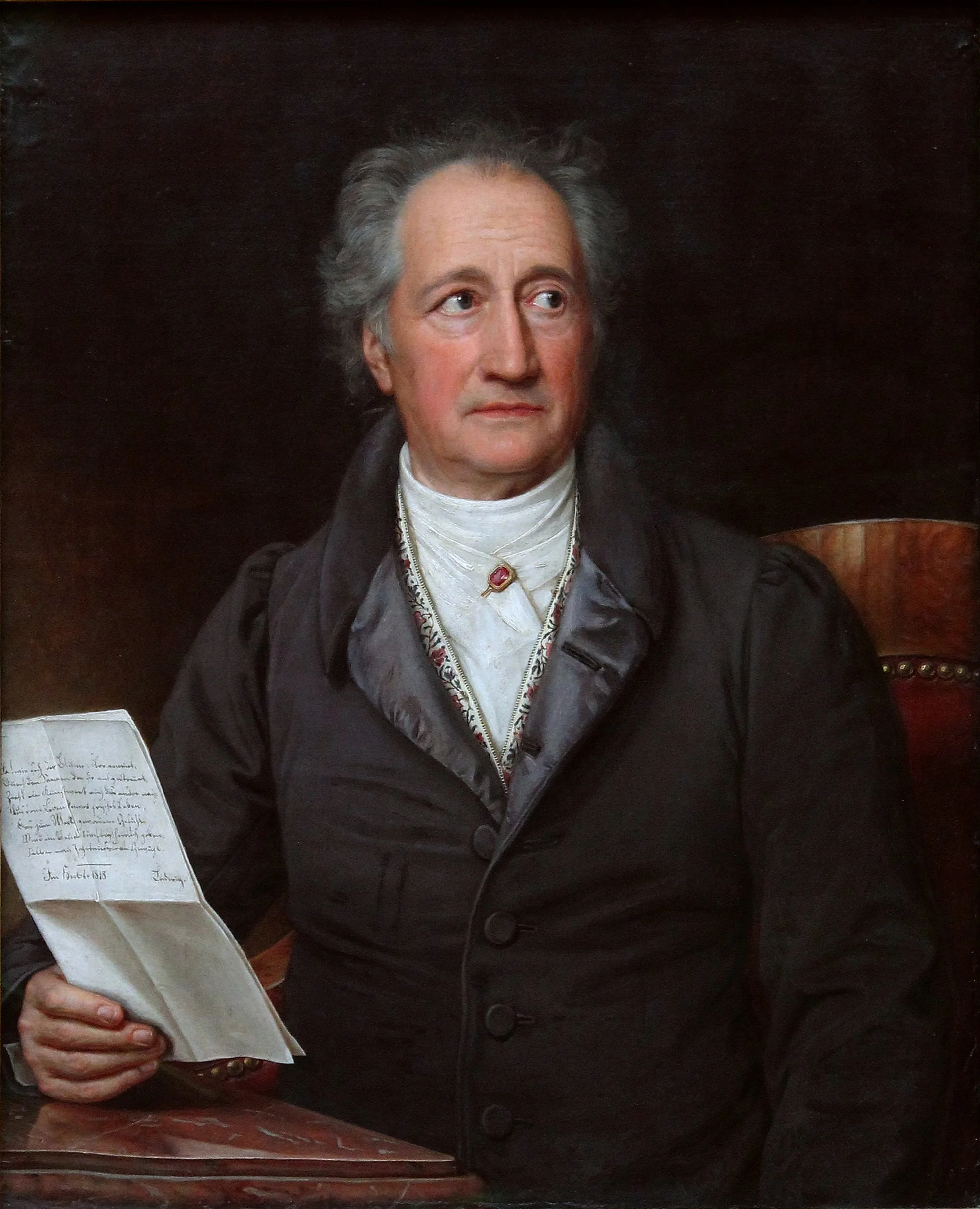
Image from Wikipedia
Image from Wikipedia
Johann Wolfgang von Goethe – Artist Profile for Music Lovers and Cultural Enthusiasts
From Sturm und Drang to Worldwide Success: How Goethe's Words Shaped Music History
Johann Wolfgang von Goethe (August 28, 1749, Frankfurt am Main – March 22, 1832, Weimar) is considered one of the greatest shapers of German culture. Although he did not have a music career in the narrower sense, his texts developed an unprecedented stage presence in opera, song, and oratorio. As a poet, theater director, and cultural politician, he set aesthetic standards that inspired musicians over generations through their artistic development. From his early successes with "Götz von Berlichingen" (1773) and "The Sorrows of Young Werther" (1774) to his lifelong work on "Faust," Goethe became a fertile ground for the genre of art song, for symphonic program music, and for operas that continue to dominate the repertoires today.
Biographical Origins: Education, Stage, and Early Passion for the Sound of Language
Coming from a wealthy Frankfurt burgher family, Goethe received a comprehensive education, studying law in Leipzig and Strasbourg while simultaneously turning to poetry. In 1775, he went to Weimar to serve at the court of the young Duke Carl August. There, he combined poetics, theater practice, and civil service – a triad that sharpened his artistic development. As director of the Weimar Court Theater, he promoted the interplay of text, scene, and music: his dramaturgical work trained the musical thinking of many contemporaries, who recognized Goethe's verses as an ideal basis for composition. Italy (1786–1788) provided him with additional impulses – encounters with antiquity, painting, and opera refined his sense of form, rhythm, and melodic sound in language.
Weimar Classicism and the Sound of Words: How Lyrics Became the Catalyst for Art Song
Goethe's poetry offered composers succinct images, clear meter, and character-strong dialogue – ideal conditions for composition, arrangement, and the art of vocal declamation. Franz Schubert created a through-composed song drama with "Erlkönig" D 328 in 1815, encapsulating the father, child, and ghostly seduction in breathless piano figures and precise vocal characterization. This art of song profoundly shaped the genre and became a benchmark for singer interpretation, breath control, and text comprehensibility in the romantic song. Schubert's Goethe songs ("Gretchen am Spinnrade," "Prometheus," "Gesänge des Harfners") established a repertoire that continues to teach the balance of poetry, composition, and psychological scene-making in recitals.
Faust on the Opera Stage: From Gounod's Grand Opéra to Berlioz's Symphonic Dramaturgy
With "Faust," Goethe provided perhaps the most influential literary score in music history. Charles Gounod transformed the material into a Grand opéra in five acts – a successful opera of the 19th century with lyrical lines, virtuosic arias, and leitmotif coloring for the main characters Faust, Marguerite, and Méphistophélès. Hector Berlioz opted for a unique formal solution: "La Damnation de Faust" is a hybrid concert opera employing symphonic means, choral blocks, and scenic tableaux, which freely rearranges Goethe's episodes. Both works demonstrate how Goethe's themes – the hunger for knowledge, seduction, redemption – stimulate musical dramaturgy, orchestration, and vocal writing to new interpretations.
Beethoven and Goethe: Incidental Music, Freedom Ideals, and the Art of Final Design
Ludwig van Beethoven approached Goethe with admiration – the artistic culmination of their relationship is found in the incidental music for "Egmont" op. 84 (premiered in 1810 in Vienna). Beethoven's composition deepens the message of freedom in the drama with a dramatically focused overture, interludes, and songs for Clärchen. The score illustrates how music becomes a carrier of tension, mood modulator, and moral commentary within a spoken tragedy. This connection between text and sound influenced later stage music and symphonic compositions that imbued literary sources with musical rhetoric.
Mahler and the Apotheosis of the Word: Symphony No. 8 as a Symphonic Worldview
Gustav Mahler crowned the Goethe reception in the symphonic repertoire by integrating the conclusion of "Faust II" into the second part of his Eighth Symphony. The score – famously known as the "Symphony of a Thousand" – merges choral symphony, orchestral colors, and vocal architecture into a musical theology of light. The final scene, with its vast structure and motivic transformation, allows Goethe's perspective of redemption to shine forth in orchestral and choral brilliance. Here, poetry becomes the structural foundation for a large-scale, modern conception of symphonic music.
Discography in the Mirror of Literature: Canonical Recordings and Reference Recordings
Goethe as a "recording artist" does not exist, but his texts create a discographic topography that runs through the canon of classical music. Benchmark recordings of Schubert's "Erlkönig" – such as with Dietrich Fischer-Dieskau – demonstrate how deeply interpretation, breath technique, articulation, and dynamic layering are tied to Goethe's meter. Beethoven's "Egmont" music is documented in complete and suite versions, often paired with other incidental music and concert overtures. Gounod's "Faust" and Berlioz's "Damnation" are part of the standard repertoire of major opera houses and orchestras; international catalogs feature numerous studio and live recordings. Mahler's Eighth marks a culmination point of choral symphony in many discographies; large-scale productions demonstrate how text-related sound dramaturgy becomes monumentally tangible in concert halls.
Style, Genre, Impact: Goethe's Text as a Motor of Musical Innovation
Goethe's verses shape musical forms through their rhythmic conciseness, semantic density, and scene economy. For the art song, they provide archetypical speech attitudes – lyrical, dramatic, hymnic – that inspire composers towards through-composed forms, expanded piano settings, and differentiated vocal lines. In opera, the character constellations of "Faust" allow for psychological depth and motivic interconnection; in incidental music, they sharpen the art of musical transitions, the semantic illumination of scenes, and final dramaturgy. The cultural-historical influence extends into modernity: reflecting on freedom, knowledge, and responsibility remains a timeless resonance space, to which musical language continually responds anew.
Reception and Cultural Influence: From Weimar to the World
Even during Goethe's lifetime, his texts circulated throughout Europe; translations made "Werther" and "Faust" cultural events, whose themes were embraced by composers, conductors, and singers. Museums, archives, and foundations maintain this tradition, creating critical editions and hosting exhibitions that illuminate the interplay between literature and music. Weimar has dedicated a thematic year in 2025 to "Faust" with special exhibitions and programs that contemporarily reinterpret the stage and music history of the material. Academic yearbooks and edition projects ensure the preservation of texts and enable historically informed interpretive practices – a basis on which performances and recordings continually renew themselves.
Current Projects, Editions, and Cultural Memory
Although Goethe died in 1832, the care of his works remains vibrant: yearbooks, critical editions of letters and diaries, as well as special exhibitions keep research and the public in dialogue. Thematic years in Weimar and curated programs shed light on sources, stage practices, and musical reception lines from the 19th century to the present. New editions, scholarly companion volumes, and museum focuses open access for a broad audience and strengthen the intersection between literary studies, music history, and performance practice.
Conclusion: Why Goethe Remains Indispensable for Music Lovers
Goethe's work is not a sound in the narrow sense, but it resonates in nearly every era of music history. His linguistic music propels composition, his puppet theater fuels dramaturgy, and his ideas offer endless material for interpretation and production. Anyone wanting to understand art song, symphonic program music, or opera encounters Goethe's words as a creative starting point. This energy is experienced live in the opera house, at song evenings, or in the concert hall – where poetry, voice, and orchestra become one. The appeal is clear: experience Goethe not just through reading, but through listening – from intimate song to monumental choral symphony.
Official Channels of Johann Wolfgang von Goethe:
- Instagram: No official profile found
- Facebook: No official profile found
- YouTube: No official profile found
- Spotify: No official profile found
- TikTok: No official profile found
Sources:
- Wikipedia – Johann Wolfgang von Goethe
- Encyclopaedia Britannica – Johann Wolfgang von Goethe
- Wikipedia – Schubert: Erlkönig, D 328
- Beethoven-Haus Bonn – Incidental Music to Goethe's "Egmont," op. 84
- Wikipedia – Charles Gounod: Faust
- Wikipedia – Hector Berlioz: La Damnation de Faust
- Klassik Stiftung Weimar – Theme Year Faust 2025: Special Exhibitions
- Wikipedia – Gustav Mahler: Symphony No. 8
- Wallstein Verlag – Goethe Yearbook 2024
- Wikipedia – The Italian Journey (DEFA Documentary Film, Historical Reception)
Upcoming Events
Stella
Stella (Goethe) – State Theater Augsburg
Goethe's Swiss Travels – Villa Eberhardt, Ulm
Stella
Stella
"Götz von Berlichingen" – Goethe's first public success and its consequences
Faust. A Tragedy
The Sorrows of Young Werther in Bonn
Faust. A Tragedy