
Heinrich Heine
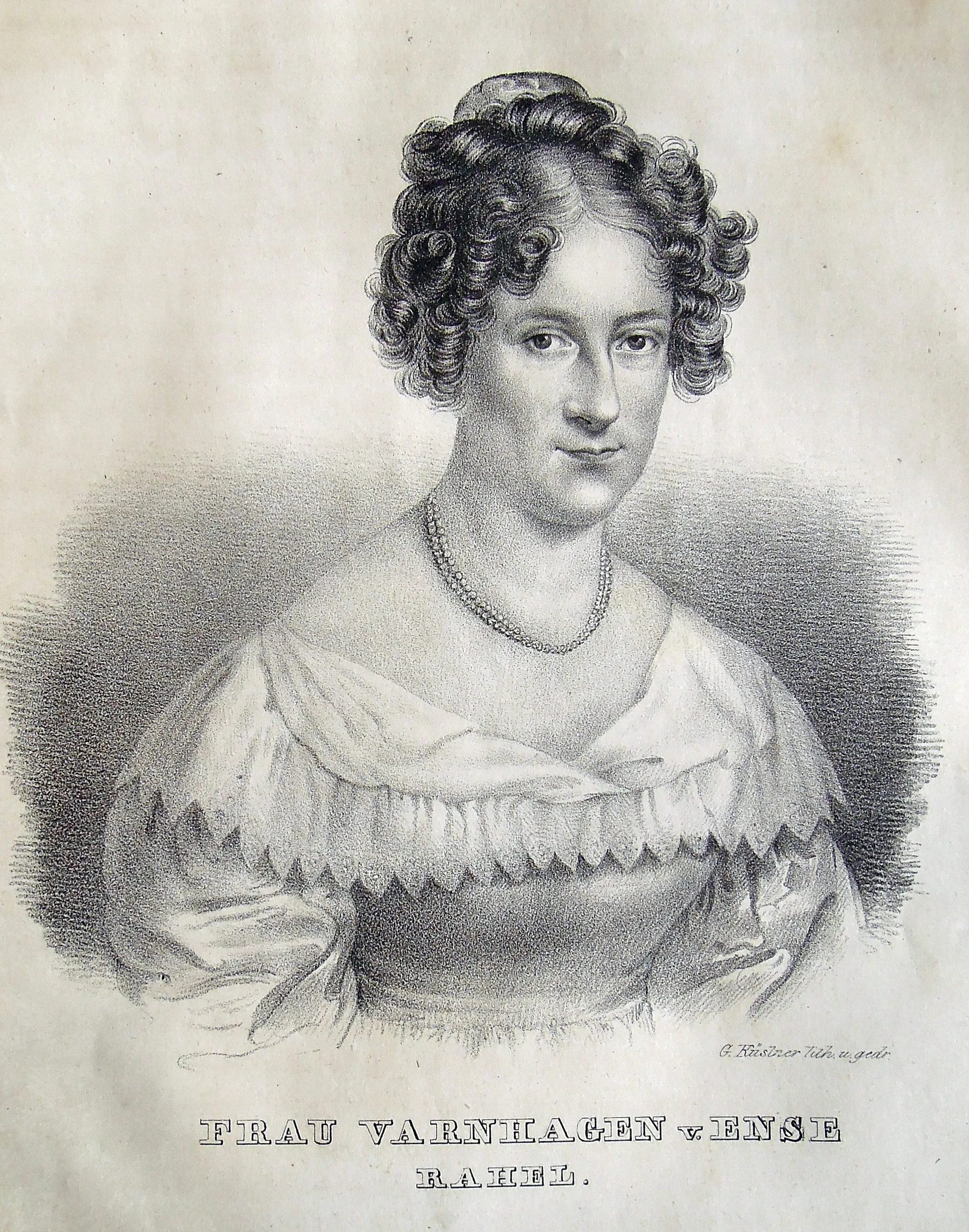
Image from Wikipedia
Image from Wikipedia
Heinrich Heine – Poet Between Romanticism and Modernity, Icon for Music and Literature
A Life Shaped by Poetry, Politics, and Music History
Heinrich Heine (born December 13, 1797, in Düsseldorf; died February 17, 1856, in Paris) is one of the most widely quoted voices in German literature. He transcended late Romanticism with a modern, colloquial tone, blending lyrical elegance with political sharpness, and has left a lasting impact on feuilleton and travel literature. With the Book of Songs (1827), Heine achieved international acclaim; his poems inspired hundreds of composers and shaped the soundscape of the romantic art song. At the same time, he remained a combative publicist, criticizing censorship, nationalism, and anti-Semitism with wit, polemic, and moral consequence.
Heine's musical career in a metaphorical sense – the artistic development of his texts into music – is unique: His verses became song, his "arrangement" of language found cyclic forms in the romantic song, and his poetic "production" entered into a fruitful dialogue with composition. To read Heine is to hear music: metric precision, melodic lines, contrast, and reprise. This connection of poetry, history, and music makes him equally relevant for literature and music lovers today.
Early Years and Education: From Düsseldorf to Bonn, Berlin, and Göttingen
Growing up in the Rhineland, influenced by French thought, Heine early on encountered the bourgeois-enlightenment freedom that shaped his later worldview. After commercial apprenticeships – and a scarcely beloved foray into the business world – he studied law starting in 1819, but primarily attended philosophy, history, and literature lectures. He completed his studies with a doctorate in 1825 and converted – more out of opportunity than conviction – to Protestantism to circumvent career obstacles for Jews. However, instead of pursuing a bureaucratic career, Heine chose literature, where his artistic development and critical intellect could unfold.
Even the early volumes of poetry, attempts at tragedy, and the Lyrical Intermezzo display that blend of musical language, irony, and emotion that became his hallmark. His presence as a public intellectual unfolded in essays, letters, and travel writings – texts that masterfully combined reportage, feuilleton, political analysis, and poetic miniatures.
Breakthrough with the Book of Songs: Poetry as Sound Body
With the Book of Songs, Heine achieved a level of popularity in 1827 that is rare for poets. The collection brings together early poetry and the Lyrical Intermezzo, whose melodic economy, strict composition, and vivid imagery attracted both music-loving readers and composers. The poetic tone fluctuates between delicate cantability and cutting punchlines, between intimate song and revealing irony. Thus, ideal "texts for music" emerged, whose internal dramaturgy – thematic guidance, motivic work, contrasting stanzas – invigorated the romantic song weaving with poetry.
The reception in music history is immense: Felix Mendelssohn Bartholdy set to music Auf Flügeln des Gesanges (Op. 34/2) and created a song that became canonical worldwide; Robert Schumann shaped two peak works of the art song with Liederkreis op. 24 and Dichterliebe op. 48, which translate Heine's dialectic of yearning and skepticism into sound. These works established a tradition that extends from Schubert and Brahms to Liszt and Wagner, from Silcher to international composers of the 19th and 20th centuries.
Paris 1831: Exile, Journalism, and a European Perspective
In 1831, Heine moved his center of life to Paris. This was more than a change of location: it marked a step into a European public sphere. In the French cultural metropolis, he wrote essays, critiques, and political feuilletons that intertwined German contemporary issues with French debate – an arrangement of observation, analysis, and stylistic brilliance. The July Revolution of 1830 inspired him to articulate the interplay of art and society with precision. Publication bans in the German Confederation intensified the situation of exile: Heine's voice remained present, precisely because it argued cross-border.
Aesthetically, Heine reflected on the end of Romanticism: In Die romantische Schule (1836), he traces with intellectual brilliance and polemical precision the lines from medieval longing to the present, debunking idealizations and anchoring poetry in reality. His artistic development aimed for a modern, urban literature that brings politics, everyday life, and emotion into a new, lighter yet sharp-edged form.
Germany. A Winter's Tale: Satirical Epic and Censorship Scandal
In 1843/44, after years in Paris, Heine traveled back to his homeland – the foundation for Germany. A Winter's Tale. The verse epic combines travel literature, political satire, and lyrical self-reflection into an epic composition. It attacks restoration politics, narrow-mindedness, and nationalist posturing. The work quickly became a scandalous book, frequently censored and banned in parts of the German Confederation. Here, Heine orchestrates a cunning device: the personal self and historical commentary merge, and the stanza sequence operates like sentences in a music drama – with an overture, motivic variation, and a cutting finale.
This poetic language of form – sometimes hymnic, sometimes mocking, always rhythmically precise – continues to inspire musical interpretations and staged performances to this day. Those who read the piece hear undercurrents of march, hymn, couplet – and understand why composers felt Heine's texts were the ideal score of emotions.
Matratzengruft and Late Works: Romanzero, Resignation, and New Sound Colors
Since the mid-1840s, Heine's health deteriorated dramatically; by 1848 he was largely confined to bed – the famous "Matratzengruft," from which he nonetheless wrote texts of icy clarity. The Romanzero (1851) emerges as a late work filled with pain, defiance, and intellectual clarity, a cycle that shifts its tonality: darker, more laconic, with an expressiveness that sounds modern. The lyrical I adopts a more sober tone, with irony and skepticism taking on an overtone character; nevertheless, Heine's stanzas are permeated with unmistakable melodic lines, whose sparseness creates a new musical readability.
As an essayist, he remained alert until the end: culturally critical, self-ironic, yet vulnerable. The poet who dissected the romantic school discovers a new intensity in reduction – poetic chamber music against the grand pathos.
Heine and Music: Discography of Compositions – From Mendelssohn to Schumann
The "discography" of Heine settings is unparalleled in its extensiveness. Alongside Mendelssohn's Auf Flügeln des Gesanges and Schumann's cycles op. 24 and op. 48, folk song adaptations and artful versions have shaped the history of reception – consider Silcher's Lorelei. Franz Liszt transcribed Mendelssohn's Heine song for piano; Schumann's Dichterliebe, which consolidates 16 poems from the Lyrical Intermezzo, is considered a milestone of romantic song dramaturgy: harmonic delicateness, motivic networking, piano interludes as soulful spaces. This cyclical composition technique – sequence, leitmotif, tonality architecture – makes Heine's lyric poetry the ideal template for singers, accompanied by pianists with a sense for subtle agogics.
Even beyond the narrower canon, Heine's texts have been set to music numerous times: Brahms, Wagner, Tschaikovsky, Wolf, and many others created independent interpretations. The number of settings is impressively high and attests to the cultural-historical radiance of Heine's poetry for the 19th century and far beyond.
Style, Form, and Influence: How Heine Shaped Modern Literature and Musical Thinking
Heine's style relies on clear diction, economical composition, and calculated disruption. He loved abrupt modulations – from tender tones to sarcasm, from folk song quality to intellectual punchlines. This "harmony theory" of language influenced generations of poets and sensitized music to semantic ambiguities. In travel writings, he perfected the feuilleton form: quick cuts, urban scenes, skeptical observation, "camera" and "microphone" always close to the material.
Heine's authority arises from this novel connection of formal awareness and societal sensibility. For music history, he provided with his poems a poetics of the singable: vivid imagery, breathing verses, a rhythm that already thinks melodically. This qualified "pre-production" allowed for the emergence of the great song culture of the 19th century and continues to resonate in vocal music today.
Cultural Heritage, Institutions, Present
Heine's afterlife is institutionally anchored: In Düsseldorf, a museum dedicates its permanent exhibition to the life, work, and impact of the poet; in Paris, the Maison Heinrich Heine commemorates the European intellectual and the Franco-German dialogue. Universities, festivals, and concert halls repeatedly bring his texts to life in literary-musical programs – from song evenings with Schumann cycles to thematic series that present Heine and Schumann in dialogue.
Heine also remains present in editorial contexts: collected editions, digital portals, critical studies on exile, Judaism, journalism, and music reception attest to his unbroken relevance. Events, readings, and music programs of the Heinrich Heine institutions bridge the gap between historical consciousness and contemporary interpretation – a vibrant archive that makes Heine's voice audible in the here and now.
Conclusion: Why Heinrich Heine Resonates Today – and Should Be Experienced Live
Heinrich Heine is the poet who transforms language into music – and music into insight. His artistic development leads from romantic intimacy to modern clarity; his presence on stage as a publicist displays stance, humor, and humanity. Those who listen to song evenings featuring Heine settings experience the great art of arrangement between word and sound: Dichterliebe draws one into an emotional arc, Auf Flügeln des Gesanges floats with melodic ease, and Deutschland. Ein Wintermärchen shows how poetry brings politics to sound. The best way to grasp Heine remains the live experience – in concert halls, in readings and music, in the dialogue between past and present.
Official Channels of Heinrich Heine:
- Instagram: No official profile found
- Facebook: No official profile found
- YouTube: No official profile found
- Spotify: No official profile found
- TikTok: No official profile found
Sources:
- Encyclopaedia Britannica – Heinrich Heine
- Heinrich-Heine-Institut Düsseldorf – Museum
- Deutsche Biographie – Heine, Heinrich
- Wikipedia – Heinrich Heine
- Wikipedia – Auf Flügeln des Gesanges (Mendelssohn)
- Wikipedia – Dichterliebe (Schumann, op. 48)
- Wikipedia – Liederkreis op. 24 (Schumann after Heine)
- Wikipedia – List of Works on Heinrich Heine (Music)
- Wikipedia – Germany. A Winter’s Tale (Deutschland. Ein Wintermärchen)
- Haus der Universität Düsseldorf – Concert Series "schumann@heine"
- Wikipedia: Image and Text Source
Upcoming Events
Theater Ansbach: Germany. A Winter's Tale
Heinrich Heine: When I Think of Germany
Family Tour "Heine - Newly Integrated"