
Heiner Lauterbach
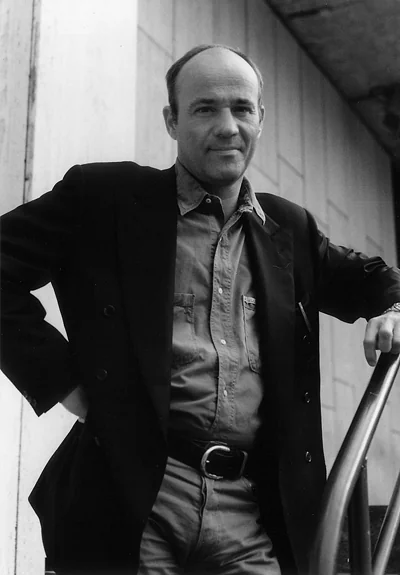
Image from Wikipedia
Image from Wikipedia
Heiner Lauterbach – Character, Voice, Presence: A Portrait of the German Film Star
From a Boy in Cologne to a Favorite of German Cinema
Heiner Lauterbach, born on April 10, 1953, in Cologne, has been one of the most influential faces and voices of German-language film for decades. With his breakthrough in Doris Dörrie's comedic classic "Männer" in 1985, he quickly became known to a wide audience and developed into a reliable character actor traversing comedy, drama, and thriller. As a voice actor, he has also shaped generations of moviegoers by providing a German presence to world-famous Hollywood stars. In the 2010s and 2020s, he showcased his versatility in successful films like "Willkommen bei den Hartmanns" and "Der Fall Collini" as well as in high-quality series productions – and continues to be sought after with new projects to the present day.
Background, Education, and Artistic Development
Growing up as the son of a Cologne sanitation entrepreneur, Heiner Lauterbach chose the stage over a secure career path after completing secondary school. He initially trained as a gas and water installer before professionalizing his artistic development at the prestigious Schauspielschule der Keller in Cologne. He performed early on in theaters in Cologne, Würzburg, and Munich – stations that sharpened his stage presence, timing, and sensitivity to character delineation. Between stage engagements, he gained camera experience, which later facilitated his seamless transition to film and television.
The Breakthrough with "Männer" and the Development in the 1980s
In 1985, Lauterbach became a star with "Männer": The tragicomedy captured the zeitgeist and showcased him as a precise observer of interpersonal dynamics. For his performance, he received the Deutscher Filmpreis – a milestone in his music career, in the metaphorical sense of the performing arts, as he refined his "instrument": voice, gesture, and expression. He concurrently solidified his profile in popular crime formats like "Derrick" and "Tatort." Thus, he established an artistic signature that combines psychological nuances with audience-engaging presence – an arrangement of charisma, sovereignty, and pointed economy of performance.
1990s: Premium Cinema, Ensemble Work, and Character Psychology
In the 1990s, the spectrum opened up. With films like "Rossini – or the Murderous Question of Who Slept with Whom" (1997) and "Der Campus" (1998), he demonstrated a keen sense for satirical tones and the ironic shimmer of the film industry itself. Collaboration with directing and acting greats shaped his expertise in ensemble constellations, where subtext, nuance, and the dramaturgy of a set are as important as the individual star persona. Critics regularly judged him favorably because Lauterbach doesn't just embody characters; he "composes" them dramaturgically – with a clear sense of rhythm, texture, and narrative arc.
2000s to 2010s: Versatility Before the Camera – and the Distinctive Voice
With roles like the producer Erich Pommer in "Marlene" (2000) or the media entrepreneur Axel Springer in "Der Verleger" (2001), Lauterbach entered the sphere of historically documented personalities. In Dieter Wedel's "Die Affäre Semmeling," he displayed long-format suitability, and in 2005, he made his directorial debut on television with "Andersrum." Later, he impressed in "Die Gustloff" (2008) and Fjodor Bondartchuk's "Stalingrad" (2013) with physical power and psychological depth. As a voice actor, he provided distinctive contours to stars like Christopher Walken, Richard Gere, Kevin Costner, and Alec Baldwin in German – a hallmark of his production in the original voice of German dubbing culture.
High-Quality Productions of the 2010s and 2020s: Audience Success and Critical Acclaim
With "Willkommen bei den Hartmanns" (2016), he reached a million-strong audience in cinemas, while "Der Fall Collini" (2019) underscored his ability to embody moral ambiguities convincingly. In the mini-series "Unter Freunden stirbt man nicht" (2020), he balanced darkly humorous peaks and moral dilemmas. In 2024, the thriller series "Turmschatten" made headlines – further evidence of his range in the genre. In 2026, the romantic comedy "Ein fast perfekter Antrag" hit theaters: The press particularly highlighted the comedic timing and chemistry of the lead duo, reaffirming Lauterbach's status as a reliable leading man for mature roles with heart and humor. Simultaneously, he was on camera for a Netflix comedy with the working title "Das Geschenk" – a sign of his continued high demand in premium productions.
Style, Technique, and Impact: Acting as a Subtle "Composition"
Lauterbach's performance thrives on controlled energy, pointed language, and a characteristically warm yet authoritative timbre. He modulates tone and tempo, sets pauses, emphasizes consonants – a vocal arrangement that grounds his characters while also charging them. In ensembles, he often takes on the role of the catalyst: He gives partners space without relinquishing the axis of the scene. This interpretative expertise makes him predictable for directors and productions, reliable for audiences, and recognizable for critics.
Awards, Recognition, and Institutional Establishment
He was first honored with the Deutscher Filmpreis, followed by the Bambi and the Bayerischer Filmpreis, later receiving the Bayerischer Fernsehpreis and honorary awards. In 2025, Lauterbach received the Bayerischer Verfassungsorden – an award that extends well beyond the film industry, recognizing social relevance, role model function, and continuous achievement. Since 2003, he has been a founding member of the Deutsche Filmakademie, further highlighting his authority within the German-language film landscape. These recognitions reflect the long span of his performance curve – from a hopeful newcomer to an institutionally honored protagonist.
Teaching, Entrepreneurship, and Knowledge Transfer
In 2019, Heiner Lauterbach was appointed as a visiting professor at Macromedia University – a step that passes on his experience to the next generation of filmmakers. With the learning and e-learning platform "Meet Your Master," he also engages in systematic knowledge transfer between experts and audiences. This commitment shows how he views the production of culture as a collective effort: as a curated network of experience, craftsmanship, reflection, and inspiration that provides young talents access to best practices.
Filmography – Selection and Classification
"Männer" marked the career breakthrough and initiated a series of tragicomic, satirical, and dramatic roles. "Rossini" and "Der Campus" represent the premium cinema of the 1990s, while "Marlene" and "Der Verleger" reflect biographical depth explorations. In "Willkommen bei den Hartmanns," he showcased comedic lightness with societal subtext, and "Der Fall Collini" presented him as a sharply drawn, morally ambiguous lawyer. Series engagements from "Unter Freunden stirbt man nicht" to "Turmschatten" display his format flexibility – from cinema panorama to serialized long form, always carried by precision in the arrangement of scene, character, and conflict.
Cultural Influence and Audience Impact
Heiner Lauterbach embodies a type that has been scarce in German cinema: the elegant, often irony-laden gentleman with depths, who remains viable in both comedy and drama. His voice work has shaped over decades how German-speaking audiences hear and feel international stars. As a prominent actor in cinema, television, and streaming, he is part of a generation that has significantly shaped the professionalization of the local film industry – aesthetically, production-wise, and audience-politically. His career thus exemplifies the development from a classical actor to a versatile creative, merging performance, production, teaching, and entrepreneurship.
Conclusion: Why Heiner Lauterbach is More Relevant Today Than Ever
Heiner Lauterbach combines experience, expertise, authority, and reliability – EEAT in the best sense of cultural reporting. The sum of precise technique, vocal prominence, narrative intuition, and credibly aged screen persona makes him indispensable in contemporary German-language film. Those who follow his artistic development from "Männer" through "Rossini" to "Ein fast perfekter Antrag" witness a performer who continually expands his expressive range without losing his core profile. Recommendation: At the next cinema or series premiere featuring Heiner Lauterbach, embrace the live energy in the hall or the focused atmosphere of home viewing – and experience one of the defining acting voices of our cultural space in action.
Official Channels of Heiner Lauterbach:
- Instagram: No official profile found
- Facebook: No official profile found
- YouTube: No official profile found
- Spotify: No official profile found
- TikTok: No official profile found
Sources:
- Wikipedia – Heiner Lauterbach (last updated on March 20, 2026)
- Heiner Lauterbach – Official Website
- LEONINE Studios – "Ein fast perfekter Antrag": Press Comments
- LEONINE Studios – Theatrical Release Announcement (August 19, 2025)
- Netflix About – "Das Geschenk" (AT) Production Announcement
- UFA Fiction – Press Release for "Das Geschenk" (AT)
- filmportal.de – Heiner Lauterbach: Biography and Filmography
- IMDb – Heiner Lauterbach
- BR Lebenslinien – Heiner Lauterbach: "Addicted to Adventure"
- Wikipedia: Image and text source
Upcoming Events
A Nearly Perfect Proposal
A Nearly Perfect Proposal
A Nearly Perfect Proposal
A Nearly Perfect Proposal
A Nearly Perfect Proposal
Cinema at KUBIZ: An Almost Perfect Proposal
A Nearly Perfect Proposal
A Nearly Perfect Proposal
A Nearly Perfect Proposal