
Gitte Hænning
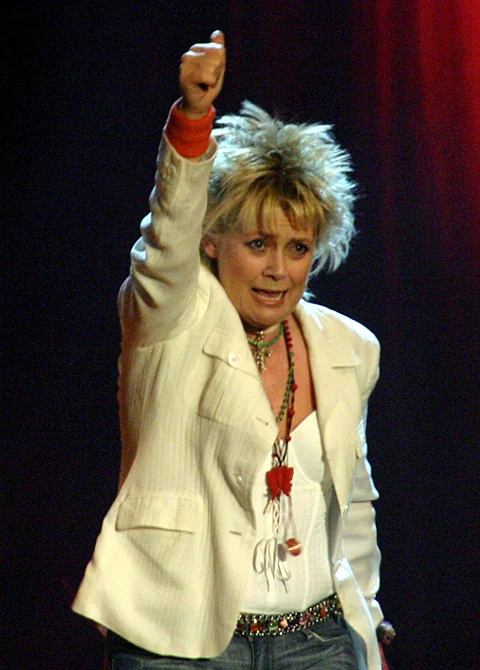
Image from Wikipedia
Image from Wikipedia
Gitte Hænning – From Child Voice to Cultural Cornerstone of German-Danish Pop
A voice that accompanies generations – the long music career of the Danish singer
Gitte Hænning-Johansson, born in 1946 in Aarhus, Denmark, is one of the defining voices of German-language entertainment music. Her music career began as a child star in the 1950s, but she achieved her major breakthrough in 1963 with the hit "Ich will ’nen Cowboy als Mann." What started as a teenage phenomenon developed into an artistic evolution over decades: from Schlager and pop to musical and jazz. Her stage presence, her knack for arrangement, and her ability to reinterpret repertoire made her a multifaceted singer who has captivated both audiences and critics alike.
As a versatile entertainer, she navigated changes in genres and trends with remarkable confidence. Whether performing duets with Rex Gildo, representing Germany at the Eurovision Song Contest in 1973, participating in concept albums with sophisticated lyrics, or engaging in jazz projects: Gitte Hænning always maintained a distinct artistic signature. To this day, she fills theaters and concert halls with her charismatic stage presence, remaining an inspiring figure for music lovers in the German-speaking world and Scandinavia.
Childhood, Early Years, and Artistic Influence
Gitte's first performances were alongside her father, Otto Hænning, a folk singer and vocal coach. She learned the fundamentals of vocal technique, phrasing, and musical interpretation early on – a foundation that would support her later career. In the late 1950s, she moved to Sweden, where she already celebrated chart successes as a teenager and made linguistic diversity her trademark. Her early singles in Danish, Swedish, German, English, and Italian sharpened her versatility in dealing with genre and style shifts.
During this phase, the unique blend of natural musicality and professional discipline took shape. Studio work, live performances, and TV appearances went hand in hand. Her repertoire spanned from light, melodic Schlager songs to more sophisticated ballads, which she interpreted with clear articulation and a well-managed head voice. It was already evident here that versatility would later characterize her discography.
Breakthrough in the German-speaking World: Schlager Icon of the 1960s
In 1963, her career took a leap: "Ich will ’nen Cowboy als Mann" catapulted the young singer to the forefront of the German Schlager scene. The title combined a catchy hook, a clear verse structure, and a production that brilliantly highlighted the vocals. Concurrently, she established herself with Rex Gildo as "Gitte & Rex," becoming the most popular singing duo of the mid-1960s; duets like "Vom Stadtpark die Laternen" documented the zeitgeist between dance tea, jukebox romance, and radio hits.
Her single releases were characterized by memorable melodies, cohesive arrangements, and a fresh, effortless vocal tone. Her popularity continued to grow through TV shows and musical films – a blend of pop aesthetics, screen presence, and radio success that made her a mainstay of post-war Schlager culture. At the same time, she remained present in Scandinavia, collecting further chart hits.
The 1970s: Eurovision, Top Ten Successes, and Prominent Producers
In 1973, Gitte Hænning represented Germany at the Eurovision Song Contest with "Junger Tag," achieving a respectable middle position. The 1970s brought additional hits with a clear pop-Schlager signature, including "Ich hab die Liebe verspielt in Monte Carlo" (Top Ten) as well as "So schön kann doch kein Mann sein" and "Lass mich heute nicht allein." During this decade, she also collaborated with ABBA members Benny Andersson and Björn Ulvaeus, who produced her song "Happy-End" in 1976 – a remarkable intersection between Scandinavian pop expertise and German-language entertainment.
Gitte showed a fine sense of repertoire selection: engaging hook lines, clear narrative structure, and contemporary orchestration defined her single productions. Several personality shows on television solidified her image as a versatile entertainer. She also remained present in international pre-selections, such as in 1978 for Luxembourg, signaling her cross-border popularity.
Image Change and Artistic Realignment in the 1980s
At the beginning of the 1980s, Gitte Hænning underwent a conscious artistic development towards more serious pop interpretation. The German adaptation of Andrew Lloyd Webber’s song "Take That Look Off Your Face," titled "Freu dich bloß nicht zu früh," became a hit in 1980 and marked the beginning of broader concepts. The concept album "Bleib noch bis zum Sonntag" earned her the German Record Award – a critical success that recognized production, lyrical quality, and interpretation.
Further important milestones in her discography followed: "Ungeschminkt" (1982), "Berührungen" (1983, Gold), and "Jetzt erst recht" (1987, lyrics by Michael Kunze). These albums combined pop aesthetics with narrative song cycles that addressed female perspectives, emancipation, and self-assertion. Live tours – from the "Berührungen" tour in 1984 to the "Jetzt erst recht" tour in 1988 – showcased an artist who emphasized her studio statement with precise stage dramaturgy and a strong band interpretation.
Jazz, Stage, and Long Lines: 1990s to 2000s
Alongside pop and Schlager, Gitte Hænning has always harbored an affinity for jazz. As early as 1968, she recorded the album "My Kind of World" with the Kenny Clarke/Francy Boland Big Band – a work that later grew in reception. In the 1990s and 2000s, she intensified her jazz and theater activities: concerts like "Songs for My Father" and engagements in productions spanning Shakespeare, revue, and concert formats demonstrated vocal maturity, timing accuracy, and stylistic range.
Since 2004, "Gitte, Wencke, Siw – Die Show" with Wencke Myhre and Siw Malmkvist became a particular crowd puller: Over 500 performances in the German-speaking area, supported by a live CD, documented the enduring appeal of three Scandinavian icons. In 2010, Hænning released the album "Was ihr wollt," on which she rearranged classics from her repertoire and connected them with new songs – a clever update of her artistic identity.
Highlights of Discography and Awards
Gitte Hænning's discography reflects half a century of pop history: from the 1960s singles and duets with Rex Gildo to the 1970s hits and the concept albums of the 1980s. Her notable works include "Bleib noch bis zum Sonntag" (1980), "Ungeschminkt" (1982), "Berührungen" (1983, Gold), "Jetzt erst recht" (1987), and "Was ihr wollt" (2010). Her singles show an evolution from youthful lightness to mature pop with demanding textures.
The list of awards is also impressive: Lions from Radio Luxembourg (including 1963 and 1974), a Bravo Otto (1965), the Golden Europa (1975), and the German Record Award (1980). These awards mark career milestones but mainly honor the enduring resonance of her music – as hit chart entries, as stage events, and as a significant contribution to entertainment culture.
Voice, Style, and Production: An Expert Assessment
Gitte Hænning impresses with a clear, brilliantly focused mid-range, clean intonation, and a controlled mix of chest and head voice, which particularly enriches ballads. In uptempo numbers, she excels with precise timing and a conversational nuance, which keeps the lyrics transparent. Her productions often rely on melody-leading strings, warm woodwind colors, punchy electric guitar fills, and a rhythm section with a buoyant bass drum – a sound design that oscillates between classic Schlager and mature pop.
In the jazz programs, another facet emerges: stronger dynamic arcs, freer phrasing, nuanced rubati, and greater harmonic mobility. Here, the singer shows herself as a stylistically aware interpreter, combining repertoire from the Great American Songbook and European entertainment tradition with personality. This stylistic sovereignty turns her discography into a vibrant archive of German-Danish pop and jazz history.
Cultural Influence and Stage Presence
Gitte Hænning embodies the journey from the post-war Schlager era to a modern pop aesthetic. Her career tells of the changing media landscape – from records and TV shows to concert hall projects with jazz ensembles. As a woman in German-speaking pop of the 1970s and 80s, she shaped confident, adult perspectives in Schlager and opened the door for female interpreters who wanted to tell stories of autonomy, doubt, and strength beyond pure romantic themes.
On stage, she combines presence and intimacy: pointed moderation, dramaturgically clever setlists, and an understanding of tension arcs that range from light chanson to grand pop ballads. It is precisely this combination of experience, expertise, and artistic authority that explains why her programs still resonate decades after her first hits – and why she has become a reference figure for many music lovers.
Activities and Resonance in Recent Times
Beyond the big chart operations, Gitte Hænning remains present as a live artist. Concert formats with small, finely cast bands showcase her voice in a chamber music light and bring the narrative element to the forefront. In reports, her versatility, stage maturity, and ability to independently update classics are consistently highlighted. Additionally, event organizers’ and ticket portals document selected performances of recent years in the German-speaking world and at North Sea venues.
Accompanying this, the music press is developing a retrospective look at her discography – from early hit singles to the conceptually designed albums of the 1980s and the rearrangements and jazz programs of the 2000s and 2010s. The critical reception emphasizes her interpretative artistry, bridging entertainment and ambition, and the consistency of an artist who has accompanied her audience over generations.
Conclusion: Why Gitte Hænning Still Captivates Today
Gitte Hænning connects her life story and sound aesthetics to a distinctive signature: a voice that carries stories; a discography that spans eras; a stage presence that speaks from experience. Her best recordings demonstrate how Schlager, pop, musical, and jazz can productively intersect – with a clear focus on song dramaturgy, lyrical clarity, and emotional directness. Anyone wanting to understand how German-language pop culture has developed since the 1960s will find in Gitte Hænning a key figure.
The appeal to music lovers: Experience this artist live – in formats that center on the singing, allow intimacy, and make the great melodies of her career newly tangible. Gitte Hænning demonstrates how artistic development, expertise in composition and arrangement, and credible craftsmanship can continue to shine brightly even after decades.
Official Channels of Gitte Hænning:
- Instagram: No official profile found
- Facebook: No official profile found
- YouTube: No official profile found
- Spotify: No official profile found
- TikTok: No official profile found
Sources:
- Wikipedia – Gitte Hænning (de)
- Wikipedia – Gitte Hænning (en)
- Wikipedia – Jetzt erst recht (Album)
- Wikipedia – Ungeschminkt (Album)
- Wikipedia – Was ihr wollt (Album)
- Online Musik Magazin – Gitte Hænning: Jazz (Review)
- t-online – Gitte Hænning: What the "Cowboy" Singer Does (Portrait)
- Nordische Botschaften – Concert Announcement Gitte Hænning
- Bandsintown – Gitte Hænning: Concerts & Live Dates
- Universal Music – Electrola: This is Music! Gitte Hænning
- Wikipedia: Image and text source