
Franz von Assisi
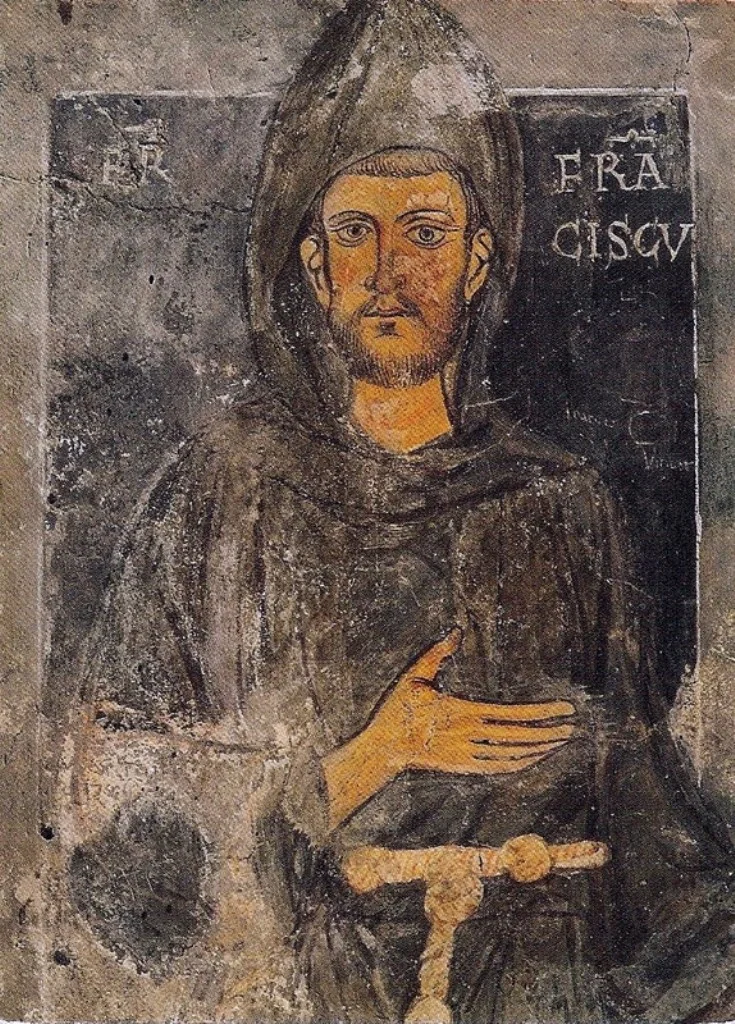
Image from Wikipedia
Image from Wikipedia
Francis of Assisi – The Radical Saint Who Reconceived Poverty, Nature, and Spirituality
One of the Most Influential Figures of the Middle Ages
Francis of Assisi is considered one of the most influential personalities in the history of Christian culture. Born in 1181 or 1182 in Assisi as Giovanni di Pietro di Bernardone, he became known as Francis of Assisi, emerging as a key figure in a movement that placed poverty, humility, and a radical following of Christ at its core. As the founder of the Order of Friars Minor and co-founder of the Poor Clares, he not only shaped the history of religion but also influenced the European perception of simplicity, peace ethics, and connection to nature. The accounts of his life are extraordinarily rich, which is why his biography remains one of the best-documented of the Middle Ages to this day. ([de.wikipedia.org](https://de.wikipedia.org/wiki/Franz_von_Assisi?utm_source=openai))
From a Cloth Merchant Family to Spiritual Transformation
Francis grew up as the son of the wealthy cloth merchant Pietro Bernadone in Assisi, receiving a solid education. His early years were characterized as worldly, vivacious, and marked by social ambition; it was experiences of war and a deep inner crisis that gradually took him out of this world. Following his imprisonment during the conflict between Assisi and Perugia, he sought a new purpose that no longer resided in status, possessions, or social ambition. His rejection of his father's life model became a symbol of a radical new beginning. ([franziskaner.de](https://franziskaner.de/franziskus-biografie/?utm_source=openai))
The decisive turning point was his commitment to a way of life that Francis understood as imitation of Jesus. In tradition, the experience before the cross of San Damiano symbolizes this transformation: from a searching young man, he became a preacher who saw possession not as deprivation, but as liberation. This life decision attracted companions and turned a personal calling into a communal movement. Hence, the Order of Friars Minor was established, quickly spreading and establishing itself throughout Europe just a few years after the founder's death. ([de.wikipedia.org](https://de.wikipedia.org/wiki/Franz_von_Assisi?utm_source=openai))
Establishment of a New Order: Poor, Preaching, On the Move
Francis drafted a rule of life for his companions centered on poverty, penance, and service to people and the Church. In 1210, he journeyed to Rome with his brothers to gain recognition for their way of life. In a short period, the small brotherhood evolved into an independent order with a clear spiritual identity. The Friars Minor represented a new form of religious practice that combined closeness to people, mobility in the land, and a strong attachment to the Gospel. ([katholisch.de](https://www.katholisch.de/lexikon/998-franz-von-assisi?utm_source=openai))
The rapid expansion of the Franciscans is key to understanding the saint's historical significance. By 1230, a branch was established in Riga, illustrating the early international reach of his ideas. The fact that Francis was canonized just two years after his death, despite initial resistance, underscores the extraordinary impact of his actions within the Church. His movement not only outlasted him but also permanently shaped ecclesiastical culture, pastoral care, and religious life. ([de.wikipedia.org](https://de.wikipedia.org/wiki/Franz_von_Assisi?utm_source=openai))
The Poor Clares and the Female Side of the Franciscan Movement
Francis of Assisi was also a co-founder of the Poor Clares, a female religious community that remained closely related to his spiritual impetus. The emergence of this branch demonstrates how far his spirituality extended beyond a single biography. It provided women with an independent path within the Franciscan idea, to live in poverty and devotion. Thus, the movement became a broader spiritual model that encompassed different ways of life. ([de.wikipedia.org](https://de.wikipedia.org/wiki/Franz_von_Assisi?utm_source=openai))
In popular reception, Francis has often been depicted as a gentle nature protector and pious friend of animals. This image is primarily due to later narrative traditions, such as the Fioretti, which significantly shaped devotional life in the 19th and 20th centuries. Modern portrayals strive to present the historical figure more accurately: as a serious, conflict-prone, and profoundly inspired individual, whose significance transcends legends. It is precisely this tension between myth and historical figure that continues to captivate to this day. ([de.wikipedia.org](https://de.wikipedia.org/wiki/Franz_von_Assisi?utm_source=openai))
Spirituality, Language, and an Extraordinary Charisma
Francis lived out a consistent Imitatio Christi, embodying the example of Jesus. His spirituality intertwined prayer, movement, proclamation, and radical simplicity. Contemporary and early accounts describe him as a man of great charisma, winning companions without seeking a position of power. It is this blend of inner rigor and human warmth that made him a figure whose influence extends beyond the religious sphere. ([franziskaner.de](https://franziskaner.de/franziskus-biografie/?utm_source=openai))
In terms of language, the Franciscan movement represented a break with conventions. The emphasis on vernacular language, vivid preaching, and immediate access to faith transformed religious communication for the long term. The famous Canticle of the Sun, which remains central in the Franciscan tradition, showcases the poetic dimension of his piety and the connection between creation, praise, and humility. In this way, Francis became a figure where theology, poetry, and life practice intersect. ([franziskanisch.net](https://www.franziskanisch.net/wp-content/uploads/2024/04/Eine_Auswahl_von_Vertonungen_des_Sonnengesangs_von_Franz_von_Assisi.pdf?utm_source=openai))
Cultural Influence: From Hagiography to the Present
The influence of Francis of Assisi extends deeply into European culture. The Fioretti, a collection of 53 short chapters about his life, shaped his popular image for centuries, portraying him as a gentle, miraculous saint. At the same time, modern authors and historians attempt to capture the figure of Francis more accurately, presenting him as a complex individual with biographical fractures. This dual perspective of reverence and critical reconstruction makes his cultural-historical position particularly compelling. ([de.wikipedia.org](https://de.wikipedia.org/wiki/Franz_von_Assisi?utm_source=openai))
Even beyond ecclesiastical contexts, Francis continues to function as a symbolic figure. His connection of the ideal of poverty, peace ethics, and creation sensitivity continues to influence ecological, social, and spiritual discourses to this day. The memorial day on October 4 in various churches indicates his enduring presence in the liturgical calendar. Francis of Assisi thus remains not only a historical figure but also a cultural reference point for questions of simplicity, responsibility, and humanity. ([de.wikipedia.org](https://de.wikipedia.org/wiki/Franz_von_Assisi?utm_source=openai))
Reception, Source Situation, and Lasting Authority
Hardly any medieval figure is as well documented as Francis. The earliest life descriptions come from among others Thomas of Celano, who claimed to rely on reports from direct proximity. Later sources further refined the image, creating a rich tradition in which historical facts, spiritual interpretation, and legends merge. For contemporary research, this diversity of sources is crucial as it makes visible both the historical reconstruction and the history of impact. ([de.wikipedia.org](https://de.wikipedia.org/wiki/Franz_von_Assisi?utm_source=openai))
His canonization and the rapid expansion of the order attest to the institutional significance of his work. At the same time, the ongoing popularity of his persona shows that Francis is more than just a founder of an order: He embodies a spiritual alternative to the logic of possession, competition, and distance. Those who engage with him encounter one of the most influential voices in European religious and cultural history. This is precisely where his timeless tension and lasting radiance lie. ([de.wikipedia.org](https://de.wikipedia.org/wiki/Franz_von_Assisi?utm_source=openai))
Conclusion: Why Francis of Assisi Continues to Fascinate Today
Francis of Assisi remains fascinating because he consistently tested a different way of life: poor, open, spiritually focused, and yet deeply human. His biography speaks of conversion, courage, and the power of an idea that shaped a global movement from personal conviction. Anyone seeking to understand Francis encounters not a mere saintly image but a historically impactful personality with profound cultural depth. His story invites us to rediscover the Franciscan tradition and to take the spiritual radicalism of his example seriously to this day. ([de.wikipedia.org](https://de.wikipedia.org/wiki/Franz_von_Assisi?utm_source=openai))
Official Channels of Francis of Assisi:
- Instagram: No official profile found
- Facebook: No official profile found
- YouTube: No official profile found
- Spotify: No official profile found
- TikTok: No official profile found
Sources:
- Wikipedia: Francis of Assisi ([de.wikipedia.org](https://de.wikipedia.org/wiki/Franz_von_Assisi?utm_source=openai))
- Franziskaner.de – Biography: Francis of Assisi ([franziskaner.de](https://franziskaner.de/franziskus-biografie/?utm_source=openai))
- katholisch.de – Lexicon: Francis of Assisi ([katholisch.de](https://www.katholisch.de/lexikon/998-franz-von-assisi?utm_source=openai))
- ORF Religion – Francis of Assisi ([religion.orf.at](https://religion.orf.at/v3/lexikon/stories/2602304/?utm_source=openai))
- St.-Franziskus-Hochdahl – Francis of Assisi: A Biography ([st-franziskus-hochdahl.de](https://www.st-franziskus-hochdahl.de/unsere-grundgedanken/franz-von-assisi/franz-von-assisi-eine-biographie?utm_source=openai))
- franziskanisch.net – Selection of Musical Settings of the Canticle of the Sun ([franziskanisch.net](https://www.franziskanisch.net/wp-content/uploads/2024/04/Eine_Auswahl_von_Vertonungen_des_Sonnengesangs_von_Franz_von_Assisi.pdf?utm_source=openai))
- Wikipedia: Image and Text Source ([de.wikipedia.org](https://de.wikipedia.org/wiki/Franz_von_Assisi?utm_source=openai))