Felix Mitterer
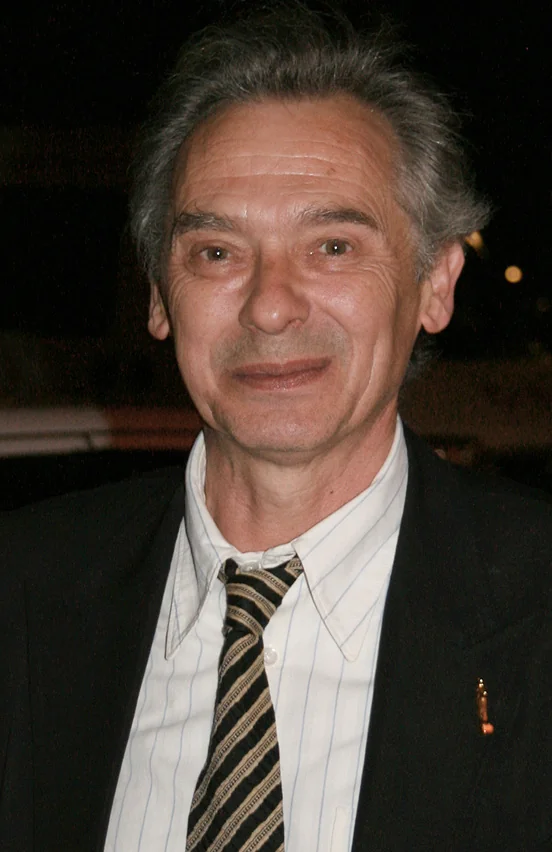
Image from Wikipedia
Image from Wikipedia
Felix Mitterer – The Tyrolean Playwright Who Renewed Folk Theater
An Author with a Sharp Eye for Outsiders, Power, and Humanity
Felix Mitterer, born on February 6, 1948, in Achenkirch, Tyrol, is one of the most influential Austrian playwrights, actors, and screenwriters of our time. His path did not begin in the literary establishment but in a biography shaped by adoption, social hardship, and rural experience. It is precisely from this background that he developed the distinctive narrative power that characterizes his theater works, radio plays, and screenplays to this day. ([goethe.de](https://www.goethe.de/ins/cz/de/kul/ser/uak/per.cfm?personId=538&utm_source=openai))
From Tyrolean Childhood to Freelance Writer
Mitterer grew up as an adopted child of a pair of farm laborers in the Kitzbühel region and attended the teacher training college in Innsbruck from 1962 to 1966. He then worked for ten years at the Innsbruck customs office before becoming a freelance writer in 1977. This biographical tension between administrative routine and artistic calling also shapes the perception of his works: Mitterer does not write from a distance about life but from experience with social environments, dependencies, and friction points. ([gaertnerplatztheater.de](https://www.gaertnerplatztheater.de/de/personen/felix-mitterer.html?utm_source=openai))
The early years explain much of his later thematic choices. Der Standard describes his childhood as tough, marked by beatings, archaic conditions, and at the same time warmth in the rural surroundings. From this ambivalence, Mitterer shaped a literary stance that focuses on people at the edge of society and lends their everyday lives great dramatic weight. ([derstandard.de](https://www.derstandard.de/story/2000074413901?utm_source=openai))
The Breakthrough with “Kein Platz für Idioten”
Mitterer achieved his first major breakthrough in 1977 with Kein Platz für Idioten, a play that originated as a radio play and was later premiered as a stage adaptation. The Goethe-Institut biography names this work as his first book; other sources highlight that Mitterer established his career as a freelance author with it. His style is evident even here: He combines accessible language with social critique and turns a local story into a universal drama about exclusion. ([goethe.de](https://www.goethe.de/ins/cz/de/kul/ser/uak/per.cfm?personId=538&utm_source=openai))
In the following years, Mitterer consistently expanded his spectrum. He wrote plays, short stories, radio plays, children's books, dialect texts, and numerous screenplays, including work for the television series Tatort. The Gärtnerplatztheater succinctly summarizes his artistic development: After the breakthrough, screenplays, plays, short stories, radio plays, and children's stories followed. This versatility made him one of the most distinctive voices in contemporary Austrian theater. ([gaertnerplatztheater.de](https://www.gaertnerplatztheater.de/de/personen/felix-mitterer.html?utm_source=openai))
The Piefke-Saga and the Great Reputation as a Folk Author
The broad breakthrough with the audience came to him mainly in the late 1980s with Die Piefke-Saga. ORF contributions and theater sources mention this work along with Verkaufte Heimat as key works that made Mitterer a celebrated author. The series and its sequels resonated with a society grappling with tourism, identity, regional pride, and media self-observation. ([tv.orf.at](https://tv.orf.at/stories/mitterer100.html?utm_source=openai))
It is particularly in these materials that Mitterer displays his remarkable authority in dealing with conflicts. Die Presse describes him as a reserved person who, for stage and television, knows precisely how to create effects and compelling narratives. His characters often find themselves in historical or societal focal points, and it is from this that the strong stage presence of his plays and their lasting impact on Austria's cultural memory arise. ([diepresse.com](https://www.diepresse.com/1452543/felix-mitterer-ein-platz-fuer-alle?utm_source=openai))
Themes, Dramaturgy, and Social Relevance
At the center of Mitterer’s dramaturgy are outsiders, disadvantaged individuals, and people overlooked or oppressed by societal systems. Store norske leksikon highlights that his plays often take place during political upheavals, especially during National Socialism, and unflinchingly expose the mechanisms of exclusion and power. This thematic consistency lends his work a clear moral and political contour. ([snl.no](https://snl.no/Felix_Mitterer?utm_source=openai))
The Goethe-Institut also emphasizes the breadth of his oeuvre and his recurring engagement with heavy, sensitive, and socially critical topics. Mitterer is not an author of light tones but one who observes with precision. His texts succeed because they condense concrete life worlds while also transcending local boundaries. ([goethe.de](https://www.goethe.de/ins/cz/de/kul/ser/uak/per.cfm?personId=538&utm_source=openai))
Dramatic Highlights, Television, and Historical Material
Among his notable works, in addition to Kein Platz für Idioten and Die Piefke-Saga, are plays such as In der Löwengrube, Jägerstätter, Die Kinder des Teufels, and Der Boxer. Store norske leksikon and other sources also refer to his focus on documentarily inspired material, such as the story of Johann “Rukeli” Trollmann. Mitterer's work thus remains closely tied to real biographies and historical experiences. ([snl.no](https://snl.no/Felix_Mitterer?utm_source=openai))
Mitterer was also a prominent storyteller in television. ORF sources mention numerous Tatort screenplays, as well as the historical drama Andreas Hofer – Die Freiheit des Adlers, which was produced based on his screenplay. These works demonstrate how adeptly he transitioned between theater, television, and literary prose while maintaining his thematic line. ([tv.orf.at](https://tv.orf.at/stories/mitterer100.html?utm_source=openai))
Later Works, Awards, and Artistic Maturity
Mitterer's career remained productive even beyond his breakthrough. The ORF portrait on his 75th birthday highlights, among other things, his ventures into opera with Wolkenstein and into musical theater with Die Weberischen; he also published his first novel Keiner von Euch in 2020. With this, he continuously expands his work and proves that his storytelling is not bound to a single format. ([tirol.orf.at](https://tirol.orf.at/stories/3193450/?utm_source=openai))
The landscape of awards underscores his authority in the German-speaking literature and theater scene. The Goethe-Institut mentions early honors such as the Great Literary Scholarship of the State of Tyrol, while additional sources refer to further prizes and recognition both at home and abroad. Mitterer has thereby become not only popular but also institutionally acknowledged as an important voice in Austrian literature. ([goethe.de](https://www.goethe.de/ins/cz/de/kul/ser/uak/per.cfm?personId=538&utm_source=openai))
Cultural Influence and Literary Signature
Felix Mitterer’s cultural influence lies in his ability to connect folk theater, social criticism, and historical reflection. The Austrian theater landscape owes him plays that reach broad audiences while remaining politically uncomfortable. His writing has shaped the tone of contemporary Austrian popular theater without tipping into folklore. ([snl.no](https://snl.no/Felix_Mitterer?utm_source=openai))
Particularly remarkable is his closeness to real fates. Whether outsiders, persecuted minorities, historical resistors, or people on the margins of social mainstream: Mitterer gives them a voice without sentimentalizing them. It is precisely in this sustainability of his artistic development and the lasting relevance of his works on stage, in television, and in literature. ([snl.no](https://snl.no/Felix_Mitterer?utm_source=openai))
Conclusion: Why Felix Mitterer Continues to Fascinate Today
Felix Mitterer remains compelling because he tells with great clarity while never losing sight of the person behind the conflict. His plays connect home, criticism of power, and empathy into a distinctive profile that is unique in the Austrian cultural scene. Anyone wishing to experience theater, television, and literary prose as a vibrant form of social observation should definitely discover Mitterer’s work and experience his plays on stage. ([tv.orf.at](https://tv.orf.at/stories/mitterer100.html?utm_source=openai))
Official Channels of Felix Mitterer:
- Instagram: No official profile found
- Facebook: No official profile found
- YouTube: No official profile found
- Spotify: No official profile found
- TikTok: No official profile found
Sources:
- Wikipedia – Felix Mitterer
- Goethe-Institut Czech Republic – Felix Mitterer
- Gärtnerplatztheater – Felix Mitterer
- Kaiser Verlag – Felix Mitterer
- ORF Tirol – Felix Mitterer Celebrates 75th Birthday
- ORF TV – Portrait for Felix Mitterer’s 75th Birthday
- Der Standard – What a Tyrolean Childhood Looked Like
- Die Presse – Felix Mitterer: A Place for Everyone
- Store norske leksikon – Felix Mitterer
- School for Poetry – Felix Mitterer