
Carl Maria von Weber
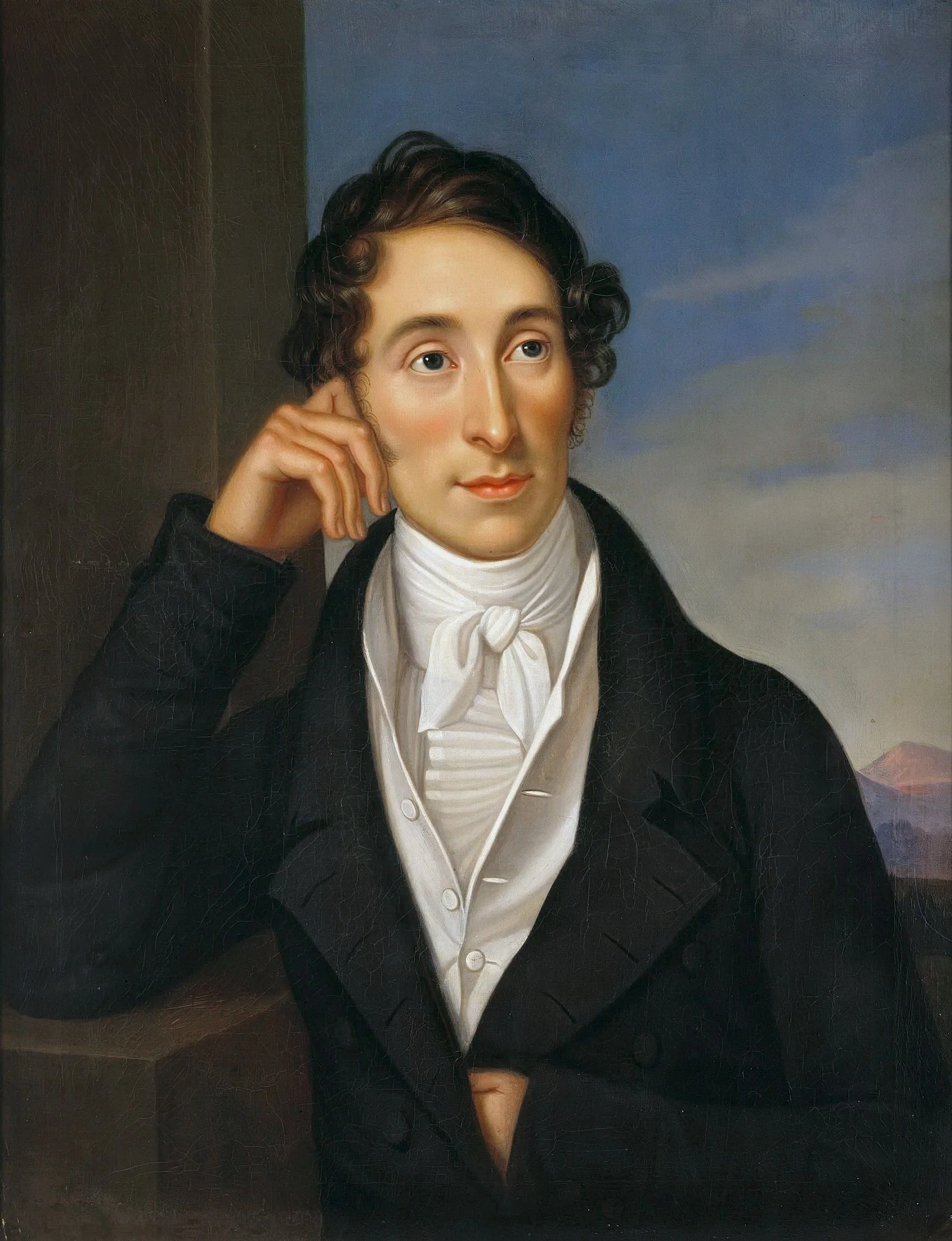
Image from Wikipedia
Image from Wikipedia
Carl Maria von Weber – Pioneer of German Romanticism in Opera
An artist's life between opera revolution, orchestral sound, and stage magic
Carl Maria von Weber significantly shaped the early 19th century with his musical career: as a composer, conductor, pianist, and brilliant musical thinker. Born on November 18 or 19, 1786, in Eutin and died on June 5, 1826, in London, he embodies like few others the emergence of German Romanticism in opera. His “Der Freischütz” marked a turning point in opera history in 1821, while “Euryanthe” and “Oberon” expanded the sound spectrum between dramatic realism and fairytale atmosphere. At the same time, Weber created milestones of instrumental art with his clarinet works, the concert piece in f-minor, and his piano music.
Weber combined artistic development and stage presence with organizational foresight. As a conductor in Prague and Dresden, he professionalized rehearsal practices, ensemble structure, and repertoire – a modern opera manager avant la lettre. His composition, arrangement, and production aimed for dramatic impact, orchestral colorfulness, and a distinctive German sound language that later influenced composers like Wagner.
Early years and education: From traveling theater child to composer
Growing up in a wandering theater environment, Weber came into contact with stage, singing, and dramaturgy early on. His years of study led him to Munich and Vienna; formative teachers shaped his compositional and pianistic-virtuoso profile. Even as a young musician, he displayed a knack for melodic lines, modulations, and orchestral colors – skills that would later define his operatic aesthetics. Early works such as his first operas and piano sonatas document a search between classical form and romantic expressiveness.
Weber sought the appeal of new colors beyond the piano: guitar and clarinet inspired him in particular. Collaborations with outstanding virtuosos sharpened his understanding of idiomatic writing styles, articulation, and register. From this experience emerged the profile of a composer who mastered both vocal theater and instrumental art with equal expertise.
Conductor and opera innovator: Prague and Dresden as laboratories of Romanticism
Weber's career reached an institutional culmination point starting in 1813 in Prague and from 1817 in Dresden. Here, he shaped rehearsal methodology, ensemble culture, and the relationship between stage and orchestra as a conductor. His conducting, the clever disposition of voices and instruments, as well as a dramaturgically well-thought-out repertoire, strengthened a specifically “German” operatic profile. The cultivation of new works was accompanied by a systematic development of ensembles – a hallmark of his authority in the musical life.
It was in Dresden that the conditions arose for Weber's breakthrough as an opera composer. Sound direction, motivic work, and scenic economy combined with a romantic imagery that fused folk proximity and the supernatural, nature poetry, and dramatic intensification. This overall aesthetic culminated in works that captivated opera audiences.
The breakthrough: “Der Freischütz” as a founding document of German Romantic opera
With “Der Freischütz” (premiered on June 18, 1821, at the Royal Playhouse in Berlin), Weber struck a chord with his time. Folk-like melodies, vivid choral scenes, and innovative orchestration created a dense atmosphere between hunting idyll and “Wolf's Glen” demonology. The score utilizes brass, woodwinds, and strings in a suggestive balance; leitmotivic seeds and colorful impulses psychologically advance the action. Critics celebrated the work as a breakthrough against the Italian bel canto style and French grand opera conventions.
The reception was overwhelming: "Der Freischütz" quickly embarked on a European triumph. The piece became stylistically formative for an entire understanding of opera – with effects lasting into the late 19th century. Its secret of success lies in the synthesis of dramatic economy, folk-rooted tonal invention, and symphonic interludes that open dramaturgical spaces rather than merely connecting them.
Expanding horizons: “Euryanthe” and “Oberon”
With “Euryanthe” (1823), Weber took the step towards the fully composed romantic opera. The abandonment of spoken dialogue shifted the weight onto sustainable thematic development, refined harmony, and orchestral psychology. Despite performance issues, the work is now considered one of the key texts of early Romanticism – a bridge on the way to Wagner's music drama.
“Oberon” (London, Covent Garden, April 12, 1826) was created for an English audience and bears fairy-tale and supernatural traits. Weber responded with brightly colored orchestration, refined wind colors, and brilliant coloratura style to the specific theater and singer tradition of the city. The overture, still a staple in repertoire today, demonstrates his expertise in form, contrast dramaturgy, and motivic condensation.
Instrumental masterpieces: Clarinet, piano, and more
Weber’s clarinet works – including the two concertos (f-minor Op. 73, E-flat major Op. 74), the Concertino, and the clarinet quintet Op. 34 – are still considered benchmark pieces in the repertoire today. They combine cantabile lines, virtuosic register leaps, and characteristic timbres that give the instrument a romantic soul. The dialogue between soloist and orchestra showcases a clever balance between brilliance and chamber music delicacy.
With the concert piece in f-minor Op. 79, Weber created a symphonic sequence of scenes for piano and orchestra that intertwines narrative dramaturgy and pianistic virtuosity. Works like the “Aufforderung zum Tanz” Op. 65 became parade examples of the romantic character piece and inspired orchestral adaptations. Even his bassoon concerto, chamber music, and opera overtures show a signature that combines awareness of form and dramatic gesture.
Style and technique: Sound direction, color, and dramaturgy
Weber thinks of opera and orchestra in symphonic terms. His scores exhibit finely nuanced woodwind colors, characteristic horn configurations, and impactful brass accents. Harmonic turns and chromatic inflections open scenic spaces while rhythmic profiles define dramatic situations. His composition, arrangement, and the production of his stage works always follow a clear dramaturgical idea: music as stage, stage as music.
Even in vocal music, Weber sets standards. Arias and ensembles develop character psychology from motivic material; choirs serve not just as backdrop but as active sound bodies. This connection between technique and expression establishes his status as an authority in romantic opera and explains the enduring cultural influence of his works.
Conductor, pianist, organizer: Weber's stage presence behind the podium
As a conductor, Weber established precise rehearsal practices, careful sound balance, and text-related articulation. His stage presence was evident in his understanding of musical theater as well as in the management of ensembles, choir, and orchestra. In Dresden, he advanced professionalization and defended an artistic profile that integrated the German language, dramatic truth, and orchestral subtlety.
As a pianist, Weber made waves with his improvisational talents and brilliant technique. His concert programs combined virtuoso pieces with his own compositions and served as a laboratory for sound-dramatic effects that later flowed into the opera scores.
Reception, research, and editions: From premiere to critical complete edition
The critical engagement with Weber is vibrant. Authoritative reference works recognize him as a pioneer of German Romanticism, while performances and recordings affirm his orchestral sensitivity and dramaturgical succinctness. Opera houses keep “Der Freischütz” in their repertoire; “Euryanthe” and “Oberon” regularly return in reimagined readings, demonstrating the modernity of his dramatic concepts.
The Carl Maria von Weber Complete Edition (WeGA) secures scores, letters, diaries, and documents in scientifically grounded editions. This work promotes understanding of source conditions, instrumentation practices, and work genesis – a crucial building block for a trustworthy, EEAT-compliant engagement with Weber's oeuvre and its cultural-historical significance.
Current projects, recordings, and anniversaries (2024–2026)
In 2024 and 2025, new recordings of his works were released and are being released, including cycles of clarinet concertos and chamber music that highlight Weber’s sound language on modern instruments. Concert programs in Germany, Austria, and beyond focus on overtures, concert pieces, and clarinet works, emphasizing Weber's role as a driving force of the romantic repertoire.
In 2026, the 200th anniversary of his death (June 5, 1826) will be marked. Museums, universities, and opera houses are preparing exhibitions, lectures, cross-over projects (“Weber meets Jazz”), and stage adaptations. These activities will consolidate history, performance practice, and new perspectives on Weber's aesthetics – from historical scores to contemporary readings.
Resonance and cultural influence
Weber paved the way for an independent German operatic aesthetic that later culminated in music drama. Themes like nature, folk beliefs, and the supernatural became carriers of musical form in his works. His artistry in instrumentation influenced orchestration and sound dramaturgy well into the late 19th century. In clarinet literature, he defined technical standards and poetic expressive possibilities that continue to challenge performers today.
Beyond opera, Weber inspired ballet and concert performances, film music aesthetics, and a long tradition of performance ranging from historically informed practice to grand symphonic works. This cultural value explains why his music remains present in concert programs – vibrant, adaptable, and always current.
Final years, death in London, and posthumous fame
“Oberon” premiered on April 12, 1826, in London; shortly thereafter, Weber died on June 5, 1826, in the city. His early death amplified the aura of an artist who set standards in a remarkably short time. In 1844, his mortal remains were transferred to Dresden; the ceremonial commemoration underscored his status as a national cultural architect and pioneer of modern operatic aesthetics.
Weber's posthumous fame arises from a connection between artistic integrity, technical mastery, and institutional foresight. His operas, concert pieces, and chamber music remain benchmarks for performers – and for an audience that loves dramatic truth, orchestral color, and melodic invention.
Discography and overview of works (selection)
Operas: “Der Freischütz” (1821), “Euryanthe” (1823), “Oberon” (1826). Instrumental works: Clarinet concertos f-minor Op. 73 and E-flat major Op. 74, Concertino, Clarinet Quintet Op. 34, Concert Piece f-minor Op. 79, “Aufforderung zum Tanz” Op. 65, overtures to the operas. Additionally: Bassoon Concerto and chamber music that document Weber’s sense of sound character and formal drive.
Recording landscape: Numerous complete and selective recordings of the operas as well as concert works are available; new releases are based on critical editions and colorful orchestral sounds from modern top ensembles. Opera discographies and program books trace a diverse reception history – from classical tradition to contemporary reinterpretation.
Conclusion: Why Carl Maria von Weber fascinates today
Weber's art electrifies through atmosphere, dramatic succinctness, and orchestral poetry. His musical language merges folk proximity and artistic form, scenic impact, and subtle psychology. Those wishing to experience Romanticism at its inception will find in “Der Freischütz,” “Euryanthe,” and “Oberon” a school of music theater – and in the clarinet and piano works a panorama of instrumental storytelling.
Experience Weber live: Overtures, concert pieces, and staged productions showcase how contemporary his music sounds. His stage presence resonates through the score and interpretation to this day – a sonorous plea for opera as a total work of art.
Official channels of Carl Maria von Weber:
- Instagram: No official profile found
- Facebook: No official profile found
- YouTube: No official profile found
- Spotify: No official profile found
- TikTok: No official profile found
Sources:
- Encyclopaedia Britannica – Carl Maria von Weber
- Wikipedia – Der Freischütz (premiere and context)
- Berliner Philharmoniker – Program note for the Oberon Overture (premiere indication London, April 12, 1826)
- Weber Complete Edition – Activities for the Weber Anniversary 2026
- WeGA – Carl Maria von Weber Complete Edition (Project & Sources)
- ORF Ö1 – Program note for new recordings (Clarinet Concertos)
- concerti – Composer profile & current performances
- Kulturpalast Dresden – Event notice 2026
- Wikipedia – Oberon (premiere Covent Garden 1826)
- Wikipedia: Image and text source
Upcoming Events
Opera Seminar with Dr. Benedikt Holtbernd: Lecture Series on 'Der Freischütz'
The Freischütz – Introduction Matinee
The Free Shooter
The Free Shooter
The Freeshooter - Bamberg Performance 2026
The Marksman
The Freeshooter - Opera in Bonn
The Freeshooter
The Free Shooter