Archive
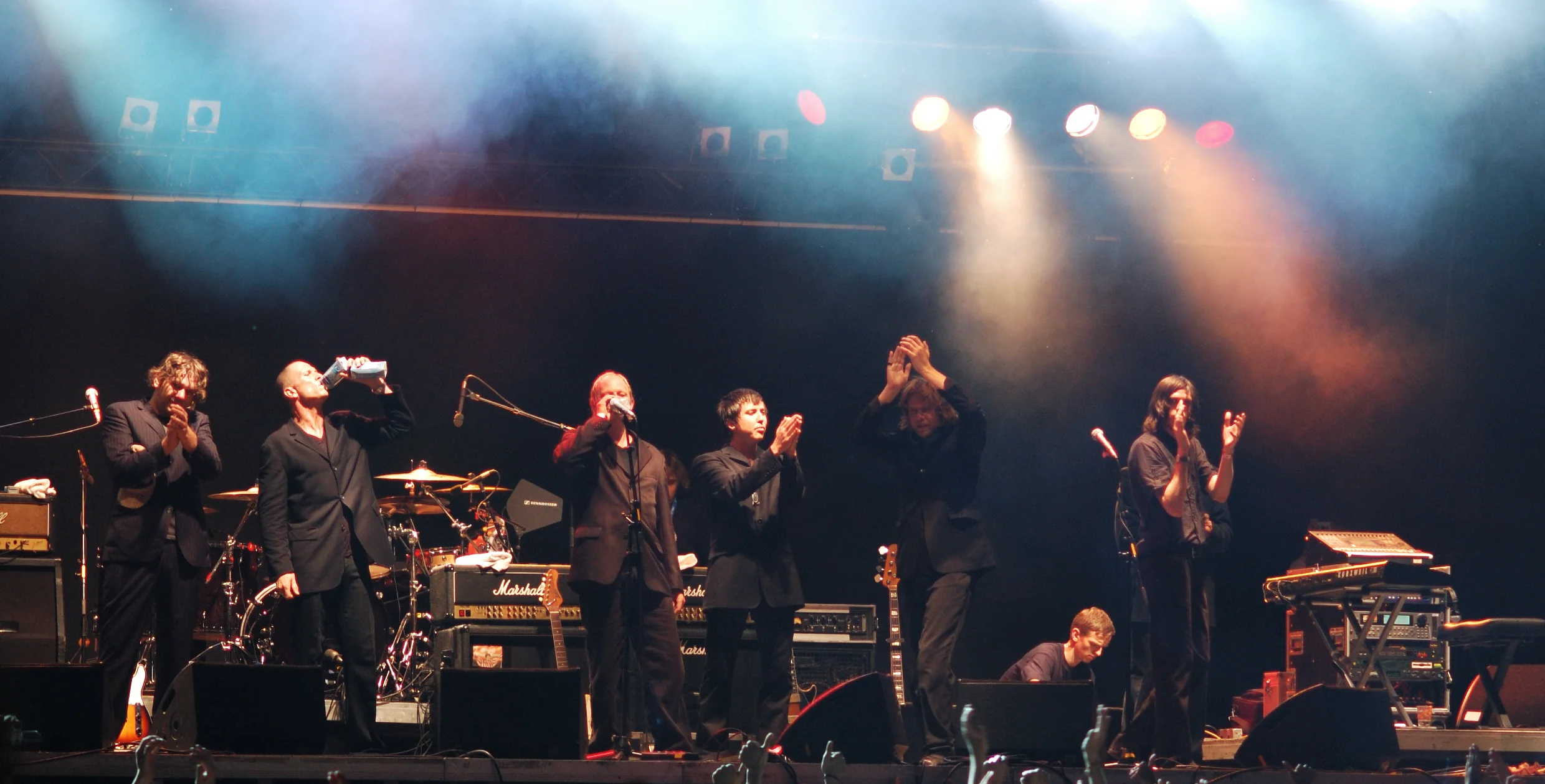
Image from Wikipedia
Image from Wikipedia
Archive – The London Music Collective Between Trip-Hop, Post-Rock, and Progressive Visions
From Underground Aesthetics to Cinematic Sound Architecture: Why Archive Has Captivated Fans and Critics for Three Decades
Archive is a British music collective from London, founded in 1994 by Darius Keeler and Danny Griffiths. Since its inception, the band has blended trip-hop, electronic music, post-rock, and progressive rock into a distinctive, atmospheric sound characterized by epic tension arcs and intricate arrangements. Over three decades, Archive has evolved from a studio project into an internationally renowned live institution, particularly filling large halls in France and significantly impacting the European alternative scene.
With 13 studio albums, notable singles such as Bullets and Again, and multiple soundtrack projects, the collective has created a discography that is both consistent and experimental. In 2026, Archive continued its artistic development with the album Glass Minds – a statement for collective composition, dense production, and a stage presence that translates immersive soundscapes into pure live experience.
Origins and First Chapter: Trip-Hop Roots, Breaks, and a Unique Vocabulary
Archive’s music career began in the London electronic scene of the early 90s. Keeler and Griffiths, previously active in the breakbeat hardcore formation Genaside II, formed the first incarnation of Archive in 1994 together with singer Roya Arab and rapper Rosko John. The debut Londinium (1996) was released by Island Records and combined dark trip-hop, orchestral textures, and rap passages – a complex arrangement that foreshadowed their later sound. After personnel changes, Take My Head (1999) marked a more melodic, pop-oriented phase with singer Suzanne Wooder before Archive ventured into post and progressive rock starting in 2002.
With You All Look the Same to Me (2002) – now featuring Craig Walker – the collective established itself as a boundary-pusher between electronics and guitar dynamics. The 16-minute epic Again became the signature piece of this artistic evolution: flowing crescendos, expansive reverbs, repetitive-hypnotic figures, and a production that spans the dramatic arc across the entire composition.
From Studio to Stage: International Breakthrough and Cinematic Perspective
The early 2000s marked the breakthrough on the European mainland. Archive composed the soundtrack for Michel Vaillant (2003), solidified their progressive orientation with Noise (2004) and Lights (2006), and intensified their live activity. The collective transformed its studio attention to detail onto the stage: dynamic arrangements, seamless transitions, and visual elements combined to create a performance aesthetic that works in large venues as well as in intimate theaters.
The artistic development also remained open in personnel: alongside Keeler and Griffiths, voices like Dave Pen, Pollard Berrier, Maria Q, and Holly Martin shaped the variable sound spectrum. This flexible lineup – typical for a collective – allowed for continuous rethinking of composition, production, and arrangement without abandoning the identifying atmosphere.
Discography Overview: Studio Milestones, Remixes, and Soundtracks
Since 1996, Archive has released 13 studio albums. Key works include You All Look the Same to Me (2002), Lights (2006), and the conceptually designed Controlling Crowds (2009), whose range extends from electronic sound sculptures to orchestral tension builds. With Us Until You’re Dead (2012) and Axiom (2014) deepened the cinematic storytelling; Restriction (2015) showcased a politically charged, rhythmically focused side. The False Foundation (2016) accentuated electronic production, while Call to Arms & Angels (2022) explored the spectrum between intimate downtempo and eruptive post-rock dramaturgy.
Beyond regular albums, Archive has influenced the interplay of image and sound: in addition to Michel Vaillant (2003), the collective created the music for Mélanie Laurent's Netflix film Voleuses in 2023. Remix projects such as Versions (2020) reflect the band's production competence – existing material is formally streamlined, sonically re-weighted, fine-tuned in dynamics, and curated for new listening contexts.
Chart Success and Reception by Music Press
Archive achieved significant chart presence, particularly in the DACH region and France. Controlling Crowds (2009) reached number 7 in Switzerland, With Us Until You’re Dead (2012) hit number 4 in Switzerland and secured top 40 positions in Germany and Austria. Axiom (2014) and Restriction (2015) continued this trend; Call to Arms & Angels (2022) debuted at number 6 in Germany and also at number 6 in Switzerland. In 2026, Glass Minds debuted at number 12 in Germany, number 20 in Austria, and number 7 in Switzerland – a testament to the band's enduring impact in the European market.
Critics regularly acknowledge Archive as a collective with distinctive sound architecture: AllMusic situates the group historically between 90s trip-hop and a progressively evolved rock approach of the 2000s, while extensive reviews of Call to Arms & Angels highlight the opulent production, nuanced arrangement, and dramatic range – attributes that underline the band's authority in the intersection of electronica, post-rock, and art-pop.
Glass Minds (2026): Production, Aesthetics, and Current Phase
With Glass Minds, Archive set a current chapter on February 27, 2026: produced by the band with long-term partner Jerome Devoise, recorded among others at Metway Studios (Brighton) and Angel Studios (London), mixed in Paris. The single Look At Us combines a powerful, guitar-infused side with ominous lyrical motifs – an example of distilling the Archive cosmos into concise song forms while maintaining layered depth in production. The artwork by Alaric Hammond visually frames the thematic idea of the album – broken, reassembled perception.
The tracklist – including Broken Bits, Patterns, City Walls, and The Love The Light – showcases Archive in the tension field of pulsating rhythm, expansive synth textures, and ethereal vocal layers. The compositions utilize escalation logics, microtonal colors in the pads, and dynamic contrasts between intimacy and eruptive density – trademarks of the artistic development of recent years.
Live Culture and Stage Presence: The Collective as an Experience
Archive are regarded as one of the most popular live bands on the continent. Tours for the best-of project 25 (2019/2020) and the large-scale shows of 2022/2023 underscored their ability to transparently transfer their studio complexity onto the stage. After postponing the 2022 dates due to health issues, the collective returned in 2023/2024 with even greater energy. The current Glass Minds phase continues this line – dramaturgically careful setlists, cinematic visuals, dynamic loud-quiet choreographies, and a precise, powerful live mix.
Remarkably, Archive maintains the balance between collective identity and changing voices: several lead vocalists color the songs without diluting the overarching sound language. This principle strengthens artistic diversity and makes the concerts stylistically multifaceted without losing the inner logic of the repertoire.
Style and Influence: Between Bristol Heritage, Prog Dramatic, and Electronic Modernity
Musically, Archive has always intertwined loop-based electronics with organic band dynamics. From the trip-hop legacy (Massive Attack, Portishead), the collective derived textural sensitivity, dub aesthetics, and cinematic depth; post-rock elements provide the dramatic ranges and crescendo arcs; the progressive rock influence structures the large-scale form. In production, granular layers, controlled saturation, expansive reverbs, and dynamic automation dominate, embedding the vocal expression in architectural soundscapes.
This style also shapes their cultural influence: Again has been frequently used in French film and TV contexts, while Bullets has appeared prominently in trailer cultures and game teasers. Archive exemplifies a generation of British acts that have created a lasting impact on pop culture across continental Europe, extending beyond the UK mainstream into cinema, advertising, and streaming formats.
Current Projects, Tours, Collaborations
Alongside the release of Glass Minds, the collective announced new tour dates for 2026, as well as selected co-headline formats in Europe and North America. Remixes – such as Pye Corner Audio for City Walls – expand the sound perspective, while additional digital releases (including single edits and visualizers) continue the album narrative. Archive and deluxe editions of catalog works (including remastered editions) keep the early, trip-hop-close phase in conversation, showcasing how consistently the aesthetic signature has grown over decades.
Previously, Call to Arms & Angels (2022) ended the longest album hiatus in the band's history and set the bar for the current creative period – also reflected in the music press's acclaim, reaffirming Archive's role as authorities in the interplay of electronica and progressive drama.
Voices of Fans
Fan reactions clearly show: Archive delights people worldwide. On Instagram, a fan raves: “The music of Archive touches my soul.” A YouTube comment reads: “One of the best artist collectives of our time – simply overwhelming live!” On Facebook, a listener writes: “Glass Minds is on repeat for me – goosebumps with every track.”
Conclusion: Why Listen to Archive Now – and Experience Live
Archive combines the wealth of experience from three decades with unbroken experimental enthusiasm. The collective writes songs with architectural ambition, stages dynamics as a narrative tool, and delivers productions that work both through headphones and in large spaces. Glass Minds contemporary summarizes these qualities: concise hooks, textural depth, rhythmic power – an invitation to dive into the cosmos of this collective. Anyone who loves the blend of trip-hop atmosphere, post-rock drama, and progressive form should experience Archive live: here, the full scope of this extraordinary band unfolds.
Official Channels of Archive:
- Instagram: https://www.instagram.com/archiveofficial
- Facebook: https://www.facebook.com/ArchiveOfficial
- YouTube: https://www.youtube.com/user/archiveofficial
- Spotify: https://open.spotify.com/artist/1Q776wzj2mrtXrNu3iH6nk
- TikTok: No official profile found
Sources:
- Wikipedia (DE) – Archive
- Wikipedia (FR) – Archive (groupe)
- XS Noize – Archive announce new album ‘Glass Minds’… (09.10.2025)
- MusicBrainz – Archive (external links & discography)
- AllMusic – Archive: Biography & Overview
- [PIAS] Store – Dangervisit (label context)
- Archive – Official Website
- Wikipedia: Image and text source
Upcoming Events
Archive live in Munich: Glass Minds Tour 2026
ARCHIVE live in Munich - Muffathalle Concert 2026
Guided Tour The Public Green – Kunstmuseum Bochum