
Agatha Christie
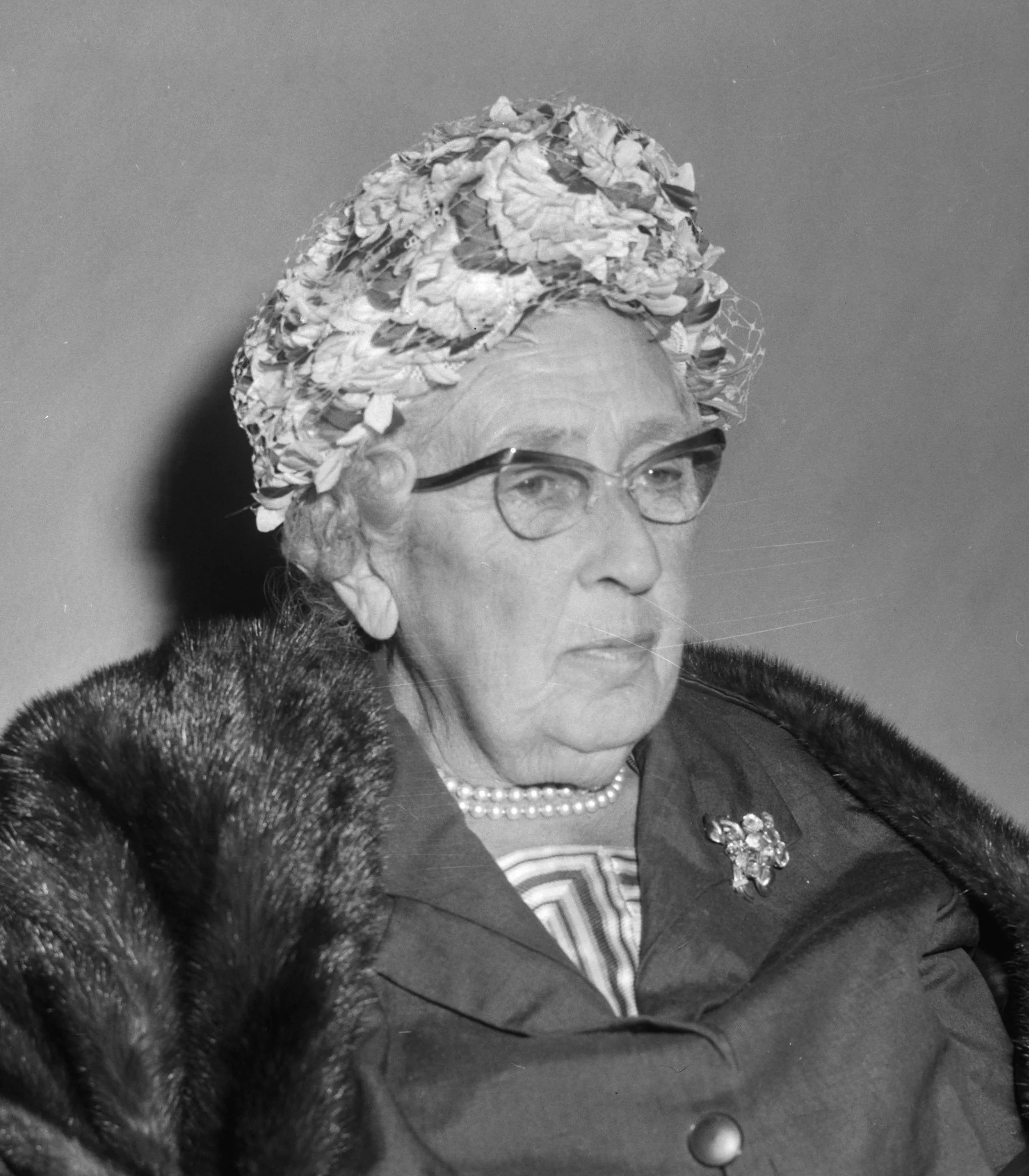
Image from Wikipedia
Image from Wikipedia
Agatha Christie – The Timeless Queen of Crime Fiction
Puzzles, Refinement, and Clever Twists: Why Agatha Christie’s World Captivates Us Today
Agatha Christie shaped modern crime literature like few others. Born on September 15, 1890, in Torquay and passed away on January 12, 1976, she developed a signature style: precise composition, economical storytelling, psychological observation, and an uncanny sense of suspense. Her most famous characters – the Belgian detective Hercule Poirot and the astute Miss Marple – have become cultural archetypes. Christie’s books have sold billions worldwide; her plays like “The Mousetrap” and countless film and TV adaptations keep her myth alive. Even in 2026, her work remains present – on stages, in series, games, and audio dramas.
Biography: From the Pharmacy to Global Fame
Christie’s music career? No – her domain was literary tempo, the dramaturgy of the unpredictable. During World War I, she worked in a pharmacy; the knowledge she gained about poisons skillfully informed many plots. She made her debut in 1920 with “The Mysterious Affair at Styles,” introducing Hercule Poirot – one of the most enduring figures in crime fiction. After a personal crisis in the mid-1920s, she returned to writing with focus, perfecting her artistic development and establishing herself as an authority in the genre with each new novel.
As a traveler and the wife of her second husband, archaeologist Max Mallowan, Christie collected experiences from the Middle East that were precisely woven into novels like “Murder in Mesopotamia.” Her stage presence was not through concerts but through adaptations: as a playwright, she created theatrical hits that continue to be performed. In 1971, she was honored for her contributions. Her death in 1976 did not end her impact – her work continued to grow into new media.
Career Trajectory: Composing the Perfect Puzzle
Christie’s writing career is a model of consistent quality assurance: creativity in character development, disciplined composition, nuanced arrangement of clues. She worked with recurring motifs – isolated settings, limited circles of characters, subtle red herrings – yet varied their arrangement so skillfully that the result always felt fresh. “The Murder of Roger Ackroyd” marked a milestone in narrative technique; here she artfully played with perspective and reader expectations.
Alongside her prose production, she developed stage plays with precise timing: dialogue as rhythm, pauses as dramatic “rests,” punchlines as cadence. This expert play with narrative rhythm, comparable to the music of a score, established Christie’s reputation as a master of form.
Bibliography Over Discography: Canon, Characters, Cycles
Christie’s discography would be blank – her bibliography is monumental. 66 crime novels, 14 collections of short stories, several stage works, and six psychologically nuanced novels published under the pseudonym Mary Westmacott. The Poirot cycle shows the evolution of a character over decades: from the eccentric outsider to the mourned deceased in “Curtain.” The Miss Marple novels demonstrate observational craftsmanship: from the microcosm of St. Mary Mead, Marple derives macrocriminological principles – a brilliant artistic move.
Other recurring protagonists like Tommy & Tuppence expand the field to espionage and adventure narratives. Christie’s short stories, on the other hand, serve as laboratories of form: dense dramaturgy, economical clues, precise final twists.
Style and Technique: Precision, Psychology, Poetics of the Plot
Christie’s expertise is evident in the economy of her prose. Her sentences seem simple, yet the composition is highly complex: every detail serves a function in the overall architecture. She "instruments" character voices like parts in an arrangement – contrasts and frictions create tension. Poison as a motif fulfills both forensic and symbolic roles. Her settings – trains, Nile steamers, country houses, hotels – resonate with social dynamics.
The author mastered the interplay with the audience’s expectations: the seemingly unassuming narrator, the false alibi, the morally ambiguous resolution. Her work never presents mere mechanics; it reflects questions of class, gender roles, and the uncertainties of modern societies in the 20th century.
Cultural Influence: From Literature to the Global Memory
Christie's characters and formulas have profoundly influenced pop culture, television, cinema, and theater. “The Mousetrap” holds theater records, Kenneth Branagh anchored Poirot in contemporary mainstream cinema, and series adaptations continuously reinterpret Christie’s works. Her influence is felt in true-crime formats, escape room designs, and detective games – her logic of the chain of evidence has become a universal narrative technique.
Christie’s authority is based not only on her sales figures but also on a school of thought: the clean separation of appearance and reality, the ethics of inference, the joy of fair but surprising solutions. Her books read like precisely composed scores of the puzzle – crafted so robustly that they endure across generations.
Current Projects (2024–2026): Adaptations, Theater, Games
Christie’s work remains dynamic. In 2026, the Netflix miniseries “Agatha Christie’s Seven Dials” will gain international attention – developed by Chris Chibnall. Simultaneously, British stages continue Christie's DNA: “Witness for the Prosecution” is performed at London County Hall in an immersive courtroom setting, delighting large audiences for years. Additionally, a new stage adaptation of “Death on the Nile” is touring the UK and Ireland – supported by creative teams that previously brought “Murder on the Orient Express” and “And Then There Were None” to the stage successfully.
The series universe is also expanding: “Towards Zero” has been reinterpreted for the international TV market, and “Tommy & Tuppence” will receive a modern update for the present day, including the exploration of how detection works in a digitally connected world. In the interactive realm, the brand is also evolving: following the recent success of the “Murder on the Orient Express” game, developers are setting new highlights with a planned “Death on the Nile” video game.
Reception and Awards: Critical Response and Lasting Relevance
Critics acknowledge Christie’s balance of elegance and efficiency. In rankings, essays, and literary historic overviews, she is considered a benchmark for fair-play detection: the reader is given enough information to deduce the solution – the art lies in the arrangement. Awards and honorary titles mirror societal recognition; however, more important is the ongoing audience resonance: ever new editions, translations into over a hundred languages, adaptations across all media.
In academic circles, Christie's work is also methodically analyzed: narrative perspective, unreliability, staging of witness accounts, semiotic patterns of evidence. This research underscores that behind the ease of her prose stands the highest technical discipline.
Audio Drama, Audio, Stage: The Living Line of Tradition
Christie’s texts are particularly suitable for audio versions: dialogue-driven, acoustically punctuated, with clear scene transitions. New audio drama projects leverage these strengths, often featuring prominent casts and original composed music as a dramatic motif. On stage, directorial styles convey Christie’s timing to the present day – with site-specific concepts that place the audience in the role of jurors or depict travel settings cinematically.
The transfer to live formats shows: Christie’s plots are more than pages of a book – they are performative structures, gaining a second, sensuous level in voices, bodies, spaces, and sound systems.
Voices of the Fans
The reactions from fans clearly show: Agatha Christie fascinates people worldwide. On Instagram, one fan raves: “Every twist hits me completely unprepared – simply brilliant.” On Facebook, a reader writes: “Christie’s stories are my cozy crime universe.” A YouTube comment sums it up: “The queen of the puzzle – timeless, clever, incomparable.” On X, one reads: “New adaptations, old magic – Christie works in 2026 just as well as in 1926.”
Conclusion: Why Christie Now (Again)?
Christie’s art is radically contemporary: she shows how to organize complexity with logic, empathy, and structured thinking. In a world filled with noise and speed, her stories remind us that precision, patience, and keen observation lead to insight. Those who love crime literature will find in Christie the school of the fair puzzle – formative, inspiring, inexhaustible.
Experience Christie live on stage, discover new series adaptations, and immerse yourself in audio dramas and games. Each new adaptation is an invitation to (re)read the original – and to marvel at how adept this author is at mastering the art of plotting.
Official Channels of Agatha Christie:
- Instagram: https://instagram.com/officialagathachristie
- Facebook: https://www.facebook.com/OfficialAgathaChristie
- YouTube: https://www.youtube.com/channel/UC2EwCt90flAFdp3lofJWSbA
- Spotify: No official profile found
- TikTok: No official profile found
Sources:
- Agatha Christie – Official Website
- Agatha Christie Limited – Rights, Licenses, Productions
- Witness for the Prosecution – Official Theatre Page
- Death on the Nile – UK & Ireland Tour (Theatre)
- Agatha Christie’s Seven Dials – Netflix Title Page
- Agatha Christie’s Seven Dials – Production Background
- AP News – Set Report on “Tommy & Tuppence” (2025)
- Encyclopaedia Britannica – Biography & Overview of Work
- Biography.com – Portrait & Adaptations (Update 2024)
- Wikipedia (EN) – Works, Characters, Bibliography
- Linktree – Official Social Overview
- Wikipedia: Image and text source
Upcoming Events
Whodunit? – Crime Evening with Improv & Reading
Murder on the Orient Express