
Landshut
Burg Trausnitz 168, 84036 Landshut, Deutschland
Trausnitz Castle | Tickets & Parking
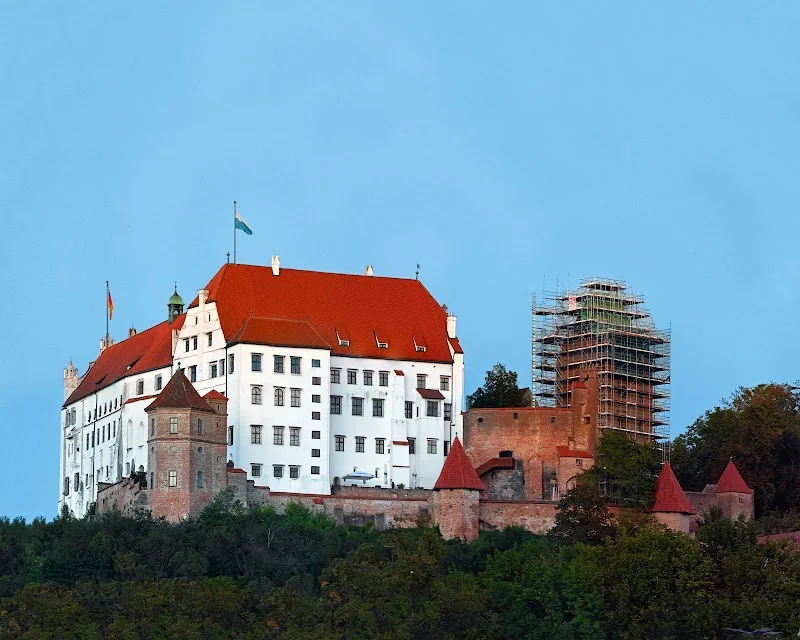
Trausnitz Castle, in Landshut better known as Burg Trausnitz, is one of the most striking hilltop landmarks in Lower Bavaria. Founded in 1204 by Duke Ludwig I, it served for 250 years as the ancestral seat of the Wittelsbachs and as the residence and seat of government of the dukes of Lower Bavaria. The official visitor information presents the castle today as a carefully curated mix of medieval fortress, Renaissance residence, museum, event venue and viewpoint over the city, with clear advice on tickets, parking, opening hours and accessible routes. That makes Trausnitz Castle a strong match for visitors searching for history, guided tours, practical planning, photos and special events, because a single visit can combine architecture, culture and a sweeping view over Landshut in a very compact way. ([schloesser.bayern.de](https://www.schloesser.bayern.de/englisch/palace/objects/la_traus.htm))
History and Features of Trausnitz Castle
The history of Trausnitz Castle begins in the early 13th century and is closely linked to the Wittelsbachs. The official description refers to the complex as a powerful structure above the city of Landshut, founded in 1204 by Duke Ludwig I, the Kelheimer. For over 250 years, the castle was the ancestral seat of the Wittelsbachs and the government center of the dukes of Lower Bavaria. In the 16th century, important expansions were added, making the complex appear today as an exciting dialogue between the Middle Ages and the Renaissance. Particularly defining are the almost complete ring wall, the observation towers, gate buildings, and sections of the original battlements, as well as the high keep, the Wittelsbach Tower. Additionally, the impressive inner courtyard with its arcades emphasizes the Renaissance side of the castle and makes the ensemble immediately readable for visitors. ([schloesser.bayern.de](https://www.schloesser.bayern.de/englisch/palace/objects/la_traus.htm))
During the tour, it becomes clear why the castle is significant not only architecturally but also culturally. In the castle chapel, visitors encounter important sculptures and the altarpieces of the wealthy dukes. The famous Fools' Staircase, known internationally as the Fools' Staircase, preserves the oldest and only monumental pictorial representation of this courtly entertainment style with figures from the Commedia dell'arte. It was designed by Friedrich Sustris and executed by Alessandro Padovano between 1575 and 1579. The arcade dates back to a planned two-story architecture from around 1578, which Friedrich Sustris designed for Wilhelm of Bavaria, framing the inner courtyard with a uniform, Italian-inspired Renaissance facade. The view from the balcony at the end of the tour is also no coincidence but part of the staging: the castle opens up to the city and shows why it has been regarded as a landmark of Landshut for centuries. The Landshut Wedding, reenacted every four years, connects the complex to the grand late medieval festival culture of the region to this day. ([schloesser.bayern.de](https://www.schloesser.bayern.de/englisch/palace/objects/la_traus.htm))
Tickets, Opening Hours and Tours
For planning a visit, it is worthwhile to take a look at the official times, as Trausnitz Castle operates with a clear visiting system. The opening hours for Trausnitz Castle with the art and wonder chamber are daily from March 28 to September between 9 AM and 6 PM, and from October to March 27 daily between 10 AM and 4 PM. The last admission is always 60 minutes before the end of opening hours. The castle is only closed on January 1, Shrove Tuesday, and on December 24, 25, and 31. Tickets are only available at the cash desk of Trausnitz Castle. For 2026, the admission fee is 6 euros regular and 5 euros reduced; children and teenagers up to the age of 18 receive free admission. School classes should register organizationally in advance with the castle administration to ensure a smooth visit and, if necessary, with appropriate capacity. ([burg-trausnitz.de](https://www.burg-trausnitz.de/deutsch/tourist/oeffnung.htm))
The tour model is also interesting for visitors because it preserves the historical atmosphere. From Monday to Saturday, the castle can generally only be visited with a guided tour, which takes place hourly; an important exception applies from May 1 to August 2, 2026, during the special exhibition, when visitors can also walk through the castle without a guide. On Sundays and public holidays, the tour is also possible without a guide. The art and wonder chamber can generally be visited without a guide. It is also practical that the entrance area with the cash desk and museum shop is located in the ladies' section, that is, in the northern part of the inner courtyard. Those who know the process save time and enjoy the visit more relaxed: first ticket at the cash desk, then depending on the day a guided tour or free tour, and finally the museum area, which thematically rounds off the visit. For guests specifically searching for 'Trausnitz Castle tickets' or 'Trausnitz Castle opening hours', the official structure thus offers very clear and planable information. ([burg-trausnitz.de](https://www.burg-trausnitz.de/deutsch/tourist/oeffnung.htm))
Access, Parking and Barrier-Free Visit
The official access is also well described and helps even before the trip. By car, the castle can be reached from Munich via the A92 towards Deggendorf to the Moosburg-Nord exit, from Nuremberg via the A9 towards Munich and also further via the A92 to the Moosburg-Nord exit; afterwards, the B11 leads towards Deggendorf or Hofham to Landshut city center. Those arriving by train should first orient themselves at the main train station in Landshut and then use the bus. From the main train station, take line 3 or 6 to Altstadt, transfer there to line 7 or 7A, and walk about a kilometer from the Kalcherstraße stop up to the castle. From March to October, lines 7 and 7A also stop at the Hofgarten parking lot on request, from there it is about 800 meters. This distance is pleasant for many visitors because the walk becomes part of the excursion experience, and the castle grows ever closer from the city. ([burg-trausnitz.de](https://www.burg-trausnitz.de/deutsch/tourist/anfahrt.htm))
For drivers and families, the Hofgarten parking lot is the most important practical address, as it offers 100 parking spaces for cars and 4 bus parking spaces. Additionally, the castle administration points out a designated castle parking lot at Pfeifergorigasse with a disabled parking space; driving onto the castle grounds in the pedestrian zone is only possible with a special permit. The route via Edmund-Jörg-Straße is about 800 meters long, easily accessible, and has a total elevation difference of only 27 meters. This is an important point for guests with mobility restrictions, as the route leads uphill but is clearly described and well planned. On the castle grounds, seating is available during the summer season, and there is also a barrier-free toilet in the castle courtyard to the left of the ticket office and a step-free entrance with a ramp at the cash desk. At the same time, the castle administration honestly points out that the actual guided tour path is not suitable for wheelchairs, as several floors are only accessible via stairs. The art and wonder chamber, on the other hand, is accessible without steps via an elevator. This mixture of openness and realistic information makes the official visitor communication so helpful. ([burg-trausnitz.de](https://www.burg-trausnitz.de/deutsch/tourist/mobilitaet.htm))
Art and Wonder Chamber: 750 Exhibits and Renaissance World
A special reason to visit Trausnitz Castle is the art and wonder chamber. It is a branch museum of the Bavarian National Museum and connects to the great tradition of early modern art chambers, where princes presented art, nature, exoticism, and curiosities side by side. The official description mentions 750 exhibits, including works of art, treasures from the Orient, and typical wonder pieces from Renaissance collections. The appeal lies not only in the quantity but in the historical concept: art chambers were precursors to modern museums and reflected a pre-scientific understanding of the world in the 16th century. A finely carved plum stone could be considered a wonder just as much as an exotic animal with armor. This sense of wonder still makes the exhibition accessible today, as it does not tell a dry collection logic but rather a perspective on the world. ([burg-trausnitz.de](https://www.burg-trausnitz.de/deutsch/kunst/index.htm))
For Trausnitz Castle, the wonder chamber is also important because it makes the court of the Wittelsbachs understandable. Duke Albrecht V. founded one of the most significant art chambers in Europe in Munich in 1565; his son, Hereditary Prince Wilhelm, collected artistic, exotic, and strange objects in Landshut in the Young Art Chamber at Trausnitz Castle. When Wilhelm moved to Munich in 1579, he took these collections with him. The Landshut tradition, however, remains and is now presented as part of the overall visit. For families, the art and wonder chamber is particularly attractive because there is a multimedia guide that leads through the rooms and makes access more playful. On the children's and youth pages of the castle, it is explicitly pointed out that there is even more to discover beyond the castle grounds and the castle museum, including curriculum-oriented tours, play offers, and audio or visual content. So those searching for 'Trausnitz Castle photos' or 'Trausnitz Castle reviews' are often looking for impressions and experiences, and this is exactly where the art and wonder chamber provides one of the densest visit results of the castle. ([burg-trausnitz.de](https://www.burg-trausnitz.de/deutsch/kunst/index.htm))
Events, Weddings and Event Spaces
Trausnitz Castle is not only a museum and monument but also an active event venue. The official homepage highlights current events, tours, and the special exhibition 'Royal Weddings – Networks for the Future', which runs from April 30 to August 2, 2026. Additionally, an action day is announced for Sunday, May 17, 2026, where visitors can look forward to open participation offers and exciting tours. Thematically, the exhibition fits very well with the castle, as it focuses on court culture and the significance of weddings as political and social networks. At the same time, the castle refers to the Landshut Wedding, an event that is still reenacted every four years as a historical festival. Thus, the castle does not remain in the museum context but is also a place of vibrant memory culture. ([burg-trausnitz.de](https://www.burg-trausnitz.de/))
The rental and event spaces are also relevant for SEO and practical planning, as they show how versatile the castle is used. According to the official overview, various rooms can be booked for receptions, concerts, conferences, and other functions. The Old Dürnitz or the Knights' Hall is suitable for banquets, receptions, and exhibitions with up to 235 people. The White Hall can accommodate up to 310 people and is also suitable for concerts. The Georgskapelle is intended for religious celebrations and weddings with up to 100 people, the Söller for receptions up to 99 people, and the Kleine Dürnitz for smaller banquets and receptions with up to 50 people. Thus, the castle is also interesting for private and representative formats that are to take place in a historical setting. So those searching for 'Trausnitz Castle event rooms' find here not only a monument but a real event profile. Additionally, the castle administration points out that the rooms can only be used for events outside of museum opening hours and that in some cases catering is possible through cooperating providers such as the castle tavern. ([burg-trausnitz.de](https://burg-trausnitz.de/englisch/rooms/index.htm))
Restaurant, View and Photo Opportunities in and around the Castle
For many visitors, a good break is part of a castle or fortress visit, and for that, Trausnitz Castle offers the castle tavern – restaurant & bar directly at the site. The official restaurant page refers to the castle tavern as the in-house gastronomy of Trausnitz Castle and shows that dining, views, and historical atmosphere can be well combined here. Especially for day visitors, this is helpful because the visit to the castle can be planned with a conscious break without having to leave the grounds. The combination of gastronomy and monument makes the castle not only a cultural destination but also a pleasant place to stay for families, couples, and groups. Those searching for 'Trausnitz castle restaurant' or even 'Trausnitz cafe' in the vicinity will practically end up at this castle gastronomy, which is clearly highlighted in the official information. ([burg-trausnitz.de](https://www.burg-trausnitz.de/englisch/tourist/restaur.htm))
The castle is also very photogenic. Even the exterior silhouette with the ring wall, gate building, and Wittelsbach Tower provides strong motifs, and in the inner courtyard, the Renaissance arcades create clear lines and elegant perspectives. Within the tour, the Fools' Staircase, the castle chapel, the tapestry rooms, and the path to the balcony are particularly photogenic because here art history and architecture come together in a small space. The official tour ends with a view over the city from the balustrade, and this moment is for many guests the image that remains of Trausnitz Castle. Those who love photos with a view should therefore not consider the visit as a quick obligation but rather plan time for the outdoor areas, inner courtyard, and views. Even the slight slope plays a role here, as it creates new sightlines to Landshut and the castle itself. Thus, a short stop becomes a tour with multiple perspectives: historical walls, Renaissance courtyard, museum rooms, city view, and gastronomy all in one place. ([schloesser.bayern.de](https://www.schloesser.bayern.de/englisch/palace/objects/la_traus.htm))
When visiting Landshut, Trausnitz Castle offers more than just a sight. The castle connects a very early Wittelsbach history with a clearly structured visitor experience, a strong museum function, user-friendly access, realistic information for families and guests with mobility restrictions, as well as a vibrant event and gastronomy scene. This is exactly why it works for both day trips and longer cultural programs, for school classes as well as for individual visitors and for event planners as well as for history enthusiasts. ([schloesser.bayern.de](https://www.schloesser.bayern.de/englisch/palace/objects/la_traus.htm))
Sources:
- Burg Trausnitz - Current Events
- Burg Trausnitz - Opening Hours
- Burg Trausnitz - Admission Prices and Tickets
- Burg Trausnitz - Access
- Burg Trausnitz - Accessibility
- Burg Trausnitz - Art and Wonder Chamber
- Bavarian Palace Administration - Trausnitz Castle
- Trausnitz Castle - Event Rooms
- Trausnitz Castle - Restaurant
Show moreShow less
Trausnitz Castle | Tickets & Parking
Trausnitz Castle, in Landshut better known as Burg Trausnitz, is one of the most striking hilltop landmarks in Lower Bavaria. Founded in 1204 by Duke Ludwig I, it served for 250 years as the ancestral seat of the Wittelsbachs and as the residence and seat of government of the dukes of Lower Bavaria. The official visitor information presents the castle today as a carefully curated mix of medieval fortress, Renaissance residence, museum, event venue and viewpoint over the city, with clear advice on tickets, parking, opening hours and accessible routes. That makes Trausnitz Castle a strong match for visitors searching for history, guided tours, practical planning, photos and special events, because a single visit can combine architecture, culture and a sweeping view over Landshut in a very compact way. ([schloesser.bayern.de](https://www.schloesser.bayern.de/englisch/palace/objects/la_traus.htm))
History and Features of Trausnitz Castle
The history of Trausnitz Castle begins in the early 13th century and is closely linked to the Wittelsbachs. The official description refers to the complex as a powerful structure above the city of Landshut, founded in 1204 by Duke Ludwig I, the Kelheimer. For over 250 years, the castle was the ancestral seat of the Wittelsbachs and the government center of the dukes of Lower Bavaria. In the 16th century, important expansions were added, making the complex appear today as an exciting dialogue between the Middle Ages and the Renaissance. Particularly defining are the almost complete ring wall, the observation towers, gate buildings, and sections of the original battlements, as well as the high keep, the Wittelsbach Tower. Additionally, the impressive inner courtyard with its arcades emphasizes the Renaissance side of the castle and makes the ensemble immediately readable for visitors. ([schloesser.bayern.de](https://www.schloesser.bayern.de/englisch/palace/objects/la_traus.htm))
During the tour, it becomes clear why the castle is significant not only architecturally but also culturally. In the castle chapel, visitors encounter important sculptures and the altarpieces of the wealthy dukes. The famous Fools' Staircase, known internationally as the Fools' Staircase, preserves the oldest and only monumental pictorial representation of this courtly entertainment style with figures from the Commedia dell'arte. It was designed by Friedrich Sustris and executed by Alessandro Padovano between 1575 and 1579. The arcade dates back to a planned two-story architecture from around 1578, which Friedrich Sustris designed for Wilhelm of Bavaria, framing the inner courtyard with a uniform, Italian-inspired Renaissance facade. The view from the balcony at the end of the tour is also no coincidence but part of the staging: the castle opens up to the city and shows why it has been regarded as a landmark of Landshut for centuries. The Landshut Wedding, reenacted every four years, connects the complex to the grand late medieval festival culture of the region to this day. ([schloesser.bayern.de](https://www.schloesser.bayern.de/englisch/palace/objects/la_traus.htm))
Tickets, Opening Hours and Tours
For planning a visit, it is worthwhile to take a look at the official times, as Trausnitz Castle operates with a clear visiting system. The opening hours for Trausnitz Castle with the art and wonder chamber are daily from March 28 to September between 9 AM and 6 PM, and from October to March 27 daily between 10 AM and 4 PM. The last admission is always 60 minutes before the end of opening hours. The castle is only closed on January 1, Shrove Tuesday, and on December 24, 25, and 31. Tickets are only available at the cash desk of Trausnitz Castle. For 2026, the admission fee is 6 euros regular and 5 euros reduced; children and teenagers up to the age of 18 receive free admission. School classes should register organizationally in advance with the castle administration to ensure a smooth visit and, if necessary, with appropriate capacity. ([burg-trausnitz.de](https://www.burg-trausnitz.de/deutsch/tourist/oeffnung.htm))
The tour model is also interesting for visitors because it preserves the historical atmosphere. From Monday to Saturday, the castle can generally only be visited with a guided tour, which takes place hourly; an important exception applies from May 1 to August 2, 2026, during the special exhibition, when visitors can also walk through the castle without a guide. On Sundays and public holidays, the tour is also possible without a guide. The art and wonder chamber can generally be visited without a guide. It is also practical that the entrance area with the cash desk and museum shop is located in the ladies' section, that is, in the northern part of the inner courtyard. Those who know the process save time and enjoy the visit more relaxed: first ticket at the cash desk, then depending on the day a guided tour or free tour, and finally the museum area, which thematically rounds off the visit. For guests specifically searching for 'Trausnitz Castle tickets' or 'Trausnitz Castle opening hours', the official structure thus offers very clear and planable information. ([burg-trausnitz.de](https://www.burg-trausnitz.de/deutsch/tourist/oeffnung.htm))
Access, Parking and Barrier-Free Visit
The official access is also well described and helps even before the trip. By car, the castle can be reached from Munich via the A92 towards Deggendorf to the Moosburg-Nord exit, from Nuremberg via the A9 towards Munich and also further via the A92 to the Moosburg-Nord exit; afterwards, the B11 leads towards Deggendorf or Hofham to Landshut city center. Those arriving by train should first orient themselves at the main train station in Landshut and then use the bus. From the main train station, take line 3 or 6 to Altstadt, transfer there to line 7 or 7A, and walk about a kilometer from the Kalcherstraße stop up to the castle. From March to October, lines 7 and 7A also stop at the Hofgarten parking lot on request, from there it is about 800 meters. This distance is pleasant for many visitors because the walk becomes part of the excursion experience, and the castle grows ever closer from the city. ([burg-trausnitz.de](https://www.burg-trausnitz.de/deutsch/tourist/anfahrt.htm))
For drivers and families, the Hofgarten parking lot is the most important practical address, as it offers 100 parking spaces for cars and 4 bus parking spaces. Additionally, the castle administration points out a designated castle parking lot at Pfeifergorigasse with a disabled parking space; driving onto the castle grounds in the pedestrian zone is only possible with a special permit. The route via Edmund-Jörg-Straße is about 800 meters long, easily accessible, and has a total elevation difference of only 27 meters. This is an important point for guests with mobility restrictions, as the route leads uphill but is clearly described and well planned. On the castle grounds, seating is available during the summer season, and there is also a barrier-free toilet in the castle courtyard to the left of the ticket office and a step-free entrance with a ramp at the cash desk. At the same time, the castle administration honestly points out that the actual guided tour path is not suitable for wheelchairs, as several floors are only accessible via stairs. The art and wonder chamber, on the other hand, is accessible without steps via an elevator. This mixture of openness and realistic information makes the official visitor communication so helpful. ([burg-trausnitz.de](https://www.burg-trausnitz.de/deutsch/tourist/mobilitaet.htm))
Art and Wonder Chamber: 750 Exhibits and Renaissance World
A special reason to visit Trausnitz Castle is the art and wonder chamber. It is a branch museum of the Bavarian National Museum and connects to the great tradition of early modern art chambers, where princes presented art, nature, exoticism, and curiosities side by side. The official description mentions 750 exhibits, including works of art, treasures from the Orient, and typical wonder pieces from Renaissance collections. The appeal lies not only in the quantity but in the historical concept: art chambers were precursors to modern museums and reflected a pre-scientific understanding of the world in the 16th century. A finely carved plum stone could be considered a wonder just as much as an exotic animal with armor. This sense of wonder still makes the exhibition accessible today, as it does not tell a dry collection logic but rather a perspective on the world. ([burg-trausnitz.de](https://www.burg-trausnitz.de/deutsch/kunst/index.htm))
For Trausnitz Castle, the wonder chamber is also important because it makes the court of the Wittelsbachs understandable. Duke Albrecht V. founded one of the most significant art chambers in Europe in Munich in 1565; his son, Hereditary Prince Wilhelm, collected artistic, exotic, and strange objects in Landshut in the Young Art Chamber at Trausnitz Castle. When Wilhelm moved to Munich in 1579, he took these collections with him. The Landshut tradition, however, remains and is now presented as part of the overall visit. For families, the art and wonder chamber is particularly attractive because there is a multimedia guide that leads through the rooms and makes access more playful. On the children's and youth pages of the castle, it is explicitly pointed out that there is even more to discover beyond the castle grounds and the castle museum, including curriculum-oriented tours, play offers, and audio or visual content. So those searching for 'Trausnitz Castle photos' or 'Trausnitz Castle reviews' are often looking for impressions and experiences, and this is exactly where the art and wonder chamber provides one of the densest visit results of the castle. ([burg-trausnitz.de](https://www.burg-trausnitz.de/deutsch/kunst/index.htm))
Events, Weddings and Event Spaces
Trausnitz Castle is not only a museum and monument but also an active event venue. The official homepage highlights current events, tours, and the special exhibition 'Royal Weddings – Networks for the Future', which runs from April 30 to August 2, 2026. Additionally, an action day is announced for Sunday, May 17, 2026, where visitors can look forward to open participation offers and exciting tours. Thematically, the exhibition fits very well with the castle, as it focuses on court culture and the significance of weddings as political and social networks. At the same time, the castle refers to the Landshut Wedding, an event that is still reenacted every four years as a historical festival. Thus, the castle does not remain in the museum context but is also a place of vibrant memory culture. ([burg-trausnitz.de](https://www.burg-trausnitz.de/))
The rental and event spaces are also relevant for SEO and practical planning, as they show how versatile the castle is used. According to the official overview, various rooms can be booked for receptions, concerts, conferences, and other functions. The Old Dürnitz or the Knights' Hall is suitable for banquets, receptions, and exhibitions with up to 235 people. The White Hall can accommodate up to 310 people and is also suitable for concerts. The Georgskapelle is intended for religious celebrations and weddings with up to 100 people, the Söller for receptions up to 99 people, and the Kleine Dürnitz for smaller banquets and receptions with up to 50 people. Thus, the castle is also interesting for private and representative formats that are to take place in a historical setting. So those searching for 'Trausnitz Castle event rooms' find here not only a monument but a real event profile. Additionally, the castle administration points out that the rooms can only be used for events outside of museum opening hours and that in some cases catering is possible through cooperating providers such as the castle tavern. ([burg-trausnitz.de](https://burg-trausnitz.de/englisch/rooms/index.htm))
Restaurant, View and Photo Opportunities in and around the Castle
For many visitors, a good break is part of a castle or fortress visit, and for that, Trausnitz Castle offers the castle tavern – restaurant & bar directly at the site. The official restaurant page refers to the castle tavern as the in-house gastronomy of Trausnitz Castle and shows that dining, views, and historical atmosphere can be well combined here. Especially for day visitors, this is helpful because the visit to the castle can be planned with a conscious break without having to leave the grounds. The combination of gastronomy and monument makes the castle not only a cultural destination but also a pleasant place to stay for families, couples, and groups. Those searching for 'Trausnitz castle restaurant' or even 'Trausnitz cafe' in the vicinity will practically end up at this castle gastronomy, which is clearly highlighted in the official information. ([burg-trausnitz.de](https://www.burg-trausnitz.de/englisch/tourist/restaur.htm))
The castle is also very photogenic. Even the exterior silhouette with the ring wall, gate building, and Wittelsbach Tower provides strong motifs, and in the inner courtyard, the Renaissance arcades create clear lines and elegant perspectives. Within the tour, the Fools' Staircase, the castle chapel, the tapestry rooms, and the path to the balcony are particularly photogenic because here art history and architecture come together in a small space. The official tour ends with a view over the city from the balustrade, and this moment is for many guests the image that remains of Trausnitz Castle. Those who love photos with a view should therefore not consider the visit as a quick obligation but rather plan time for the outdoor areas, inner courtyard, and views. Even the slight slope plays a role here, as it creates new sightlines to Landshut and the castle itself. Thus, a short stop becomes a tour with multiple perspectives: historical walls, Renaissance courtyard, museum rooms, city view, and gastronomy all in one place. ([schloesser.bayern.de](https://www.schloesser.bayern.de/englisch/palace/objects/la_traus.htm))
When visiting Landshut, Trausnitz Castle offers more than just a sight. The castle connects a very early Wittelsbach history with a clearly structured visitor experience, a strong museum function, user-friendly access, realistic information for families and guests with mobility restrictions, as well as a vibrant event and gastronomy scene. This is exactly why it works for both day trips and longer cultural programs, for school classes as well as for individual visitors and for event planners as well as for history enthusiasts. ([schloesser.bayern.de](https://www.schloesser.bayern.de/englisch/palace/objects/la_traus.htm))
Sources:
- Burg Trausnitz - Current Events
- Burg Trausnitz - Opening Hours
- Burg Trausnitz - Admission Prices and Tickets
- Burg Trausnitz - Access
- Burg Trausnitz - Accessibility
- Burg Trausnitz - Art and Wonder Chamber
- Bavarian Palace Administration - Trausnitz Castle
- Trausnitz Castle - Event Rooms
- Trausnitz Castle - Restaurant
Trausnitz Castle | Tickets & Parking
Trausnitz Castle, in Landshut better known as Burg Trausnitz, is one of the most striking hilltop landmarks in Lower Bavaria. Founded in 1204 by Duke Ludwig I, it served for 250 years as the ancestral seat of the Wittelsbachs and as the residence and seat of government of the dukes of Lower Bavaria. The official visitor information presents the castle today as a carefully curated mix of medieval fortress, Renaissance residence, museum, event venue and viewpoint over the city, with clear advice on tickets, parking, opening hours and accessible routes. That makes Trausnitz Castle a strong match for visitors searching for history, guided tours, practical planning, photos and special events, because a single visit can combine architecture, culture and a sweeping view over Landshut in a very compact way. ([schloesser.bayern.de](https://www.schloesser.bayern.de/englisch/palace/objects/la_traus.htm))
History and Features of Trausnitz Castle
The history of Trausnitz Castle begins in the early 13th century and is closely linked to the Wittelsbachs. The official description refers to the complex as a powerful structure above the city of Landshut, founded in 1204 by Duke Ludwig I, the Kelheimer. For over 250 years, the castle was the ancestral seat of the Wittelsbachs and the government center of the dukes of Lower Bavaria. In the 16th century, important expansions were added, making the complex appear today as an exciting dialogue between the Middle Ages and the Renaissance. Particularly defining are the almost complete ring wall, the observation towers, gate buildings, and sections of the original battlements, as well as the high keep, the Wittelsbach Tower. Additionally, the impressive inner courtyard with its arcades emphasizes the Renaissance side of the castle and makes the ensemble immediately readable for visitors. ([schloesser.bayern.de](https://www.schloesser.bayern.de/englisch/palace/objects/la_traus.htm))
During the tour, it becomes clear why the castle is significant not only architecturally but also culturally. In the castle chapel, visitors encounter important sculptures and the altarpieces of the wealthy dukes. The famous Fools' Staircase, known internationally as the Fools' Staircase, preserves the oldest and only monumental pictorial representation of this courtly entertainment style with figures from the Commedia dell'arte. It was designed by Friedrich Sustris and executed by Alessandro Padovano between 1575 and 1579. The arcade dates back to a planned two-story architecture from around 1578, which Friedrich Sustris designed for Wilhelm of Bavaria, framing the inner courtyard with a uniform, Italian-inspired Renaissance facade. The view from the balcony at the end of the tour is also no coincidence but part of the staging: the castle opens up to the city and shows why it has been regarded as a landmark of Landshut for centuries. The Landshut Wedding, reenacted every four years, connects the complex to the grand late medieval festival culture of the region to this day. ([schloesser.bayern.de](https://www.schloesser.bayern.de/englisch/palace/objects/la_traus.htm))
Tickets, Opening Hours and Tours
For planning a visit, it is worthwhile to take a look at the official times, as Trausnitz Castle operates with a clear visiting system. The opening hours for Trausnitz Castle with the art and wonder chamber are daily from March 28 to September between 9 AM and 6 PM, and from October to March 27 daily between 10 AM and 4 PM. The last admission is always 60 minutes before the end of opening hours. The castle is only closed on January 1, Shrove Tuesday, and on December 24, 25, and 31. Tickets are only available at the cash desk of Trausnitz Castle. For 2026, the admission fee is 6 euros regular and 5 euros reduced; children and teenagers up to the age of 18 receive free admission. School classes should register organizationally in advance with the castle administration to ensure a smooth visit and, if necessary, with appropriate capacity. ([burg-trausnitz.de](https://www.burg-trausnitz.de/deutsch/tourist/oeffnung.htm))
The tour model is also interesting for visitors because it preserves the historical atmosphere. From Monday to Saturday, the castle can generally only be visited with a guided tour, which takes place hourly; an important exception applies from May 1 to August 2, 2026, during the special exhibition, when visitors can also walk through the castle without a guide. On Sundays and public holidays, the tour is also possible without a guide. The art and wonder chamber can generally be visited without a guide. It is also practical that the entrance area with the cash desk and museum shop is located in the ladies' section, that is, in the northern part of the inner courtyard. Those who know the process save time and enjoy the visit more relaxed: first ticket at the cash desk, then depending on the day a guided tour or free tour, and finally the museum area, which thematically rounds off the visit. For guests specifically searching for 'Trausnitz Castle tickets' or 'Trausnitz Castle opening hours', the official structure thus offers very clear and planable information. ([burg-trausnitz.de](https://www.burg-trausnitz.de/deutsch/tourist/oeffnung.htm))
Access, Parking and Barrier-Free Visit
The official access is also well described and helps even before the trip. By car, the castle can be reached from Munich via the A92 towards Deggendorf to the Moosburg-Nord exit, from Nuremberg via the A9 towards Munich and also further via the A92 to the Moosburg-Nord exit; afterwards, the B11 leads towards Deggendorf or Hofham to Landshut city center. Those arriving by train should first orient themselves at the main train station in Landshut and then use the bus. From the main train station, take line 3 or 6 to Altstadt, transfer there to line 7 or 7A, and walk about a kilometer from the Kalcherstraße stop up to the castle. From March to October, lines 7 and 7A also stop at the Hofgarten parking lot on request, from there it is about 800 meters. This distance is pleasant for many visitors because the walk becomes part of the excursion experience, and the castle grows ever closer from the city. ([burg-trausnitz.de](https://www.burg-trausnitz.de/deutsch/tourist/anfahrt.htm))
For drivers and families, the Hofgarten parking lot is the most important practical address, as it offers 100 parking spaces for cars and 4 bus parking spaces. Additionally, the castle administration points out a designated castle parking lot at Pfeifergorigasse with a disabled parking space; driving onto the castle grounds in the pedestrian zone is only possible with a special permit. The route via Edmund-Jörg-Straße is about 800 meters long, easily accessible, and has a total elevation difference of only 27 meters. This is an important point for guests with mobility restrictions, as the route leads uphill but is clearly described and well planned. On the castle grounds, seating is available during the summer season, and there is also a barrier-free toilet in the castle courtyard to the left of the ticket office and a step-free entrance with a ramp at the cash desk. At the same time, the castle administration honestly points out that the actual guided tour path is not suitable for wheelchairs, as several floors are only accessible via stairs. The art and wonder chamber, on the other hand, is accessible without steps via an elevator. This mixture of openness and realistic information makes the official visitor communication so helpful. ([burg-trausnitz.de](https://www.burg-trausnitz.de/deutsch/tourist/mobilitaet.htm))
Art and Wonder Chamber: 750 Exhibits and Renaissance World
A special reason to visit Trausnitz Castle is the art and wonder chamber. It is a branch museum of the Bavarian National Museum and connects to the great tradition of early modern art chambers, where princes presented art, nature, exoticism, and curiosities side by side. The official description mentions 750 exhibits, including works of art, treasures from the Orient, and typical wonder pieces from Renaissance collections. The appeal lies not only in the quantity but in the historical concept: art chambers were precursors to modern museums and reflected a pre-scientific understanding of the world in the 16th century. A finely carved plum stone could be considered a wonder just as much as an exotic animal with armor. This sense of wonder still makes the exhibition accessible today, as it does not tell a dry collection logic but rather a perspective on the world. ([burg-trausnitz.de](https://www.burg-trausnitz.de/deutsch/kunst/index.htm))
For Trausnitz Castle, the wonder chamber is also important because it makes the court of the Wittelsbachs understandable. Duke Albrecht V. founded one of the most significant art chambers in Europe in Munich in 1565; his son, Hereditary Prince Wilhelm, collected artistic, exotic, and strange objects in Landshut in the Young Art Chamber at Trausnitz Castle. When Wilhelm moved to Munich in 1579, he took these collections with him. The Landshut tradition, however, remains and is now presented as part of the overall visit. For families, the art and wonder chamber is particularly attractive because there is a multimedia guide that leads through the rooms and makes access more playful. On the children's and youth pages of the castle, it is explicitly pointed out that there is even more to discover beyond the castle grounds and the castle museum, including curriculum-oriented tours, play offers, and audio or visual content. So those searching for 'Trausnitz Castle photos' or 'Trausnitz Castle reviews' are often looking for impressions and experiences, and this is exactly where the art and wonder chamber provides one of the densest visit results of the castle. ([burg-trausnitz.de](https://www.burg-trausnitz.de/deutsch/kunst/index.htm))
Events, Weddings and Event Spaces
Trausnitz Castle is not only a museum and monument but also an active event venue. The official homepage highlights current events, tours, and the special exhibition 'Royal Weddings – Networks for the Future', which runs from April 30 to August 2, 2026. Additionally, an action day is announced for Sunday, May 17, 2026, where visitors can look forward to open participation offers and exciting tours. Thematically, the exhibition fits very well with the castle, as it focuses on court culture and the significance of weddings as political and social networks. At the same time, the castle refers to the Landshut Wedding, an event that is still reenacted every four years as a historical festival. Thus, the castle does not remain in the museum context but is also a place of vibrant memory culture. ([burg-trausnitz.de](https://www.burg-trausnitz.de/))
The rental and event spaces are also relevant for SEO and practical planning, as they show how versatile the castle is used. According to the official overview, various rooms can be booked for receptions, concerts, conferences, and other functions. The Old Dürnitz or the Knights' Hall is suitable for banquets, receptions, and exhibitions with up to 235 people. The White Hall can accommodate up to 310 people and is also suitable for concerts. The Georgskapelle is intended for religious celebrations and weddings with up to 100 people, the Söller for receptions up to 99 people, and the Kleine Dürnitz for smaller banquets and receptions with up to 50 people. Thus, the castle is also interesting for private and representative formats that are to take place in a historical setting. So those searching for 'Trausnitz Castle event rooms' find here not only a monument but a real event profile. Additionally, the castle administration points out that the rooms can only be used for events outside of museum opening hours and that in some cases catering is possible through cooperating providers such as the castle tavern. ([burg-trausnitz.de](https://burg-trausnitz.de/englisch/rooms/index.htm))
Restaurant, View and Photo Opportunities in and around the Castle
For many visitors, a good break is part of a castle or fortress visit, and for that, Trausnitz Castle offers the castle tavern – restaurant & bar directly at the site. The official restaurant page refers to the castle tavern as the in-house gastronomy of Trausnitz Castle and shows that dining, views, and historical atmosphere can be well combined here. Especially for day visitors, this is helpful because the visit to the castle can be planned with a conscious break without having to leave the grounds. The combination of gastronomy and monument makes the castle not only a cultural destination but also a pleasant place to stay for families, couples, and groups. Those searching for 'Trausnitz castle restaurant' or even 'Trausnitz cafe' in the vicinity will practically end up at this castle gastronomy, which is clearly highlighted in the official information. ([burg-trausnitz.de](https://www.burg-trausnitz.de/englisch/tourist/restaur.htm))
The castle is also very photogenic. Even the exterior silhouette with the ring wall, gate building, and Wittelsbach Tower provides strong motifs, and in the inner courtyard, the Renaissance arcades create clear lines and elegant perspectives. Within the tour, the Fools' Staircase, the castle chapel, the tapestry rooms, and the path to the balcony are particularly photogenic because here art history and architecture come together in a small space. The official tour ends with a view over the city from the balustrade, and this moment is for many guests the image that remains of Trausnitz Castle. Those who love photos with a view should therefore not consider the visit as a quick obligation but rather plan time for the outdoor areas, inner courtyard, and views. Even the slight slope plays a role here, as it creates new sightlines to Landshut and the castle itself. Thus, a short stop becomes a tour with multiple perspectives: historical walls, Renaissance courtyard, museum rooms, city view, and gastronomy all in one place. ([schloesser.bayern.de](https://www.schloesser.bayern.de/englisch/palace/objects/la_traus.htm))
When visiting Landshut, Trausnitz Castle offers more than just a sight. The castle connects a very early Wittelsbach history with a clearly structured visitor experience, a strong museum function, user-friendly access, realistic information for families and guests with mobility restrictions, as well as a vibrant event and gastronomy scene. This is exactly why it works for both day trips and longer cultural programs, for school classes as well as for individual visitors and for event planners as well as for history enthusiasts. ([schloesser.bayern.de](https://www.schloesser.bayern.de/englisch/palace/objects/la_traus.htm))
Sources:
- Burg Trausnitz - Current Events
- Burg Trausnitz - Opening Hours
- Burg Trausnitz - Admission Prices and Tickets
- Burg Trausnitz - Access
- Burg Trausnitz - Accessibility
- Burg Trausnitz - Art and Wonder Chamber
- Bavarian Palace Administration - Trausnitz Castle
- Trausnitz Castle - Event Rooms
- Trausnitz Castle - Restaurant
Upcoming Events
Hidden Championnes – Invisible Women
Forgotten women are finally visible at Burg Trausnitz: Roxana Panetta connects portrait art, history, and the present. Opening on 30.04.2026, free entry. #Landshut #Art
Princely Weddings – Networks for the Future
Dive into the world of princely weddings in Landshut: Trausnitz Castle, power, networks, and history starting May 1, 2026. #Landshut #TrausnitzCastle

For Better or Worse
An evening between war, history, and a grand castle backdrop: For Better or Worse at Trausnitz Castle makes the Thirty Years' War palpable. 31.05.2026, 6 PM. #Landshut #Theater
Dance the Trausnitz
Visit Trausnitz Castle for a night full of dance and electronic music in Landshut.

Family Day at Trausnitz Castle
Visit the Family Day at Trausnitz Castle on June 7, 2026. A day full of history and fun for the whole family!

Imaginary Pictures of the Middle Ages
Medieval hands-on fun at Trausnitz Castle: Children create their own pictures from natural materials and experience creative family time. 06/07/2026, free. #FamilyExperience #Landshut

Children's Rally: The Grand Wedding Preparation
Riddles, castle magic, and children's laughter in Landshut: The free Children's Rally at Trausnitz Castle combines history and family time. On June 07, 2026 at 10:30 AM for 7 to 12 years. #FamilyOuting #Landshut

Friendship Bands Like in the Middle Ages
Middle Ages, crafting fun, and family time at Trausnitz Castle in Landshut: creatively design friendship bands, experience for free, and marvel together. #FamilyTime

Tour: How Did Princes and Princesses Live in the Middle Ages?
At Trausnitz Castle, an exciting family tour into the Middle Ages awaits: princes, princesses, and court life to touch. 07.06.2026, free of charge. #Landshut

Puppet Theater: The Magic Flute for Children at Trausnitz Castle
Mozart's Magic Flute becomes a family experience full of music, courage, and fantasy at Trausnitz Castle. For children aged 4 to 10 years. Discover now! #FamilyTime
Frequently Asked Questions
Reviews
No reviews found