
Landshut
Kirchgasse 232, 84028 Landshut, Deutschland
Stiftsbasilika St. Martin | Photos & History
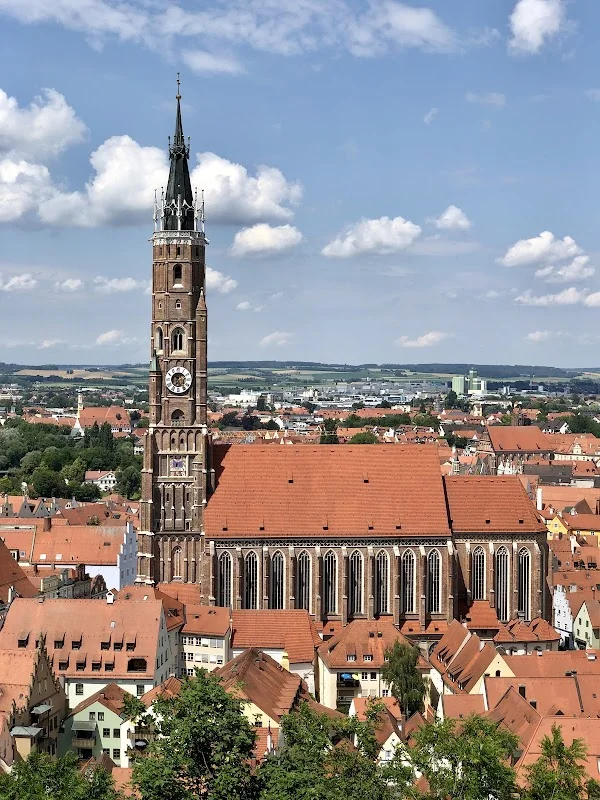
The Stiftsbasilika St. Martin shapes Landshut like hardly any other building. As the main church and landmark of the city, the late Gothic hall church with its approximately 130-meter-high brick tower stands in the old town and connects sacred architecture, city history, and impressive spatial effects in a confined space. Those looking for photos, background information, opening hours, or practical visiting tips will find the most important information bundled here: from its construction between 1389 and 1500, its designation as Basilica minor, to art-historical highlights such as the choral arch cross, choir stalls, high altar, and treasury. The basilica is not only a monument but also a living place with daily services, music, and special occasions. Visitors will also appreciate the view of the old town location, as the church is situated in the historical center, making it an ideal starting point for a city walk. ([erleben.landshut.de](https://erleben.landshut.de/adressen/stiftsbasilika-st-martin/))
Photos, 360-Degree Views, and First Impressions
For those who want to get to know the Stiftsbasilika St. Martin visually first, the official photo gallery offers a remarkably wide selection. There are exterior views, interior views, impressions from services, church music, engagement, and children's programs documented. Additionally, there are 360-degree views that provide a good impression of the spaciousness of the nave and the special atmosphere inside. This is ideal for the search intent around photos, as the building presents itself not only as a framework of Gothic architecture but also as a living church. Those exploring the basilica digitally quickly realize that architecture, liturgy, and urban space are closely interconnected here. The images clearly illustrate why St. Martin is a fixed address in Landshut not only for believers but also for travelers, culture enthusiasts, and photographers. ([martin-landshut.de](https://martin-landshut.de/st-martin-besuchen/bildergalerie))
The first real impression on-site is also strongly characterized by contrasts. The red brick masonry, the steep lines of the Gothic form language, and the monumental tower give the basilica an almost vertical effect that can be seen from afar. The city describes St. Martin as the main church and landmark, while the tourist information highlights it as a masterpiece of late Gothic architecture and one of the most significant sacred buildings in southern Germany. This mix of sacred dignity and urban presence is precisely what makes the photographic motifs appealing. Visitors to Landshut do not receive an isolated monument with St. Martin but a building that shapes the city's silhouette. The views around the tower, main portal, altar area, and interior are particularly valuable as they clearly illustrate the dimensions of the church. The fact that the tower itself cannot be publicly climbed further enhances its character as a historical landmark, as the public perspective remains at ground level and in the virtual tour. ([erleben.landshut.de](https://erleben.landshut.de/adressen/stiftsbasilika-st-martin/))
History and Architecture of the Martinskirche
The history of St. Martin reaches deep into the medieval development of the city. Over the remains of a Romanesque predecessor building from the time of the founding of Landshut in 1204, the current church was built after the devastating city fire of 1342. The parish describes a construction process that lasted about 120 years, which took place in several phases and began with the choir area; the first secure dating is from 1392, and the tower was completed in 1500. The basilica is thus a key work of late Gothic architecture. Among the builders, Hans von Burghausen stands out as the leading figure of this project. His signature is not only palpable in the magnificent spatial effect but also in the church's self-understanding as an outstanding monument of the Middle Ages. For visitors, this means: St. Martin is not just a city church but a building that visibly represents the rise of Landshut in its heyday. ([martin-landshut.de](https://martin-landshut.de/st-martin-besuchen/geschichte))
The construction history also includes the later religious and organizational elevation. Since 1595, St. Martin has not only been a parish church but also the seat of a canonry, and since the transfer of the relics of Saint Castulus in 1604, the church has gained additional spiritual significance. After secularization, the chapter was re-established in 1937, and in 2001 the church was granted the status of Basilica minor, a papal honor that emphasizes the special care in the celebration of services. The interior has also changed over the centuries: around 1700, it underwent baroque transformation, and in the 19th century, the Gothic impression was restored. Subsequent major renovations from 1978 to 1991, as well as roof and portal work between 1997 and 2014, show that this century-old building is continuously maintained. The church is thus not only a monument of the past but a living, restored, and still cared-for center of church life in Landshut. ([martin-landshut.de](https://martin-landshut.de/st-martin-besuchen/geschichte))
Tower, Treasury, and Main Attractions
The tower is the iconic element of the Stiftsbasilika St. Martin. The official tourism site states a height of 130.1 meters and refers to it as the highest brick tower in the world and the highest church tower in Bavaria. The parish gives the height of the Martin tower's tip as 130.08 meters and refers to the historical development of the measurements. Equally impressive is the internal construction: on the tower side, there are mentions of 1.86 million bricks, two stairwheels, twelve bells, and a balustrade at 97 meters high. All of this makes clear the technical and craftsmanship achievements behind the construction. Visitors are not allowed to climb the tower because access does not meet current safety standards. This is why the virtual tour is so helpful, as it reveals details that can only be perceived from a distance on-site. The tower is also the backdrop for the Landshut Wedding and is firmly part of the city's silhouette. ([erleben.landshut.de](https://erleben.landshut.de/adressen/stiftsbasilika-st-martin/))
Also, away from the tower, there is exceptionally much to see in St. Martin. Among the main attractions are the choral arch cross, one of the largest late Gothic crucifixes in Europe, the medieval choir stalls with 132 individually carved representations, and the Gothic high altar with its reliefs. Particularly noteworthy is also the treasury in the former canonry building at the Martin cemetery. There, one can find a fresco fragment recovered in the 1980s from the Romanesque predecessor church, precious liturgical items from Augsburg goldsmith workshops, historical vestments, and as a highlight, the grape monstrance from the Jesuit church. The treasury was redesigned and reopened in 2022. Together, these places offer a visit that is not only architecturally impressive but also deeply significant in terms of art and piety history. Those interested in the development of a church space over centuries will gain an exceptionally dense insight here. ([martin-landshut.de](https://martin-landshut.de/st-martin-besuchen/sehenswuerdigkeiten))
Opening Hours, Services, and Visits
For planning a visit, the opening hours are particularly important. According to the city of Landshut, the Stiftsbasilika is open daily from April to September from 7:30 AM to 6:30 PM and from October to March daily from 7:30 AM to 5:30 PM. Additionally, there is a closing time on Mondays and Fridays from 10:30 AM to 3:00 PM. Those who wish to experience the church in peace should consider these times. The city also points out that groups are welcome by arrangement. This is practical for travel groups, school classes, or culture-interested visitors who want to integrate the basilica into their city visit rather than just taking a quick look at the interior. The location in the old town makes the visit easily combinable with a tour of the historical city center. Especially in the morning and late afternoon, the light in the nave creates a special character, as the Gothic architecture and the red brick surfaces appear particularly vibrant then. ([landshut.de](https://landshut.de/node/1964))
The spiritual life is also clearly structured and offers visitors reliable orientation. The parish states that on weekdays from Monday to Saturday, mass is held at 10:00 AM, on Thursday the choir prayer and chapter office at 8:00 AM, on Sunday the parish service at 11:00 AM, and the evening mass at 6:30 PM; additionally, on Friday, there is a mass at 4:15 PM at the Holy Spirit Hospital. Those interested in special visits will find further opportunities: the predecessor church, i.e., the lower church, can be visited during special tours, and the treasury is open on the first Sunday from May to November after the 11 AM service until 1:00 PM, as well as on the patronage in November. Special openings are announced in the service bulletin, and groups can inquire about special tours through the city church office. Additionally, music shapes church life: the organ matinee quarter to twelve offers 15 minutes of organ music on the first Saturday of each month from May to December, and there are regular services with special music as well as choir concerts. ([martin-landshut.de](https://martin-landshut.de/st-martin-besuchen/geschichte))
Access, Parking, and Location in the Old Town
The Stiftsbasilika is located in the heart of the historical center of Landshut. The tourism site lists the address as Altstadt 315, while the city information site names the location Kirchgasse / Altstadt. For visitors, it is especially important that the church can be excellently integrated into a stroll through the old town. Those walking through Landshut almost automatically have St. Martin in sight as a fixed point, as the landmark is not on the edge but in the heart of the city. This creates the typical Landshut impression: winding alleys, historical facades, and above them the massive silhouette of the Martinskirche. This central location is one of the greatest advantages for anyone looking to take photos, plan visits, or simply seek a brief cultural break during their city tour. The city's free bike map can also be helpful when exploring the city center by bike, as the tourist info at Altstadt 315 also provides it. ([erleben.landshut.de](https://erleben.landshut.de/adressen/stiftsbasilika-st-martin/))
However, parking is limited: the historical city center offers only limited capacities. The city of Landshut therefore explicitly recommends the large parking lot at Grieserwiese, from which it takes about five minutes on foot to reach the old town, as well as the parking garage on Wittstraße, which is only about two minutes on foot. Additionally, there are bicycle parking spaces in the vicinity; the city even documents a bike parking facility at the St. Martin basilica. Those traveling by bike or on foot thus benefit from very good accessibility to the landmark without getting directly into the dense old town traffic. For many visitors, this is also the most pleasant way, as one consciously experiences the approach to the church: first the narrow alleys, then the square situation, finally the unobstructed view of the tower. This sequence makes the visit to Landshut so impressive. Therefore, those who want to travel as stress-free as possible should plan parking and the footpath in advance. ([erleben.landshut.de](https://erleben.landshut.de/parkmoeglichkeiten-2/?utm_source=openai))
Baptism, Wedding, Music, and Special Occasions
The Stiftsbasilika St. Martin is not only a monument but also a place for personal and festive occasions. The parish explains that the basilica is open to Catholics from the area of the Landshut city church and, in exceptional cases, also to Catholics from outside for baptisms, weddings, and special occasions. When a public congregation comes together for a spiritually significant special occasion, St. Martin is also a suitable place. Appointments are arranged through the city church office. This keeps the church part of the active life of the city and not just a backdrop for visits. Those looking for a place with historical depth, representative effect, and liturgical dignity will find here a setting that goes far beyond an ordinary event venue. Weddings, baptisms, and special blessing ceremonies particularly benefit from the unique acoustics and the calm, spacious effect of the basilica. ([martin-landshut.de](https://martin-landshut.de/gottesdienst-feiern/taufen-hochzeiten-bes-anlaesse))
Music also plays a significant role in St. Martin. The parish maintains a significant church music program with the canon organist, assistants, choirs, and regular formats. The page about the main organ describes that the current casing has been in place since 1625, the modern Simon organ was created in 1984, and was thoroughly cleaned and overhauled in 2013; it has four manuals and 77 registers. For smaller services and the choir prayer of the chapter, a chamber organ in the choir area is used. The series quarter to twelve complements the musical offering with 15 minutes of organ music on the first Saturday of each month from May to December. In addition, there are services with special music and choir concerts, demonstrating that St. Martin is not only visually but also acoustically an extraordinary place. Thus, those seeking a connection between architecture, faith, and music will find a very harmonious overall picture here. ([martin-landshut.de](https://martin-landshut.de/musik-erleben/orgeln))
Sources:
- Parish St. Martin Landshut - History
- Parish St. Martin Landshut - Tower
- Parish St. Martin Landshut - Photo Gallery
- Parish St. Martin Landshut - Treasury
- Stiftsbasilika St. Martin - City of Landshut
- Stiftsbasilika St. Martin - Experience Landshut
- Parking Options - Experience Landshut
- Baptisms, Weddings, and Special Occasions - Parish St. Martin Landshut
Show moreShow less
Stiftsbasilika St. Martin | Photos & History
The Stiftsbasilika St. Martin shapes Landshut like hardly any other building. As the main church and landmark of the city, the late Gothic hall church with its approximately 130-meter-high brick tower stands in the old town and connects sacred architecture, city history, and impressive spatial effects in a confined space. Those looking for photos, background information, opening hours, or practical visiting tips will find the most important information bundled here: from its construction between 1389 and 1500, its designation as Basilica minor, to art-historical highlights such as the choral arch cross, choir stalls, high altar, and treasury. The basilica is not only a monument but also a living place with daily services, music, and special occasions. Visitors will also appreciate the view of the old town location, as the church is situated in the historical center, making it an ideal starting point for a city walk. ([erleben.landshut.de](https://erleben.landshut.de/adressen/stiftsbasilika-st-martin/))
Photos, 360-Degree Views, and First Impressions
For those who want to get to know the Stiftsbasilika St. Martin visually first, the official photo gallery offers a remarkably wide selection. There are exterior views, interior views, impressions from services, church music, engagement, and children's programs documented. Additionally, there are 360-degree views that provide a good impression of the spaciousness of the nave and the special atmosphere inside. This is ideal for the search intent around photos, as the building presents itself not only as a framework of Gothic architecture but also as a living church. Those exploring the basilica digitally quickly realize that architecture, liturgy, and urban space are closely interconnected here. The images clearly illustrate why St. Martin is a fixed address in Landshut not only for believers but also for travelers, culture enthusiasts, and photographers. ([martin-landshut.de](https://martin-landshut.de/st-martin-besuchen/bildergalerie))
The first real impression on-site is also strongly characterized by contrasts. The red brick masonry, the steep lines of the Gothic form language, and the monumental tower give the basilica an almost vertical effect that can be seen from afar. The city describes St. Martin as the main church and landmark, while the tourist information highlights it as a masterpiece of late Gothic architecture and one of the most significant sacred buildings in southern Germany. This mix of sacred dignity and urban presence is precisely what makes the photographic motifs appealing. Visitors to Landshut do not receive an isolated monument with St. Martin but a building that shapes the city's silhouette. The views around the tower, main portal, altar area, and interior are particularly valuable as they clearly illustrate the dimensions of the church. The fact that the tower itself cannot be publicly climbed further enhances its character as a historical landmark, as the public perspective remains at ground level and in the virtual tour. ([erleben.landshut.de](https://erleben.landshut.de/adressen/stiftsbasilika-st-martin/))
History and Architecture of the Martinskirche
The history of St. Martin reaches deep into the medieval development of the city. Over the remains of a Romanesque predecessor building from the time of the founding of Landshut in 1204, the current church was built after the devastating city fire of 1342. The parish describes a construction process that lasted about 120 years, which took place in several phases and began with the choir area; the first secure dating is from 1392, and the tower was completed in 1500. The basilica is thus a key work of late Gothic architecture. Among the builders, Hans von Burghausen stands out as the leading figure of this project. His signature is not only palpable in the magnificent spatial effect but also in the church's self-understanding as an outstanding monument of the Middle Ages. For visitors, this means: St. Martin is not just a city church but a building that visibly represents the rise of Landshut in its heyday. ([martin-landshut.de](https://martin-landshut.de/st-martin-besuchen/geschichte))
The construction history also includes the later religious and organizational elevation. Since 1595, St. Martin has not only been a parish church but also the seat of a canonry, and since the transfer of the relics of Saint Castulus in 1604, the church has gained additional spiritual significance. After secularization, the chapter was re-established in 1937, and in 2001 the church was granted the status of Basilica minor, a papal honor that emphasizes the special care in the celebration of services. The interior has also changed over the centuries: around 1700, it underwent baroque transformation, and in the 19th century, the Gothic impression was restored. Subsequent major renovations from 1978 to 1991, as well as roof and portal work between 1997 and 2014, show that this century-old building is continuously maintained. The church is thus not only a monument of the past but a living, restored, and still cared-for center of church life in Landshut. ([martin-landshut.de](https://martin-landshut.de/st-martin-besuchen/geschichte))
Tower, Treasury, and Main Attractions
The tower is the iconic element of the Stiftsbasilika St. Martin. The official tourism site states a height of 130.1 meters and refers to it as the highest brick tower in the world and the highest church tower in Bavaria. The parish gives the height of the Martin tower's tip as 130.08 meters and refers to the historical development of the measurements. Equally impressive is the internal construction: on the tower side, there are mentions of 1.86 million bricks, two stairwheels, twelve bells, and a balustrade at 97 meters high. All of this makes clear the technical and craftsmanship achievements behind the construction. Visitors are not allowed to climb the tower because access does not meet current safety standards. This is why the virtual tour is so helpful, as it reveals details that can only be perceived from a distance on-site. The tower is also the backdrop for the Landshut Wedding and is firmly part of the city's silhouette. ([erleben.landshut.de](https://erleben.landshut.de/adressen/stiftsbasilika-st-martin/))
Also, away from the tower, there is exceptionally much to see in St. Martin. Among the main attractions are the choral arch cross, one of the largest late Gothic crucifixes in Europe, the medieval choir stalls with 132 individually carved representations, and the Gothic high altar with its reliefs. Particularly noteworthy is also the treasury in the former canonry building at the Martin cemetery. There, one can find a fresco fragment recovered in the 1980s from the Romanesque predecessor church, precious liturgical items from Augsburg goldsmith workshops, historical vestments, and as a highlight, the grape monstrance from the Jesuit church. The treasury was redesigned and reopened in 2022. Together, these places offer a visit that is not only architecturally impressive but also deeply significant in terms of art and piety history. Those interested in the development of a church space over centuries will gain an exceptionally dense insight here. ([martin-landshut.de](https://martin-landshut.de/st-martin-besuchen/sehenswuerdigkeiten))
Opening Hours, Services, and Visits
For planning a visit, the opening hours are particularly important. According to the city of Landshut, the Stiftsbasilika is open daily from April to September from 7:30 AM to 6:30 PM and from October to March daily from 7:30 AM to 5:30 PM. Additionally, there is a closing time on Mondays and Fridays from 10:30 AM to 3:00 PM. Those who wish to experience the church in peace should consider these times. The city also points out that groups are welcome by arrangement. This is practical for travel groups, school classes, or culture-interested visitors who want to integrate the basilica into their city visit rather than just taking a quick look at the interior. The location in the old town makes the visit easily combinable with a tour of the historical city center. Especially in the morning and late afternoon, the light in the nave creates a special character, as the Gothic architecture and the red brick surfaces appear particularly vibrant then. ([landshut.de](https://landshut.de/node/1964))
The spiritual life is also clearly structured and offers visitors reliable orientation. The parish states that on weekdays from Monday to Saturday, mass is held at 10:00 AM, on Thursday the choir prayer and chapter office at 8:00 AM, on Sunday the parish service at 11:00 AM, and the evening mass at 6:30 PM; additionally, on Friday, there is a mass at 4:15 PM at the Holy Spirit Hospital. Those interested in special visits will find further opportunities: the predecessor church, i.e., the lower church, can be visited during special tours, and the treasury is open on the first Sunday from May to November after the 11 AM service until 1:00 PM, as well as on the patronage in November. Special openings are announced in the service bulletin, and groups can inquire about special tours through the city church office. Additionally, music shapes church life: the organ matinee quarter to twelve offers 15 minutes of organ music on the first Saturday of each month from May to December, and there are regular services with special music as well as choir concerts. ([martin-landshut.de](https://martin-landshut.de/st-martin-besuchen/geschichte))
Access, Parking, and Location in the Old Town
The Stiftsbasilika is located in the heart of the historical center of Landshut. The tourism site lists the address as Altstadt 315, while the city information site names the location Kirchgasse / Altstadt. For visitors, it is especially important that the church can be excellently integrated into a stroll through the old town. Those walking through Landshut almost automatically have St. Martin in sight as a fixed point, as the landmark is not on the edge but in the heart of the city. This creates the typical Landshut impression: winding alleys, historical facades, and above them the massive silhouette of the Martinskirche. This central location is one of the greatest advantages for anyone looking to take photos, plan visits, or simply seek a brief cultural break during their city tour. The city's free bike map can also be helpful when exploring the city center by bike, as the tourist info at Altstadt 315 also provides it. ([erleben.landshut.de](https://erleben.landshut.de/adressen/stiftsbasilika-st-martin/))
However, parking is limited: the historical city center offers only limited capacities. The city of Landshut therefore explicitly recommends the large parking lot at Grieserwiese, from which it takes about five minutes on foot to reach the old town, as well as the parking garage on Wittstraße, which is only about two minutes on foot. Additionally, there are bicycle parking spaces in the vicinity; the city even documents a bike parking facility at the St. Martin basilica. Those traveling by bike or on foot thus benefit from very good accessibility to the landmark without getting directly into the dense old town traffic. For many visitors, this is also the most pleasant way, as one consciously experiences the approach to the church: first the narrow alleys, then the square situation, finally the unobstructed view of the tower. This sequence makes the visit to Landshut so impressive. Therefore, those who want to travel as stress-free as possible should plan parking and the footpath in advance. ([erleben.landshut.de](https://erleben.landshut.de/parkmoeglichkeiten-2/?utm_source=openai))
Baptism, Wedding, Music, and Special Occasions
The Stiftsbasilika St. Martin is not only a monument but also a place for personal and festive occasions. The parish explains that the basilica is open to Catholics from the area of the Landshut city church and, in exceptional cases, also to Catholics from outside for baptisms, weddings, and special occasions. When a public congregation comes together for a spiritually significant special occasion, St. Martin is also a suitable place. Appointments are arranged through the city church office. This keeps the church part of the active life of the city and not just a backdrop for visits. Those looking for a place with historical depth, representative effect, and liturgical dignity will find here a setting that goes far beyond an ordinary event venue. Weddings, baptisms, and special blessing ceremonies particularly benefit from the unique acoustics and the calm, spacious effect of the basilica. ([martin-landshut.de](https://martin-landshut.de/gottesdienst-feiern/taufen-hochzeiten-bes-anlaesse))
Music also plays a significant role in St. Martin. The parish maintains a significant church music program with the canon organist, assistants, choirs, and regular formats. The page about the main organ describes that the current casing has been in place since 1625, the modern Simon organ was created in 1984, and was thoroughly cleaned and overhauled in 2013; it has four manuals and 77 registers. For smaller services and the choir prayer of the chapter, a chamber organ in the choir area is used. The series quarter to twelve complements the musical offering with 15 minutes of organ music on the first Saturday of each month from May to December. In addition, there are services with special music and choir concerts, demonstrating that St. Martin is not only visually but also acoustically an extraordinary place. Thus, those seeking a connection between architecture, faith, and music will find a very harmonious overall picture here. ([martin-landshut.de](https://martin-landshut.de/musik-erleben/orgeln))
Sources:
- Parish St. Martin Landshut - History
- Parish St. Martin Landshut - Tower
- Parish St. Martin Landshut - Photo Gallery
- Parish St. Martin Landshut - Treasury
- Stiftsbasilika St. Martin - City of Landshut
- Stiftsbasilika St. Martin - Experience Landshut
- Parking Options - Experience Landshut
- Baptisms, Weddings, and Special Occasions - Parish St. Martin Landshut
Stiftsbasilika St. Martin | Photos & History
The Stiftsbasilika St. Martin shapes Landshut like hardly any other building. As the main church and landmark of the city, the late Gothic hall church with its approximately 130-meter-high brick tower stands in the old town and connects sacred architecture, city history, and impressive spatial effects in a confined space. Those looking for photos, background information, opening hours, or practical visiting tips will find the most important information bundled here: from its construction between 1389 and 1500, its designation as Basilica minor, to art-historical highlights such as the choral arch cross, choir stalls, high altar, and treasury. The basilica is not only a monument but also a living place with daily services, music, and special occasions. Visitors will also appreciate the view of the old town location, as the church is situated in the historical center, making it an ideal starting point for a city walk. ([erleben.landshut.de](https://erleben.landshut.de/adressen/stiftsbasilika-st-martin/))
Photos, 360-Degree Views, and First Impressions
For those who want to get to know the Stiftsbasilika St. Martin visually first, the official photo gallery offers a remarkably wide selection. There are exterior views, interior views, impressions from services, church music, engagement, and children's programs documented. Additionally, there are 360-degree views that provide a good impression of the spaciousness of the nave and the special atmosphere inside. This is ideal for the search intent around photos, as the building presents itself not only as a framework of Gothic architecture but also as a living church. Those exploring the basilica digitally quickly realize that architecture, liturgy, and urban space are closely interconnected here. The images clearly illustrate why St. Martin is a fixed address in Landshut not only for believers but also for travelers, culture enthusiasts, and photographers. ([martin-landshut.de](https://martin-landshut.de/st-martin-besuchen/bildergalerie))
The first real impression on-site is also strongly characterized by contrasts. The red brick masonry, the steep lines of the Gothic form language, and the monumental tower give the basilica an almost vertical effect that can be seen from afar. The city describes St. Martin as the main church and landmark, while the tourist information highlights it as a masterpiece of late Gothic architecture and one of the most significant sacred buildings in southern Germany. This mix of sacred dignity and urban presence is precisely what makes the photographic motifs appealing. Visitors to Landshut do not receive an isolated monument with St. Martin but a building that shapes the city's silhouette. The views around the tower, main portal, altar area, and interior are particularly valuable as they clearly illustrate the dimensions of the church. The fact that the tower itself cannot be publicly climbed further enhances its character as a historical landmark, as the public perspective remains at ground level and in the virtual tour. ([erleben.landshut.de](https://erleben.landshut.de/adressen/stiftsbasilika-st-martin/))
History and Architecture of the Martinskirche
The history of St. Martin reaches deep into the medieval development of the city. Over the remains of a Romanesque predecessor building from the time of the founding of Landshut in 1204, the current church was built after the devastating city fire of 1342. The parish describes a construction process that lasted about 120 years, which took place in several phases and began with the choir area; the first secure dating is from 1392, and the tower was completed in 1500. The basilica is thus a key work of late Gothic architecture. Among the builders, Hans von Burghausen stands out as the leading figure of this project. His signature is not only palpable in the magnificent spatial effect but also in the church's self-understanding as an outstanding monument of the Middle Ages. For visitors, this means: St. Martin is not just a city church but a building that visibly represents the rise of Landshut in its heyday. ([martin-landshut.de](https://martin-landshut.de/st-martin-besuchen/geschichte))
The construction history also includes the later religious and organizational elevation. Since 1595, St. Martin has not only been a parish church but also the seat of a canonry, and since the transfer of the relics of Saint Castulus in 1604, the church has gained additional spiritual significance. After secularization, the chapter was re-established in 1937, and in 2001 the church was granted the status of Basilica minor, a papal honor that emphasizes the special care in the celebration of services. The interior has also changed over the centuries: around 1700, it underwent baroque transformation, and in the 19th century, the Gothic impression was restored. Subsequent major renovations from 1978 to 1991, as well as roof and portal work between 1997 and 2014, show that this century-old building is continuously maintained. The church is thus not only a monument of the past but a living, restored, and still cared-for center of church life in Landshut. ([martin-landshut.de](https://martin-landshut.de/st-martin-besuchen/geschichte))
Tower, Treasury, and Main Attractions
The tower is the iconic element of the Stiftsbasilika St. Martin. The official tourism site states a height of 130.1 meters and refers to it as the highest brick tower in the world and the highest church tower in Bavaria. The parish gives the height of the Martin tower's tip as 130.08 meters and refers to the historical development of the measurements. Equally impressive is the internal construction: on the tower side, there are mentions of 1.86 million bricks, two stairwheels, twelve bells, and a balustrade at 97 meters high. All of this makes clear the technical and craftsmanship achievements behind the construction. Visitors are not allowed to climb the tower because access does not meet current safety standards. This is why the virtual tour is so helpful, as it reveals details that can only be perceived from a distance on-site. The tower is also the backdrop for the Landshut Wedding and is firmly part of the city's silhouette. ([erleben.landshut.de](https://erleben.landshut.de/adressen/stiftsbasilika-st-martin/))
Also, away from the tower, there is exceptionally much to see in St. Martin. Among the main attractions are the choral arch cross, one of the largest late Gothic crucifixes in Europe, the medieval choir stalls with 132 individually carved representations, and the Gothic high altar with its reliefs. Particularly noteworthy is also the treasury in the former canonry building at the Martin cemetery. There, one can find a fresco fragment recovered in the 1980s from the Romanesque predecessor church, precious liturgical items from Augsburg goldsmith workshops, historical vestments, and as a highlight, the grape monstrance from the Jesuit church. The treasury was redesigned and reopened in 2022. Together, these places offer a visit that is not only architecturally impressive but also deeply significant in terms of art and piety history. Those interested in the development of a church space over centuries will gain an exceptionally dense insight here. ([martin-landshut.de](https://martin-landshut.de/st-martin-besuchen/sehenswuerdigkeiten))
Opening Hours, Services, and Visits
For planning a visit, the opening hours are particularly important. According to the city of Landshut, the Stiftsbasilika is open daily from April to September from 7:30 AM to 6:30 PM and from October to March daily from 7:30 AM to 5:30 PM. Additionally, there is a closing time on Mondays and Fridays from 10:30 AM to 3:00 PM. Those who wish to experience the church in peace should consider these times. The city also points out that groups are welcome by arrangement. This is practical for travel groups, school classes, or culture-interested visitors who want to integrate the basilica into their city visit rather than just taking a quick look at the interior. The location in the old town makes the visit easily combinable with a tour of the historical city center. Especially in the morning and late afternoon, the light in the nave creates a special character, as the Gothic architecture and the red brick surfaces appear particularly vibrant then. ([landshut.de](https://landshut.de/node/1964))
The spiritual life is also clearly structured and offers visitors reliable orientation. The parish states that on weekdays from Monday to Saturday, mass is held at 10:00 AM, on Thursday the choir prayer and chapter office at 8:00 AM, on Sunday the parish service at 11:00 AM, and the evening mass at 6:30 PM; additionally, on Friday, there is a mass at 4:15 PM at the Holy Spirit Hospital. Those interested in special visits will find further opportunities: the predecessor church, i.e., the lower church, can be visited during special tours, and the treasury is open on the first Sunday from May to November after the 11 AM service until 1:00 PM, as well as on the patronage in November. Special openings are announced in the service bulletin, and groups can inquire about special tours through the city church office. Additionally, music shapes church life: the organ matinee quarter to twelve offers 15 minutes of organ music on the first Saturday of each month from May to December, and there are regular services with special music as well as choir concerts. ([martin-landshut.de](https://martin-landshut.de/st-martin-besuchen/geschichte))
Access, Parking, and Location in the Old Town
The Stiftsbasilika is located in the heart of the historical center of Landshut. The tourism site lists the address as Altstadt 315, while the city information site names the location Kirchgasse / Altstadt. For visitors, it is especially important that the church can be excellently integrated into a stroll through the old town. Those walking through Landshut almost automatically have St. Martin in sight as a fixed point, as the landmark is not on the edge but in the heart of the city. This creates the typical Landshut impression: winding alleys, historical facades, and above them the massive silhouette of the Martinskirche. This central location is one of the greatest advantages for anyone looking to take photos, plan visits, or simply seek a brief cultural break during their city tour. The city's free bike map can also be helpful when exploring the city center by bike, as the tourist info at Altstadt 315 also provides it. ([erleben.landshut.de](https://erleben.landshut.de/adressen/stiftsbasilika-st-martin/))
However, parking is limited: the historical city center offers only limited capacities. The city of Landshut therefore explicitly recommends the large parking lot at Grieserwiese, from which it takes about five minutes on foot to reach the old town, as well as the parking garage on Wittstraße, which is only about two minutes on foot. Additionally, there are bicycle parking spaces in the vicinity; the city even documents a bike parking facility at the St. Martin basilica. Those traveling by bike or on foot thus benefit from very good accessibility to the landmark without getting directly into the dense old town traffic. For many visitors, this is also the most pleasant way, as one consciously experiences the approach to the church: first the narrow alleys, then the square situation, finally the unobstructed view of the tower. This sequence makes the visit to Landshut so impressive. Therefore, those who want to travel as stress-free as possible should plan parking and the footpath in advance. ([erleben.landshut.de](https://erleben.landshut.de/parkmoeglichkeiten-2/?utm_source=openai))
Baptism, Wedding, Music, and Special Occasions
The Stiftsbasilika St. Martin is not only a monument but also a place for personal and festive occasions. The parish explains that the basilica is open to Catholics from the area of the Landshut city church and, in exceptional cases, also to Catholics from outside for baptisms, weddings, and special occasions. When a public congregation comes together for a spiritually significant special occasion, St. Martin is also a suitable place. Appointments are arranged through the city church office. This keeps the church part of the active life of the city and not just a backdrop for visits. Those looking for a place with historical depth, representative effect, and liturgical dignity will find here a setting that goes far beyond an ordinary event venue. Weddings, baptisms, and special blessing ceremonies particularly benefit from the unique acoustics and the calm, spacious effect of the basilica. ([martin-landshut.de](https://martin-landshut.de/gottesdienst-feiern/taufen-hochzeiten-bes-anlaesse))
Music also plays a significant role in St. Martin. The parish maintains a significant church music program with the canon organist, assistants, choirs, and regular formats. The page about the main organ describes that the current casing has been in place since 1625, the modern Simon organ was created in 1984, and was thoroughly cleaned and overhauled in 2013; it has four manuals and 77 registers. For smaller services and the choir prayer of the chapter, a chamber organ in the choir area is used. The series quarter to twelve complements the musical offering with 15 minutes of organ music on the first Saturday of each month from May to December. In addition, there are services with special music and choir concerts, demonstrating that St. Martin is not only visually but also acoustically an extraordinary place. Thus, those seeking a connection between architecture, faith, and music will find a very harmonious overall picture here. ([martin-landshut.de](https://martin-landshut.de/musik-erleben/orgeln))
Sources:
- Parish St. Martin Landshut - History
- Parish St. Martin Landshut - Tower
- Parish St. Martin Landshut - Photo Gallery
- Parish St. Martin Landshut - Treasury
- Stiftsbasilika St. Martin - City of Landshut
- Stiftsbasilika St. Martin - Experience Landshut
- Parking Options - Experience Landshut
- Baptisms, Weddings, and Special Occasions - Parish St. Martin Landshut
Upcoming Events
No events found
Frequently Asked Questions
Reviews
Debajyoti Adhikari
21. June 2025
This landmark has the world's highest church tower (>130m). The church is entirely made of bricks in the late Gothic architectural style. Each of the five doors is uniquely styled. Inside the church is an 8-m hanging cross created from a lime tree bark that is spectacularly suspended high up. The stained glass windows, the stone pulpit, the organ, the frescoes, and the Leinberger Madonna date back to the 14th to 17th centuries. Construction started in the 1380s and was completed in 1500. However, renovations continue to this day. During my visit, the spiral staircase to the underground area, and the actual tower were out of bounds. Overall, it is an impressive piece of historical and religious architecture that is worth spending an hour of your Landshut trip.
Yasser A.
8. August 2025
A great Gothic structure, what is interesting most about it is: the tower, which is the World’s Tallest Brick Tower at 130.1 meters, the highest brick structure in the world without steel supports and Bavaria’s tallest church tower. Constructed entirely of brick with a copper-clad helm, it’s a stunning example of Gothic engineering, completed in 1500... this fact alone makes it worth a while to visit Landshut, in addition to the castle on the hill.
Fryderyk Kögl
20. April 2019
It is the church with the tallest brick tower in the entire world, it looks quite spectacular, especially in contrast to the rest of the surrounding buildings which are pretty low. On the inside, there are currently some renovations done (2019.04.06), so one can’t really enjoy the inside as much.
Tine Horvat
16. October 2018
Amazing church in neogothic style. It is huge compared to the buildings around it. It has beautiful arches on the outside and a really high belfry. It has a minimalistic style on the inside, so without any unnecessary kitsch you see in ordinary Catholic churches. Around the church is a really lovable and quiet town.
David Ellis
4. November 2025
Stunning Gothic cathedral. The size is difficult to fathom. Quieting beauty inside; the windows are magical.