
Landshut
Hauptwachgäßchen, 84028 Landshut, Deutschland
Historic Old Town Landshut | Photos & Attractions
The Historic Old Town Landshut is not just a place to arrive, but an urban space where medieval and early modern architecture continues to thrive in everyday life. The ensemble of the old town extends within the boundaries of the former city fortifications and includes Trausnitz Castle with the Duke's Garden and Court Garden, the suburb Between the Bridges on the other side of the Isar, as well as the Abbey of Seligenthal. Together with the old town and the new town, it creates a historical overall picture that shapes Landshut's identity to this day and leads visitors directly into a grown, vibrant urban landscape. ([landshut.de](https://landshut.de/leben/planen-bauen-wohnen/untere-denkmalschutzbehoerde))
Historic Old Town Landshut: Cityscape, History, and Ensemble
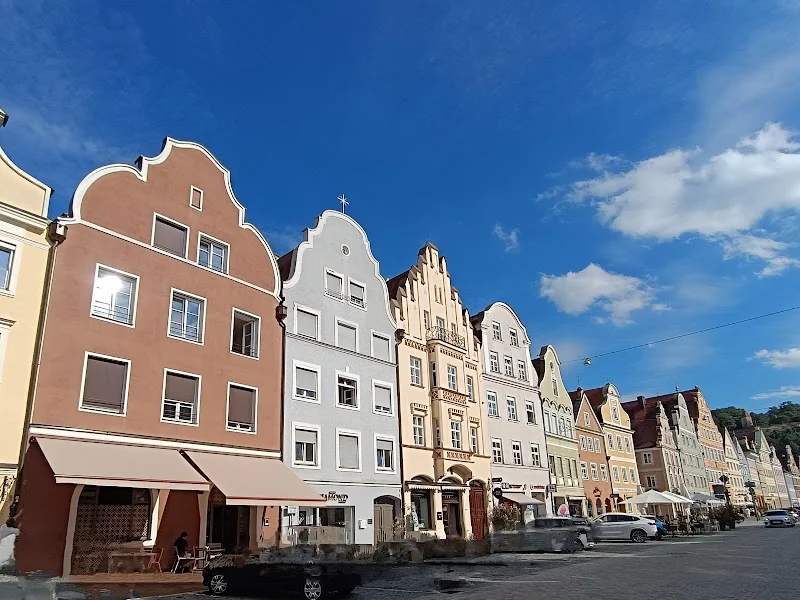
The historic old town is not a museum decoration in Landshut, but the core of an ensemble that is equally important for monument preservation, city history, and today's urban life. The municipal monument preservation describes the ensemble as an area within the former city fortifications; two-thirds of the 578 individual monuments and 209 archaeological monuments in the city were located in the historic city center as of December 2, 2020. This explains why many facades, roofs, and building edges appear so cohesive here and why even small changes in the street space are considered with great care. On the other hand, the old town is not quiet: it is a pedestrian zone, a shopping and strolling area, a gastronomic space, and an event venue all in one. It is precisely this mix of protection and use that creates its charm. Walking through the old town, one sees Gothic gabled houses, carefully designed decorative facades, characteristic arcades, and winding alleys. The city even describes the historic center as one of the most beautiful old towns in Bavaria and as a kind of long Gothic terrace where architecture and pathways unfold almost like a stage. This is a good starting point for anyone looking for historical images, old town photos, or characteristic city views: Here, the motif does not arise from individual attractions alone, but from the dense interplay of space, perspective, and architectural history. ([landshut.de](https://landshut.de/leben/planen-bauen-wohnen/untere-denkmalschutzbehoerde))
What is particularly exciting is that the historic character is not only visible in a few representative places but shapes the entire city center. The official description refers to the old town, the new town, and the narrow connecting alleys as elements of a well-preserved historical cityscape. For visitors, this means: The paths are short, but the impressions change constantly. Sometimes one stands in front of a wide square with a broad view, sometimes in a narrow alley that directs the gaze towards a tower, portal, or facade edge. The city also emphasizes that there are many preserved monument objects in Landshut, and a large part of them is located in the historic center. You can feel this with every step, as not only the well-known monuments but also the ordinary rows of houses, shop entrances, and ground floor areas are part of this ensemble. Those interested in architecture or urban development can see here how a grown old town can be both a protective space and a usable space. This is exactly what makes Landshut so attractive for photographers, strollers, and cultural travelers: The backdrop is historical, but life within it is current, colorful, and constantly in motion. ([landshut.de](https://landshut.de/leben/planen-bauen-wohnen/untere-denkmalschutzbehoerde))
Town Hall, St. Martin, and City Residence: The Most Important Landmarks
Among the defining landmarks of the old town are the town hall, the collegiate basilica of St. Martin, and the city residence, all of which are located in close proximity to each other and together form the historical backdrop of the city center. The town hall in the middle of the old town consists of three Gothic gabled houses, which were only connected into a harmonious overall picture in the 19th century by a neo-Gothic facade; the city council acquired the middle house as early as 1380, and later the two neighboring buildings were added. It is precisely this grown character that makes the town hall so photogenic: It tells the city's history in several layers while remaining a vibrant administrative seat. The collegiate basilica of St. Martin is the main church and landmark of the city; it was built from 1389 to 1500 and is considered the highest brick tower in the world with its 130.6-meter-high brick tower. As a late Gothic hall church, it is one of the most significant sacred buildings in southern Germany and gives the skyline of the old town its unmistakable vertical accent. The city residence, on the other hand, is considered the first Renaissance palace north of the Alps. Built under Duke Ludwig X between 1536 and 1543, it consists of the German building in the old town and the Italian building at the arcade courtyard; inside, there are representative rooms and elaborate furnishings that visibly express the princely claim of the building. Therefore, a visit to the old town offers not only a pretty row of houses but also a very concentrated sequence of epochs: late Gothic, Renaissance, and later renovations are only a few minutes' walk apart. Additionally, it is worth taking a look at the former landscape house at Altstadt 28, now called Pustet or Alte Post, whose Renaissance facade refers to its historical use as the seat of the Lower Bavarian estates. ([landshut.de](https://landshut.de/node/2096))
For practical planning, this spatial proximity is a significant advantage. One can choose the town hall as a starting point, then take the sightline to St. Martin's Church, and then continue to the city residence without having to cover long distances. This almost automatically turns a city visit into a historical tour. The town hall, with its neo-Gothic facade, is located directly in the old town and is immediately recognizable by its gabled structure. St. Martin provides the vertical counterpoint: The tower serves as a landmark even from a distance and draws the gaze beyond the rows of houses. The city residence, in turn, opens up another historical focus with its architecturally diverse structures, as it makes the transition from the late Gothic city to the Renaissance world visible. Those who look closely will recognize that the old town does not consist of isolated attractions but of a finely tuned interplay of squares, facades, and directions of view. For SEO purposes and for genuine visitor experiences, this is ideal, as search queries like historic buildings Landshut, Landshut old town photos, or city residence Landshut are answered here with concrete, spatially closely located motifs. The historic center thus functions like an open history book that one can read step by step. ([landshut.de](https://landshut.de/node/2096))
Photo Points in the Old Town: The Best Motifs for Historical Images
Those searching for historical images of Landshut will find particularly strong perspectives for photos in the old town. The official tourism site names the Trinity Square as a photo point with a brilliant view into the old town; from there, the Gothic house facades and the highest brick tower of St. Martin's Church can be staged together. The location is therefore ideal if one wants to capture as much of Landshut's typical silhouette as possible in one image. Another strong photo point is located at the intersection of Altstadt-Spiegelgasse-Ländgasse. There, the perspective condenses into a kind of Gothic stage, where facade colors, gables, arcades, and the proximity to St. Martin's Church create a very lively overall picture. The city describes this area as a place with a special variety and vibrancy of Gothic facades; this makes it particularly interesting for architecture and street photography. The official statement that the old town resembles a long Gothic terrace also aids in motif searching: Depending on the direction of view, clear lines, narrow sequences of space, or wide views along the house fronts emerge. Practically, this means that in Landshut, one does not only photograph individual buildings but works with sightlines. An image often becomes particularly strong when one combines foreground, facades, and tower in a line. For social media motifs, the areas around cafes and street terraces are also suitable, as they connect the historical ambiance with everyday urban life. This results in photos that not only look beautiful but credibly transport the atmosphere of the old town: medieval proportions, vibrant use, plenty of light, and a very clear spatial structure. ([erleben.landshut.de](https://erleben.landshut.de/tourismus/selfiepoints/?utm_source=openai))
The small differences in daylight also help with image composition. In the morning, the alleys often appear calmer and clearer because there is less activity, and the facades can be very evenly lit. In the late afternoon or evening, however, a warmer atmosphere often arises that emphasizes the colors of the gabled houses and the depth of the alleys. Those who take their time can create several different visual languages at the same locations: once classic and representative, once urban and lively, once very wide and panoramic, and once tighter and more detailed. This flexibility makes the old town so attractive for photographers. The official motifs also show that not only the large landmarks work but also the in-between spaces. The interplay of street edges, umbrellas of outdoor gastronomy, church portals, and rows of facades brings movement into the image and makes the shots more narrative. For search terms like historic old town Landshut photos, Landshut old town images, or historical images Landshut, this is particularly valuable because users are not only looking for a single motif but for an entire visual world. The old town provides the right mix of recognizability, depth, and urban atmosphere. ([erleben.landshut.de](https://erleben.landshut.de/tourismus/selfiepoints/?utm_source=openai))
Parking and Access in Landshut's Old Town
Even though the old town is very centrally located, parking in the historic city center is intentionally limited to maintain the character of the ensemble. The official recommendation is therefore to use the large parking lot at Grieserwiese; from there, it is about a five-minute walk to the old town, and those walking towards Trinity Square over Grätzberg will already get an impressive view of St. Martin on the way. Even closer is the parking garage on Wittstraße, from which the old town can be reached in about two minutes. Additionally, the city mentions the parking garage Old Town/Central on the Mühleninsel with 270 parking spaces, including women's parking spaces, disabled parking spaces, charging spaces for electric vehicles, and charging options for e-bikes. Those arriving by car also benefit from the short-term parking zones at Trinity Square and New Town, which are practical for quick errands or a quick visit to the old town. For electric vehicles with an E license plate, as of April 1, 2025, there will be a free parking time of up to three hours in public parking spaces in Landshut, provided the respective maximum parking duration of the space is not shorter. This is particularly interesting for city visits in the historic center, as it allows for a short tour, a café visit, or a museum stop to be well planned. At the same time, the most important rule remains simple: In the old town itself, walking is often more convenient than searching. So, for a relaxed arrival, one should park the car at the edge and walk the last section. This is precisely how the old town unfolds its effect: One gradually approaches the historic center instead of driving directly into it. ([erleben.landshut.de](https://erleben.landshut.de/parkmoeglichkeiten/))
The official service offerings of the city are very helpful for orientation. The tourist information is located at Altstadt 315 directly in the town hall area, making it a natural starting point for visitors who have questions about attractions, programs, or tours. The municipal parking information and the indications of available parking spaces also facilitate travel planning. Those who do not just want to make a brief stop in the old town but want to experience it consciously should therefore decide in advance whether a city tour, a photo walk, or a longer café and shopping visit is planned. For short stays, the short-term zones are suitable; for longer stays, the edge parking lots and parking garages. Those arriving by bicycle will also find well-utilized cycling options and can flexibly explore the city center. This is particularly pleasant because the old town is compact and the most important destinations are reachable in just a few minutes. This is an advantage, especially for families, photography enthusiasts, and day visitors: One saves paths but remains close to the historical motifs. Landshut thus combines a very classic old town feeling with an surprisingly functional visitor logic. This way, the approach does not become an obstacle but a clearly plannable part of the city experience. ([erleben.landshut.de](https://erleben.landshut.de/parkmoeglichkeiten/))
Pedestrian Zone, Cafés, and Shopping: The Old Town as a Lively Meeting Point
The Historic Old Town Landshut is not just a backdrop but a place of everyday life. The city describes it as a place where shopping, enjoying, and discovering come together; between gabled houses, decorative facades, arcades, and alleys, there are many owner-operated shops, brands, cafés, beer gardens, and restaurants. This mix makes the old town attractive even for visitors without a specific sightseeing plan. One can stroll, look, take a break, and always perceive the historical framework. Those looking for a lively city center with a high recognition value will not find an interchangeable pedestrian zone here, but a space where commerce and architectural history intertwine closely. Additionally, the City Center Landshut is only a few steps away from the old town and complements the stroll with a modern shopping offer and a multiplex cinema. This shows how strongly tradition and the present function side by side here. The old town is also a place for seasonal atmosphere: During the Advent season, the arts and crafts market in the pedestrian zone enriches the city center with stalls, crafts, and demonstrations. Traditional large events like the old town festival also utilize this space, and around New Year's Eve, the old town repeatedly becomes a stage for special productions. For content with search intent such as old town Landshut images or historic old town Landshut photos, this liveliness is important because it adds a second layer to the motif: Not only the architecture but also the use makes the place attractive. Landshut is therefore both a shopping city, café address, event venue, and historical ensemble. ([landshut.de](https://landshut.de/wirtschaft/einkaufserlebnisstadt))
Those who want to experience the old town in peace should also take time for breaks. Especially the street cafés and the gastronomic areas in the pedestrian zone contribute to the fact that the historical surroundings are not only observed but intensely perceived. From there, one can excellently observe city life while the Gothic facades and the tower of St. Martin remain visible in the background. This is an essential part of Landshut's charm: The city does not appear as a closed monument but as a inhabited and utilized old town where shopping, drinking coffee, and strolling naturally belong together. For visitors, this means that half a day in the old town is not enough if one wants to truly understand all levels. Those who come only for photos discover light, axes, and facades. Those who stay to stroll experience gastronomy and shops. And those who come in winter or during festive times see how the old town transforms into an event space. This very adaptability makes the place permanently interesting and ensures that it appears repeatedly in search queries for historical buildings, attractions, and images. Landshut's old town is thus a very good example of how a historic city center can thrive today without losing its character. ([landshut.de](https://landshut.de/wirtschaft/einkaufserlebnisstadt))
Events, Markets, and Practical Tips for Visiting the Old Town
A good visit to Landshut's old town often begins with a look at the current program, as the historic urban space is regularly used for markets, festivals, and cultural offerings. The city explicitly points out that the Landshut arts and crafts market takes place in the old town in the pedestrian zone and enriches the Advent city. Such formats show that the historic center does not only function in summer or for pure sightseeing tours but provides reasons to return throughout the year. Those who want to rediscover the old town can also start at the tourist information in the town hall; it is located at Altstadt 315 and is thus anchored right in the historic core. The digital access is also practical: The Landshut app offers, among other things, a 3D tour of the old town and the town hall, allowing for a good connection between visit and preparation. For those who prefer to be active, the city even offers e-bikes at the tourist information to explore attractions like Trausnitz Castle, Carossahöhe, or the historic city center at their own pace. This is particularly sensible for photography, architecture, and urban history, as one can then approach the most important sightlines without haste. The old town thus does not seem like a brief stop but like a well-walkable experience space where one can stroll from attraction to attraction and continuously discover new motifs in between. Therefore, those looking for historical images, special facades, short paths, and an authentic city feeling find a dense mix of history, present, and plenty of atmosphere in Landshut. ([landshut.de](https://landshut.de/kultur-sport/dulten-maerkte-messen?utm_source=openai))
For a successful day plan, it is worth thinking of the old town not only as a destination but as a route. One can start at the town hall, pick up the sightline to St. Martin's Church, continue over Trinity Square, and then stroll back along the shop windows, cafés, and historic houses. Those who combine this with a photo stop will get several very different motifs within a few minutes without losing sight of the paths. This is also part of the attractiveness: The old town is compact but never monotonous. An hour is enough for a first impression, two to three hours for a relaxed tour with breaks, and a whole day is worthwhile if one wants to combine architecture, food, shopping, and photography. Especially during Advent or at festive times, it is advisable to arrive a bit earlier, as the parking options at the edge of the old town are particularly sought after then. At the same time, the visit remains uncomplicated because the most important destinations are close together, and orientation is very easy due to the prominent buildings. Landshut thus offers exactly the kind of historic city center that can be experienced both spontaneously and planned: beautiful for pictures, strong for city history, and pleasant in everyday life. ([erleben.landshut.de](https://erleben.landshut.de/parkmoeglichkeiten/))
Sources:
- Lower Monument Protection Authority - City of Landshut
- Attractions - Experience Landshut
- Parking Options - Experience Landshut
- Town Hall - City of Landshut
- Collegiate Basilica of St. Martin - City of Landshut
- City Residence - City of Landshut
- Photo Points - Experience Landshut
- Shopping Experience City - City of Landshut
Mehr anzeigenWeniger anzeigen
Historic Old Town Landshut | Photos & Attractions
The Historic Old Town Landshut is not just a place to arrive, but an urban space where medieval and early modern architecture continues to thrive in everyday life. The ensemble of the old town extends within the boundaries of the former city fortifications and includes Trausnitz Castle with the Duke's Garden and Court Garden, the suburb Between the Bridges on the other side of the Isar, as well as the Abbey of Seligenthal. Together with the old town and the new town, it creates a historical overall picture that shapes Landshut's identity to this day and leads visitors directly into a grown, vibrant urban landscape. ([landshut.de](https://landshut.de/leben/planen-bauen-wohnen/untere-denkmalschutzbehoerde))
Historic Old Town Landshut: Cityscape, History, and Ensemble
The historic old town is not a museum decoration in Landshut, but the core of an ensemble that is equally important for monument preservation, city history, and today's urban life. The municipal monument preservation describes the ensemble as an area within the former city fortifications; two-thirds of the 578 individual monuments and 209 archaeological monuments in the city were located in the historic city center as of December 2, 2020. This explains why many facades, roofs, and building edges appear so cohesive here and why even small changes in the street space are considered with great care. On the other hand, the old town is not quiet: it is a pedestrian zone, a shopping and strolling area, a gastronomic space, and an event venue all in one. It is precisely this mix of protection and use that creates its charm. Walking through the old town, one sees Gothic gabled houses, carefully designed decorative facades, characteristic arcades, and winding alleys. The city even describes the historic center as one of the most beautiful old towns in Bavaria and as a kind of long Gothic terrace where architecture and pathways unfold almost like a stage. This is a good starting point for anyone looking for historical images, old town photos, or characteristic city views: Here, the motif does not arise from individual attractions alone, but from the dense interplay of space, perspective, and architectural history. ([landshut.de](https://landshut.de/leben/planen-bauen-wohnen/untere-denkmalschutzbehoerde))
What is particularly exciting is that the historic character is not only visible in a few representative places but shapes the entire city center. The official description refers to the old town, the new town, and the narrow connecting alleys as elements of a well-preserved historical cityscape. For visitors, this means: The paths are short, but the impressions change constantly. Sometimes one stands in front of a wide square with a broad view, sometimes in a narrow alley that directs the gaze towards a tower, portal, or facade edge. The city also emphasizes that there are many preserved monument objects in Landshut, and a large part of them is located in the historic center. You can feel this with every step, as not only the well-known monuments but also the ordinary rows of houses, shop entrances, and ground floor areas are part of this ensemble. Those interested in architecture or urban development can see here how a grown old town can be both a protective space and a usable space. This is exactly what makes Landshut so attractive for photographers, strollers, and cultural travelers: The backdrop is historical, but life within it is current, colorful, and constantly in motion. ([landshut.de](https://landshut.de/leben/planen-bauen-wohnen/untere-denkmalschutzbehoerde))
Town Hall, St. Martin, and City Residence: The Most Important Landmarks
Among the defining landmarks of the old town are the town hall, the collegiate basilica of St. Martin, and the city residence, all of which are located in close proximity to each other and together form the historical backdrop of the city center. The town hall in the middle of the old town consists of three Gothic gabled houses, which were only connected into a harmonious overall picture in the 19th century by a neo-Gothic facade; the city council acquired the middle house as early as 1380, and later the two neighboring buildings were added. It is precisely this grown character that makes the town hall so photogenic: It tells the city's history in several layers while remaining a vibrant administrative seat. The collegiate basilica of St. Martin is the main church and landmark of the city; it was built from 1389 to 1500 and is considered the highest brick tower in the world with its 130.6-meter-high brick tower. As a late Gothic hall church, it is one of the most significant sacred buildings in southern Germany and gives the skyline of the old town its unmistakable vertical accent. The city residence, on the other hand, is considered the first Renaissance palace north of the Alps. Built under Duke Ludwig X between 1536 and 1543, it consists of the German building in the old town and the Italian building at the arcade courtyard; inside, there are representative rooms and elaborate furnishings that visibly express the princely claim of the building. Therefore, a visit to the old town offers not only a pretty row of houses but also a very concentrated sequence of epochs: late Gothic, Renaissance, and later renovations are only a few minutes' walk apart. Additionally, it is worth taking a look at the former landscape house at Altstadt 28, now called Pustet or Alte Post, whose Renaissance facade refers to its historical use as the seat of the Lower Bavarian estates. ([landshut.de](https://landshut.de/node/2096))
For practical planning, this spatial proximity is a significant advantage. One can choose the town hall as a starting point, then take the sightline to St. Martin's Church, and then continue to the city residence without having to cover long distances. This almost automatically turns a city visit into a historical tour. The town hall, with its neo-Gothic facade, is located directly in the old town and is immediately recognizable by its gabled structure. St. Martin provides the vertical counterpoint: The tower serves as a landmark even from a distance and draws the gaze beyond the rows of houses. The city residence, in turn, opens up another historical focus with its architecturally diverse structures, as it makes the transition from the late Gothic city to the Renaissance world visible. Those who look closely will recognize that the old town does not consist of isolated attractions but of a finely tuned interplay of squares, facades, and directions of view. For SEO purposes and for genuine visitor experiences, this is ideal, as search queries like historic buildings Landshut, Landshut old town photos, or city residence Landshut are answered here with concrete, spatially closely located motifs. The historic center thus functions like an open history book that one can read step by step. ([landshut.de](https://landshut.de/node/2096))
Photo Points in the Old Town: The Best Motifs for Historical Images
Those searching for historical images of Landshut will find particularly strong perspectives for photos in the old town. The official tourism site names the Trinity Square as a photo point with a brilliant view into the old town; from there, the Gothic house facades and the highest brick tower of St. Martin's Church can be staged together. The location is therefore ideal if one wants to capture as much of Landshut's typical silhouette as possible in one image. Another strong photo point is located at the intersection of Altstadt-Spiegelgasse-Ländgasse. There, the perspective condenses into a kind of Gothic stage, where facade colors, gables, arcades, and the proximity to St. Martin's Church create a very lively overall picture. The city describes this area as a place with a special variety and vibrancy of Gothic facades; this makes it particularly interesting for architecture and street photography. The official statement that the old town resembles a long Gothic terrace also aids in motif searching: Depending on the direction of view, clear lines, narrow sequences of space, or wide views along the house fronts emerge. Practically, this means that in Landshut, one does not only photograph individual buildings but works with sightlines. An image often becomes particularly strong when one combines foreground, facades, and tower in a line. For social media motifs, the areas around cafes and street terraces are also suitable, as they connect the historical ambiance with everyday urban life. This results in photos that not only look beautiful but credibly transport the atmosphere of the old town: medieval proportions, vibrant use, plenty of light, and a very clear spatial structure. ([erleben.landshut.de](https://erleben.landshut.de/tourismus/selfiepoints/?utm_source=openai))
The small differences in daylight also help with image composition. In the morning, the alleys often appear calmer and clearer because there is less activity, and the facades can be very evenly lit. In the late afternoon or evening, however, a warmer atmosphere often arises that emphasizes the colors of the gabled houses and the depth of the alleys. Those who take their time can create several different visual languages at the same locations: once classic and representative, once urban and lively, once very wide and panoramic, and once tighter and more detailed. This flexibility makes the old town so attractive for photographers. The official motifs also show that not only the large landmarks work but also the in-between spaces. The interplay of street edges, umbrellas of outdoor gastronomy, church portals, and rows of facades brings movement into the image and makes the shots more narrative. For search terms like historic old town Landshut photos, Landshut old town images, or historical images Landshut, this is particularly valuable because users are not only looking for a single motif but for an entire visual world. The old town provides the right mix of recognizability, depth, and urban atmosphere. ([erleben.landshut.de](https://erleben.landshut.de/tourismus/selfiepoints/?utm_source=openai))
Parking and Access in Landshut's Old Town
Even though the old town is very centrally located, parking in the historic city center is intentionally limited to maintain the character of the ensemble. The official recommendation is therefore to use the large parking lot at Grieserwiese; from there, it is about a five-minute walk to the old town, and those walking towards Trinity Square over Grätzberg will already get an impressive view of St. Martin on the way. Even closer is the parking garage on Wittstraße, from which the old town can be reached in about two minutes. Additionally, the city mentions the parking garage Old Town/Central on the Mühleninsel with 270 parking spaces, including women's parking spaces, disabled parking spaces, charging spaces for electric vehicles, and charging options for e-bikes. Those arriving by car also benefit from the short-term parking zones at Trinity Square and New Town, which are practical for quick errands or a quick visit to the old town. For electric vehicles with an E license plate, as of April 1, 2025, there will be a free parking time of up to three hours in public parking spaces in Landshut, provided the respective maximum parking duration of the space is not shorter. This is particularly interesting for city visits in the historic center, as it allows for a short tour, a café visit, or a museum stop to be well planned. At the same time, the most important rule remains simple: In the old town itself, walking is often more convenient than searching. So, for a relaxed arrival, one should park the car at the edge and walk the last section. This is precisely how the old town unfolds its effect: One gradually approaches the historic center instead of driving directly into it. ([erleben.landshut.de](https://erleben.landshut.de/parkmoeglichkeiten/))
The official service offerings of the city are very helpful for orientation. The tourist information is located at Altstadt 315 directly in the town hall area, making it a natural starting point for visitors who have questions about attractions, programs, or tours. The municipal parking information and the indications of available parking spaces also facilitate travel planning. Those who do not just want to make a brief stop in the old town but want to experience it consciously should therefore decide in advance whether a city tour, a photo walk, or a longer café and shopping visit is planned. For short stays, the short-term zones are suitable; for longer stays, the edge parking lots and parking garages. Those arriving by bicycle will also find well-utilized cycling options and can flexibly explore the city center. This is particularly pleasant because the old town is compact and the most important destinations are reachable in just a few minutes. This is an advantage, especially for families, photography enthusiasts, and day visitors: One saves paths but remains close to the historical motifs. Landshut thus combines a very classic old town feeling with an surprisingly functional visitor logic. This way, the approach does not become an obstacle but a clearly plannable part of the city experience. ([erleben.landshut.de](https://erleben.landshut.de/parkmoeglichkeiten/))
Pedestrian Zone, Cafés, and Shopping: The Old Town as a Lively Meeting Point
The Historic Old Town Landshut is not just a backdrop but a place of everyday life. The city describes it as a place where shopping, enjoying, and discovering come together; between gabled houses, decorative facades, arcades, and alleys, there are many owner-operated shops, brands, cafés, beer gardens, and restaurants. This mix makes the old town attractive even for visitors without a specific sightseeing plan. One can stroll, look, take a break, and always perceive the historical framework. Those looking for a lively city center with a high recognition value will not find an interchangeable pedestrian zone here, but a space where commerce and architectural history intertwine closely. Additionally, the City Center Landshut is only a few steps away from the old town and complements the stroll with a modern shopping offer and a multiplex cinema. This shows how strongly tradition and the present function side by side here. The old town is also a place for seasonal atmosphere: During the Advent season, the arts and crafts market in the pedestrian zone enriches the city center with stalls, crafts, and demonstrations. Traditional large events like the old town festival also utilize this space, and around New Year's Eve, the old town repeatedly becomes a stage for special productions. For content with search intent such as old town Landshut images or historic old town Landshut photos, this liveliness is important because it adds a second layer to the motif: Not only the architecture but also the use makes the place attractive. Landshut is therefore both a shopping city, café address, event venue, and historical ensemble. ([landshut.de](https://landshut.de/wirtschaft/einkaufserlebnisstadt))
Those who want to experience the old town in peace should also take time for breaks. Especially the street cafés and the gastronomic areas in the pedestrian zone contribute to the fact that the historical surroundings are not only observed but intensely perceived. From there, one can excellently observe city life while the Gothic facades and the tower of St. Martin remain visible in the background. This is an essential part of Landshut's charm: The city does not appear as a closed monument but as a inhabited and utilized old town where shopping, drinking coffee, and strolling naturally belong together. For visitors, this means that half a day in the old town is not enough if one wants to truly understand all levels. Those who come only for photos discover light, axes, and facades. Those who stay to stroll experience gastronomy and shops. And those who come in winter or during festive times see how the old town transforms into an event space. This very adaptability makes the place permanently interesting and ensures that it appears repeatedly in search queries for historical buildings, attractions, and images. Landshut's old town is thus a very good example of how a historic city center can thrive today without losing its character. ([landshut.de](https://landshut.de/wirtschaft/einkaufserlebnisstadt))
Events, Markets, and Practical Tips for Visiting the Old Town
A good visit to Landshut's old town often begins with a look at the current program, as the historic urban space is regularly used for markets, festivals, and cultural offerings. The city explicitly points out that the Landshut arts and crafts market takes place in the old town in the pedestrian zone and enriches the Advent city. Such formats show that the historic center does not only function in summer or for pure sightseeing tours but provides reasons to return throughout the year. Those who want to rediscover the old town can also start at the tourist information in the town hall; it is located at Altstadt 315 and is thus anchored right in the historic core. The digital access is also practical: The Landshut app offers, among other things, a 3D tour of the old town and the town hall, allowing for a good connection between visit and preparation. For those who prefer to be active, the city even offers e-bikes at the tourist information to explore attractions like Trausnitz Castle, Carossahöhe, or the historic city center at their own pace. This is particularly sensible for photography, architecture, and urban history, as one can then approach the most important sightlines without haste. The old town thus does not seem like a brief stop but like a well-walkable experience space where one can stroll from attraction to attraction and continuously discover new motifs in between. Therefore, those looking for historical images, special facades, short paths, and an authentic city feeling find a dense mix of history, present, and plenty of atmosphere in Landshut. ([landshut.de](https://landshut.de/kultur-sport/dulten-maerkte-messen?utm_source=openai))
For a successful day plan, it is worth thinking of the old town not only as a destination but as a route. One can start at the town hall, pick up the sightline to St. Martin's Church, continue over Trinity Square, and then stroll back along the shop windows, cafés, and historic houses. Those who combine this with a photo stop will get several very different motifs within a few minutes without losing sight of the paths. This is also part of the attractiveness: The old town is compact but never monotonous. An hour is enough for a first impression, two to three hours for a relaxed tour with breaks, and a whole day is worthwhile if one wants to combine architecture, food, shopping, and photography. Especially during Advent or at festive times, it is advisable to arrive a bit earlier, as the parking options at the edge of the old town are particularly sought after then. At the same time, the visit remains uncomplicated because the most important destinations are close together, and orientation is very easy due to the prominent buildings. Landshut thus offers exactly the kind of historic city center that can be experienced both spontaneously and planned: beautiful for pictures, strong for city history, and pleasant in everyday life. ([erleben.landshut.de](https://erleben.landshut.de/parkmoeglichkeiten/))
Sources:
- Lower Monument Protection Authority - City of Landshut
- Attractions - Experience Landshut
- Parking Options - Experience Landshut
- Town Hall - City of Landshut
- Collegiate Basilica of St. Martin - City of Landshut
- City Residence - City of Landshut
- Photo Points - Experience Landshut
- Shopping Experience City - City of Landshut
Historic Old Town Landshut | Photos & Attractions
The Historic Old Town Landshut is not just a place to arrive, but an urban space where medieval and early modern architecture continues to thrive in everyday life. The ensemble of the old town extends within the boundaries of the former city fortifications and includes Trausnitz Castle with the Duke's Garden and Court Garden, the suburb Between the Bridges on the other side of the Isar, as well as the Abbey of Seligenthal. Together with the old town and the new town, it creates a historical overall picture that shapes Landshut's identity to this day and leads visitors directly into a grown, vibrant urban landscape. ([landshut.de](https://landshut.de/leben/planen-bauen-wohnen/untere-denkmalschutzbehoerde))
Historic Old Town Landshut: Cityscape, History, and Ensemble
The historic old town is not a museum decoration in Landshut, but the core of an ensemble that is equally important for monument preservation, city history, and today's urban life. The municipal monument preservation describes the ensemble as an area within the former city fortifications; two-thirds of the 578 individual monuments and 209 archaeological monuments in the city were located in the historic city center as of December 2, 2020. This explains why many facades, roofs, and building edges appear so cohesive here and why even small changes in the street space are considered with great care. On the other hand, the old town is not quiet: it is a pedestrian zone, a shopping and strolling area, a gastronomic space, and an event venue all in one. It is precisely this mix of protection and use that creates its charm. Walking through the old town, one sees Gothic gabled houses, carefully designed decorative facades, characteristic arcades, and winding alleys. The city even describes the historic center as one of the most beautiful old towns in Bavaria and as a kind of long Gothic terrace where architecture and pathways unfold almost like a stage. This is a good starting point for anyone looking for historical images, old town photos, or characteristic city views: Here, the motif does not arise from individual attractions alone, but from the dense interplay of space, perspective, and architectural history. ([landshut.de](https://landshut.de/leben/planen-bauen-wohnen/untere-denkmalschutzbehoerde))
What is particularly exciting is that the historic character is not only visible in a few representative places but shapes the entire city center. The official description refers to the old town, the new town, and the narrow connecting alleys as elements of a well-preserved historical cityscape. For visitors, this means: The paths are short, but the impressions change constantly. Sometimes one stands in front of a wide square with a broad view, sometimes in a narrow alley that directs the gaze towards a tower, portal, or facade edge. The city also emphasizes that there are many preserved monument objects in Landshut, and a large part of them is located in the historic center. You can feel this with every step, as not only the well-known monuments but also the ordinary rows of houses, shop entrances, and ground floor areas are part of this ensemble. Those interested in architecture or urban development can see here how a grown old town can be both a protective space and a usable space. This is exactly what makes Landshut so attractive for photographers, strollers, and cultural travelers: The backdrop is historical, but life within it is current, colorful, and constantly in motion. ([landshut.de](https://landshut.de/leben/planen-bauen-wohnen/untere-denkmalschutzbehoerde))
Town Hall, St. Martin, and City Residence: The Most Important Landmarks
Among the defining landmarks of the old town are the town hall, the collegiate basilica of St. Martin, and the city residence, all of which are located in close proximity to each other and together form the historical backdrop of the city center. The town hall in the middle of the old town consists of three Gothic gabled houses, which were only connected into a harmonious overall picture in the 19th century by a neo-Gothic facade; the city council acquired the middle house as early as 1380, and later the two neighboring buildings were added. It is precisely this grown character that makes the town hall so photogenic: It tells the city's history in several layers while remaining a vibrant administrative seat. The collegiate basilica of St. Martin is the main church and landmark of the city; it was built from 1389 to 1500 and is considered the highest brick tower in the world with its 130.6-meter-high brick tower. As a late Gothic hall church, it is one of the most significant sacred buildings in southern Germany and gives the skyline of the old town its unmistakable vertical accent. The city residence, on the other hand, is considered the first Renaissance palace north of the Alps. Built under Duke Ludwig X between 1536 and 1543, it consists of the German building in the old town and the Italian building at the arcade courtyard; inside, there are representative rooms and elaborate furnishings that visibly express the princely claim of the building. Therefore, a visit to the old town offers not only a pretty row of houses but also a very concentrated sequence of epochs: late Gothic, Renaissance, and later renovations are only a few minutes' walk apart. Additionally, it is worth taking a look at the former landscape house at Altstadt 28, now called Pustet or Alte Post, whose Renaissance facade refers to its historical use as the seat of the Lower Bavarian estates. ([landshut.de](https://landshut.de/node/2096))
For practical planning, this spatial proximity is a significant advantage. One can choose the town hall as a starting point, then take the sightline to St. Martin's Church, and then continue to the city residence without having to cover long distances. This almost automatically turns a city visit into a historical tour. The town hall, with its neo-Gothic facade, is located directly in the old town and is immediately recognizable by its gabled structure. St. Martin provides the vertical counterpoint: The tower serves as a landmark even from a distance and draws the gaze beyond the rows of houses. The city residence, in turn, opens up another historical focus with its architecturally diverse structures, as it makes the transition from the late Gothic city to the Renaissance world visible. Those who look closely will recognize that the old town does not consist of isolated attractions but of a finely tuned interplay of squares, facades, and directions of view. For SEO purposes and for genuine visitor experiences, this is ideal, as search queries like historic buildings Landshut, Landshut old town photos, or city residence Landshut are answered here with concrete, spatially closely located motifs. The historic center thus functions like an open history book that one can read step by step. ([landshut.de](https://landshut.de/node/2096))
Photo Points in the Old Town: The Best Motifs for Historical Images
Those searching for historical images of Landshut will find particularly strong perspectives for photos in the old town. The official tourism site names the Trinity Square as a photo point with a brilliant view into the old town; from there, the Gothic house facades and the highest brick tower of St. Martin's Church can be staged together. The location is therefore ideal if one wants to capture as much of Landshut's typical silhouette as possible in one image. Another strong photo point is located at the intersection of Altstadt-Spiegelgasse-Ländgasse. There, the perspective condenses into a kind of Gothic stage, where facade colors, gables, arcades, and the proximity to St. Martin's Church create a very lively overall picture. The city describes this area as a place with a special variety and vibrancy of Gothic facades; this makes it particularly interesting for architecture and street photography. The official statement that the old town resembles a long Gothic terrace also aids in motif searching: Depending on the direction of view, clear lines, narrow sequences of space, or wide views along the house fronts emerge. Practically, this means that in Landshut, one does not only photograph individual buildings but works with sightlines. An image often becomes particularly strong when one combines foreground, facades, and tower in a line. For social media motifs, the areas around cafes and street terraces are also suitable, as they connect the historical ambiance with everyday urban life. This results in photos that not only look beautiful but credibly transport the atmosphere of the old town: medieval proportions, vibrant use, plenty of light, and a very clear spatial structure. ([erleben.landshut.de](https://erleben.landshut.de/tourismus/selfiepoints/?utm_source=openai))
The small differences in daylight also help with image composition. In the morning, the alleys often appear calmer and clearer because there is less activity, and the facades can be very evenly lit. In the late afternoon or evening, however, a warmer atmosphere often arises that emphasizes the colors of the gabled houses and the depth of the alleys. Those who take their time can create several different visual languages at the same locations: once classic and representative, once urban and lively, once very wide and panoramic, and once tighter and more detailed. This flexibility makes the old town so attractive for photographers. The official motifs also show that not only the large landmarks work but also the in-between spaces. The interplay of street edges, umbrellas of outdoor gastronomy, church portals, and rows of facades brings movement into the image and makes the shots more narrative. For search terms like historic old town Landshut photos, Landshut old town images, or historical images Landshut, this is particularly valuable because users are not only looking for a single motif but for an entire visual world. The old town provides the right mix of recognizability, depth, and urban atmosphere. ([erleben.landshut.de](https://erleben.landshut.de/tourismus/selfiepoints/?utm_source=openai))
Parking and Access in Landshut's Old Town
Even though the old town is very centrally located, parking in the historic city center is intentionally limited to maintain the character of the ensemble. The official recommendation is therefore to use the large parking lot at Grieserwiese; from there, it is about a five-minute walk to the old town, and those walking towards Trinity Square over Grätzberg will already get an impressive view of St. Martin on the way. Even closer is the parking garage on Wittstraße, from which the old town can be reached in about two minutes. Additionally, the city mentions the parking garage Old Town/Central on the Mühleninsel with 270 parking spaces, including women's parking spaces, disabled parking spaces, charging spaces for electric vehicles, and charging options for e-bikes. Those arriving by car also benefit from the short-term parking zones at Trinity Square and New Town, which are practical for quick errands or a quick visit to the old town. For electric vehicles with an E license plate, as of April 1, 2025, there will be a free parking time of up to three hours in public parking spaces in Landshut, provided the respective maximum parking duration of the space is not shorter. This is particularly interesting for city visits in the historic center, as it allows for a short tour, a café visit, or a museum stop to be well planned. At the same time, the most important rule remains simple: In the old town itself, walking is often more convenient than searching. So, for a relaxed arrival, one should park the car at the edge and walk the last section. This is precisely how the old town unfolds its effect: One gradually approaches the historic center instead of driving directly into it. ([erleben.landshut.de](https://erleben.landshut.de/parkmoeglichkeiten/))
The official service offerings of the city are very helpful for orientation. The tourist information is located at Altstadt 315 directly in the town hall area, making it a natural starting point for visitors who have questions about attractions, programs, or tours. The municipal parking information and the indications of available parking spaces also facilitate travel planning. Those who do not just want to make a brief stop in the old town but want to experience it consciously should therefore decide in advance whether a city tour, a photo walk, or a longer café and shopping visit is planned. For short stays, the short-term zones are suitable; for longer stays, the edge parking lots and parking garages. Those arriving by bicycle will also find well-utilized cycling options and can flexibly explore the city center. This is particularly pleasant because the old town is compact and the most important destinations are reachable in just a few minutes. This is an advantage, especially for families, photography enthusiasts, and day visitors: One saves paths but remains close to the historical motifs. Landshut thus combines a very classic old town feeling with an surprisingly functional visitor logic. This way, the approach does not become an obstacle but a clearly plannable part of the city experience. ([erleben.landshut.de](https://erleben.landshut.de/parkmoeglichkeiten/))
Pedestrian Zone, Cafés, and Shopping: The Old Town as a Lively Meeting Point
The Historic Old Town Landshut is not just a backdrop but a place of everyday life. The city describes it as a place where shopping, enjoying, and discovering come together; between gabled houses, decorative facades, arcades, and alleys, there are many owner-operated shops, brands, cafés, beer gardens, and restaurants. This mix makes the old town attractive even for visitors without a specific sightseeing plan. One can stroll, look, take a break, and always perceive the historical framework. Those looking for a lively city center with a high recognition value will not find an interchangeable pedestrian zone here, but a space where commerce and architectural history intertwine closely. Additionally, the City Center Landshut is only a few steps away from the old town and complements the stroll with a modern shopping offer and a multiplex cinema. This shows how strongly tradition and the present function side by side here. The old town is also a place for seasonal atmosphere: During the Advent season, the arts and crafts market in the pedestrian zone enriches the city center with stalls, crafts, and demonstrations. Traditional large events like the old town festival also utilize this space, and around New Year's Eve, the old town repeatedly becomes a stage for special productions. For content with search intent such as old town Landshut images or historic old town Landshut photos, this liveliness is important because it adds a second layer to the motif: Not only the architecture but also the use makes the place attractive. Landshut is therefore both a shopping city, café address, event venue, and historical ensemble. ([landshut.de](https://landshut.de/wirtschaft/einkaufserlebnisstadt))
Those who want to experience the old town in peace should also take time for breaks. Especially the street cafés and the gastronomic areas in the pedestrian zone contribute to the fact that the historical surroundings are not only observed but intensely perceived. From there, one can excellently observe city life while the Gothic facades and the tower of St. Martin remain visible in the background. This is an essential part of Landshut's charm: The city does not appear as a closed monument but as a inhabited and utilized old town where shopping, drinking coffee, and strolling naturally belong together. For visitors, this means that half a day in the old town is not enough if one wants to truly understand all levels. Those who come only for photos discover light, axes, and facades. Those who stay to stroll experience gastronomy and shops. And those who come in winter or during festive times see how the old town transforms into an event space. This very adaptability makes the place permanently interesting and ensures that it appears repeatedly in search queries for historical buildings, attractions, and images. Landshut's old town is thus a very good example of how a historic city center can thrive today without losing its character. ([landshut.de](https://landshut.de/wirtschaft/einkaufserlebnisstadt))
Events, Markets, and Practical Tips for Visiting the Old Town
A good visit to Landshut's old town often begins with a look at the current program, as the historic urban space is regularly used for markets, festivals, and cultural offerings. The city explicitly points out that the Landshut arts and crafts market takes place in the old town in the pedestrian zone and enriches the Advent city. Such formats show that the historic center does not only function in summer or for pure sightseeing tours but provides reasons to return throughout the year. Those who want to rediscover the old town can also start at the tourist information in the town hall; it is located at Altstadt 315 and is thus anchored right in the historic core. The digital access is also practical: The Landshut app offers, among other things, a 3D tour of the old town and the town hall, allowing for a good connection between visit and preparation. For those who prefer to be active, the city even offers e-bikes at the tourist information to explore attractions like Trausnitz Castle, Carossahöhe, or the historic city center at their own pace. This is particularly sensible for photography, architecture, and urban history, as one can then approach the most important sightlines without haste. The old town thus does not seem like a brief stop but like a well-walkable experience space where one can stroll from attraction to attraction and continuously discover new motifs in between. Therefore, those looking for historical images, special facades, short paths, and an authentic city feeling find a dense mix of history, present, and plenty of atmosphere in Landshut. ([landshut.de](https://landshut.de/kultur-sport/dulten-maerkte-messen?utm_source=openai))
For a successful day plan, it is worth thinking of the old town not only as a destination but as a route. One can start at the town hall, pick up the sightline to St. Martin's Church, continue over Trinity Square, and then stroll back along the shop windows, cafés, and historic houses. Those who combine this with a photo stop will get several very different motifs within a few minutes without losing sight of the paths. This is also part of the attractiveness: The old town is compact but never monotonous. An hour is enough for a first impression, two to three hours for a relaxed tour with breaks, and a whole day is worthwhile if one wants to combine architecture, food, shopping, and photography. Especially during Advent or at festive times, it is advisable to arrive a bit earlier, as the parking options at the edge of the old town are particularly sought after then. At the same time, the visit remains uncomplicated because the most important destinations are close together, and orientation is very easy due to the prominent buildings. Landshut thus offers exactly the kind of historic city center that can be experienced both spontaneously and planned: beautiful for pictures, strong for city history, and pleasant in everyday life. ([erleben.landshut.de](https://erleben.landshut.de/parkmoeglichkeiten/))
Sources:
- Lower Monument Protection Authority - City of Landshut
- Attractions - Experience Landshut
- Parking Options - Experience Landshut
- Town Hall - City of Landshut
- Collegiate Basilica of St. Martin - City of Landshut
- City Residence - City of Landshut
- Photo Points - Experience Landshut
- Shopping Experience City - City of Landshut
Upcoming Events
Landshut at Night - City Tour
Experience Landshut at Night: A quiet city tour through the Old Town, with history, alleys, and special evening atmosphere. 17.07.2026, 10:30 PM, 15 € per person. Discover and book now. #Landshut
21. Landshut Art Night
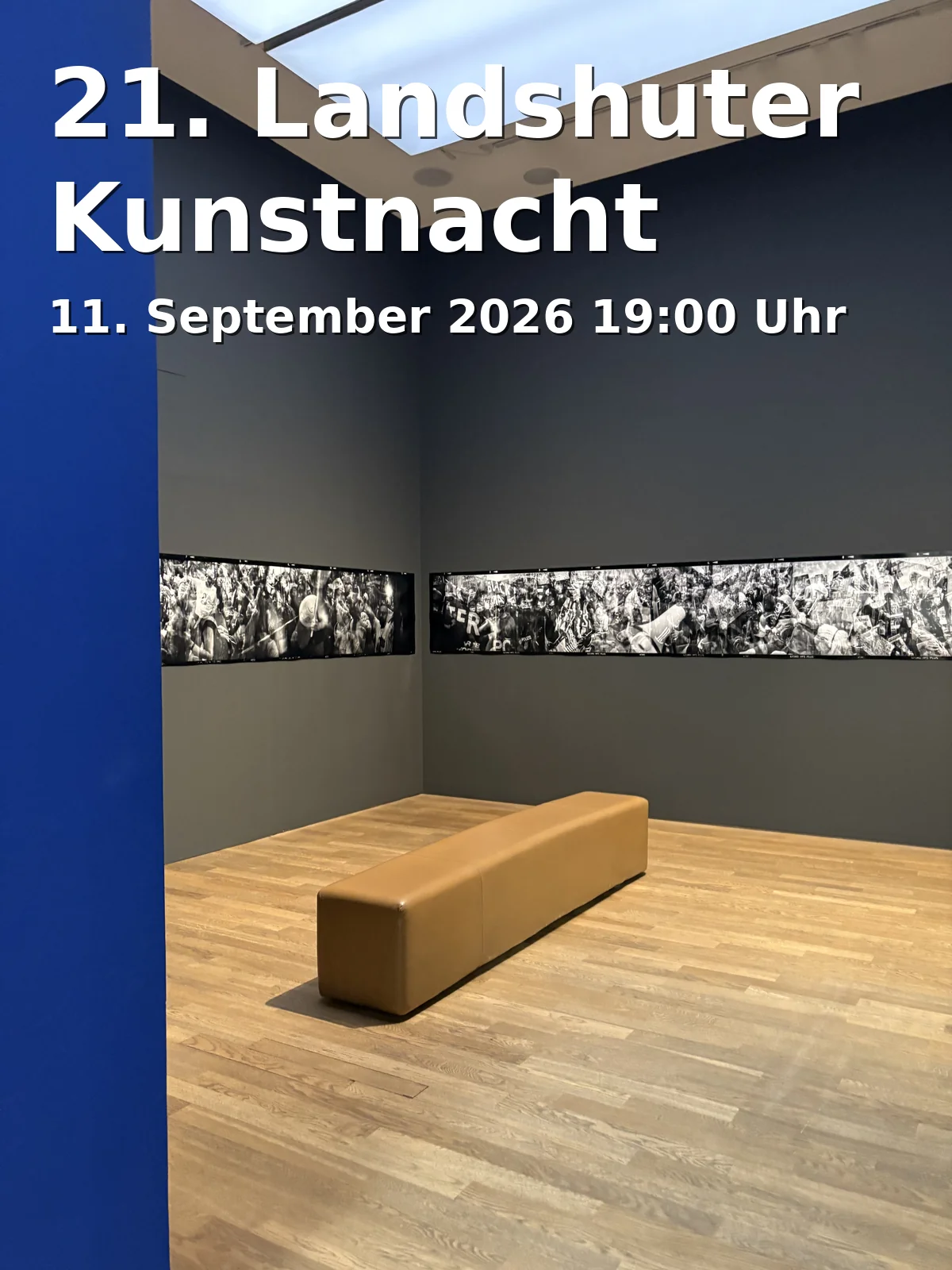
Landshut becomes the stage for contemporary art: Vernissages, galleries, and museums await you on 11.09.2026. Free, inspiring, close-up. #LandshutArtNight
Open Monument Day in Landshut
Landshut opens its monuments: churches, monasteries, and historical buildings await explorers. Experience for free on 13.09.2026. #MonumentProtection
Frequently Asked Questions
Reviews
Spring Power
27. November 2025
Beautiful old town! Nice streets, buildings and places.
N D
22. February 2026
Worth visiting. So calm and beautiful.
vijaya kumar Rachuri
17. March 2026
OldTown street, Cafés, ice cream, clothing, footwear, variety stores, good footfall.
Pasan Sensouk
7. July 2024
Beautiful old town of Landshut where shops, restaurants, bakeries are here. And a beautiful tall church looking over the castle on the hill.
Sya Jeff
30. May 2024
We went for shopping at More & More. Then ate lunch at Pamodoro Pizzeria. I had Tagliatelle al Salmone and strawberry drink with a yummy dessert I forgot the name 😅 But yeah, old town (Alstadt) seems always alive whatever time you go there.