
Nikolastraße 41, Landshut
Nikolastraße 41, 84034 Landshut, Germany
Catholic parish of St. Nikola | Events & Tickets
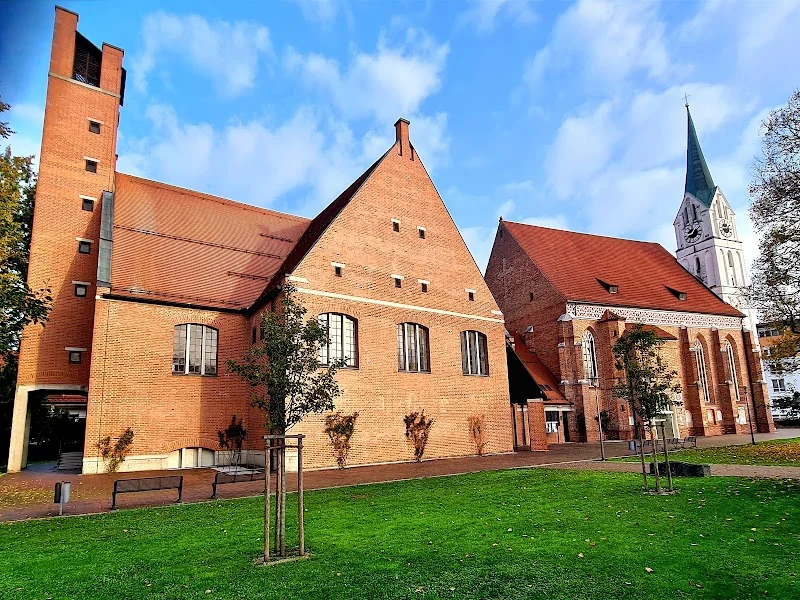
The parish of St. Nikola in Landshut is not an ordinary single building, but a developed ensemble of old and new church, embedded in a vibrant community life. The official parish belongs to the Diocese of Regensburg and sees itself as the mother parish for St. Wolfgang, St. Konrad, and St. Pius. Those looking for events, service times, or simply a place with a strong historical aura will find here a destination that connects spirituality, city history, and community culture. Old St. Nikola tells of the beginnings of the place, New St. Nikola of the awakening of the post-war period, and in between stands a parish that continuously publishes its dates, its parish newsletter, and its current notices. ([st-nikola.de](https://st-nikola.de/Kirche/))
Events, Dates, and Tickets
Those searching for events at St. Nikola will not only find church services but also a very broad concept of community life. The parish's homepage continuously features notices about actions and occasions such as wine festivals, charity evenings, and the night of open churches. In Nikola Current, specific dates are additionally mentioned, such as Stations of the Cross during Lent, Lenten meals, pilgrimage to St. Johannes in Piflas, May devotions, confirmation, the days of Holy Week and Easter, as well as the Nikola adult service. This quickly makes it clear that the parish does not view its annual program as a rigid list, but as a rhythm of liturgy, encounters, music, social engagement, and festive culture. This page is particularly relevant for users searching for the keyword events because it not only shows a single event but a whole sequence of dates that make the church year tangible in parish life. ([st-nikola.de](https://st-nikola.de/?utm_source=openai))
The keyword tickets is somewhat special for a Catholic parish because there is no traditional ticket sale for the regular attendance of church services, prayers, or devotions. That is why the distinction is important: While the church itself is primarily a place of prayer and liturgy, the topic of tickets appears in the context of the parish center through the Theater Nikola. There, performance dates, premieres, and ticket sales are explicitly communicated, including advance sales and phone numbers. This is valuable for SEO planning because seekers often mean either admission tickets for cultural evenings or general visitor information with the term tickets. The parish indirectly covers this need: Those looking for tickets will find suitable information at Theater Nikola; those seeking spiritual offerings will be guided through service times, parish newsletters, and current announcements. This creates a content bridge between sacred space, cultural offerings, and practical visitor orientation. ([theater-nikola.de](https://www.theater-nikola.de/index.php/saal))
Another important point is the visibility of the dates across multiple channels. The official website features sections such as Current, Parish Newsletter, Nikola Current, and Dates directly in the main menu. This is helpful for visitors because it keeps both short-term announcements and longer-prepared festivals accessible. Therefore, anyone looking for a parish with regular events receives a very clear signal: St. Nikola lives not only from its history but also from an active present. The event calendar shows the entire spectrum from sober administrative dates to ecclesiastical highlights and cultural evenings. This mix is particularly strong for local searches because it can simultaneously address the terms events, dates, parish newsletter, church service, and tickets without appearing artificial. ([st-nikola.de](https://st-nikola.de/Home/))
Service Times, Opening Hours, and Prayer Offers
The service times are one of the most important search terms related to St. Nikola because the parish communicates its liturgical offerings very clearly. The regular times distinguish between summer and winter schedules. In the summer, services take place on Mondays and Tuesdays at 7:00 PM, Wednesdays at 8:00 AM, Thursdays at 7:00 PM, Fridays at 8:00 AM, Saturdays at 7:00 PM, and Sundays at 9:00 AM and 10:30 AM, with the 10:30 AM mass being canceled during the summer holidays. In the winter, several dates shift to 6:30 PM, while Wednesday and Friday mornings remain at 8:00 AM; on Saturday, the evening service is at 5:00 PM. This seasonal order shows that the parish adapts its liturgical practice to the annual cycle without becoming confusing for visitors and parish members. ([st-nikola.de](https://st-nikola.de/de/Praktisches/Gottesdienstzeiten/?utm_source=openai))
Particularly helpful for visits is the clear separation of the two churches in everyday life. Sundays and holidays are usually celebrated in the parish church. Baptisms, funerals, and May devotions also take place in New St. Nikola. The mass celebrations on weekdays are, however, held in Old St. Nikola. There, the daily rosary is prayed, except on Sundays, and during Lent, the Stations of the Cross are held in Old St. Nikola. For people specifically looking for prayer times, devotions, or quiet moments, this is a significant advantage because the parish offers not just one church but two spiritual spaces that complement each other in everyday life. This makes the offer more flexible and also explains why search queries like rosary, May devotions, or opening hours fit so well with the parish. ([st-nikola.de](https://st-nikola.de/Kirche/))
The opening hours are also clearly regulated. Both churches are open daily from 8:00 AM until after the evening service or after the rosary prayer. Access is via the main entrance of the parish church on the south side; Old St. Nikola is accessible through the parish church. Therefore, anyone planning a visit can assume that the churches are open not only during fixed service times but also during the day. Additionally, practical details that are relevant for quiet visitors are available: Both in the parish church and in Old St. Nikola, there is a candle donation table where personal prayer requests can be symbolically accompanied. In Old St. Nikola, holy water for taking home can also be found at Christ in Rest. All this information transforms a historical church ensemble into a very usable place for prayer, sightseeing, and personal reflection. ([st-nikola.de](https://st-nikola.de/Kirche/))
The parish thus provides an offer that works for seekers with very different intentions. Some only want to know if the church is open. Others are specifically looking for the Sunday mass, the evening rosary, or a way to participate in the Stations of the Cross during Lent. Still, others may want to find a place for quiet and candle prayer spontaneously. St. Nikola addresses these different needs on its website with unusually clear information. Especially in local SEO, this is a strong signal because the usage intentions do not have to be played against each other. The parish connects openness, liturgy, and visitor experience in such a way that both locals and guests quickly understand when which form of participation makes sense. ([st-nikola.de](https://st-nikola.de/Kirche/))
Old St. Nikola, New St. Nikola, and the History of the Parish
The history of St. Nikola extends far before the actual city history of Landshut. The current settlement in the Nikola district is significantly older than the city itself, which was founded in 1204. Already in late Roman times, there was a crossing of the Isar and a traffic junction at this location. This explains why the patron saint Nikolaus fits so well here as the protector of travelers: The church has always stood in an environment associated with movement, trade, transitions, and the need for protection. In the course of the city's founding, the settlement was later incorporated, and the church of St. Nikola was attached in 1232 to the Cistercian convent Seligenthal founded by Ludmilla. Thus, St. Nikola is not only religiously but also historically closely linked to the major lines of Landshut's development. Therefore, those searching for history will find here not only a church building but a key location in the city's emergence. ([st-nikola.de](https://st-nikola.de/Kirche/Chronik/))
Particularly fascinating is the architectural depth of Old St. Nikola. While written documents about the beginning of the parish's independence are missing, archaeological finds confirm a Romanesque predecessor building made of stone, dating back to the 11th or 12th century. There may have even been an older wooden predecessor. During renovation work in the 1990s, the foundations were uncovered, and in the so-called archaeological window, remnants of the old outer wall and the brick floor of the predecessor church can be viewed today. The open floor area is about five square meters large and makes the building history immediately visible. Thus, Old St. Nikola is not only a house of worship but also a monument that consolidates the various layers of Landshut's city and church history in one place. This deep insight makes the church particularly appealing to culture-interested visitors. ([st-nikola.de](https://st-nikola.de/Kirche/Chronik/))
In the 14th century, the church underwent a Gothic reconstruction, this time not merely as an extension of the Romanesque building but as a new structure over the existing one. The current form was finally completed in the late 15th century. Particularly impressive are the keystones in the choir vault: They depict Mary with the child, Saint Nikolaus, as well as the coats of arms of the city of Landshut, the convent of Seligenthal, Duke Georg the Rich, and his wife Hedwig of Poland. From these heraldic and historical references, the chronological placement of the completion of the construction can be derived quite precisely. The church is thus a document of architectural history that consists not only of stone but also of symbols of city, power, monastery, and piety. For an SEO page about an event and church location, this is an enormously valuable aspect because history does not remain abstract here but becomes directly readable in the space. ([st-nikola.de](https://st-nikola.de/Kirche/Chronik/))
The modern history is equally formative. On March 19, 1945, bombing raids in the vicinity of the Landshut main train station and the old town also affected St. Nikola. The cemetery around the church was devastated, the west facade collapsed, and large parts of the interior furnishings as well as the organ were lost. A memorial sign on the south facade keeps this destruction and the cemetery abandoned in 1913 in collective memory. Nevertheless, the church did not remain as a ruin: In 1966 and 1967, the new building of New St. Nikola was constructed on the site of the former cemetery west of the old church according to the plans of Professor Hans Döllgast from Munich. The consecration took place on October 1, 1967, and since then, New St. Nikola has been the main church of the parish. The contrast between the historical old church and the clear post-war building is not only architecturally exciting but also symbolic: Here, the past remains visible without being overshadowed by the present. ([st-nikola.de](https://st-nikola.de/Kirche/Chronik/))
The more recent restoration history is also significant. In 1975, the parish center was established to provide space for the growing parish life. When it became evident in 1993 that Old St. Nikola was at risk of collapse due to massive foundation damage, an extensive renovation began, during which the wooden foundation piles were replaced with a concrete foundation, masonry and roof structure were secured, and the historical structures were carefully renewed. Supported by the city, the Free State, and the diocese, the church was reopened in 2001. The interior was redesigned to connect the house of worship and cultural space, and in 2003 the outdoor facilities were completed in their current form. This sequence of destruction, rescue, and reorganization gives St. Nikola a rare density. For visitors, the ensemble is therefore not only old or modern but a place where history visibly continues to work. ([st-nikola.de](https://st-nikola.de/Kirche/Chronik/))
Parish Center, Theater Nikola, and Vibrant Community Life
St. Nikola is not only a historical church but explicitly a lively and active parish. Already on the homepage, it is emphasized that everyone is welcome and that the community makes its life visible online. This is evident in offerings such as parish newsletters, Nikola Current, video archives, event calendars, and the various sections for groups and associations. From an SEO perspective, this is important because seekers with terms like parish center, community life, or events discover not just a building but a whole social structure. The church is thus not only a destination for visits but also a center for liturgy, education, youth work, and encounters. ([st-nikola.de](https://st-nikola.de/Home/))
A particularly vibrant part of this system is the parish center, which was established in 1975 in response to the growing parish life. The Theater Nikola also has its home there. The theater rooms are located in the parish center St. Nikola at Nikolastraße 41a, and on the theater association's page, the foyer, theater bar, and the integration into the church ensemble become visible. At the same time, the theater's calendar shows that there are not only rehearsal or side rooms but a real performance venue with premieres, regular performances, and advance sales. For seekers interested in tickets, cultural evenings, or local stage projects, this connection between the parish and the theater is particularly attractive. It makes St. Nikola a place where faith, culture, and volunteer work are not separated but intertwined. ([theater-nikola.de](https://www.theater-nikola.de/index.php/saal))
The group structure of the parish also emphasizes this character. The website features dedicated pages for Kolping, the Women's Association, and the Family Service Team; it also points to offerings for altar servers, children, and families. The parish thus communicates not only events from top to bottom but also a network of groups that carry the community in everyday life. For families, the services are particularly accessible because family services, toddler services, and guidance through the church year are regularly offered. This is an important content building block when the page is to be oriented towards keywords like events, parish newsletter, May devotions, or children's church. Because here it becomes clear that St. Nikola does not only know liturgical obligation dates but a variety of formats that appeal to different age groups and interests. ([st-nikola.de](https://www.st-nikola.de/Gruppen-und-Verbaende/Kolping/?utm_source=openai))
Additionally, the proximity to other facilities such as kindergarten and after-school care is explicitly mentioned on the homepage. This makes the parish particularly relevant in everyday life for parents, children, and volunteers. The church administration is also transparently presented: It is responsible for the maintenance of churches, parish house, parish center, and kindergarten, as well as for the material needs of pastoral care. This makes it visible that St. Nikola is not only spiritually but also organizationally sustainable. The parish is thus a functioning network that connects sacred space, social space, and event space. This mix is particularly strong for local search queries because it expands the classic church question about services and opening hours with everyday questions about dates, space, culture, and encounters. ([st-nikola.de](https://st-nikola.de/Pfarrteam/Kirchenverwaltung/?utm_source=openai))
Address, Contact, and Orientation in Landshut
For practical orientation, the address of the parish is clear: Nikolastraße 41 in 84034 Landshut. The parish office can be reached at the phone number 0871 / 962 65-0; the contact page also states the opening hours on Mondays, Tuesdays, Thursdays, and Fridays from 8:00 AM to 12:00 PM, as well as Fridays additionally from 2:00 PM to 4:00 PM, while Wednesdays are closed. This information is important because it helps seekers find a contact point immediately without detours. Anyone planning a visit can also orient themselves to the clear access situation of the churches: The main entrance of the parish church is on the south side, and Old St. Nikola is accessible through the parish church. Thus, the place is well connected despite its historical layering and is understandable not only for connoisseurs. ([st-nikola.de](https://st-nikola.de/Kontakt/?utm_source=openai))
The location in the district is also relevant. The Nikola district is described in local representations as the oldest city expansion area northwest of the old town beyond the Isar. This fits well with the historical role of the parish, as the church marks not only a point on the map but a developed urban and spiritual focus. For visitors, this means: St. Nikola is clearly located in Landshut, but is also closely connected to the older traffic and settlement history of the city. Therefore, if one is looking for directions, orientation, or Landshut-specific context, the church is a particularly meaningful anchor point. The name Nikola refers not only to the district but also to a centuries-old connection of the Isar crossing, travelers, urban development, and ecclesiastical presence. ([st-nikola.de](https://st-nikola.de/Kirche/Chronik/))
For visitors with the keyword opening hours, it is especially important that the church is open not only for services. The parish explicitly emphasizes that both churches can be prayed in during the day, candles can be lit, and Old St. Nikola as well as the new parish church are intended as places for personal reflection. Thus, St. Nikola is not just a place for appointments but an open spiritual destination in everyday life. Therefore, anyone wishing to come for a specific mass, a devotion, an event, or simply for quiet sightseeing will find a clear structure: parish office for organizational questions, website for dates, and the churches themselves for immediate visits. This mix of digital overview and real accessibility is a strong signal for visitor-friendliness. ([st-nikola.de](https://st-nikola.de/Kirche/))
Sources:
Show moreShow less
Catholic parish of St. Nikola | Events & Tickets
The parish of St. Nikola in Landshut is not an ordinary single building, but a developed ensemble of old and new church, embedded in a vibrant community life. The official parish belongs to the Diocese of Regensburg and sees itself as the mother parish for St. Wolfgang, St. Konrad, and St. Pius. Those looking for events, service times, or simply a place with a strong historical aura will find here a destination that connects spirituality, city history, and community culture. Old St. Nikola tells of the beginnings of the place, New St. Nikola of the awakening of the post-war period, and in between stands a parish that continuously publishes its dates, its parish newsletter, and its current notices. ([st-nikola.de](https://st-nikola.de/Kirche/))
Events, Dates, and Tickets
Those searching for events at St. Nikola will not only find church services but also a very broad concept of community life. The parish's homepage continuously features notices about actions and occasions such as wine festivals, charity evenings, and the night of open churches. In Nikola Current, specific dates are additionally mentioned, such as Stations of the Cross during Lent, Lenten meals, pilgrimage to St. Johannes in Piflas, May devotions, confirmation, the days of Holy Week and Easter, as well as the Nikola adult service. This quickly makes it clear that the parish does not view its annual program as a rigid list, but as a rhythm of liturgy, encounters, music, social engagement, and festive culture. This page is particularly relevant for users searching for the keyword events because it not only shows a single event but a whole sequence of dates that make the church year tangible in parish life. ([st-nikola.de](https://st-nikola.de/?utm_source=openai))
The keyword tickets is somewhat special for a Catholic parish because there is no traditional ticket sale for the regular attendance of church services, prayers, or devotions. That is why the distinction is important: While the church itself is primarily a place of prayer and liturgy, the topic of tickets appears in the context of the parish center through the Theater Nikola. There, performance dates, premieres, and ticket sales are explicitly communicated, including advance sales and phone numbers. This is valuable for SEO planning because seekers often mean either admission tickets for cultural evenings or general visitor information with the term tickets. The parish indirectly covers this need: Those looking for tickets will find suitable information at Theater Nikola; those seeking spiritual offerings will be guided through service times, parish newsletters, and current announcements. This creates a content bridge between sacred space, cultural offerings, and practical visitor orientation. ([theater-nikola.de](https://www.theater-nikola.de/index.php/saal))
Another important point is the visibility of the dates across multiple channels. The official website features sections such as Current, Parish Newsletter, Nikola Current, and Dates directly in the main menu. This is helpful for visitors because it keeps both short-term announcements and longer-prepared festivals accessible. Therefore, anyone looking for a parish with regular events receives a very clear signal: St. Nikola lives not only from its history but also from an active present. The event calendar shows the entire spectrum from sober administrative dates to ecclesiastical highlights and cultural evenings. This mix is particularly strong for local searches because it can simultaneously address the terms events, dates, parish newsletter, church service, and tickets without appearing artificial. ([st-nikola.de](https://st-nikola.de/Home/))
Service Times, Opening Hours, and Prayer Offers
The service times are one of the most important search terms related to St. Nikola because the parish communicates its liturgical offerings very clearly. The regular times distinguish between summer and winter schedules. In the summer, services take place on Mondays and Tuesdays at 7:00 PM, Wednesdays at 8:00 AM, Thursdays at 7:00 PM, Fridays at 8:00 AM, Saturdays at 7:00 PM, and Sundays at 9:00 AM and 10:30 AM, with the 10:30 AM mass being canceled during the summer holidays. In the winter, several dates shift to 6:30 PM, while Wednesday and Friday mornings remain at 8:00 AM; on Saturday, the evening service is at 5:00 PM. This seasonal order shows that the parish adapts its liturgical practice to the annual cycle without becoming confusing for visitors and parish members. ([st-nikola.de](https://st-nikola.de/de/Praktisches/Gottesdienstzeiten/?utm_source=openai))
Particularly helpful for visits is the clear separation of the two churches in everyday life. Sundays and holidays are usually celebrated in the parish church. Baptisms, funerals, and May devotions also take place in New St. Nikola. The mass celebrations on weekdays are, however, held in Old St. Nikola. There, the daily rosary is prayed, except on Sundays, and during Lent, the Stations of the Cross are held in Old St. Nikola. For people specifically looking for prayer times, devotions, or quiet moments, this is a significant advantage because the parish offers not just one church but two spiritual spaces that complement each other in everyday life. This makes the offer more flexible and also explains why search queries like rosary, May devotions, or opening hours fit so well with the parish. ([st-nikola.de](https://st-nikola.de/Kirche/))
The opening hours are also clearly regulated. Both churches are open daily from 8:00 AM until after the evening service or after the rosary prayer. Access is via the main entrance of the parish church on the south side; Old St. Nikola is accessible through the parish church. Therefore, anyone planning a visit can assume that the churches are open not only during fixed service times but also during the day. Additionally, practical details that are relevant for quiet visitors are available: Both in the parish church and in Old St. Nikola, there is a candle donation table where personal prayer requests can be symbolically accompanied. In Old St. Nikola, holy water for taking home can also be found at Christ in Rest. All this information transforms a historical church ensemble into a very usable place for prayer, sightseeing, and personal reflection. ([st-nikola.de](https://st-nikola.de/Kirche/))
The parish thus provides an offer that works for seekers with very different intentions. Some only want to know if the church is open. Others are specifically looking for the Sunday mass, the evening rosary, or a way to participate in the Stations of the Cross during Lent. Still, others may want to find a place for quiet and candle prayer spontaneously. St. Nikola addresses these different needs on its website with unusually clear information. Especially in local SEO, this is a strong signal because the usage intentions do not have to be played against each other. The parish connects openness, liturgy, and visitor experience in such a way that both locals and guests quickly understand when which form of participation makes sense. ([st-nikola.de](https://st-nikola.de/Kirche/))
Old St. Nikola, New St. Nikola, and the History of the Parish
The history of St. Nikola extends far before the actual city history of Landshut. The current settlement in the Nikola district is significantly older than the city itself, which was founded in 1204. Already in late Roman times, there was a crossing of the Isar and a traffic junction at this location. This explains why the patron saint Nikolaus fits so well here as the protector of travelers: The church has always stood in an environment associated with movement, trade, transitions, and the need for protection. In the course of the city's founding, the settlement was later incorporated, and the church of St. Nikola was attached in 1232 to the Cistercian convent Seligenthal founded by Ludmilla. Thus, St. Nikola is not only religiously but also historically closely linked to the major lines of Landshut's development. Therefore, those searching for history will find here not only a church building but a key location in the city's emergence. ([st-nikola.de](https://st-nikola.de/Kirche/Chronik/))
Particularly fascinating is the architectural depth of Old St. Nikola. While written documents about the beginning of the parish's independence are missing, archaeological finds confirm a Romanesque predecessor building made of stone, dating back to the 11th or 12th century. There may have even been an older wooden predecessor. During renovation work in the 1990s, the foundations were uncovered, and in the so-called archaeological window, remnants of the old outer wall and the brick floor of the predecessor church can be viewed today. The open floor area is about five square meters large and makes the building history immediately visible. Thus, Old St. Nikola is not only a house of worship but also a monument that consolidates the various layers of Landshut's city and church history in one place. This deep insight makes the church particularly appealing to culture-interested visitors. ([st-nikola.de](https://st-nikola.de/Kirche/Chronik/))
In the 14th century, the church underwent a Gothic reconstruction, this time not merely as an extension of the Romanesque building but as a new structure over the existing one. The current form was finally completed in the late 15th century. Particularly impressive are the keystones in the choir vault: They depict Mary with the child, Saint Nikolaus, as well as the coats of arms of the city of Landshut, the convent of Seligenthal, Duke Georg the Rich, and his wife Hedwig of Poland. From these heraldic and historical references, the chronological placement of the completion of the construction can be derived quite precisely. The church is thus a document of architectural history that consists not only of stone but also of symbols of city, power, monastery, and piety. For an SEO page about an event and church location, this is an enormously valuable aspect because history does not remain abstract here but becomes directly readable in the space. ([st-nikola.de](https://st-nikola.de/Kirche/Chronik/))
The modern history is equally formative. On March 19, 1945, bombing raids in the vicinity of the Landshut main train station and the old town also affected St. Nikola. The cemetery around the church was devastated, the west facade collapsed, and large parts of the interior furnishings as well as the organ were lost. A memorial sign on the south facade keeps this destruction and the cemetery abandoned in 1913 in collective memory. Nevertheless, the church did not remain as a ruin: In 1966 and 1967, the new building of New St. Nikola was constructed on the site of the former cemetery west of the old church according to the plans of Professor Hans Döllgast from Munich. The consecration took place on October 1, 1967, and since then, New St. Nikola has been the main church of the parish. The contrast between the historical old church and the clear post-war building is not only architecturally exciting but also symbolic: Here, the past remains visible without being overshadowed by the present. ([st-nikola.de](https://st-nikola.de/Kirche/Chronik/))
The more recent restoration history is also significant. In 1975, the parish center was established to provide space for the growing parish life. When it became evident in 1993 that Old St. Nikola was at risk of collapse due to massive foundation damage, an extensive renovation began, during which the wooden foundation piles were replaced with a concrete foundation, masonry and roof structure were secured, and the historical structures were carefully renewed. Supported by the city, the Free State, and the diocese, the church was reopened in 2001. The interior was redesigned to connect the house of worship and cultural space, and in 2003 the outdoor facilities were completed in their current form. This sequence of destruction, rescue, and reorganization gives St. Nikola a rare density. For visitors, the ensemble is therefore not only old or modern but a place where history visibly continues to work. ([st-nikola.de](https://st-nikola.de/Kirche/Chronik/))
Parish Center, Theater Nikola, and Vibrant Community Life
St. Nikola is not only a historical church but explicitly a lively and active parish. Already on the homepage, it is emphasized that everyone is welcome and that the community makes its life visible online. This is evident in offerings such as parish newsletters, Nikola Current, video archives, event calendars, and the various sections for groups and associations. From an SEO perspective, this is important because seekers with terms like parish center, community life, or events discover not just a building but a whole social structure. The church is thus not only a destination for visits but also a center for liturgy, education, youth work, and encounters. ([st-nikola.de](https://st-nikola.de/Home/))
A particularly vibrant part of this system is the parish center, which was established in 1975 in response to the growing parish life. The Theater Nikola also has its home there. The theater rooms are located in the parish center St. Nikola at Nikolastraße 41a, and on the theater association's page, the foyer, theater bar, and the integration into the church ensemble become visible. At the same time, the theater's calendar shows that there are not only rehearsal or side rooms but a real performance venue with premieres, regular performances, and advance sales. For seekers interested in tickets, cultural evenings, or local stage projects, this connection between the parish and the theater is particularly attractive. It makes St. Nikola a place where faith, culture, and volunteer work are not separated but intertwined. ([theater-nikola.de](https://www.theater-nikola.de/index.php/saal))
The group structure of the parish also emphasizes this character. The website features dedicated pages for Kolping, the Women's Association, and the Family Service Team; it also points to offerings for altar servers, children, and families. The parish thus communicates not only events from top to bottom but also a network of groups that carry the community in everyday life. For families, the services are particularly accessible because family services, toddler services, and guidance through the church year are regularly offered. This is an important content building block when the page is to be oriented towards keywords like events, parish newsletter, May devotions, or children's church. Because here it becomes clear that St. Nikola does not only know liturgical obligation dates but a variety of formats that appeal to different age groups and interests. ([st-nikola.de](https://www.st-nikola.de/Gruppen-und-Verbaende/Kolping/?utm_source=openai))
Additionally, the proximity to other facilities such as kindergarten and after-school care is explicitly mentioned on the homepage. This makes the parish particularly relevant in everyday life for parents, children, and volunteers. The church administration is also transparently presented: It is responsible for the maintenance of churches, parish house, parish center, and kindergarten, as well as for the material needs of pastoral care. This makes it visible that St. Nikola is not only spiritually but also organizationally sustainable. The parish is thus a functioning network that connects sacred space, social space, and event space. This mix is particularly strong for local search queries because it expands the classic church question about services and opening hours with everyday questions about dates, space, culture, and encounters. ([st-nikola.de](https://st-nikola.de/Pfarrteam/Kirchenverwaltung/?utm_source=openai))
Address, Contact, and Orientation in Landshut
For practical orientation, the address of the parish is clear: Nikolastraße 41 in 84034 Landshut. The parish office can be reached at the phone number 0871 / 962 65-0; the contact page also states the opening hours on Mondays, Tuesdays, Thursdays, and Fridays from 8:00 AM to 12:00 PM, as well as Fridays additionally from 2:00 PM to 4:00 PM, while Wednesdays are closed. This information is important because it helps seekers find a contact point immediately without detours. Anyone planning a visit can also orient themselves to the clear access situation of the churches: The main entrance of the parish church is on the south side, and Old St. Nikola is accessible through the parish church. Thus, the place is well connected despite its historical layering and is understandable not only for connoisseurs. ([st-nikola.de](https://st-nikola.de/Kontakt/?utm_source=openai))
The location in the district is also relevant. The Nikola district is described in local representations as the oldest city expansion area northwest of the old town beyond the Isar. This fits well with the historical role of the parish, as the church marks not only a point on the map but a developed urban and spiritual focus. For visitors, this means: St. Nikola is clearly located in Landshut, but is also closely connected to the older traffic and settlement history of the city. Therefore, if one is looking for directions, orientation, or Landshut-specific context, the church is a particularly meaningful anchor point. The name Nikola refers not only to the district but also to a centuries-old connection of the Isar crossing, travelers, urban development, and ecclesiastical presence. ([st-nikola.de](https://st-nikola.de/Kirche/Chronik/))
For visitors with the keyword opening hours, it is especially important that the church is open not only for services. The parish explicitly emphasizes that both churches can be prayed in during the day, candles can be lit, and Old St. Nikola as well as the new parish church are intended as places for personal reflection. Thus, St. Nikola is not just a place for appointments but an open spiritual destination in everyday life. Therefore, anyone wishing to come for a specific mass, a devotion, an event, or simply for quiet sightseeing will find a clear structure: parish office for organizational questions, website for dates, and the churches themselves for immediate visits. This mix of digital overview and real accessibility is a strong signal for visitor-friendliness. ([st-nikola.de](https://st-nikola.de/Kirche/))
Sources:
Catholic parish of St. Nikola | Events & Tickets
The parish of St. Nikola in Landshut is not an ordinary single building, but a developed ensemble of old and new church, embedded in a vibrant community life. The official parish belongs to the Diocese of Regensburg and sees itself as the mother parish for St. Wolfgang, St. Konrad, and St. Pius. Those looking for events, service times, or simply a place with a strong historical aura will find here a destination that connects spirituality, city history, and community culture. Old St. Nikola tells of the beginnings of the place, New St. Nikola of the awakening of the post-war period, and in between stands a parish that continuously publishes its dates, its parish newsletter, and its current notices. ([st-nikola.de](https://st-nikola.de/Kirche/))
Events, Dates, and Tickets
Those searching for events at St. Nikola will not only find church services but also a very broad concept of community life. The parish's homepage continuously features notices about actions and occasions such as wine festivals, charity evenings, and the night of open churches. In Nikola Current, specific dates are additionally mentioned, such as Stations of the Cross during Lent, Lenten meals, pilgrimage to St. Johannes in Piflas, May devotions, confirmation, the days of Holy Week and Easter, as well as the Nikola adult service. This quickly makes it clear that the parish does not view its annual program as a rigid list, but as a rhythm of liturgy, encounters, music, social engagement, and festive culture. This page is particularly relevant for users searching for the keyword events because it not only shows a single event but a whole sequence of dates that make the church year tangible in parish life. ([st-nikola.de](https://st-nikola.de/?utm_source=openai))
The keyword tickets is somewhat special for a Catholic parish because there is no traditional ticket sale for the regular attendance of church services, prayers, or devotions. That is why the distinction is important: While the church itself is primarily a place of prayer and liturgy, the topic of tickets appears in the context of the parish center through the Theater Nikola. There, performance dates, premieres, and ticket sales are explicitly communicated, including advance sales and phone numbers. This is valuable for SEO planning because seekers often mean either admission tickets for cultural evenings or general visitor information with the term tickets. The parish indirectly covers this need: Those looking for tickets will find suitable information at Theater Nikola; those seeking spiritual offerings will be guided through service times, parish newsletters, and current announcements. This creates a content bridge between sacred space, cultural offerings, and practical visitor orientation. ([theater-nikola.de](https://www.theater-nikola.de/index.php/saal))
Another important point is the visibility of the dates across multiple channels. The official website features sections such as Current, Parish Newsletter, Nikola Current, and Dates directly in the main menu. This is helpful for visitors because it keeps both short-term announcements and longer-prepared festivals accessible. Therefore, anyone looking for a parish with regular events receives a very clear signal: St. Nikola lives not only from its history but also from an active present. The event calendar shows the entire spectrum from sober administrative dates to ecclesiastical highlights and cultural evenings. This mix is particularly strong for local searches because it can simultaneously address the terms events, dates, parish newsletter, church service, and tickets without appearing artificial. ([st-nikola.de](https://st-nikola.de/Home/))
Service Times, Opening Hours, and Prayer Offers
The service times are one of the most important search terms related to St. Nikola because the parish communicates its liturgical offerings very clearly. The regular times distinguish between summer and winter schedules. In the summer, services take place on Mondays and Tuesdays at 7:00 PM, Wednesdays at 8:00 AM, Thursdays at 7:00 PM, Fridays at 8:00 AM, Saturdays at 7:00 PM, and Sundays at 9:00 AM and 10:30 AM, with the 10:30 AM mass being canceled during the summer holidays. In the winter, several dates shift to 6:30 PM, while Wednesday and Friday mornings remain at 8:00 AM; on Saturday, the evening service is at 5:00 PM. This seasonal order shows that the parish adapts its liturgical practice to the annual cycle without becoming confusing for visitors and parish members. ([st-nikola.de](https://st-nikola.de/de/Praktisches/Gottesdienstzeiten/?utm_source=openai))
Particularly helpful for visits is the clear separation of the two churches in everyday life. Sundays and holidays are usually celebrated in the parish church. Baptisms, funerals, and May devotions also take place in New St. Nikola. The mass celebrations on weekdays are, however, held in Old St. Nikola. There, the daily rosary is prayed, except on Sundays, and during Lent, the Stations of the Cross are held in Old St. Nikola. For people specifically looking for prayer times, devotions, or quiet moments, this is a significant advantage because the parish offers not just one church but two spiritual spaces that complement each other in everyday life. This makes the offer more flexible and also explains why search queries like rosary, May devotions, or opening hours fit so well with the parish. ([st-nikola.de](https://st-nikola.de/Kirche/))
The opening hours are also clearly regulated. Both churches are open daily from 8:00 AM until after the evening service or after the rosary prayer. Access is via the main entrance of the parish church on the south side; Old St. Nikola is accessible through the parish church. Therefore, anyone planning a visit can assume that the churches are open not only during fixed service times but also during the day. Additionally, practical details that are relevant for quiet visitors are available: Both in the parish church and in Old St. Nikola, there is a candle donation table where personal prayer requests can be symbolically accompanied. In Old St. Nikola, holy water for taking home can also be found at Christ in Rest. All this information transforms a historical church ensemble into a very usable place for prayer, sightseeing, and personal reflection. ([st-nikola.de](https://st-nikola.de/Kirche/))
The parish thus provides an offer that works for seekers with very different intentions. Some only want to know if the church is open. Others are specifically looking for the Sunday mass, the evening rosary, or a way to participate in the Stations of the Cross during Lent. Still, others may want to find a place for quiet and candle prayer spontaneously. St. Nikola addresses these different needs on its website with unusually clear information. Especially in local SEO, this is a strong signal because the usage intentions do not have to be played against each other. The parish connects openness, liturgy, and visitor experience in such a way that both locals and guests quickly understand when which form of participation makes sense. ([st-nikola.de](https://st-nikola.de/Kirche/))
Old St. Nikola, New St. Nikola, and the History of the Parish
The history of St. Nikola extends far before the actual city history of Landshut. The current settlement in the Nikola district is significantly older than the city itself, which was founded in 1204. Already in late Roman times, there was a crossing of the Isar and a traffic junction at this location. This explains why the patron saint Nikolaus fits so well here as the protector of travelers: The church has always stood in an environment associated with movement, trade, transitions, and the need for protection. In the course of the city's founding, the settlement was later incorporated, and the church of St. Nikola was attached in 1232 to the Cistercian convent Seligenthal founded by Ludmilla. Thus, St. Nikola is not only religiously but also historically closely linked to the major lines of Landshut's development. Therefore, those searching for history will find here not only a church building but a key location in the city's emergence. ([st-nikola.de](https://st-nikola.de/Kirche/Chronik/))
Particularly fascinating is the architectural depth of Old St. Nikola. While written documents about the beginning of the parish's independence are missing, archaeological finds confirm a Romanesque predecessor building made of stone, dating back to the 11th or 12th century. There may have even been an older wooden predecessor. During renovation work in the 1990s, the foundations were uncovered, and in the so-called archaeological window, remnants of the old outer wall and the brick floor of the predecessor church can be viewed today. The open floor area is about five square meters large and makes the building history immediately visible. Thus, Old St. Nikola is not only a house of worship but also a monument that consolidates the various layers of Landshut's city and church history in one place. This deep insight makes the church particularly appealing to culture-interested visitors. ([st-nikola.de](https://st-nikola.de/Kirche/Chronik/))
In the 14th century, the church underwent a Gothic reconstruction, this time not merely as an extension of the Romanesque building but as a new structure over the existing one. The current form was finally completed in the late 15th century. Particularly impressive are the keystones in the choir vault: They depict Mary with the child, Saint Nikolaus, as well as the coats of arms of the city of Landshut, the convent of Seligenthal, Duke Georg the Rich, and his wife Hedwig of Poland. From these heraldic and historical references, the chronological placement of the completion of the construction can be derived quite precisely. The church is thus a document of architectural history that consists not only of stone but also of symbols of city, power, monastery, and piety. For an SEO page about an event and church location, this is an enormously valuable aspect because history does not remain abstract here but becomes directly readable in the space. ([st-nikola.de](https://st-nikola.de/Kirche/Chronik/))
The modern history is equally formative. On March 19, 1945, bombing raids in the vicinity of the Landshut main train station and the old town also affected St. Nikola. The cemetery around the church was devastated, the west facade collapsed, and large parts of the interior furnishings as well as the organ were lost. A memorial sign on the south facade keeps this destruction and the cemetery abandoned in 1913 in collective memory. Nevertheless, the church did not remain as a ruin: In 1966 and 1967, the new building of New St. Nikola was constructed on the site of the former cemetery west of the old church according to the plans of Professor Hans Döllgast from Munich. The consecration took place on October 1, 1967, and since then, New St. Nikola has been the main church of the parish. The contrast between the historical old church and the clear post-war building is not only architecturally exciting but also symbolic: Here, the past remains visible without being overshadowed by the present. ([st-nikola.de](https://st-nikola.de/Kirche/Chronik/))
The more recent restoration history is also significant. In 1975, the parish center was established to provide space for the growing parish life. When it became evident in 1993 that Old St. Nikola was at risk of collapse due to massive foundation damage, an extensive renovation began, during which the wooden foundation piles were replaced with a concrete foundation, masonry and roof structure were secured, and the historical structures were carefully renewed. Supported by the city, the Free State, and the diocese, the church was reopened in 2001. The interior was redesigned to connect the house of worship and cultural space, and in 2003 the outdoor facilities were completed in their current form. This sequence of destruction, rescue, and reorganization gives St. Nikola a rare density. For visitors, the ensemble is therefore not only old or modern but a place where history visibly continues to work. ([st-nikola.de](https://st-nikola.de/Kirche/Chronik/))
Parish Center, Theater Nikola, and Vibrant Community Life
St. Nikola is not only a historical church but explicitly a lively and active parish. Already on the homepage, it is emphasized that everyone is welcome and that the community makes its life visible online. This is evident in offerings such as parish newsletters, Nikola Current, video archives, event calendars, and the various sections for groups and associations. From an SEO perspective, this is important because seekers with terms like parish center, community life, or events discover not just a building but a whole social structure. The church is thus not only a destination for visits but also a center for liturgy, education, youth work, and encounters. ([st-nikola.de](https://st-nikola.de/Home/))
A particularly vibrant part of this system is the parish center, which was established in 1975 in response to the growing parish life. The Theater Nikola also has its home there. The theater rooms are located in the parish center St. Nikola at Nikolastraße 41a, and on the theater association's page, the foyer, theater bar, and the integration into the church ensemble become visible. At the same time, the theater's calendar shows that there are not only rehearsal or side rooms but a real performance venue with premieres, regular performances, and advance sales. For seekers interested in tickets, cultural evenings, or local stage projects, this connection between the parish and the theater is particularly attractive. It makes St. Nikola a place where faith, culture, and volunteer work are not separated but intertwined. ([theater-nikola.de](https://www.theater-nikola.de/index.php/saal))
The group structure of the parish also emphasizes this character. The website features dedicated pages for Kolping, the Women's Association, and the Family Service Team; it also points to offerings for altar servers, children, and families. The parish thus communicates not only events from top to bottom but also a network of groups that carry the community in everyday life. For families, the services are particularly accessible because family services, toddler services, and guidance through the church year are regularly offered. This is an important content building block when the page is to be oriented towards keywords like events, parish newsletter, May devotions, or children's church. Because here it becomes clear that St. Nikola does not only know liturgical obligation dates but a variety of formats that appeal to different age groups and interests. ([st-nikola.de](https://www.st-nikola.de/Gruppen-und-Verbaende/Kolping/?utm_source=openai))
Additionally, the proximity to other facilities such as kindergarten and after-school care is explicitly mentioned on the homepage. This makes the parish particularly relevant in everyday life for parents, children, and volunteers. The church administration is also transparently presented: It is responsible for the maintenance of churches, parish house, parish center, and kindergarten, as well as for the material needs of pastoral care. This makes it visible that St. Nikola is not only spiritually but also organizationally sustainable. The parish is thus a functioning network that connects sacred space, social space, and event space. This mix is particularly strong for local search queries because it expands the classic church question about services and opening hours with everyday questions about dates, space, culture, and encounters. ([st-nikola.de](https://st-nikola.de/Pfarrteam/Kirchenverwaltung/?utm_source=openai))
Address, Contact, and Orientation in Landshut
For practical orientation, the address of the parish is clear: Nikolastraße 41 in 84034 Landshut. The parish office can be reached at the phone number 0871 / 962 65-0; the contact page also states the opening hours on Mondays, Tuesdays, Thursdays, and Fridays from 8:00 AM to 12:00 PM, as well as Fridays additionally from 2:00 PM to 4:00 PM, while Wednesdays are closed. This information is important because it helps seekers find a contact point immediately without detours. Anyone planning a visit can also orient themselves to the clear access situation of the churches: The main entrance of the parish church is on the south side, and Old St. Nikola is accessible through the parish church. Thus, the place is well connected despite its historical layering and is understandable not only for connoisseurs. ([st-nikola.de](https://st-nikola.de/Kontakt/?utm_source=openai))
The location in the district is also relevant. The Nikola district is described in local representations as the oldest city expansion area northwest of the old town beyond the Isar. This fits well with the historical role of the parish, as the church marks not only a point on the map but a developed urban and spiritual focus. For visitors, this means: St. Nikola is clearly located in Landshut, but is also closely connected to the older traffic and settlement history of the city. Therefore, if one is looking for directions, orientation, or Landshut-specific context, the church is a particularly meaningful anchor point. The name Nikola refers not only to the district but also to a centuries-old connection of the Isar crossing, travelers, urban development, and ecclesiastical presence. ([st-nikola.de](https://st-nikola.de/Kirche/Chronik/))
For visitors with the keyword opening hours, it is especially important that the church is open not only for services. The parish explicitly emphasizes that both churches can be prayed in during the day, candles can be lit, and Old St. Nikola as well as the new parish church are intended as places for personal reflection. Thus, St. Nikola is not just a place for appointments but an open spiritual destination in everyday life. Therefore, anyone wishing to come for a specific mass, a devotion, an event, or simply for quiet sightseeing will find a clear structure: parish office for organizational questions, website for dates, and the churches themselves for immediate visits. This mix of digital overview and real accessibility is a strong signal for visitor-friendliness. ([st-nikola.de](https://st-nikola.de/Kirche/))
Sources:
Upcoming Events
No events found
Frequently Asked Questions
Reviews
Philipp Neubauer
11. July 2019
Nice garden
Rico Henning
10. February 2025
Unfortunately, only the Catholic church was open today; the parish church was locked... Modernity has opened, but antiquity remains inaccessible... A graceful house of worship...
Mary Lu
29. December 2022
A very beautiful church, consisting of both old and modern sections. The pastor is very personable and holds a wonderful service. The highlight on December 24th is always the hymn "Silent Night" at the end.
Adel Armanous
13. June 2021
A day trip to Landshut The church is beautiful very many visitors simply wonderful
Stephan Geiner
27. May 2023
A church in the oldest part of Landshut's settlement history. New and old together in one building, a community center. Especially in times of war, it becomes clear that peace "dwells" more in our churches than in our "war-participating" forms of government. I am glad that Christian churches still exist; the monasteries and with them, religious orders, are disappearing more and more. I hope that the Christian character will remain in our city for a long time to come.