
Ulrike Rosenbach
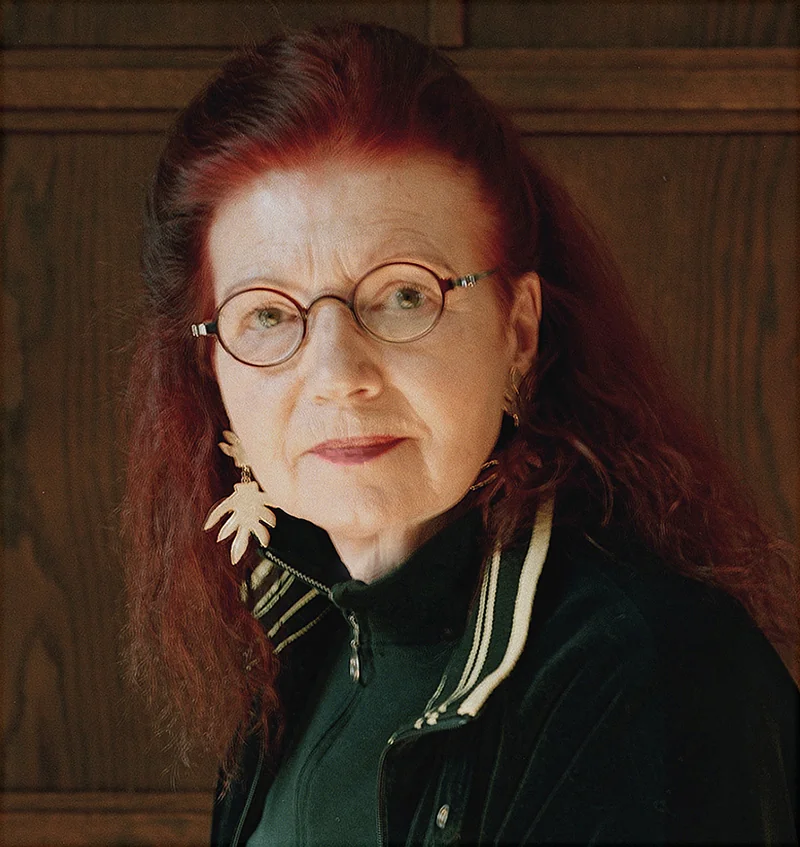
Image from Wikipedia
Image from Wikipedia
Ulrike Rosenbach – Pioneer of Video Art, Performances, and Feminist Media Art
An Artist Who Has Permanently Changed the Perspective on Body, Image, and Role
Ulrike Rosenbach, born in early January 1943 in Bad Salzdetfurth near Hildesheim, is one of the most influential figures in German media art. She was among the first female artists to utilize video as an independent medium for artistic expression, developing a body of work that connects performance, photography, installation, and feminist art criticism. Her name is synonymous with an early, consistent exploration of the body as a carrier of images, a stage, and a site of societal attributions. ([en.wikipedia.org](https://en.wikipedia.org/wiki/Ulrike_Rosenbach?utm_source=openai))
Biographical Roots and Artistic Breakthrough
Rosenbach's artistic development is closely linked to the upheavals of the 1970s, when performance art and video art were barely established in Germany. In her own reflections, she describes how video and performance were inseparable from her work at that time and how she shifted away from classical sculpture towards actions where process became more important than the finished object. This attitude made her an early representative of an open, experimental concept of art, in which perception, time, and physicality play a central role. ([ulrike-rosenbach.de](https://www.ulrike-rosenbach.de/lebenslauf/texte/videokunst-und-performance-aktion-im-werk-von-ulrike-rosenbach/?utm_source=openai))
The move to media art for Rosenbach was never just a technical shift but an aesthetic and political decision. Her work raises questions about representation, gender images, and the power of the image, which is precisely where its enduring relevance lies. The artist connected reflection and action, theory and sensual presence, thus creating works that resonate far beyond the moment of their creation. ([ulrike-rosenbach.de](https://www.ulrike-rosenbach.de/lebenslauf/texte/zum-werk-ulrike-rosenbachs/))
Video Art as Artistic Language
Rosenbach's video works are not just mere recordings of performances, but independent visual compositions. On her website, she describes her works as collages of language, music, movement, objects, and drawings; the video dramaturgy also follows this principle of montage. In works like "The Wind of My Dreams" or "The Eulenspiegel Woman," image fragments, computer-generated elements, and sound layers intertwine to create open spaces of meaning that the audience must actively assemble. ([ulrike-rosenbach.de](https://www.ulrike-rosenbach.de/lebenslauf/texte/zum-werk-ulrike-rosenbachs/))
This openness is what defines the significance of her oeuvre. Rosenbach does not conceive of video as a linear narrative medium but as a reflexive form where perception itself becomes a subject. Her works create tension between the visible body and the construction of the gaze; between immediate action and later reception. In doing so, she has developed a visual language that is simultaneously analytical, poetic, and provocative. ([ulrike-rosenbach.de](https://www.ulrike-rosenbach.de/lebenslauf/texte/zum-werk-ulrike-rosenbachs/))
Performance, Body, and Feminist Perspective
A crucial aspect of Rosenbach's career lies in her feminist art practice. In the 1970s, she worked in a field where performance art was still rare in Germany, and body-related actions often provoked discomfort. In hindsight, she recalls how these early live formats were perceived as new and radical. Rosenbach used her own body not for self-promotion but as a medium for critical analysis of role models and societal expectations. ([cafedeutschland.staedelmuseum.de](https://cafedeutschland.staedelmuseum.de/gespraeche/ulrike-rosenbach))
Her works are closely linked to the question of how female presence becomes visible in the art system. Exhibitions and collection presentations such as "Extreme Tension" at the Neue Nationalgalerie demonstrate that works like "Dance for a Woman" are still read as central contributions to feminist art. Thus, Rosenbach belongs to that generation of female artists who have significantly shifted the relationship between body, power, and representation. ([ulrike-rosenbach.de](https://www.ulrike-rosenbach.de/extreme-tension-in-der-neuen-nationalgalerie-berlin/?utm_source=openai))
Teaching, Theory, and Institutional Impact
Ulrike Rosenbach has not only worked as an artist but also as a professor and mediator of new media literacy. Her position as an educator made her an important voice in the institutional establishment of media art. The bibliographic entries on her website refer to a wide reception, to monographs, exhibition catalogs, and media theoretical publications that locate her work at the intersection of video, performance, photography, and installation. ([ulrike-rosenbach.de](https://www.ulrike-rosenbach.de/lebenslauf/bibliografie/))
Theoretically, her work also carries weight. Rosenbach draws on processes of perception, semantic shifts, and the openness of artistic signs. The texts about her work reveal how strongly she has been influenced by structuralist and semiological approaches. This combination of practice and reflection gives her art an intellectual depth that occupies a special place in the German-speaking art discourse. ([ulrike-rosenbach.de](https://www.ulrike-rosenbach.de/lebenslauf/texte/zum-werk-ulrike-rosenbachs/))
Development of Work, Exhibitions, and Current Visibility
Rosenbach's work has remained present over decades and has been revisited in numerous exhibitions and collection contexts. Her official website documents a strikingly vibrant exhibition activity extending into 2024 and 2025, including presentations at the Sprengel Museum Hannover, the Kunsthalle Bremen, the Staatsgalerie Stuttgart, and the Neue Nationalgalerie Berlin. The continuity of these exhibitions indicates that her oeuvre has not become museum-bound but is still actively discussed in today's context. ([ulrike-rosenbach.de](https://www.ulrike-rosenbach.de/?utm_source=openai))
It is particularly noteworthy how often younger curatorial formats place her work within the context of current debates around feminism, media imagery, and body politics. The exhibitions documented in 2024 and 2025 indicate an ongoing relevance that goes beyond her historical pioneering role. Rosenbach remains an artist whose works seem just as urgent today as when she first emerged in the 1970s. ([ulrike-rosenbach.de](https://www.ulrike-rosenbach.de/?utm_source=openai))
Discography, Cultural Influence, and Reception
In the narrower musical sense, Ulrike Rosenbach does not have a discography like a pop or jazz artist. Nonetheless, music plays an important role in her work as it is used as a compositional element in performance and video. In her own writings, she describes music as an equal component of the collage, as a material with its own communicative value. This makes it clear that sound in her oeuvre is not a mere accompaniment but a structuring medium. ([ulrike-rosenbach.de](https://www.ulrike-rosenbach.de/lebenslauf/texte/zum-werk-ulrike-rosenbachs/))
Her cultural influence lies primarily in the fact that she has significantly shaped the perspective on video art in Germany. Works such as "Dance for a Woman," "Binding Mask," or later media works now appear as key pieces in an art history that has redefined the female body as a site of artistic and societal engagement. Current collection presentations and monographs also indicate that Rosenbach counts among the historical reference points of the feminist avant-garde. ([ulrike-rosenbach.de](https://www.ulrike-rosenbach.de/maske/?utm_source=openai))
Style, Handwriting, and Artistic Development
Rosenbach's handwriting combines reduction, concept, and emotional presence. Her works are often precisely constructed while also being open to associations and breaks. This tension between formal control and poetic openness shapes her performance art as well as her video works. This is precisely where the endurance of her success lies: She creates images that do not conclude but rather provoke thought processes. ([ulrike-rosenbach.de](https://www.ulrike-rosenbach.de/lebenslauf/texte/zum-werk-ulrike-rosenbachs/))
Her artistic development tells of a consistent expansion of the medium. From early video to performative body actions to media-critical installations, a red thread runs through her work, which repeatedly questions the conditions of visibility. Ulrike Rosenbach does not only work with images; she examines their societal power. This makes her work a reference point for media art, performance, and feminist image politics. ([ulrike-rosenbach.de](https://www.ulrike-rosenbach.de/lebenslauf/texte/videokunst-und-performance-aktion-im-werk-von-ulrike-rosenbach/?utm_source=openai))
Conclusion: Why Ulrike Rosenbach Continues to Captivate
Ulrike Rosenbach is a key figure in German art history because she recognized early on that video, performance, and body politics belong together. Her work combines aesthetic radicalism with intellectual clarity and has significantly influenced the discourse on feminist media art. Those who view her works experience not just a retrospective but a still relevant engagement with power, perception, and identity. Her art remains compelling because it interrogates seeing itself and does not soothe the gaze but opens it. This oeuvre unfolds its special impact in the museum and in the live context of art mediation – a visit is worthwhile to experience the power of this pioneer directly. ([ulrike-rosenbach.de](https://www.ulrike-rosenbach.de/lebenslauf/texte/zum-werk-ulrike-rosenbachs/))
Official Channels of Ulrike Rosenbach:
- Instagram: No official profile found
- Facebook: No official profile found
- YouTube: No official profile found
- Spotify: No official profile found
- TikTok: No official profile found
Sources:
- Ulrike Rosenbach – Official Website
- Ulrike Rosenbach – Video Art and Performance Action in the Work of Ulrike Rosenbach
- Ulrike Rosenbach – About the Work of Ulrike Rosenbach
- Ulrike Rosenbach – Bibliography
- Städel Museum – Café Deutschland. In Conversation with Ulrike Rosenbach
- Ulrike Rosenbach – Paths to Media Art 1969–2004
- Ulrike Rosenbach – Extreme Tension in the Neue Nationalgalerie Berlin
- Wikipedia: Image and text source