
Tobias Christl
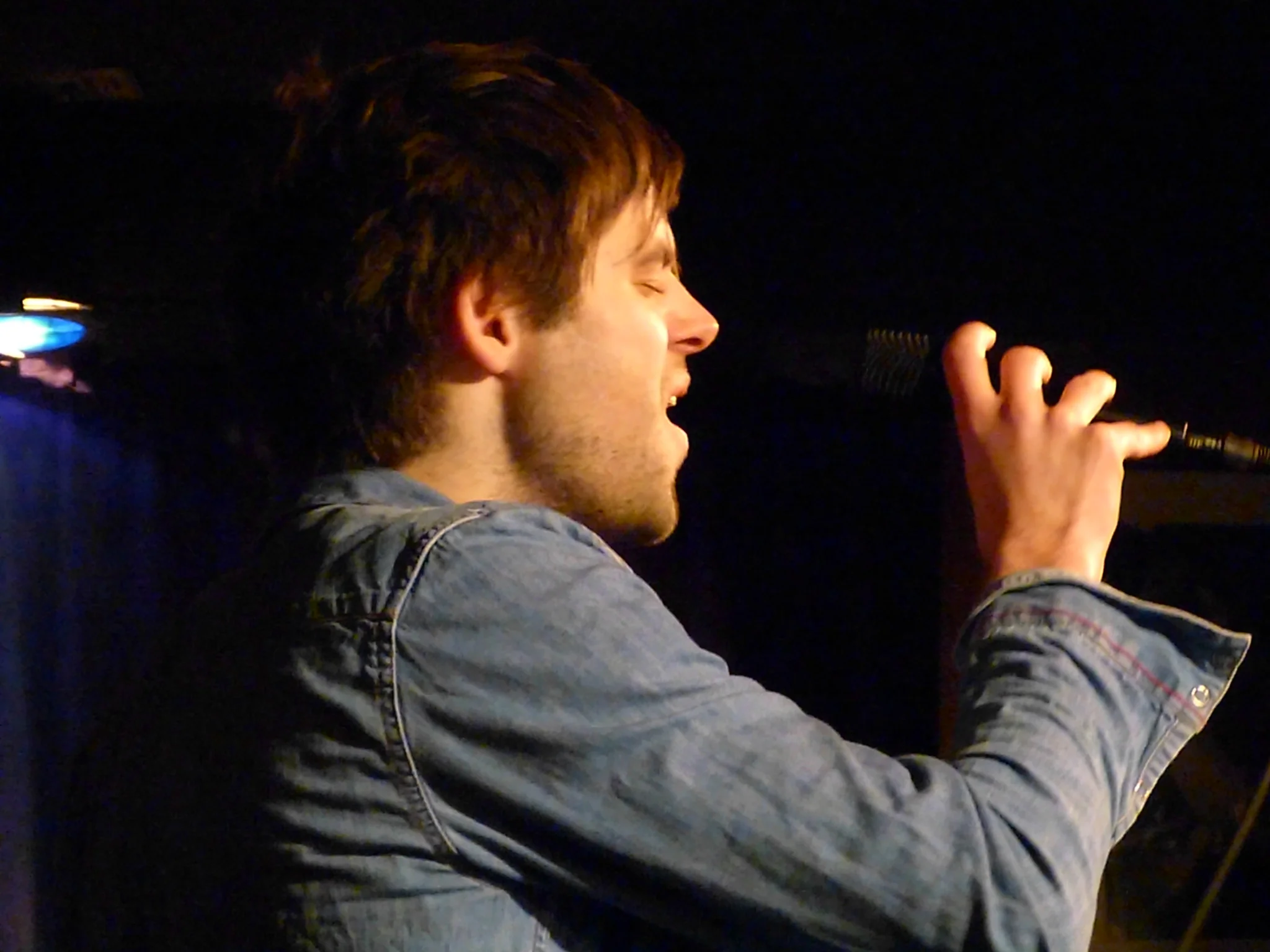
Image from Wikipedia
Image from Wikipedia
Tobias Christl – Voice, Vision, Transformation: An Artist Portrait Connecting Jazz, Pop, and Experimental Sound Art
A Singer Who Pushes Boundaries – The Sound World of Tobias Christl
Tobias Christl, born on March 7, 1978, is one of the most versatile voices in the German music scene. As a singer, songwriter, and composer, he masters the art of opening up genres and reinterpreting them: jazz vocal art meets pop aesthetics, improvisation collides with precise songwriting, sound exploration merges with grand melodies. His musical career spans from early a cappella successes to critically acclaimed band projects, in which he continually redefines the role of voice as an instrument. This artistic development, driven by a distinctive stage presence and a keen sense for arrangement and production, makes Christl a significant voice in contemporary jazz – and beyond.
Anyone who experiences Christl live quickly feels: Here, a singer shapes not only tones but also spaces. He molds syllables, breath, consonants, fluidifies words, leads them into the flow of improvised textures, and returns with clear, emotional refrains. Between intimacy and eruptive expressiveness, he creates a bridge that has thrilled concert audiences and critics for years. At the same time, he grounds his work in careful research, historical awareness, and stylistic curiosity – a profile that combines substance and brilliance.
Biographical Beginnings: Studies, Scholarship, Artistic Socialization
From 2001 to 2009, Christl studied singing and school music at the conservatories in Würzburg, Nuremberg, Cologne, and Weimar. Early on, a DAAD annual scholarship (2001) took him to New York, where encounters with improvisation and jazz traditions shaped his artistic development. This phase deepened both his technique and his understanding of form dramaturgy: He learned to use his voice as a narrative medium as well as a texture-providing instrument in complex soundscapes. Later, he passed on this knowledge through workshops and teaching, professionalizing his profile as an experienced vocal mentor in jazz and pop.
On stage, Christl worked in various contexts – from small formations to large ensembles. Collaborations with musicians from jazz, improvisational music, and pop sharpened his versatility. Cross-genre work was not a side note but rather a foundation: It inspired his sense of timing, phrasing, and the balance between composition and spontaneity – key qualities of his stage presence.
Artistic Development: Lieblingsband, Wildern, and the Idea of "Song Remodeling"
With Lieblingsband – an ensemble of leading Cologne improvisers – Christl developed a sound language that oscillates between lyrical transparency and energy-charged collective moments. Here, his compositional thinking is evident: pieces grow from motivic germ cells, shift between song forms and open passages, and integrate Dada resonances and sound-imitative elements. This music avoids simple labels and connects sound exploration with emotional directness.
The band Wildern became particularly formative. The project follows a distinct aesthetic approach: well-known pop and rock songs are not "covered" but deconstructed in the sense of recomposition, harmonically, rhythmically, and sonically shifted until a distinctive jazz interpretation emerges. This process – more transformation than tribute – positions Christl as both a vocalist and curator: He negotiates memory, nostalgia, and presence without ever tipping into retro. Thus, new readings emerge that assert “Jazz – period.” while still retaining echoes of pop history.
Breakthrough Moments and Awards: Visibility between Jazz and Pop
Among the early milestones are competition successes and festival appearances that strengthened his presence across various scenes. With the pop project Herbe Sahne, he won the German Music Video Award in 2012 (for the video “Flieger”) – a notable success that highlighted Christl's dual competence in songwriting and performance outside the jazz scene. In parallel, nominations in jazz and crossover contexts drew further attention to his work with Wildern and Lieblingsband. This intersection of artistic ambition and pop sensitivity opened doors to both cultural critiques and club stages.
The list of collaborations ranges from established jazz voices to instrumentalists from various schools. What matters less is the name than the aesthetic: Christl seeks partners who open spaces and allow for friction. From this friction, moments arise where voice and ensemble merge into a breathing entity – the core promise of his musical career.
Discography at a Glance: From “Dieb im eigenen Haus” to “WILDERN II”
Christl's discography reflects his artistic development with rare clarity. “Dieb im eigenen Haus” (2010) with Lieblingsband documents the early phase of the ensemble: melodic lines collide with branched harmonies, rock guitar colors the texture, while bass clarinet or saxophone engage in intimate duets with the voice. Critics highlighted the intelligent sound architecture and the nuanced interplay – an early indicator of Christl's signature style between vocal musicality and ensemble sound.
“Verschmelzung” (2013) represents a condensation of his own compositions. The production on Traumton organizes German texts, reduced-melodic seeds, and improvisational outbursts into a mosaic that brings together pop songwriting and advanced jazz aesthetics. Sound collages, feedback veils, and minimalist patterns stand alongside narrative arcs – an album title as a program: unification instead of delineation.
With “Wildern” (ACT Music, 2014), Christl conceptually engages in a dialogue with the pop canon. A-ha, Joy Division, Leonard Cohen, Simon & Garfunkel, or The Kinks are not nostalgically paraphrased but shifted in form, harmony, meter, and timbre so that new musical meanings emerge. Recording dates (June 2013), studio context, and high-profile contributors attest to the meticulousness in production and arrangement. The result: a statement on the permeability between pop history and improvised music.
His latest milestone “WILDERN II” is set to be released on November 14, 2025 (Unit Records) – a concentrated set of reinterpretations that tackle iconic songs (including George Michael, The Cure, Prefab Sprout, the Beatles) with raw proximity and formal clarity. The production accentuates edges, contrasts, and surprising turns; one only recognizes the originals upon second listening – precisely when Christl and the band have already transformed them into distinctive forms. The vinyl release and international distribution underscore the ambition to place this art of “re-imagining” even more prominently in today's context.
Style, Technique, and Aesthetics: The Voice as Instrument, the Song as Projection Space
Christl's vocal art thrives on timbral diversity, precise articulation, and instrumental flexibility. He applies falsetto brilliance against velvety lows, shifts from phonemic sound imitation into text-centered clarity, and uses micro-timing as a dramatic tool. In his arrangements, voices often appear layered – lead, doubled lines, heterophonic counter-voices – allowing an organic “choir” to unfold from a single throat. This production mindset – sensitive to microphones and spatial acoustics – shapes both studio work and live moments.
Harmonically, the music oscillates between modal openness and targeted tonal anchoring; rhythmically, shifted accents, stretched phrases, and contrapuntal interplay dominate the ensemble. The crucial element is the dramatic breath: songs often begin as miniature sketches, open up through improvisational bridges, and return in condensed form. This creates tension arcs that connect modern jazz strategies with the directness of good pop composition.
Cultural Influence and Context: Young German Jazz Generation, Cologne School, Collective Spirit
Christl's work is part of the tradition of a generation that understands jazz not as a stylistic enclave but as an open method. Growing up in Cologne and Berlin, he combines collective work with an individual signature. His integration into a vital musician network – from improvisation scenes to label and festival structures – strengthens his authority as an artist, curator, and mentor. The fact that his projects repeatedly gain international relevance is due to this blend of precision, willingness to take risks, and community practice.
At the same time, Christl's pop affinity demonstrates that cultural resonance spaces do not have to be thought of exclusively: When jazz retells the history of popular songs, it wins back listeners who find themselves in the tension between memory and the present. In this way, Christl helps keep the dialogue open between scenes, generations, and listening habits – with aesthetic consistency and palpable joy in transformation.
Live Experience: Stage Presence Between Intimacy and Energy
In concert, Christl merges narrative power with instrumental vocal leads. He takes spaces acoustically seriously, responds spontaneously to resonances, and explores the “in-between areas” with his band – those zones where volume, silence, and texture find a uniquely compelling dramaturgical coherence. Passages without words hold the same expressive power as text-centered verses: The voice becomes a sound sculpture, the music a physical experience. It is here that the immediacy that characterizes his performances develops.
His ensembles – from Lieblingsband to Wildern/WILDERN II – demonstrate live how subtly arranged structures coexist with open improvisation windows. Short, incisive motifs ignite impulses that coalesce in the collective. The result is concerts that engage both mind and body – a hallmark of modern stage art that broadens the definition of jazz without compromising its substance.
Conclusion: Why Listen to Tobias Christl Now – and Experience Him Live?
Tobias Christl makes it audible how vibrant the dialogue between jazz and pop can be when an artist combines experience, expertise, and a willingness to embrace gaps. His discography tells of continuous artistic development; his productions demonstrate stylistic confidence in composition, arrangement, and sound management; his concerts showcase a stage presence that touches and challenges. With “WILDERN II” (released on November 14, 2025, vinyl available from November 17, 2025), he places the art of re-imagining at the forefront of contemporary discourse – unmistakable, original, and relevant.
Anyone who loves music that tells stories, pushes boundaries, and still allows melodies to breathe should experience Tobias Christl live. The intensity of his voice, the intelligence of his arrangements, and the openness of his improvisations create a concert experience that lingers long after.
Official Channels of Tobias Christl:
- Instagram: No official profile found
- Facebook: No official profile found
- YouTube: No official profile found
- Spotify: No official profile found
- TikTok: No official profile found
Sources:
- Tobias Christl – Official Biography
- Tobias Christl – Record Store (Releases, Dates)
- ACT Music – Tobias Christl: Wildern (Album Page, Credits)
- Presto Music – WILDERN II (Unit Records, Release 14.11.2025)
- Apple Music – Tobias Christl (Artist Profile, Releases)
- Bandcamp – Tobias Christl: Verschmelzung (2013)
- Bandcamp – Herbe Sahne: Sorry, das Album (2014)
- Jazz thing – Review “Der Dieb im eigenen Haus” (2010)
- La Boîte à Musique – Wildern (Release Info, Label)
- Wikipedia: Tobias Christl – Image and Text Source
- SoundCloud – Tobias Christl (Music Community/Profile)
Upcoming Events
Tobias Christl – WILDERN II (Album Release)
WILDERN II in Kresslesmühle: Tobias Christl transforms pop into vibrant jazz. 09.04.2026, 20:00, Tickets from 63, barrier-free. Intense live experience – book now. #AugsburgJazz
Tobias Christl – WILDERN II in Augsburg
Augsburg experiences Tobias Christl with WILDERN II as an intense album release at the cultural house Kresslesmühle. Jazz, pop, and improvisation merge for a special evening. #Jazz #Augsburg #Live