
The Cure
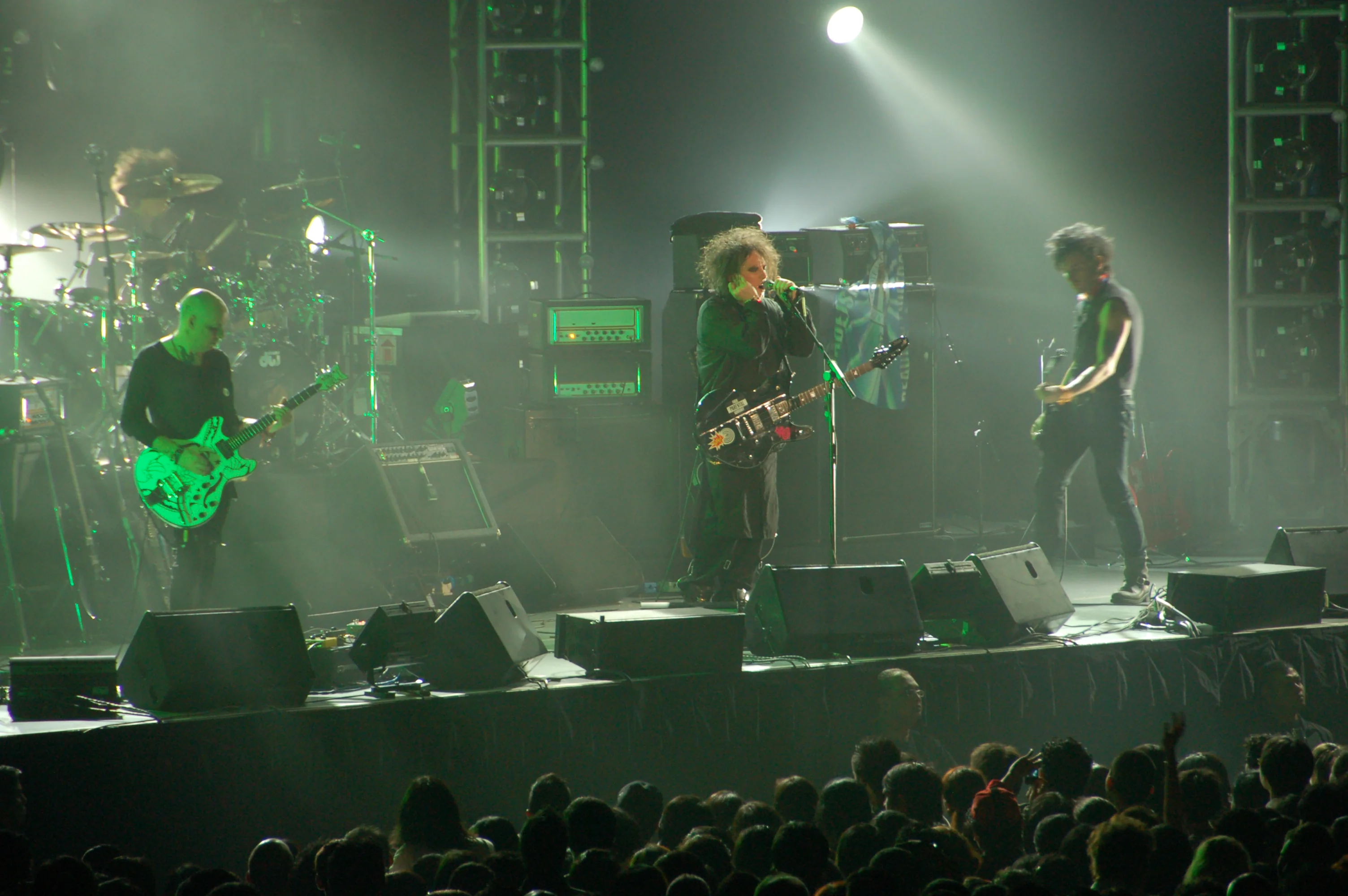
Image from Wikipedia
Image from Wikipedia
The Cure – Icons of Gothic Rock and Melancholy Pop
From Crawley to the World: How The Cure Shaped Generations with Dark Soundscapes and Grand Pop Moments
The Cure formed in the mid-1970s in Crawley, southern England, initially performing briefly as Malice and Easy Cure before settling on the name in 1978, which today is synonymous with poetic melancholy and anthemic alternative pop. Since then, frontman Robert Smith – with his unmistakable stage presence, teased hair, and red lipstick – has been the singer, guitarist, composer, and the only constant member shaping the band's musical career. The group is considered stylistically defining for post-punk, new wave, and gothic rock – even though they have consistently resisted rigid genre classifications. Their discography spans minimalist post-punk, baroque sound architecture, to stadium-ready pop hooks – an artistic evolution that has made The Cure one of the most influential British bands.
Early Years: From Malice to The Cure
The beginnings date back to 1976 when the band emerged in Crawley as Malice and changed their name to Easy Cure in 1977. Finally, in 1978, they became The Cure – linked to the early Polydor/Fiction era, during which the group defined their sound between ascetic post-punk and experimental wave. The albums "Three Imaginary Boys" (1979), "Seventeen Seconds" (1980), and "Faith" (1981) featured cool guitar figures, shadowy synth landscapes, and a strictly reduced arrangement – sound building blocks that surrounded Smith's introspective lyrics and sharpened the band's identity. This period laid the aesthetic foundation from which The Cure would later oscillate between darkness and light, between drone textures and pop ecstasy.
The Dark Zenith and the Path to Pop
With "Pornography" (1982), The Cure reached an expressive, almost monolithic culmination of darkness. Afterwards, their stylistic palette opened: "The Head on the Door" (1985) combined bouncy rhythms, melodic guitars, and world music accents; "Kiss Me, Kiss Me, Kiss Me" (1987) showcased the band as kaleidoscopic pop inventors with baroque production and lush arrangements. It was precisely this range – between cold minimalism and opulent pop – that made The Cure unique and significantly expanded their influence on indie, alternative, shoegaze, and emo.
"Disintegration" and the Art of the Great Ballad
In 1989, "Disintegration" was released, a masterpiece of sonic depth layering. With floating synths, choral guitars, and expansive song arcs, The Cure created a melancholic epic, regarded as the artistic crown of their production to this day. The album ranks high on canonic lists and has influenced generations of musicians. "Lovesong" reached No. 2 on the Billboard Hot 100 in the USA in October 1989 – a milestone that impressively demonstrated the band's international appeal. Meanwhile, tracks like "Pictures of You" and "Lullaby" set aesthetic standards for atmospheric songwriting in the alternative scene.
The 1990s and 2000s: Mainstream Success, Change, and Continuity
With "Wish" (1992), the band achieved global triumph and gifted the world "Friday I’m in Love" – a crowning achievement of melancholy pop that climbed into the Top Ten of the UK Singles Chart. The 1990s showed The Cure as a versatile major act oscillating between introspective elegy and ecstatic festival headliner. In the 2000s, "Bloodflowers" (2000), "The Cure" (2004), and "4:13 Dream" (2008) continued their sonic exploration: sometimes produced in a raw and direct manner, other times with cinematic breadth. Despite lineup changes, Robert Smith's artistic signature – his lyrical view on loss, comfort, and the beauty of melancholy – remained the constant thread.
Honor that Obligates: Rock & Roll Hall of Fame and Cultural Legacy
In 2019, The Cure was inducted into the Rock & Roll Hall of Fame – a late but well-deserved recognition of their authority and impact. The inductions emphasized how the band expanded the vocabulary of alternative rock: from the brittle post-punk of their early phase to the orchestral density of later works. Beyond the awards, their influence resonates in countless genres – whether in the dream-pop of The xx, the emo of the 2000s, or in indie productions that continue The Cure's guitar choirs and reverb-soaked soundscapes.
Renaissance in the Streaming Age
While classic radio dramaturgy shaped The Cure's universe of the 1980s and 1990s, catalog hits experienced a resurgence in the streaming age. "Boys Don’t Cry" surpassed one billion streams by January 2026 – evidence of how timeless the combination of crystalline guitar work, distinctive bass lines, and Smith's unmistakable vocal coloring remains. TikTok trends and curated playlists also helped connect younger audiences with the band’s repertoire and translate the sound aesthetics of post-punk and wave into the present.
The Long Wait and the Great Return: "Songs of a Lost World"
After years of extensive touring and studio announcements, the fourteenth studio album "Songs of a Lost World" was released on November 1, 2024. Before that, the band premiered new material with "Alone," marking their first new song in a long time – a piece that encapsulates The Cure's trademarks: shimmering synthesizers, flowing guitar layers, and elegiac melodies. The album marked a mature, confident return to the top: in the UK, "Songs of a Lost World" stormed to the top of the charts and solidified the band's status as a relevant player in contemporary rock.
Re-Interpretation as a Concept: "Mixes of a Lost World"
In 2025, The Cure opened their new material for a multi-voiced reinterpretation: "Mixes of a Lost World" brought together 24 remixes – including contributions from Four Tet, Paul Oakenfold, Orbital, and other pioneers of electronic music. This dialogical gesture – reflecting their own work in the mirror of other production aesthetics – showcased the band's enduring willingness to experiment. Remix culture as a curatorial principle extended The Cure's sonic language into clubs, playlists and new scenes.
Current Projects, Live Presence, and a Painful Loss
In 2024, The Cure curated a global livestream for the release of "Songs of a Lost World." In 2026, the band continued their live storyline as headliners of renowned festivals – a series of European dates underscores their still magnetic stage presence. This recent phase has been overshadowed by the death of longtime guitarist/keyboardist Perry Bamonte in December 2025 – the band honored him as a warm-hearted, creative, and formative part of The Cure's history. At the same time, the release of "Boys Don’t Cry (86 Mix)" in early 2026 demonstrated how alive the group's archive remains.
Sound Design, Production, and Aesthetics
The Cure's sound combines iconic guitar choirs, modulating basses, and distinctive drums with expansive synth landscapes. Production-wise, space, reverb, and delay play central roles – they create the characteristic depth layering that turns songs like "Plainsong" or "Pictures of You" into epic sound paintings. At the same time, the band demonstrates a keen sensitivity for hooks and pop economy: "Just Like Heaven" or "Friday I’m in Love" are prime examples of melodic condensation, clever harmony, and arrangement balance between dynamics and restraint.
Discography – Highlights and Reference Works
The discography includes central albums of pop and rock history: "Seventeen Seconds" (1980), "Faith" (1981), "Pornography" (1982), "The Head on the Door" (1985), "Kiss Me, Kiss Me, Kiss Me" (1987), "Disintegration" (1989), "Wish" (1992), "Bloodflowers" (2000), "The Cure" (2004), "4:13 Dream" (2008), and "Songs of a Lost World" (2024). Chart-wise, "Lovesong" (US #2, 1989) and "Friday I’m in Love" (UK Top 10, 1992) stand out. Reissues, live recordings, and remix editions keep the catalog alive and open new listening perspectives on production, composition, and arrangement.
Cultural Influence and Resonance
The Cure acted as a catalyst between subculture and mainstream. Their music created a resonant space for outsiders, romantics, and lovers of poetic darkness – and it shaped the imagery of fashion to film. From emo introspection to shoegaze clouds to the indie pop of the 2010s, the lines of tradition trace back to Smith's songwriting and the band’s ensemble aesthetics. Few other acts have managed to so masterfully transform melancholy into radiant melodies.
Voices of the Fans
Fan reactions clearly show that The Cure captivates people worldwide. A YouTube comment sums it up: "This band makes time stand still – every note sounds like a memory." On Facebook, a listener raves: "Friday I’m in Love remains my soundtrack for life – still gives me chills decades later." And on Spotify playlists, one can read sentiments like: "Disintegration is not just an album, it's a place." Such voices reflect how strongly The Cure's music fosters feeling and community – across generations and scenes.
Conclusion: Why The Cure are More Important Today than Ever
The Cure embody artistic consistency, compositional class, and a unique sonic signature. Their stage presence remains magnetic, their new releases show curiosity and courage for evolution, and their catalog inspires new listeners daily. Anyone wanting to understand how post-punk, new wave, and gothic rock shaped pop history – and how melancholy begins to shine – experiences The Cure most impressively live. Seize the next opportunity: This band transforms concert halls into cathedrals of sound.
Official Channels of The Cure:
- Instagram: No official profile found
- Facebook: https://www.facebook.com/thecure/
- YouTube: https://www.youtube.com/thecure
- Spotify: https://open.spotify.com/artist/7bu3H8JO7d0UbMoVzbo70s
- TikTok: No official profile found
Sources:
- The Cure – Official Website (News, Tour Dates, Releases)
- Rock & Roll Hall of Fame – The Cure (Induction 2019)
- Wikipedia (EN) – The Cure (Band History, Discography)
- Wikipedia (EN) – Disintegration (Album, Reception)
- Wikipedia (EN) – Lovesong (Charts, Release)
- Wikipedia (EN) – Friday I’m in Love (Charts, Context)
- Wikipedia (EN) – Songs of a Lost World (Release 2024)
- Wikipedia (EN) – Mixes of a Lost World (Release 2025)
- Musikexpress – The Cure: News & Archive
- Facebook – The Cure (Official Page)
- YouTube – The Cure (Official Channel)
- Spotify – The Cure (Official Artist Profile)
- AP News – Perry Bamonte (Obituary, December 26, 2025)
- Wikipedia: Image and Text Source