Sinfonisches Blasorchester Ulm
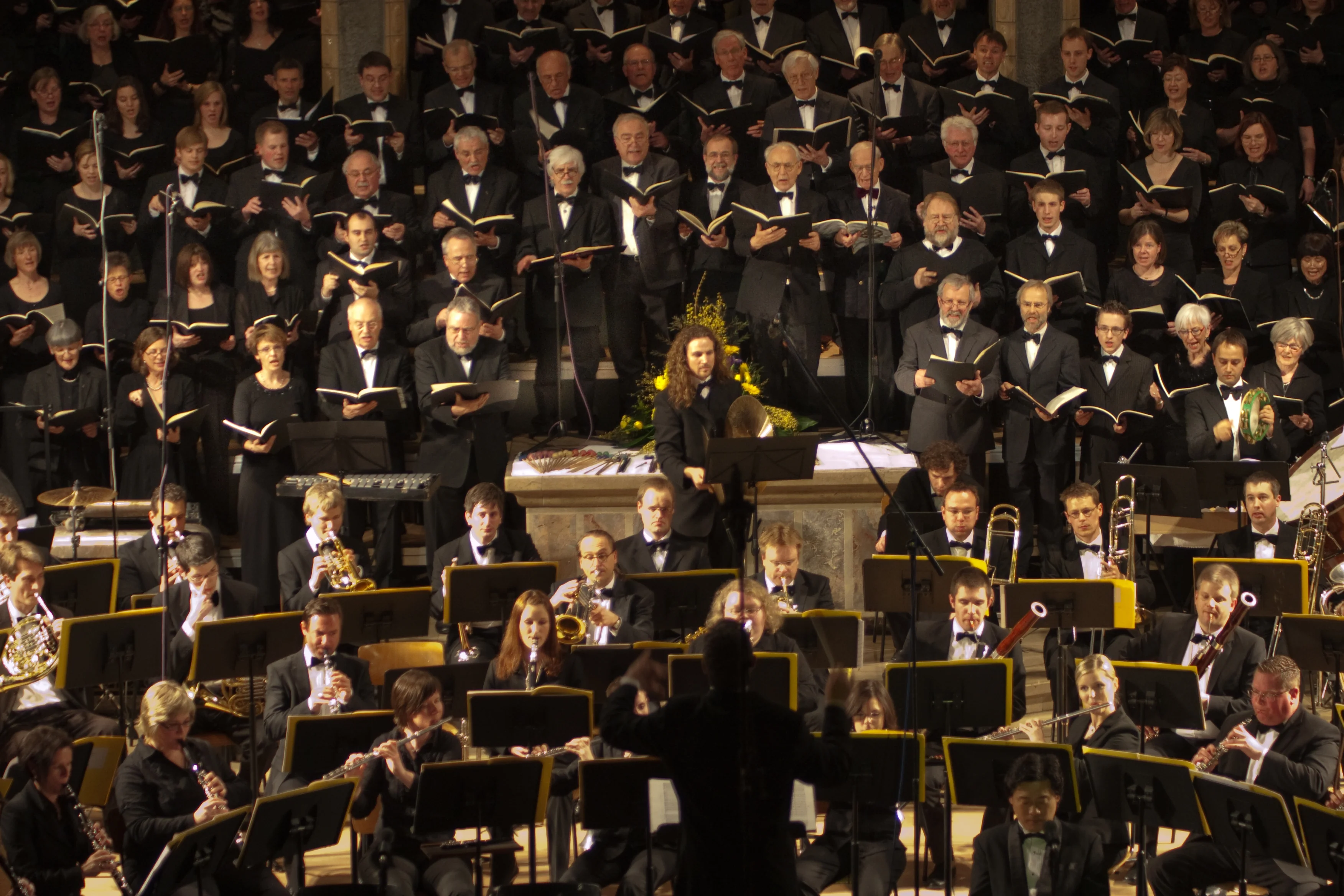
Image from Wikipedia
Image from Wikipedia
Symphonic Wind Orchestra Ulm (SBU)
Symphonic Sound at the Highest Level – SBU as the Driving Force of Brass Music in Ulm and Neu-Ulm
With precise sound architecture, expressive stage presence, and a clear artistic development, the Symphonic Wind Orchestra Ulm has shaped the south German brass music scene since the early 1990s. As an independent registered ensemble of the highest caliber, the SBU brings together ambitious musicians from across southern Germany for project-based work phases that culminate in compelling concert evenings. Under the musical direction of the internationally renowned conductor Douglas Bostock, the orchestra primarily dedicates itself to original compositions for symphonic wind orchestra—including premieres and first performances that set impulses far beyond the region.
Founded in late 1992 from the environment of the Ulm Boys' Choir, the orchestra has adhered to a tradition of symphonic brass music at the highest level since its first public performance on May 9, 1993, in the Ulm Kornhaus. Today, the name SBU stands for curated programs, carefully crafted arrangements, meticulously selected timbres, and a concert library reminiscent of a discography, thematically organized and dramatically staged— in venues such as the Congress Centrum Ulm or the Edwin-Scharff-Haus.
Foundation, Profile, and Working Method
The SBU was established in late 1992 to provide an artistic home for advanced wind musicians from the Ulm Boys' Choir after their age-related departure—while simultaneously offering an ambitious platform to all musicians interested in symphonic brass music in the region. Institutional independence followed in 1994, and since 1997 the association has been registered as a nonprofit. The orchestra's musical career has been project-based from the beginning: two working phases per year, each with concentrated rehearsal blocks on weekends and one or more concluding concerts, shape the professional ambition while maintaining a volunteer spirit.
This working method sharpens repertoire knowledge, precision, and ensemble culture. The orchestra does not see itself as competition to regularly rehearsing wind orchestras, but rather as an artistic supplement: Those who play with the SBU bring back impulses, literature suggestions, phrasing, and sound ideas to their home ensembles. This experiential loop acts as a regional competence network—a living example of the permeability between ambitious amateur and professional concert culture.
Conducting and Artistic Signature: Douglas Bostock
Since 1996, Douglas Bostock has shaped the stylistic signature of the SBU as its musical director. The British conductor is internationally networked, with positions and guest conducting engagements including the Tokyo Kosei Wind Orchestra, Aargau Symphony Orchestra, leading BBC and London orchestras, as well as numerous ensembles in Europe, North America, and Japan. His repertoire focus—ranging from British and Scandinavian music to rarely played original works for symphonic wind orchestra—fits perfectly with the programmatic idea of the SBU: thematic dramaturgy, sonic transparency, articulative precision, and stylistic diversity form the foundation of the orchestra's artistic development.
Bostock's experience as an educator and recording artist with an extensive discography is reflected in the ensemble sound of the SBU: structured rehearsal management, precise balance between woodwinds, brass, and percussion, nuanced dynamic gradations, and a colorfully nuanced brass culture. This results in concert experiences that are both analytically convincing and emotionally compelling—a hallmark of the SBU.
Program Ideas and Thematic Curation
The concert programs of the SBU follow a clear dramaturgy: titles like “Colour Symphony” (April 2022), “The Planets” (October 2022), “Images” (April 2023), “Time Travel – 30 Years of SBU” (November 2023), “Light & Shadow” (April 2024), “Homage” (November 2024), “Discovery” (April 2025), and “Planet Earth” (October 2025) illustrate how the orchestra builds musical narratives. Themes such as color, cosmos, memory, contrast, dedication, discovery, and nature are explored in the repertoire selection—comprising original works of symphonic brass music and carefully chosen arrangements that unite orchestral breadth and idiomatic writing.
For April 19, 2026, the SBU announced the program “Life Lines”—another thematic framework that connects life-related motifs with stylistic diversity. This curatorial continuity creates recognizability and offers the audience points of connection: those who attend the SBU will experience not just individual pieces but a narrated musical journey where composition, arrangement, and interpretation relate to each other.
Repertoire, Premieres, and Stylistic Range
The repertoire includes central original works of wind band literature while also embracing lesser-known voices—from the Asian-Japanese composition scene, for example. Thus, the SBU positions itself as an orchestra with repertoire responsibility and an explorative spirit. Time and again, premieres and regional premieres feature prominently in the program. This strengthens contemporary wind band culture, promotes new sound languages, and anchors the symphonic wind orchestra as a legitimate, independent genre alongside symphony orchestras, choirs, or opera ensembles.
Stylistically, the range extends from neoclassical rigor to late Romantic colorfulness to rhythmically pointed, filmic scores of the present. The orchestra sets accents in articulation, register balance, and spatial sound—qualities that become immediately audible in large halls like the CCU. Thus, the SBU connects interpretative expertise with an inquisitive repertoire policy in every working phase.
Soloists and Collaborations
The SBU frequently invites prominent soloists— from the Italian pianist Antonio Piricone to the Danish percussionist Mikkel Ib. Additionally, soloists from within the ensemble step forward. Solo contributions are not ornamental but are meaningfully integrated into the program's dramaturgy: piano concertos for wind orchestra, concertante percussion literature, and prominent woodwind or brass parts serve as narrative focal points of an evening. This cooperative practice strengthens the technical culture of the orchestra and opens new listening perspectives for the audience on the sound families of the symphonic wind orchestra.
Collaborations with choirs—such as during performances of large vocal-symphonic works—expand the sonic spectrum and create a concert format where the wind orchestra plays as an equal partner. Such evenings require careful arrangement, balanced dynamics, and an interpretation that ensures text clarity and orchestral transparency alike.
Critical Reception and Media Perception
Regional and national cultural editors regularly acknowledge the SBU for its dense yet transparently structured ensemble sound and its consistently curated programs. Press reviews emphasize the stylistic versatility, the emotionally resonant arcs of tension, and the precision of the ensemble work under Douglas Bostock. Thematic concert series receive particular attention as they not only reflect repertoire but also shape listening experiences—from color dramaturgy to engagement with nature and worldviews.
In the professional and association scene, the SBU is considered a profile ensemble that makes the culture of symphonic brass music visible as an independent art form. Through its project-based structure, a remarkable artistic density emerges: each working phase forms a coherent program, every concert evening documents interpretative progress. Over the years, this results in a kind of “living discography”—a series of documentable programs that can be read as chapters of an artistic journey.
Artistic Development and Sound Aesthetics
The artistic development of the SBU is based on detailed rehearsal work and a clear, style-related sound ideal. In classicist-influenced scores, the orchestra demonstrates buoyant articulation, slender tutti, and audibility; in late Romantic or filmically inspired works, it intensifies the color mixtures of woodwinds, brass, and percussion without tipping into mere loudness. The production—in terms of sonic realization in space—pays attention to architectural acoustics and uses it as an interpretative partner.
Compositional structure, instrumental logic, and dynamic architecture are analytically explored during rehearsal. This results in a stage presence that radiates sovereignty: the musicians react to one another chamber-music-style, Bostock’s conducting consolidates phrases and harmonic progressions, and the registers shape together. The result is an ensemble sound that unites technical proficiency with narrative tension.
Recent Projects and Highlights (2024–2026)
In 2024, the SBU presented two contrasting concerts: “Light & Shadow” in spring and “Homage” in autumn. Both programs combined classical core works with rarely performed literature and relied on contrasting sound images—once as a dramaturgical light-dark study, and another time as a portrait and dedication evening. In 2025, “Discovery” followed, an exploratory program that opened new perspectives on sound, rhythm, and form before the orchestra addressed the natural world and its musical translation in “Planet Earth” in the autumn.
For April 19, 2026, the SBU announced “Life Lines”—thematic programming that connects biographical, historical, and sound biotopes. This sequence shows how the orchestra continuously works on substantive and sonic questions: How can a concert theme be woven as a common thread through composition, arrangement, and interpretative stance? What do memory, discovery, or nature sound like when told by a wind band in contemporary sonic language?
Historical Context and Cultural Influence
The symphonic wind orchestra as a genre has established itself internationally over the past decades—not as a “substitute” for the symphony orchestra, but as an independent sound family with its own discography, repertoire canon, and a growing landscape of composers. The SBU acts as a regional lighthouse project: it connects generations, strengthens the presence of brass music in professional concert settings, and cultivates literature that ranges from the British wind band tradition to Asian avant-garde voices.
The cultural influence of the SBU is also evident in its exchange with educational institutions, choirs, and friendly orchestras. When ambitious musicians carry over what they have developed during rehearsal phases into their home ensembles, the learning effect multiplies. Thus, the SBU acts as a laboratory for repertoire maintenance, interpretation, and ensemble culture—a institution that audibly advances symphonic brass music in Ulm and Neu-Ulm.
Conclusion: Why SBU Inspires
The Symphonic Wind Orchestra Ulm impresses with its consistently curated program profile, a clearly recognizable sound aesthetic, and the handwriting of a conductor who brings international expertise to the regional scene. Those who experience the projects “Discovery,” “Planet Earth,” or “Life Lines” can feel the connection of analytical engagement with the work and emotional appeal. The audience does not receive a loose array of pieces but rather a musical narrative that combines formal clarity with sonic opulence.
Anyone wishing to discover symphonic brass music as a modern concert genre or experience it at the highest level will find a convincing ambassador in the SBU. Recommendation: secure tickets in advance, mark the next working phase in your calendar—and experience the unique acoustics of the Ulm concert halls in a live experience up close.
Official Channels of the Symphonic Wind Orchestra Ulm:
- Instagram: No official profile found
- Facebook: No official profile found
- YouTube: No official profile found
- Spotify: No official profile found
- TikTok: No official profile found
Sources:
- Symphonic Wind Orchestra Ulm – Official Website
- Symphonic Wind Orchestra Ulm – Concerts (Program Chronology 2021–2026)
- Symphonic Wind Orchestra Ulm – Orchestra (Profile, History, Working Method)
- Symphonic Wind Orchestra Ulm – Conductor Douglas Bostock (Biographical Information)
- Wikipedia – Symphonic Wind Orchestra Ulm (History, Repertoire, Premieres)
- Südwest Presse – Concert Report “Spectacular Sound Magic”, Ulm
Upcoming Events
Symphonic Wind Orchestra Ulm: Life Lines – Spring Concert at Edwin Scharff House
Stand concert at Schrannenplatz for the autumn festival
Autumn Concert 2026
Autumn Concert 2026 – Symphonic Wind Orchestra Ulm