
Saša Stanišić
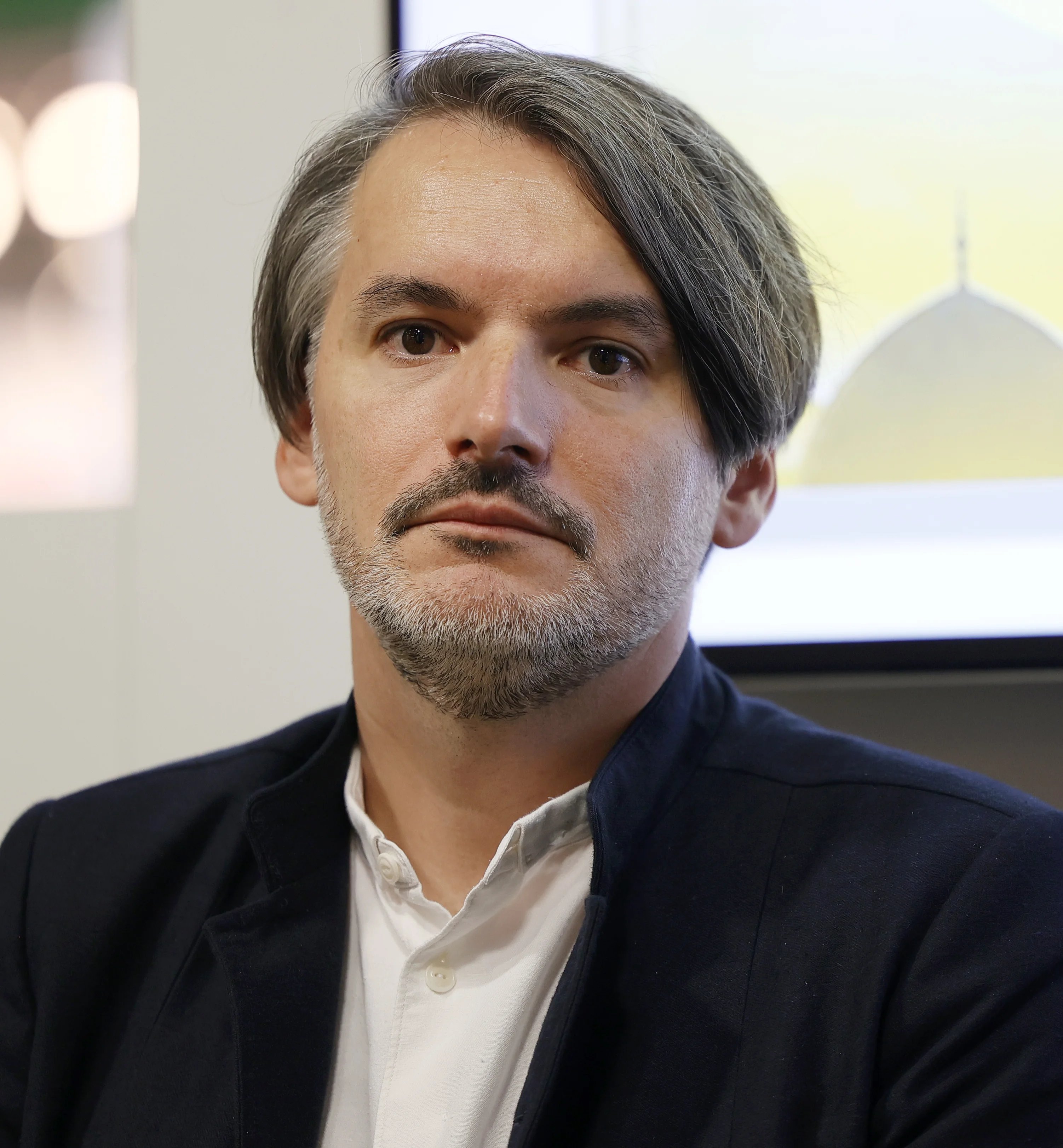
Image from Wikipedia
Image from Wikipedia
Saša Stanišić – Storyteller with Electric Imagination and Award-Winning Voice of the Present
From Višegrad to Hamburg: How Saša Stanišić Sets Literature in Motion with Narrative Boldness
Saša Stanišić, born in 1978 in Višegrad, Bosnia, is one of the defining storytellers of contemporary German-language literature. He may not have a music career – but his stage presence as an author, reader, and performer fills literary venues and theater stages. After fleeing the Bosnian War in 1992, he found a new home in Heidelberg and began an artistic development that connected his biography, memory, and imagination into a distinctive tone. Awards such as the Leipzig Book Fair Prize (2014), the German Book Prize (2019), and the Wilhelm Raabe Literature Prize (2024) mark milestones in his body of work and firmly establish him in the canon of contemporary literature.
His texts oscillate between composition and improvisation, between precise observation and poetic inventiveness. In novels, stories, children's and young adult books, he creates atmospheres that resonate: with varying tempos, surprising emotional harmonies, and rhythmic wordplay. This artistic signature, combined with a clear stance, makes Stanišić a voice that exerts cultural influence – in literature, on stages, and in public debates.
Background, Flight, and Early Influences: Biography as Resonance Space
Stanišić grows up in a multiethnic environment, shaped by a Bosniak mother and a Serbian father. The war early tears apart certainties; in 1992, the family flees to Germany. In Heidelberg, a dedicated German teacher encourages his writing; later, he studies Slavic studies and German as a foreign language. These stages of his musical career in a metaphorical sense – early appearances at reading stages, literary workshops, admission to the German Literature Institute in Leipzig – shape his understanding of text as a space for memory, play, and counterargument. Here, his theme crystallizes: How do we tell ourselves when what has been has crumbled away?
The artistic development does not proceed linearly but in movements: The experience of arrival, the polyphony of languages and dialects, the sound of a new everyday life – all of this migrates into his prose. Biography provides motifs, but Stanišić does not compose a pure autobiography from them; rather, he weaves literature: with an awareness of form, dramatic balance, and a love for surprising imagery.
Breakthrough and International Resonance: How the Soldier Repairs the Gramophone
In 2006, Stanišić debuts with “How the Soldier Repairs the Gramophone” (Luchterhand). The novel is translated into numerous languages and opens international stages for him. Narratively, he intertwines fragments of memory with magically sparkling scenes that respond to one another like solos in a suite. The text combines pathos and comedy, documentary particles and fantastical imagination; it is nominated for the German Book Prize and adapted into a radio play. Here, Stanišić establishes essential parameters of his style: strong motifs, polyphonic narrative voices, a sense of timing, pauses, and counter-rhythms.
“Before the Fest” (2014) continues this sound aesthetic – now in the microcosm of a village in Vorpommern. The novel receives the Leipzig Book Fair Prize and shows how Stanišić distills contemporary literature from local history. “The Trapmaker” (2016) condenses the art of miniature and reaffirms his knack for arrangement and variation within the narrative format.
Origin as Poetics: The German Book Prize 2019
With “Origin” (2019), Stanišić achieves new intensity. The novel, awarded the German Book Prize, is grounded in autobiography while being cleverly composed: Memory appears as a montage that reveals how narratives shape identity – and how political narratives distort history. The literary production here becomes a counter-narrative against historical distortion. Formally, he employs modular chapters, freely shifting tonal layers, and precisely set repetitions that open fields of sound and meaning like refrains.
“Origin” has an impact far beyond the literary world. The book is adapted in theaters, discussed in reading groups, and used in schools. Stanišić makes tangible how migration, language, and memory interact – not didactically, but playfully, empathically, with wit and stylistic elegance.
Between Children's Book and Stage: The Versatility of a Storyteller
Since 2021, Stanišić has expanded his discography in a broader sense – his bibliography – with children's and young adult books that take their content seriously, sparkle linguistically, and are performatively strong. “Hey, hey, hey, Taxi!” (2021) and “Panda-Pand” (2021) celebrate the freedom of imagination without romanticizing the realities of young readers. In 2023, the novel “Wolf” (Carlsen) follows, addressing bullying, peer pressure, and civil courage – narratively rapid, humorous, and compelling. The reception is enthusiastic; in 2024, “Wolf” receives the German Youth Literature Prize in the children's book category.
Stanišić's texts also migrate to the stage: From his debut to “Origin,” from “Before the Fest” to “Wolf,” theater adaptations are created at major and mid-sized houses. In readings, he showcases a presence that resembles a live performance: pauses, punchlines, modulation – his presentations are rehearsed yet appear spontaneous. This stage presence amplifies the cultural reach of his literature.
Current Works 2024–2026: New Story Collections and Awards
In 2024, the story collection “If the Widow Wants to Be Addressed, Place the Watering Can on the Grave with the Spout Facing Forward” (Luchterhand) will be released – a collection that explores the poetics of the possible: small decisions, alternative futures, the art of the good lie. For this book, Stanišić receives the Wilhelm Raabe Literature Prize in 2024 – an award signaling narrative quality and literary historical significance. The collection demonstrates his sensitivity for formal variations, transitions, and internal rhythms; each story stands on its own yet is part of an overarching composition.
On October 29, 2025, “My Misfortune Begins When the Circuit is Represented as a Rectangle. An Encouragement” (Luchterhand) is scheduled for release. Even the title strikes a typical Stanišić tone: playful, sharp-minded, with a love for detours. Meanwhile, theater adaptations of his children's and young adult books are underway on various stages, further strengthening his presence in cultural life. This activity shows: Stanišić remains active in production, experiments with new forms, and stays true to his signature style.
Style, Form, and Sound: How Stanišić Tells
Stanišić works with recurring motifs that he varies like themes in a score. Key terms, anaphoras, playful parentheticals shift meanings and create rhythm. His prose employs register shifts – from comic exaggeration to documentary sobriety – and generates productive blurriness through montage and ellipsis. In producing his books, he pays attention to precise arrangement: chapter architecture, perspective shifts, scenographic density, and gradual opening of narrative space.
Formally, he has a fondness for catalogs, lists, leaps – forms that recall sampling and collage. This aesthetic is not just a playful exercise; it reflects the experience of migration and multilingualism. The text becomes a stage where identity is not fixed but performed: sometimes as a solo, sometimes as a choir. This results in a distinctive contemporary style that is both historically connected to literature and reaches new, younger audiences.
Cultural Influence and Authority: Awards, Discourses, Institutions
Stanišić's authority derives from the connection between literary quality, public stance, and institutional recognition. The Leipzig Book Fair Prize (2014) positions him as an important novelist; the German Book Prize (2019) confirms his relevance in German-language literature; the German Youth Literature Prize (2024) showcases his breadth; the Wilhelm Raabe Literature Prize (2024) anchors him in literary history. Additionally, poetics professorships, memberships, and theater adaptations further publicize his texts.
In debates about memory politics, war experience, and migration, Stanišić takes a clear stand – always with the instrumentarium of a storyteller, not a pamphleteer. He writes against disappearance, using imagination against idealization, humor against harshness – and thus gains trust. The audience senses: Behind the texts lies experience, behind the language lies an ethic.
Voices of the Fans
The reactions of fans clearly show: Saša Stanišić captivates people worldwide. On Instagram, a fan exclaims: “Your stories linger for days – like a song that stays.” Another comment sums it up: “Wit, warmth, impact – rarely have I laughed so much and thought so deeply.” And often one reads: “Thank you for ‘Origin’ – a book that changed me.” This resonance feeds from readings, theater evenings, and social media posts that make his literature a living art form.
Conclusion: Why Read Saša Stanišić Now – and Experience Him Live?
Saša Stanišić combines narrative virtuosity with conviction. He composes texts that are accessible yet formally advanced, that make you laugh while sharpening your perspective. His works range from novels to stories to children's and young adult books – always with a sense of rhythm, structure, and surprise. Those seeking literature as a living experience will find in Stanišić a distinctive voice that illuminates our present with imagination, humor, and precision. Recommendation: Read – and definitely experience him live, as his readings demonstrate how literature can sound.
Official Channels of Saša Stanišić:
- Instagram: https://www.instagram.com/howtowaitforalongtime/
- Facebook: No official profile found
- YouTube: No official profile found
- Spotify: No official profile found
- TikTok: No official profile found
Sources:
- Wikipedia (de) – Saša Stanišić
- Penguin Random House/Luchterhand – “If the Widow Wants to Be Addressed…” (2024) – Book Page
- Penguin Random House/Luchterhand – “My Misfortune Begins When…” (Release 29.10.2025) – Book Page
- Carlsen Verlag – Press Release German Youth Literature Prize 2024 for “Wolf”
- Deutschlandfunk Kultur – Wilhelm Raabe Literature Prize 2024 for Saša Stanišić
- AJuM – Review of “Wolf” (Carlsen, 2023)
- Goethe-Institut – Book Recommendation “If the Widow Wants to Be Addressed…” (2024)
- Wikipedia: Image and Text Source
Upcoming Events
Wolf
Saša Stanišić: My Misfortune Begins With...
Reading: Saša Stanišić at the State Theatre Darmstadt
Wolf
Wolf
Literatour in the Region with Saša Stanišić
Wolf (10+)
Wolf
Workshop: Wolf