
Pjotr Iljitsch Tschaikowski
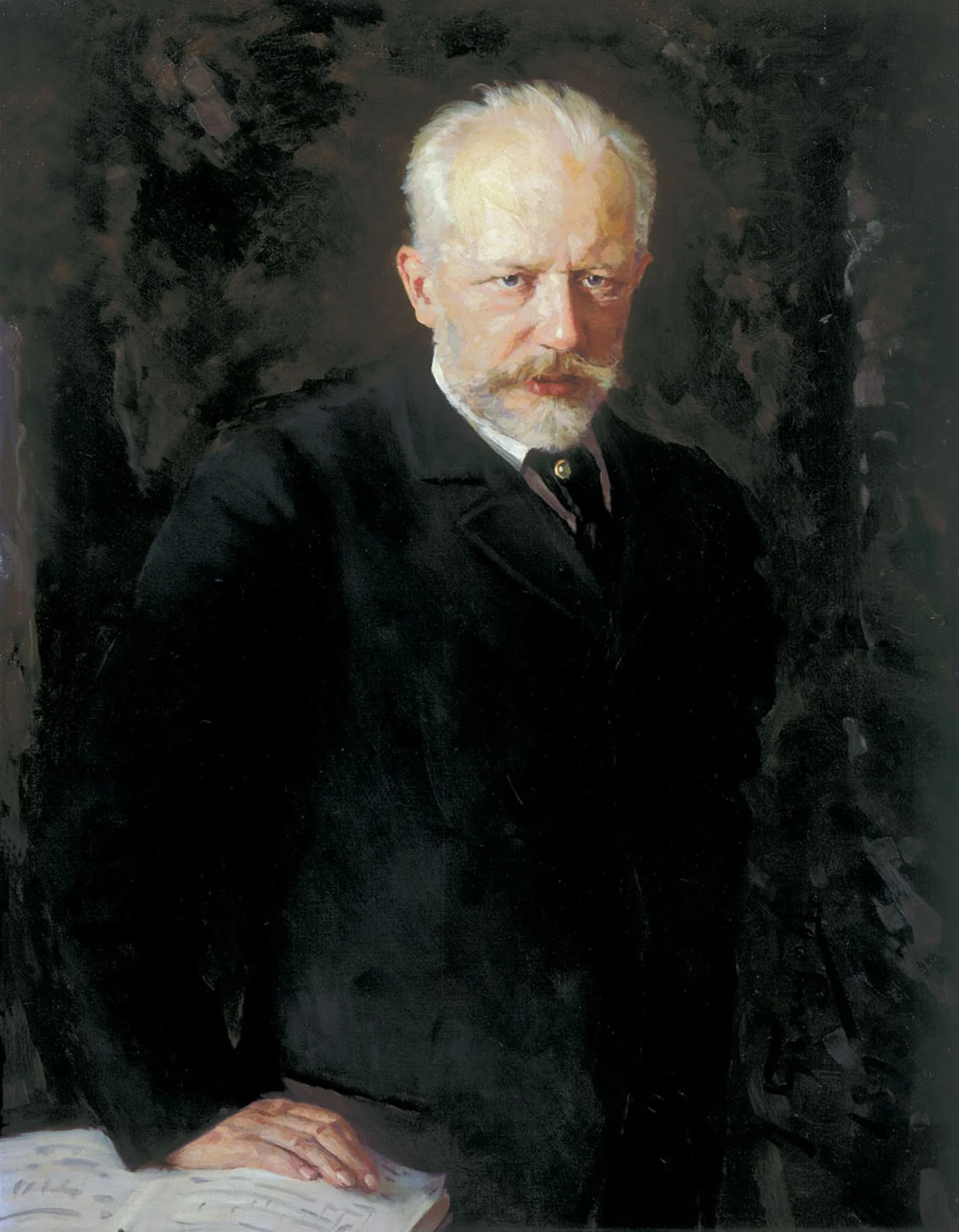
Image from Wikipedia
Image from Wikipedia
Pyotr Ilyich Tchaikovsky: The Great Romantic Between the Russian Soul and European Sound Art
A Composer Who Made Music History
Pyotr Ilyich Tchaikovsky is one of the most influential composers of the 19th century and one of the few classical names that hold cultural significance far beyond the concert hall. Many of his works gained international recognition during his lifetime; today, they are considered core repertoire of the Romantic era. His music combines melodic immediacy with orchestral elegance, psychological depth, and a dramatic range that continues to captivate audiences and performers alike. ([de.wikipedia.org](https://de.wikipedia.org/wiki/Pjotr_Iljitsch_Tschaikowski?utm_source=openai))
Biography: From Bureaucrat to World Composer
Tchaikovsky was born on May 7, 1840, in Votkinsk in the Russian Empire and died on November 6, 1893, in Saint Petersburg. His early education was aimed not at a music career but at public service: he attended law school in Saint Petersburg and initially worked in the Ministry of Justice. The fact that one of the greatest musicians of his era emerged from this background makes his career remarkable. ([britannica.com](https://www.britannica.com/biography/Pyotr-Ilyich-Tchaikovsky?utm_source=openai))
Tchaikovsky's path to music was not a straightforward child prodigy story but rather an artistic journey of self-discovery. It was not until his years in Moscow starting in 1866 that he developed, under the influence of Nikolai Rubinstein and as a teacher at the conservatory, into an independent composer of stature. He was shaped both by Western models such as Beethoven, Schumann, Mendelssohn, Berlioz, and Liszt, as well as the Russian tradition, which he continued with personal expressiveness. ([staatsoper.de](https://www.staatsoper.de/biographien/tschaikowsky-peter-i?utm_source=openai))
Career: The International Breakthrough and Years of Maturity
Tchaikovsky's artistic breakthrough was not based on a single work but rather on a series of compositions that rapidly found an international audience. His opera Eugene Onegin, the overture 1812, the 1st Piano Concerto, and the Violin Concerto are among the pieces that established his name worldwide. Particularly, his last symphonies enhanced his reputation as a symphonic composer of extraordinary emotional depth. ([de.wikipedia.org](https://de.wikipedia.org/wiki/Pjotr_Iljitsch_Tschaikowski?utm_source=openai))
Throughout his artistic development, Tchaikovsky emerged as a composer who mastered the grand forms of the Romantic era while simultaneously searching for personal distinctiveness. The years in Moscow became his most productive phase, during which he worked in nearly all genres: symphonic works, opera, concert music, chamber music, and ballets. Even difficult life phases, including emotional crises and the unhappy marriage to Antonina Milyukova, left traces in his music and imparted remarkable emotional tension. ([staatsoper.de](https://www.staatsoper.de/biographien/tschaikowsky-peter-i?utm_source=openai))
The Major Works: Symphonies, Concertos, Operas, and Ballets
Some of Tchaikovsky's best-known compositions include his last three symphonies, the Violin Concerto, the first Piano Concerto, the overture 1812, and the opera Eugene Onegin. These works demonstrate his ability to combine catchy melodies with sophisticated harmonization and finely tuned orchestration. The symphonic arcs in the Fourth, Fifth, and Sixth Symphonies particularly showcase his mastery in building tension, contrast, and emotional finales. ([de.wikipedia.org](https://de.wikipedia.org/wiki/Pjotr_Iljitsch_Tschaikowski?utm_source=openai))
The ballets Swan Lake, Sleeping Beauty, and The Nutcracker play a special role and are now considered among the most famous ballets in music history. With these works, Tchaikovsky elevated ballet to a new musical level by merging the dance's functional aspects, orchestral color, and symphonic development. This is a central part of his fame: he wrote not just stage music but also independent concert literature of lasting impact. ([de.wikipedia.org](https://de.wikipedia.org/wiki/Pjotr_Iljitsch_Tschaikowski?utm_source=openai))
Musical Language: Melody, Emotion, and Western Influences
Tchaikovsky's style is characterized by great melodic invention, strong expressive intent, and a harmony that connects dramatic intensification with lyrical breadth. Sources describe him as a composer influenced by the West yet rooted in the Russian musical tradition; it is precisely this tension that makes his sound unmistakable. His works often seem immediately accessible, but upon closer listening, they reveal complex internal architecture and subtle instrumental shading. ([breitkopf.com](https://www.breitkopf.com/composer/1014?utm_source=openai))
Unlike the representatives of the so-called "Mighty Handful," Tchaikovsky stood more in line with European formal rigor and conservatory thinking. However, this does not imply coldness or academic detachment. Instead, his music combines a sense of form with passionate directness, ensuring that even large orchestral structures never lose their human core. ([breitkopf.com](https://www.breitkopf.com/composer/1014?utm_source=openai))
Critical Reception and Cultural Influence
The reception of Tchaikovsky was marked by admiration, discussion, and occasional rejection both during his lifetime and afterward. On one hand, he was already performed well beyond Russia early on and played a key role in securing Russian music a place in Western concert halls. On the other hand, he was considered by some contemporaries in Russia as being too influenced by the West, even though this openness enabled his international impact. ([encyclopedia.com](https://www.encyclopedia.com/history/encyclopedias-almanacs-transcripts-and-maps/peter-ilyich-tchaikovsky?utm_source=openai))
Today, Tchaikovsky is a fixture of the global repertoire. His works are performed by leading orchestras, opera houses, and ballet companies worldwide, and his symphonies, concertos, and ballets represent the epitome of Romantic music for many listeners. His status as the most significant composer of the 19th century in Russia underscores the cultural magnitude of his oeuvre. ([de.wikipedia.org](https://de.wikipedia.org/wiki/Pjotr_Iljitsch_Tschaikowski?utm_source=openai))
Discography in Terms of Repertoire: The Works That Endure
A classic "discography" in the pop sense does not naturally exist for Tchaikovsky; his work lives on in countless recordings, performances, and reference interpretations. Among the absolute cornerstones are the 1st Piano Concerto, the Violin Concerto, Symphonies No. 4 to 6, Eugene Onegin, Swan Lake, Sleeping Beauty, The Nutcracker, and the Overture 1812. These compositions form the canon of a composer whose popularity continues to grow due to his constant presence in concert life and recordings. ([de.wikipedia.org](https://de.wikipedia.org/wiki/Pjotr_Iljitsch_Tschaikowski?utm_source=openai))
Especially the Violin Concerto and the first Piano Concerto have become touchstones of virtuosic interpretation. They demand brilliant technique, cantabile playing, and a sense of balance between pathos and elegance. These very requirements make Tchaikovsky so attractive to soloists even today: his music rewards not only precision but also character, breath, and emotional authenticity. ([de.wikipedia.org](https://de.wikipedia.org/wiki/Violinkonzert_%28Tschaikowski%29?utm_source=openai))
Current Projects and Releases
As a historical composer, Tchaikovsky does not have current projects in the contemporary sense. New albums, singles, or tours relate to his work only in the form of recent recordings, re-releases, and new interpretations by other artists. However, his artistic legacy remains highly relevant, as each new generation discovers his music anew and places it in different contexts. ([britannica.com](https://www.britannica.com/biography/Pyotr-Ilyich-Tchaikovsky?utm_source=openai))
Voices of the Fans
As there were no official social media channels found for Tchaikovsky, this section is intentionally not supplemented with fan quotes. For a composer of the 19th century, the public resonance shifts to concert halls, recording culture, and music historical reception. His "fan base" thus consists of a global audience that has loved his works for generations and continues to reinterpret them. ([de.wikipedia.org](https://de.wikipedia.org/wiki/Pjotr_Iljitsch_Tschaikowski?utm_source=openai))
Conclusion: Why Tchaikovsky Continues to Captivate Today
Pyotr Ilyich Tchaikovsky remains fascinating because his music touches one immediately while also remaining musically demanding. Not only did he compose some of the most well-known works of the Romantic era, but he also shaped a sound language in which melancholy, brilliance, dramatic intensification, and lyrical beauty uniquely converge. Those who experience Tchaikovsky live encounter a composer whose works have lost none of their intensity even after more than a century. ([de.wikipedia.org](https://de.wikipedia.org/wiki/Pjotr_Iljitsch_Tschaikowski?utm_source=openai))
Official Channels of Pyotr Ilyich Tchaikovsky:
- Instagram: no official profile found
- Facebook: no official profile found
- YouTube: no official profile found
- Spotify: no official profile found
- TikTok: no official profile found
Sources:
- Wikipedia - Pyotr Ilyich Tchaikovsky
- Britannica - Pyotr Ilyich Tchaikovsky
- Britannica - Pyotr Ilyich Tchaikovsky Summary
- Bavarian State Opera - Biographies Tchaikovsky
- Breitkopf & Härtel - Tchaikovsky, Pyotr Ilyich
- English National Opera - The Life of Pyotr Ilyich Tchaikovsky
- Classic FM - Pyotr Ilyich Tchaikovsky
- Wikipedia: Image and text source