
Philipp Poisel

Image from Wikipedia
Image from Wikipedia
Philipp Poisel – The Quiet Poet of German Pop
An artist who makes silence audible – and hearts beat louder
Philipp Poisel, born on June 18, 1983, in Ludwigsburg, is one of the most influential singer-songwriters of his generation. With a music career that emerged from quiet, handcrafted songwriting, he has undergone an artistic evolution that combines intimacy with grand gestures. His songs revolve around love, loss, friendship, and the fragile beauty of everyday life – themes he distills with poetic imagery, finely crafted arrangements, and an unmistakable stage presence. Blending indie pop, chanson elements, and orchestral expansiveness, Poisel has created a discography that is firmly entrenched in German pop history.
Biography: From a Home Cassette Recorder to the Big Stages
Growing up in Markgröningen, Poisel began making music at an early age – starting with drums and then guitar. He recorded his first compositions on a cassette recorder, honing his sense of form, dynamics, and intimacy. After graduating from high school, he considered a career as a secondary school teacher, but music remained his driving force and anchor. Early performances, travels, and writing under his own banner eventually led to the founding of the small label Holunder Records – an early expression of his artistic autonomy.
The turning point came in 2007/2008: Herbert Grönemeyer discovered the young songwriter and signed him to Grönland Records. This marked the beginning of a new chapter for Poisel – professionally produced, yet always with a sense of proximity and immediacy. His debut album “Wo fängt dein Himmel an?” (2008) set the tone: introspective, filled with fine observations, and supported by a “breathing” production that allows space for nuances.
Career Progression: Breakthrough, Charts, and Long-Sellers
With his second studio album “Bis nach Toulouse” (2010), Poisel refined his sound. Acoustic guitars, warm piano, subtle percussion, and strings broaden the harmonic palette – without sacrificing transparency. During this phase, songs like “Wie soll ein Mensch das ertragen” and “Eiserner Steg” established themselves as modern classics, leading to millions of streams and countless cover versions. At the same time, the single “Wolke 7” featuring Max Herre (2012) marked his popular breakthrough into the upper echelons of the German singles charts.
In 2012, he made a significant statement with the live project “Projekt Seerosenteich”: chamber music arrangements that translate his intimacy into a vibrant concert hall sound. The live album debuted at number one in Germany, showcasing how robust Poisel's songs are in an orchestral setting – a blueprint for future orchestral projects.
Between Americana Shades and Neon Lights: The 2010s to Present
With “Mein Amerika” (2017), Poisel expanded his melodic range: organic band textures, expansive refrains, and a production imbued with subtle Americana colors. This was followed in 2021 by “Neon,” a studio album that documents the maturity of his composition and production with pointed song structures, sonic details, and careful arrangements. It marked the beginning of a new live narrative that Poisel intensified from 2023/2024 with the “Neon Acoustic Orchestra”: brass and strings, cleverly placed dynamic shifts, creating a play between tenderness and symphonic breadth.
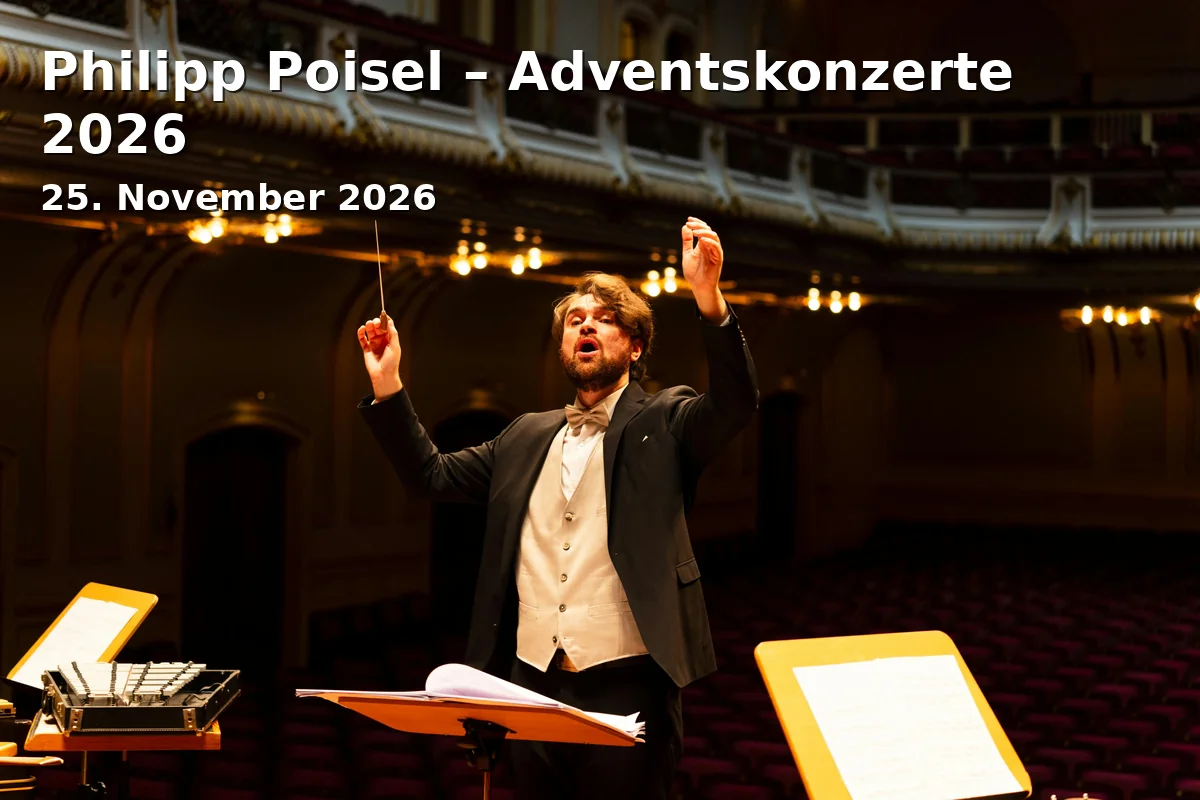
Simultaneously, he established his Advent concerts as a charming year-end finale. By 2025, many dates sold out, and he continues the series in 2026 – a testament to his enduring stage presence and close connection with his audience. These concert formats, often held in acoustically distinctive venues and churches, showcase his strength: developing the grand gesture from silence.
Discography: Studio, Live, and the Canon of Quiet Hymns
Philipp Poisel's discography is clearly structured while being diverse in sound aesthetics. Studio albums like “Wo fängt dein Himmel an?” (2008), “Bis nach Toulouse” (2010), “Mein Amerika” (2017), and “Neon” (2021) form the compositional backbone. Live recordings such as “Projekt Seerosenteich” (2012) and “Neon Acoustic Orchestra” (2024, live recorded) document the transformation of his songs into curated concert dramaturgies. The repertoire includes pieces that have become staples of German-speaking pop – including “Eiserner Steg,” “Wie soll ein Mensch das ertragen,” “Liebe meines Lebens,” “Freunde,” and the collaboration “Wolke 7.”
In critical reception, Poisel's lyrics are regarded as “close to the people”: everyday observations distilled into poetic imagery. Not pathos, but precision in word choice, melody guiding, and phrasing characterize his pieces. Media resonance and chart histories position him as a quiet yet consistent hit-maker – an artist whose songs grow organically over the years and assert themselves in playlists, radio rotations, and concert hall acoustics.
Style and Production: Between Singer-Songwriter Intimacy and Orchestral Expansiveness
On the level of composition and arrangement, Poisel combines classic song forms, subtle harmonic progressions, and repetitive-meditative motifs. Melodic motifs are often woven into the accompanying structures, while the timbre of his voice – slightly fragile, close to the microphone, dynamically nuanced – reaches an emotional peak. The production is dominated by a warm, airy sound aesthetic: acoustic guitars at the forefront, piano as the harmonic backbone, minimal percussion; in orchestral setups, strings take over pads and melodic lines, while woodwinds and brass set impulses.
Characteristically, there is a play with silence and space. Pauses, fading out, and micro-dynamic nuances give the songs breath. This production technique is rooted in the tradition of modern German chanson-pop, expanded with cinematic colors. Live, crescendoing arrangements enhance the dramatic arc – from chamber musical tenderness to vibrant tutti passages.
Cultural Impact: Songs as a Collective Memory Archive
“Eiserner Steg” and “Wie soll ein Mensch das ertragen” have long become ritual songs – at weddings, in TV series scenes, and at moments of remembrance. Poisel provides the soundtrack for transitions and thresholds in life. This repertoire resonates culturally because it translates individual feelings into universal formulas – without kitsch, with respect for the vulnerability of human experience.
The collaborations – prominently “Wolke 7” – also illustrate his adaptability to various pop contexts. At the same time, he asserts an aesthetic independence: Poisel represents German-speaking pop that understands introspection not as a counterpoint to grandeur, but as its origin. Thus, he has formed an audience that can endure silence – and sings with full voice when the choruses unfold their arcs.
Live: The Art of Listening
His stage presence thrives on controlled restraint, targeted announcements, and a sensitive interplay with the audience. In orchestral formats, his songs become sound spaces that the audience “enters.” In solo and Advent concerts, he places the voice and guitar at the center, complemented by delicate piano lines. This makes each evening different, each phrase fresh. Concerts like these leave lasting impressions – a core element of his music career and a quality marker that goes beyond mere chart data.
Current Projects: New Music and Tour Cycles
2024/2025 is marked by the “Neon Acoustic Orchestra” – live recorded and presented on Germany's premium stages – as well as the established Advent tour. In 2025, many dates were sold out, and in 2026, Poisel continues the Advent concert tradition along with his summer concerts. Concurrently, selective new releases support his live year: singles and EPs keep the discography vibrant and link studio aesthetics with the narrative excitement of his concerts. This close interconnection of production, release, and tour demonstrates a strategic and sustainable career management.
Context and Expertise: Why Philipp Poisel Endures
Musically, Poisel connects to the German-speaking singer-songwriter tradition but translates it into a contemporary pop language. His lyrics serve as semantic anchors, his melodies offer memorability, and his arrangements give intimacy a sense of grandeur. For producers, his work is a case study in micro-dramaturgy: dynamics, register shifts, string voicings, pauses for breath, and reverb architecture all contribute to the emotional impact. For listeners, he remains a storyteller who shapes personal stories in ways that resonate collectively.
Voices of the Fans
The reactions of fans clearly show: Philipp Poisel captivates people in all stages of life. On Facebook, a listener writes: “Your songs feel like letters to myself.” Another comment states: “Every concert is like a quiet film – and yet you leave with a loud heart.” A long-time fan summarizes: “Thank you for ‘Eiserner Steg’ – a song that has accompanied me for years.”
Conclusion: The Magic of the Quiet
Philipp Poisel represents a pop that listens before it tells – and whose power arises from precision, closeness, and craftsmanship. His discography consolidates intimate song miniatures that can unfold into orchestral grandeur without losing their vulnerability. Those who listen to his music experience composition, arrangement, and production as a unity. Those who see him live understand why these songs endure. Recommendation: Attend a concert, lend an ear, open your heart – and take the magic of the quiet home.
Official Channels of Philipp Poisel:
- Instagram: No official profile found
- Facebook: https://www.facebook.com/Philipp.Poisel.offiziell/
- YouTube: No official profile found
- Spotify: No official profile found
- TikTok: No official profile found
Sources:
- Philipp Poisel – Official Website
- PRK DreamHaus – Artist Profile/Booking
- Kölner Philharmonie – Concert Info “Neon Acoustic Orchestra”
- Chartsurfer – Chart History “Wolke 7”
- Wikipedia – Philipp Poisel
- Wikipedia – Projekt Seerosenteich
- Apple Music – Philipp Poisel (Discography & New Releases)
- Frontstage Magazine – “Neon Acoustic Orchestra” Tour 2024
- WDR Rockpalast – Interview (2018)
- Wikipedia: Image and text source
Upcoming Events
Philipp Poisel & Band live in Regensburg
Philipp Poisel & Band at Schwerin Castle
Philipp Poisel & Band – Friends Tour 2026
Philipp Poisel – Advent Concerts 2026