
Peter Joseph Lenné
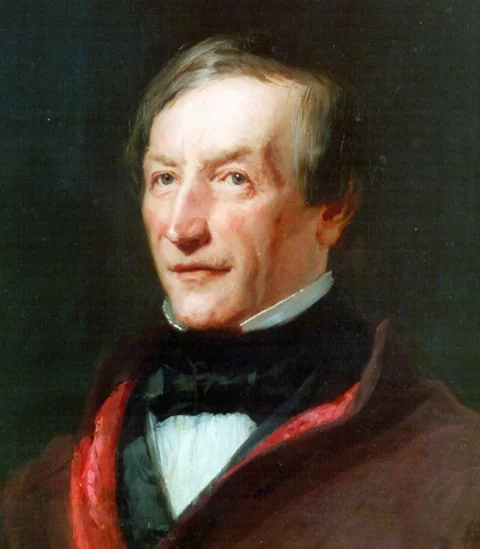
Image from Wikipedia
Image from Wikipedia
Peter Joseph Lenné – The Visionary of Prussian Garden Art and a Pioneer of Modern Urban Landscapes
From Bonn to Potsdam: How Peter Joseph Lenné Led Nature, Architecture, and Society into a Unique Gesamtkunstwerk
Peter Joseph Lenné (1789–1866) is regarded as one of the key figures in European garden art. As the General Director of the Royal Prussian Gardens, he combined botanical knowledge, artistic development, and urban planning into a distinctive signature. His parks in the Berlin–Potsdam area demonstrate how finely composed sightlines, winding paths, and characterful trees showcase architecture and make landscapes experienceable. At the same time, Lenné thought socially: He opened the perspective for public parks, local recreation, and urban planning that understands greenery as a quality of life.
Origin, Education, and Artistic Development
Born in Bonn as the son of court gardener Peter Joseph Lenné Sr., Lenné learned the profession of gardening from the ground up. He received early botanical instruction before an apprenticeship with Joseph Clemens Weyhe in Brühl laid the practical foundation for his artistic career – in his case, a career as a garden artist. Study and educational trips took him to southern Germany and Paris, where he studied botanical rarities and exotics, practicing composition and arrangement of plant images. From 1812 to 1814, he gained experience at the gardens of Schönbrunn and in Laxenburg; the interplay of architecture and park spaces shaped his later presence as a planner.
From this early phase, Lenné developed a fundamental understanding of genre and style: He adapted principles of the English landscape garden without flattening the character of the site. His design practice combined botany, terrain modeling, pathway layout, and water design into an organic composition. This artistic development would make him the central authority in garden art in Prussia.
The Path to the Prussian Court: From Court Gardener to General Director of Gardens
In 1816, Lenné took a position as an assistant in Potsdam and quickly worked his way into responsibility for royal garden facilities. Under the impression of ruined park spaces after the Napoleonic Wars, he developed a repertoire of restoration, expansion, and recreation. Plans for Sanssouci and its surroundings were already developed early on; shortly thereafter, commissions followed in Neuhardenberg and Glienicke. In 1854, he rose to the position of General Director of the Royal Prussian Gardens – a role that manifested his authority on issues of composition, production, and maintenance of the garden facilities.
In this role, Lenné understood garden art as a state-supported cultural achievement. Castles, park architectures, and landscapes were conceived as a unified arrangement, whose dramatic arcs – sightlines, viewpoints, and backdrop trees – intertwined courtly representation with civic recreation.
The Potsdam–Berlin Cultural Landscape: Sightlines as a Motif
In the Berlin-Potsdam cultural area, Lenné interconnected parks, architectural monuments, and water bodies into a spatial score. Characteristic are the diverse sightlines that visually connect, for instance, Peacock Island, Babelsberg, New Garden, Glienicke, and Sanssouci. This visual choreography follows a precise orchestration: Openings in the tree stock, modeled banks, deliberately placed solitary trees, and avenue plantings create sequences of near, middle, and distant views.
The UNESCO recognized this extraordinary unity of architecture and garden design in 1990 by adding it to the World Heritage List. The inscription honors the masterful achievement of an ensemble, to which – along with architects like Knobelsdorff and Schinkel – Lenné made a decisive contribution as a leading landscape artist. Parks like Babelsberg and Glienicke exemplify his art of embedding historically heterogeneous building forms into a harmonious landscape composition.
Design Principles: Pleasure Ground, Path Layout, Planting, Water
Lenné's "score" follows recurring motifs. First, the principle of the pleasure ground with finely manicured lawns framed by woody plants and ornamental plantings, often positioned near castles as representative stages. Second, the winding pathways that create changes in perspective and keep the composition in motion. Third, the planting: Lenné combined native species with exotics, created contrasts in textures and leaf colors, and used solitary plants as visual accents. Fourth, water: He modeled ponds, lakes, rivers, and banks as reflective carriers of images that reflect architecture and vegetation.
His arrangements aimed for a counterpoint relationship between architecture and nature. Buildings appear as quotations in the landscape; groups of trees create cadences, while avenue and bank plantings serve as motifs. From today's perspective, these placements impress with their durability and adaptability to urban transformation processes.
Urban Planning and the Concept of Public Parks: The Social Mission of Landscape
In addition to court park facilities, Lenné was active as an urban planner. With the "General Plan" and the leading design for Berlin neighborhoods like Luisenstadt, he designed a connected system of streets, squares, and green corridors. His thinking was forward-looking: He planned the city as a breathing structure in which open spaces promote health, mobility, and social participation. In this way, he announced the idea of the public park, which made Berlin a reference for urban open space planning in the 19th century.
Even in canal and bank designs – paradigmatically for the Landwehr Canal – he combined infrastructure with landscape aesthetics. In this way, Lenné "composed" urban spaces that intertwine functional development, ecological quality, and sensory perception.
Networks and Dialogues: Schinkel and Prince Hermann von Pückler-Muskau
Lenné worked in close interaction with contemporaries like Karl Friedrich Schinkel and Prince Hermann von Pückler-Muskau. While Schinkel set spatial and stylistic reference points as an architect, Pückler's independent landscape aesthetics challenged constructive competition. The Babelsberg Park illustrates this triangulation: Architecture, topography, and vegetation become a unity in which Lenné's landscape arrangement takes up Pückler's impulses and frames Schinkel's formal language.
These collaborations strengthened Lenné's authority. He became a hub of a network of court, administration, architecture, and gardening that elevated the cultural landscape of Berlin–Potsdam to a world-class level in the 19th century.
Catalog of Works – Major Works, Regions, Influence
Lenné's oeuvre encompasses a variety of sites that extend beyond Prussia. His core area includes Sanssouci and its surroundings, the New Garden, Babelsberg, Glienicke, Peacock Island, and the Bornim field landscape as some of his most significant compositions. Additional designs occurred in Neuhardenberg, at Pfingstberg, and in Sacrow. Outside of Potsdam, he worked in Bonn, Cologne/Brühl, Koblenz, in the Rhineland province, and in Mecklenburg-Vorpommern; there he notably shaped grand ducal gardens in Schwerin, Neustrelitz, and Ludwigslust.
Remarkable is the ability to transition existing baroque structures into a landscape arrangement without erasing historical identity. The "Lenné-Meyers School" programmatically stands for his sustainable impact on education and practice in garden and landscape architecture.
Reception, Honors, and Monument Preservation
His appointment as General Director marked Lenné's contemporary recognition. In modern times, UNESCO honors the extraordinary universal value of the Berlin-Potsdam park landscape. Research, garden monument preservation, and exhibitions – supported, among others, by the Foundation of Prussian Palaces and Gardens Berlin-Brandenburg – today ensure the understanding of his designs and the care of the historical substance.
Awards, societies, and institutions bear his name, and exhibitions address his design principles and the restoration of classical sightlines. Thus, Lenné's work remains alive: as a model for quality open space planning, as a school of sensitive plant use, and as a cultural reference space in a growing metropolitan region.
Technique, Maintenance, and Curatorial Practice
The production side of Lenné's park art – plant planning, terrain modeling, bank fortifications, path construction – requires continuous maintenance and adaptation. Historical compositions must be protected against climate stress, invasive species, and usage pressure. Garden monument preservation operates here like a restoration workshop: Site-adapted replacement plantings, gentle pruning for sightlines, and careful water management maintain the readability of the composition.
This curatorial attitude corresponds to Lenné's thinking in cycles and development phases. His parks are not static images, but living scores, the sound of which – the seasonal dynamics – depends on careful management.
Cultural Influence and Historical Positioning in Music – An Analogy
Walking through Lenné's parks, one experiences dramaturgy, rhythm, and thematic variation. Analogous to orchestration in music, he intertwines leitmotifs (sightlines, water, solitary trees) with interludes (meadow spaces, tree edges). This compositional quality explains his lasting influence: From the public park movement to the open space traditions of modernity and today's green infrastructure, his ideas continue to resonate.
In urban planning, his legacy is reflected as an "Arrangement of Routes" – a system that provides orientation, promotes mobility, and fosters identity. Thus, Lenné becomes a classic, whose "scores" connect urban quality, ecological resilience, and aesthetic education.
Conclusion: Why Peter Joseph Lenné is More Relevant Today than Ever
Lenné's work connects artistic excellence with social responsibility. His parks demonstrate how careful composition, precise plant usage, and clear spatial dramaturgy create places that bring people together and make architecture shine. In times of climate change and urbanization, his concepts – sightlines, interconnected green spaces, waterfront landscapes – provide concrete answers to the question of how cities can remain livable.
Those who experience the castle and park landscape of Berlin–Potsdam feel the breath of this great school of garden art. It is an invitation to continually rediscover Lenné's spaces – and to experience the subtle transitions between nature and culture live.
Official Channels of Peter Joseph Lenné:
- Instagram: No official profile found
- Facebook: No official profile found
- YouTube: No official profile found
- Spotify: No official profile found
- TikTok: No official profile found
Sources:
- Wikipedia – Peter Joseph Lenné
- German UNESCO Commission – Palaces and Parks of Potsdam and Berlin
- UNESCO World Heritage Centre – Palaces and Parks of Potsdam and Berlin
- Foundation of Prussian Palaces and Gardens Berlin-Brandenburg – UNESCO World Heritage Potsdam–Berlin
- Portal Rhineland History – Peter Joseph Lenné
- Berlin Monthly/Berlin History – Portrait: Peter Joseph Lenné
- State Capital Potsdam – Peter Joseph Lenné
- German Biography – Lenné, Peter Joseph
- Wikipedia: Image and text source