
Émile Parisien
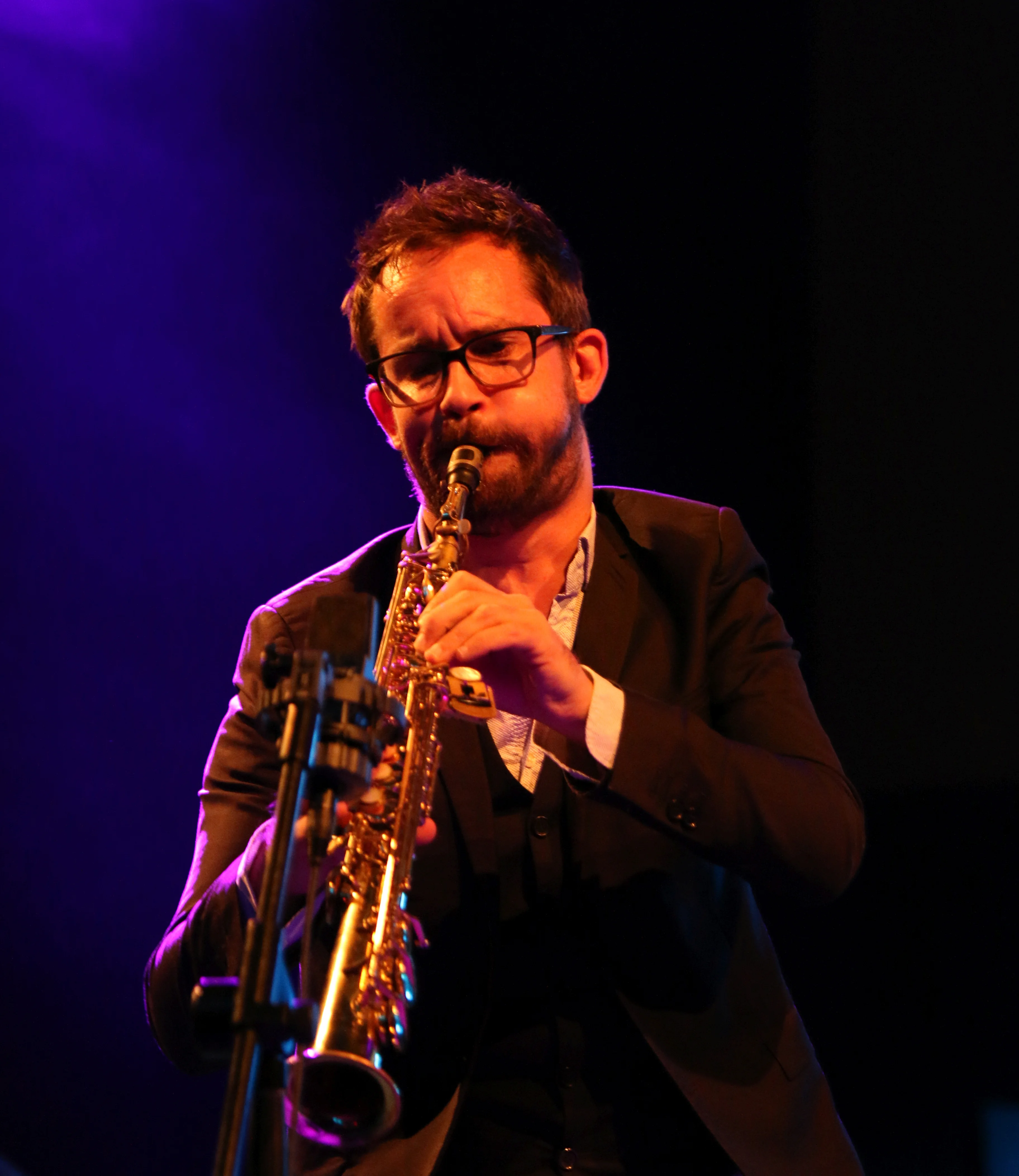
Image from Wikipedia
Image from Wikipedia
Émile Parisien – Portrait of a Stylistically Influential French Saxophonist
Virtuoso Curiosity, Deep Musicianship: Why Émile Parisien Shapes the European Jazz Scene
Émile Parisien, born on October 12, 1982, in Cahors, is one of the most prominent voices in European jazz. As a soprano saxophonist – with confident excursions on the alto saxophone – he combines improvisational brilliance with compositional foresight. His music career takes him from Marciac and Toulouse to Paris and beyond to international stages, where his stage presence, keen ear for timbres, and artistic development have captivated critics and audiences alike for years. Parisien envisions jazz as a living art form: he mixes tradition and avant-garde, writes dramaturgically intelligent compositions, and shapes an unmistakable contemporary sound both with his quartet and in various formations.
Early Years in Marciac: The Foundation of an Extraordinary Talent
Growing up in Cahors, Parisien gains early access to one of the most significant jazz hubs in France: the Collège de jazz in Marciac. At just eleven years old, he learns there from renowned figures like Pierre Boussaguet, Guy Lafitte, and Christian “Tonton” Salut. This phase shapes his understanding of tone production, phrasing, and ensemble culture. From 1996 onwards, he deepens his repertoire at the Conservatoire de Toulouse – not only in jazz but explicitly in classical and contemporary music as well. This dual grounding in improvisation and written music, in jazz tradition and modern composition, forms the DNA of his later personal style.
In parallel, he gains significant stage experience during the summers around the Jazz in Marciac festival. Encounters with Wynton Marsalis, Christian McBride, Johnny Griffin, and Bobby Hutcherson sharpen his understanding of his role as a soloist and bandleader – promoting the emergence of a tone that blends lyrical lines with angular intervals, melodic storytelling with eruptive energy.
Departure to Paris (Since 2000): Quartet Aesthetics and Formative Years
In 2000, Parisien moves to Paris – a step that accelerates his career and opens up a dense network of collaborations. In 2004, he forms his own quartet, initially with Julien Touery (piano), Ivan Gélugne (double bass), and Sylvain Darrifourcq (drums). Even the early productions showcase a distinctive handwriting: narrative themes, structured improvisation, precise craftsmanship in arrangement. The quartet's discography grows rapidly, establishing Parisien as a bandleader with buoyant timing, sonic curiosity, and energetic interplay.
His artistic development remains dialogical: Parisien collaborates with musicians such as Michel Portal, Jacky Terrasson, Yaron Herman, Joachim Kühn, Anne Paceo, Daniel Humair, Jean-Paul Céléa, and – central to his work – the accordionist Vincent Peirani. These constellations expand his sound – from chamber-music intimacy to orchestral quintet textures.
Breakthrough and ACT Era: From "Sfumato" to "Louise"
With his ACT debut Sfumato (2016), Parisien achieves a milestone in his discography. The album – featuring a quintet with guests like Joachim Kühn and Michel Portal – consolidates his strengths: highly articulated soprano voice, rich harmonics, dramaturgically conceived arcs of tension. Sfumato is awarded “Album of the Year” in France and accelerates Parisien's international visibility. This is followed by Sfumato Live in Marciac (2018) and Double Screening (2019), which document his live energy and compositional thought.
With Louise (2022), Parisien sharpens his profile as an ensemble architect: an transatlantic sextet featuring Theo Croker, Roberto Negro, Joe Martin, and Nasheet Waits. Louise functions as a sound portrait – inspired by visual art, driven by melodic storytelling and detailed production. The result: modern jazz composition that understands jazz history, breathes the present, and marks the future.
Collaborations of Significance: Peirani, Les Égarés, and Cross-Genre Projects
A special axis of his career is the duo with Vincent Peirani: Belle Époque (2014) and Abrazo (2020) showcase a chamber-jazz communication that blends tango nuances, French chanson colors, and improvisational openness. In 2023, Parisien expands this aesthetic within the formation Sissoko/Segal/Parisien/Peirani: Les Égarés combines kora (Ballaké Sissoko), cello (Vincent Segal), accordion (Peirani), and saxophone into a poetic “Chamber-Jazz” narrative that transcends fixed genre boundaries – warm, transparent, rhythmically fluid, with great resonance in the music press.
The years 2024 and 2025 mark further momentum: with Let Them Cook (March 2024), Parisien presents his quartet in peak form – melodically memorable, rhythmically agile, with subtle electronic textures. In 2025, Sou Kora is released, an intense, condensed studio format with Sissoko/Segal/Parisien/Peirani that picks up and intensifies the threads from Les Égarés. These albums underscore Parisien's ability to conceive projects as curated sound spaces: each with its own dramaturgy, timbre, and musical geography.
Current Projects 2026: "Floating" and the Next Sound Stage
For 2026, Parisien is preparing the next stage of his music career with a newly assembled ensemble. The title Floating already outlines an aesthetic of buoyancy: pulsating modern jazz, colorful textures, vast dynamic spaces. A significant milestone is the concert at La Seine Musicale on March 17, 2026, in the Paris region – a statement of his enduring presence on major European stages and a glimpse into new repertoire that intertwines composition, arrangement, and improvisation even more closely.
Beyond this beacon, Parisien remains active: tours, festival appearances, and collaborations expand his agenda. The fact that he translates this visibility into substantial artistic development – rather than mere touring – demonstrates the consistency of his releases: each album is a chapter, not an addendum.
Discography – Touchstones of a Consistent Development
Parisien’s discography outlines a clear trajectory. Early quartet albums like Au revoir porc‑épic (2006), Original pimpant (2009), and Chien Guêpe (2012) lay the groundwork: agile themes, pointed formal sections, a sense of contrast between melodic flow and angular articulation. The ACT phase brings the big breakthrough: Belle Époque (duo with Peirani, 2014), Spezial Snack (quartet, 2014), Sfumato (2016), Sfumato Live in Marciac (2018), and Double Screening (2019) form a panorama of live intensity, studio refinement, and chamber music interaction.
With Abrazo (2020), the Peirani/Parisien duo solidifies its status as a reference formation in European chamber jazz. Louise (2022) leads Parisien’s sextet aesthetics to narrative density, while Les Métanuits (2023) emphasizes his closeness to pianist Roberto Negro: pointillistic lines, fragile sound shadows, precise placement of silence. In 2024, Let Them Cook follows – a quartet album that links melodic charm with precise rhythmic language and is received as a mature, standalone statement. 2025 brings Sou Kora: condensed, intimate, with great sonic depth.
Style, Sound, Technique – An Unmistakable Soprano Voice
Parisien’s soprano saxophone is his trademark: clearly focused, flexible in intonation and articulation, with intense control over register leaps and micro-embellishments. In improvisation, he often works thematically-motivically: motifs are varied, shortened, dissected, rhythmically shifted. Harmonically, he thinks modally, but periodically opens up towards expanded tonality; in interplay with pianist and bassist, this creates flowing frictions that dramaturgically build towards climaxes.
Compositional traces of classical modernity (Berlioz, Stravinsky, Schoenberg, Wagner) can be found, as well as influences from John Coltrane and Wayne Shorter. However, it is less about quoting than about translating: Parisien transforms historical sound languages into a contemporary musical grammar. The arrangement follows the idea of breathing form: between refrain ideas and open passages, there is space for communicative spontaneity – a core principle of modern jazz production.
Stage Presence and Ensemble Culture
Live, Parisien convinces with a stage presence that balances virtuosity and a will to narrate. His playing breathes, phrases, and places pauses thoughtfully – always seeking interplay with the band. The quartet forms a living organism: the precise sense of timing from the drums, the anchor-like, melodically thinking bass line, the sound-color-reacting piano voice, and above this a soprano that leads, listens, and counters. This artistic development – from talent to timekeeper – makes Parisien a leading figure for a young generation of European improvisers.
In collaborative settings, he demonstrates curatorial skill: lineups are not understood as additive, but are combined dramaturgically. Kora and cello in dialogue with saxophone and accordion – as in Les Égarés – open up new registers of groove, Mediterranean hues, and chamber music transparency. Parisien remains both soloist and director at the same time.
Critical Reception and Awards
The music press recognizes Parisien’s discography as a continuous expansion of the European jazz vocabulary. Sfumato definitively placed him in the frontline in 2016; Louise (2022) confirmed his sensitivity to form and sound dramaturgy. Les Égarés (2023) was praised as a poetic, cross-genre reference. With Let Them Cook (2024), Parisien demonstrates the maturity of his quartet – from melody to polyrhythms to subtle electronics. Awards mark this development: the Prix Django Reinhardt (2012), Victoires du Jazz – notably “Artist of the Year” (2014) – and an Echo Jazz (2017). Additionally, Sfumato received the “Album of the Year” award in France (2016). These milestones attest to the authority and trustworthiness of his artistic path.
It is noteworthy that the honors never become an end in themselves: Parisien uses them as tailwinds for new sound ideas. Precisely for this reason, his discography reads like a sequence of chapter headings – each chapter expands the semantic space of his saxophone and anchors his authority as a composer, improviser, and ensemble leader.
Voices of the Fans
The reactions from fans clearly show: Émile Parisien delights people worldwide. On Instagram, a listener raves: “The melodies carry – even the silence sings.” A YouTube comment succinctly sums it up: “Modern, melodic, masterful – please more live videos!” On Facebook, a listener writes: “Let Them Cook is on repeat for me – the quartet grooves and tells stories.” This resonance reflects what concert halls confirm: Parisien combines virtuosity with emotion, intellect with instinct, concept with sound poetry.
Conclusion: Why You Should Listen to Émile Parisien Now – and Experience Him Live
Émile Parisien unites experience and expertise in his music: a developed music career with clear artistic progression, a vocabulary that confidently integrates composition, arrangement, and improvisation. His discography – from early quartet albums to Sfumato, Louise and Les Égarés to Let Them Cook and Sou Kora – showcases a musician who constantly rethinks his sound world. Current projects like Floating (concert at La Seine Musicale on March 17, 2026) mark the next stage. Anyone who wants to know how European jazz sounds today – modern, melodic, open – should listen to Parisien. And experience live where his soprano truly soars.
Official Channels of Émile Parisien:
- Instagram: https://www.instagram.com/emileparisien/
- Facebook: https://www.facebook.com/parisienemile
- YouTube: https://www.youtube.com/@EmileParisienOfficial
- Spotify: https://open.spotify.com/artist/0KYFSSpklRwCSM31sHD4s6
- TikTok: No official profile found
Sources:
- Emile Parisien Official – Official Website
- ACT Music – Album Page "Louise"
- Apple Music – "Let Them Cook" (Release 2024)
- Bandcamp – "Les Égarés" (Sissoko/Segal/Parisien/Peirani)
- Apple Music – "Sou Kora" (Release 2025)
- Couleurs Jazz – Review "Let Them Cook," January 2024
- Jazz Weekly – Review "Let Them Cook," March 2024
- Wikipedia (EN) – Biography, Discography, Awards
- Wikipedia (DE) – Biography, Awards, Discographic References
- YouTube – Official Channel
Upcoming Events
Michael Wollny & Emile Parisien
Michael Wollny and Émile Parisien in Bayreuth
Wollny and Parisien: Brothers in Spirit