
Markus (Evangelist)
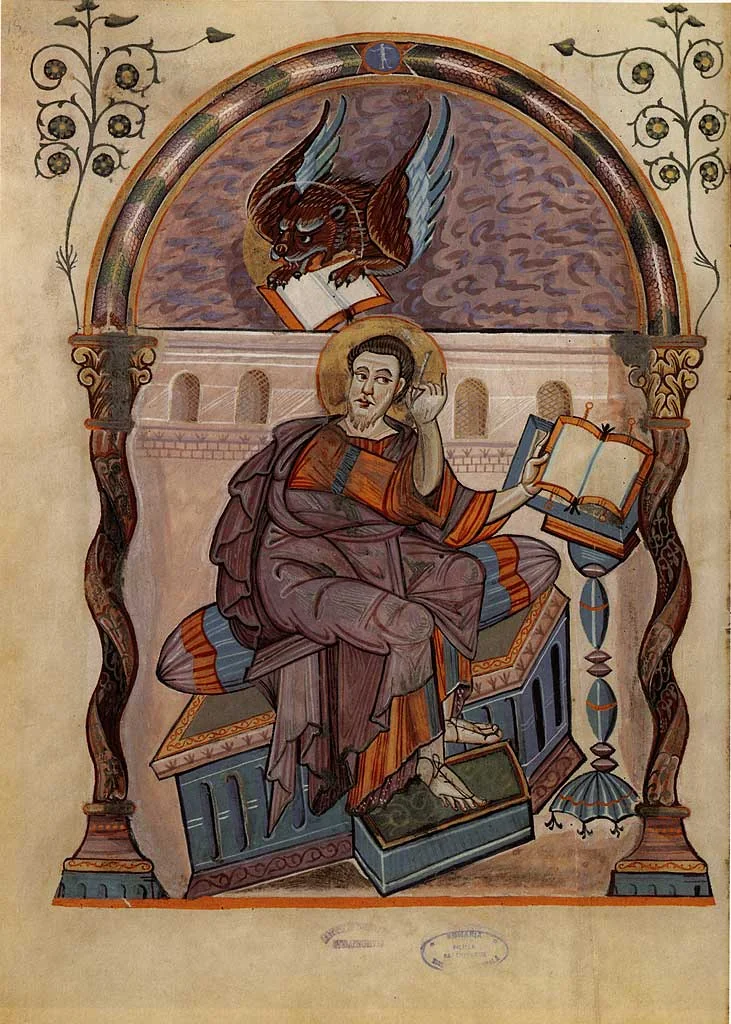
Image from Wikipedia
Image from Wikipedia
Markus the Evangelist – Voice of Early Christian Proclamation, Symbol of the Lion, and Author of the Oldest Gospel
An Evangelist Who Made History: Why Markus Continues to Fascinate Today
Markus, who is considered in ancient church tradition to be the author of the probably oldest gospel, continues to shape the understanding of Jesus' work to this day. His name does not appear in the text itself, but tradition and research link the creation of the Gospel of Mark with the early Jesus movement and the preaching of Peter. The Lion of Mark – a winged lion as an iconic sign – accompanies his figure through art, liturgy, and urban culture, especially visible in Venice. Those who follow the trail of this evangelist discover the rapid drama of the oldest gospel, the artistic development of an early Christian author, and the cultural influence that extends far beyond church history.
Biographical Outlines: Tradition, Identity, and Areas of Influence
The ancient tradition often identifies Markus with "John Mark" from the Acts of the Apostles and the "son" of Peter from the First Epistle of Peter. In this view, he stands as a translator, companion, and chronicler of the preaching of the Apostle Peter. Other strands of tradition locate Markus as the founder of the church in Alexandria and the first bishop of this metropolis. Although these biographical lines are weighted differently, they share the notion of an evangelist with a strong stage presence in early missionary history, whose artistic development culminates in a compact, powerful gospel.
The name "Markus" is of Roman origin, which underscores his embedding in the multicultural world of the 1st century. In the iconographic language of the church, he is represented by the winged lion – a motif derived from the visions of Ezekiel and Revelation, firmly anchored in the tetramorphic depiction of the four evangelists. This symbolic language refers to authority, pace, and the royal dimension of the proclamation of Christ that permeates his gospel.
The Gospel of Mark: Composition, Drama, and Theological Highlights
The Gospel of Mark has been largely considered the earliest of the four canonical gospels in New Testament scholarship since the 19th century. It is formally anonymous, yet its literary form is unmistakable. With bold composition and consistent production, it leads directly into the public ministry of Jesus without a birth narrative. Characteristic are the often-used historical present tense, strong scene montages, precise location shifts, and a dense sequence of miracles, conflicts, and teachings – all elements that give the narrative an almost cinematic editing technique.
A central motif is the so-called "Messianic secret": Jesus repeatedly forbids speaking about his identity until it can be understood in the light of Passion and Resurrection. This dramatic restraint generates tension, focuses Passion as the interpretative culmination point, and sets standards for theological narration in the Synoptics.
Time of Origin and Markan Priority: State of Research and Contexts
Many contemporary scholars date the authorship of the Gospel of Mark to the early to mid-70s of the 1st century, that is, to the post-war period following the destruction of Jerusalem in 70 AD. This dating explains the density of apocalyptic motifs and the serious tone in the context of Roman experiences of domination. The thesis of Markan priority – that Mark was written first and Matthew and Luke drew on him literarily – remains a pillar of New Testament classification, although debates about sources, oral traditions, or a Passion source continue.
Regardless of whether one profiles Markus as a disciple of Peter or as an independent author with access to early Jesus traditions, his achievement as the composer of a coherent story of Christ is undisputed. He created a template that later evangelists adopted, expanded, and rearranged – an early "blueprint" of Christian narrative art.
Style, Language, and Narrative Technique: Why Markus Feels So Modern
Markus writes in a concise, rhythmic, and scenic manner. In his composition, one senses a clear dramaturgy that rapidly strings together scenes. Typical are striking transitions, succinct dialogues, and a narrative perspective that creates closeness – one "stands" in the midst of the throng, hears the calls, sees the gestures. The author uses concise arrangements, repetitive figures, and a deliberately unvarnished portrayal of the disciples, which creates authenticity. This aesthetic makes the gospel to this day a preferred text for lecturing, Bible projects, and dramatic readings.
Theologically, Markus also works pointedly: God’s reign breaks forth palpably in healings, exorcisms, and miraculous acts. Christology is high yet hidden, the cross is not a scandal but a passage to glory. The narrative tempo and dramatic condensation lend the proclamation an immediacy that resonates in liturgy, preaching, and spiritual reading.
Alexandria and Venice: Two Cities, One Legend
According to ancient church tradition, Markus evangelized in Alexandria, which became the intellectual center of early Christianity in Egypt. In Coptic tradition, he is regarded as the founder of the Church of Alexandria and its first bishop. A second major site of remembrance is Venice: since the 9th century, the lagoon city has claimed Markus as its patron saint and shapes its cityscape with the Lion of Mark – from the Basilica of San Marco to statues, flags, and seals.
The relocation of Markus' relics to Venice – a founding myth of Venetian identity – has been immortalized in artworks, mosaics, and chronicles. The political iconography of the Lion of San Marco, who holds a book with the peaceful greeting formula, combines religious symbolism with urban self-narration. From this emerged a lasting cultural resonance that extends into modernity.
The Lion of Mark: Iconography and Cultural Impact
The winged lion is not only church art but also a European cultural brand. As part of the tetramorph, it represents authority and gospel service. In Venice, it shapes coats of arms, squares, and celebrations on April 25, St. Mark's Day. Its presence reaches into contemporary culture: the "Golden Lion" as the top prize of the Venice Film Festival iconographically connects to this tradition and keeps the figure of the evangelist visible in a secular, global culture.
The connection between biblical symbolic language and urban identity is unique: an ancient evangelist sign becomes a cultural leitmotif of a republic whose trade, art, and musical history shaped European developments over centuries. Thus, Markus becomes a focal point where religious narrative, artistic production, and urban representation intertwine.
Tradition, Relics, and Liturgical Memory
The memory of Markus lives on in feast calendars, liturgical texts, and pilgrimage sites. The Western feast day traditionally falls on April 25, while additional commemorative dates appear in Eastern churches. Relic traditions connect Alexandria and Venice and also reflect political movements, pious narratives, and the art of remembrance. Basilicas, cathedrals, and monasteries bear his name, making the figure of the evangelist tangibly experienceable in architecture and ritual.
Beyond confessional boundaries, Markus serves as a bridge between traditions: Latin, Byzantine, and Coptic liturgies remember the evangelist with their own unique sonic colors. In all cases, his gospel remains the authoritative source – read, interpreted, sung, scored, and internalized in spiritual practice.
Research Controversies: Authorship, Sources, and the Conclusion of the Gospel
Modern exegesis emphasizes the formal anonymity of the Gospel of Mark: the name does not appear in the text, and the attribution to Markus is based on ancient church tradition. The role of Peter, possible sources in a Passion narrative, and the literary relationship to Matthew and Luke are debated. Particularly noted is the abruptly ending verse at Mk 16:8; later, longer endings are textually attested and are marked transparently in Bible editions. These variants show how vibrant and diverse the tradition was in the first centuries.
At the same time, the consensus of Markan priority persists – albeit in nuanced form. Whether one assumes an exact year of authorship or a corridor around 70 AD, the work marks an initiating moment in Christian literature. The "rough" directness of its composition feels authentic and gives the proclamation a distinct profile that later editors respected and creatively elaborated upon.
Cultural Influence: From the Pulpit to the Piazza
Markus inspires not only theology and preaching but also art, architecture, and urban culture. The Basilica of San Marco with its mosaics, the allegories of the Lion of Mark in painting and sculpture, as well as urban festivals keep his memory alive. In music history, Markan texts have been frequently set to music – such as in passions, antiphons, and motets – reflecting the high textual density and scenic potential of the gospel. Thus, Markus leaves marks in liturgy, literature, and sound that intertwine culture and faith to this day.
As such, Markus remains a focal point where experience (musical career in the metaphorical sense of a path of proclamation), expertise (concise composition and theological density), authority (church reception, city symbols, scholarly consensus), and trustworthiness (transmitted, source-critical discussed facts) converge. His gospel is both an origin text and a lasting classic.
Conclusion: Why Markus Deserves to Be Read, Heard, and Experienced Today
Anyone looking to understand the dynamics of Christianity will start well with Markus. His gospel is the concise, pointed narrative that unveils the core of the message without detours. It balances narrative finesse with theological depth, connecting strong imagery with determined dramaturgy and speaking in a language that transcends the centuries. In the cultural topography of Europe – from Alexandria to Venice – one feels the echo of his proclamation.
Markus remains engaging because his text generates movement: it invites one to sharpen their perspective, interpret the signs, and read the mystery of Christ from the cross. For those wishing to experience this live, there are countless opportunities in the church year, readings, concerts of sacred music, and encounters with sacred spaces to hear the Markan voice anew – condensed, urgent, vibrant.
Official Channels of Markus (Evangelist):
- Instagram: No official profile found
- Facebook: No official profile found
- YouTube: No official profile found
- Spotify: No official profile found
- TikTok: No official profile found
Sources:
- Wikipedia – Markus (Evangelist)
- Encyclopaedia Britannica – Saint Mark the Evangelist
- Wikipedia – Gospel of Mark
- Wikipedia – Mark the Evangelist
- Wikipedia – Saint Mark’s Relics
- Wikipedia – Lion of Saint Mark
- Coptic Orthodox Diocese of Los Angeles – Saint Mark the Apostle and Evangelist
- Patriarchate of Venice – Homily for the Feast of St. Mark
- Wikipedia: Image and text source