
Ludwig van Beethoven
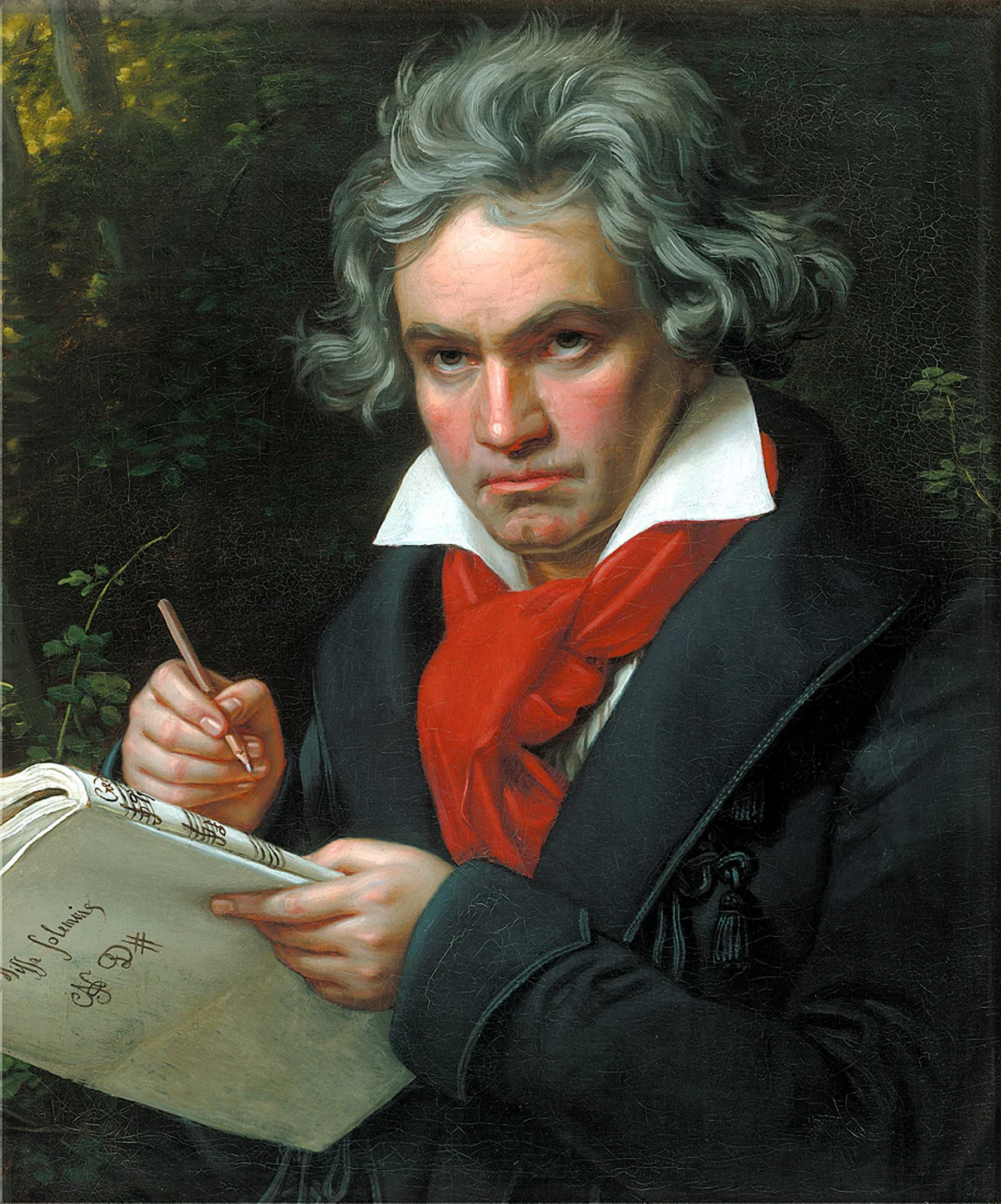
Image from Wikipedia
Image from Wikipedia
Ludwig van Beethoven – Composer, Visionary, Icon
The Titan of Music History: How Ludwig van Beethoven Directed Sound, Emotion, and Social Ideas into New Pathways
Ludwig van Beethoven, baptized on December 17, 1770, in Bonn and passed away on March 26, 1827, in Vienna, shaped the history of music like hardly anyone else. As a pianist, improviser, and composer, he brought the Viennese Classical style to its highest expression while simultaneously opening the door to Romanticism. His musical career is marked by artistic development under the most adverse living conditions—most notably his progressing deafness—which he transformed into creative energy. To this day, his symphonies, piano sonatas, string quartets, and vocal works remain central reference points in concert culture worldwide.
Beethoven combined compositional innovation with existential urgency. He refined form, harmony, and dramaturgy, creating a tonal language that discusses freedom, humanity, and self-realization sonically. His stage presence as an early virtuoso at the piano, his uncompromising quest for expression, and his authority as a innovator allowed him to ascend to the highest social circles during his lifetime—and made him a cultural icon of Europe posthumously.
Biography I – Early Years in Bonn: Influences and First Compositions
In Bonn, Beethoven received a solid musical education, gained early access to courtly and bourgeois music circles, and developed into a sought-after piano virtuoso. Lessons from prominent teachers, ensemble practice in the Electorate of Cologne context, and an active exchange with scholars and musicians honed his ear for counterpoint, sound mixing, and piano pedagogy tradition. The early variations and chamber music pieces already hint at his penchant for formal surprises and thematic condensation—a seed that would shape his entire artistic development.
As a pianist, he impressed through spontaneous fantasizing, highly developed touch technique, and dramaturgically coherent improvisations. This experience at the instrument, the immediate feedback from the audience, and the constant alignment of idea and effect gave his compositions a rare physical presence. Sound became something plastic and moldable for him—an approach that would later be felt in both orchestral crescendos and chamber music microsemiotics.
Biography II – Vienna as a Laboratory of Modernity: Teachers, Patrons, Breakthrough
Around 1792, Beethoven moved to Vienna, where he quickly succeeded as a pianist and composer. He found patrons in the nobility, networks in salons, and direct connections to the traditions of Joseph Haydn and Wolfgang Amadeus Mozart. His first published works—piano sonatas, chamber music, variations—combine classical compositional techniques with emphatic gestures. His breakthrough as a symphonist came around 1800 with a musical language that translated conflicts, resistances, and triumphs into musical form more clearly than before.
Vienna simultaneously offered him a demanding audience and excellent orchestras. Rehearsal practice, conducting tasks, and proximity to virtuosos shaped his signature as a dramaturge of sound. The establishment of his authority was accompanied by self-assertion against publishers and patrons—a preliminary step toward artistic independence that strengthened his position as a figurehead of modern authorship.
Biography III – Heiligenstadt Testament and the Inner Turning Point (1802)
Beethoven's hearing loss worsened around the turn of the century. In 1802, he articulated his existential crisis and the decision to continue living and composing in a shocking letter to his brothers. This confession marks an artistic turning point: from the experience of limitation arose a radicality of expression. Composition became a medium for self-affirmation; a new, heroic energy was fueled by personal necessity. This inner turning point initiated the middle creative period in which he revolutionized the genres of symphony, piano concert, string quartet, and sonata.
The psychological weight of this moment can be heard in his works from the following years: condensed motifs, tense harmonic shifts, architecturally planned culminations, and an intense dialogue between the individual and the collective. Beethoven's artistic development shows how biographical crises can become engines of aesthetic renewal.
Biography IV – The "Heroic" Middle: Symphony as Social Drama
In the symphonies of the phase after 1802, Beethoven shattered conventional frameworks. Thematic seeds develop from the smallest cells, conflicts are made audible and overcome through transformation. The symphony becomes a narrative of struggle, crisis, and catharsis. Sound dramaturgy, rhythm as a source of energy, and large-scale structural architecture merge into a new musical rhetoric that continues to set compositional standards today.
Even in the piano concertos and chamber works of this time, the central principles of his tonal language mature: the dialectic of proximity and distance, melodic condensation, orchestral colors as semantic ciphers. The works of this period shaped the performance traditions of the 19th and 20th centuries and became a touchstone for interpretational schools—from symphonic pathos to structural transparency.
Biography V – Late Work: Utopia, Introspection, Experimental Forms
In the late string quartets, the last piano sonatas, the Missa solemnis, and Symphony No. 9, Beethoven's composing reaches a radically personal, often speculative dimension. Form becomes a testing ground, counterpoint a metaphysical language, and the combination of introspection and universality creates a timeless aura. Strict fugues, profound slow movements, and eruptive finales probe questions of meaning, time, and transcendence.
The Ninth Symphony introduced the human voice as an equal bearer of the idea for the first time in symphonic music. The message of freedom, joy, and brotherhood later became a symbol of European values. In these works, Beethoven's authority as an artistic legislator coalesces: it is not external virtuosity but inner necessity that shapes the music.
Discography and Overview of Works: Symphonies, Sonatas, Quartets, Concertos
Beethoven's discography is nearly overwhelming and reflects the central position of his oeuvre in the repertoire. The focus is on the nine symphonies, the five piano concertos, the violin concerto, 32 piano sonatas, 16 string quartets, large chamber ensembles such as piano trios, as well as vocal and stage works—from Fidelio to song cycles to the Missa solemnis. Catalogs and complete editions organize this oeuvre by opus numbers, works without opus numbers, and unfinished fragments; scholarly editions provide philologically secured textual bases upon which interpretations are built.
In recorded music history, many Beethoven recordings are considered benchmarks that shaped interpretational discourse: symphonic cycles from major orchestras and conductors, pioneering recordings of the piano sonatas, as well as historically informed readings. Reviews from renowned music magazines regularly commend the interpretative range—from dramatic monumentality to chamber music precision—evidence of the enduring relevance of this music.
Style and Technique: Formal Dramaturgy, Motivic Work, Sound Language
Beethoven's compositional style combines classical formal discipline with energetic motivic development. Short cells are turned into large-scale arcs of tension through sequencing, augmentation, diminishment, and modulatory stretching. Rhythmic profiles—syncopations, sforzati, sharply contoured accents—create motor energy. In harmony, he shifts centers, uses surprising intermediate steps, rubs major and minor against each other, and expands the sonic space to structural limits.
The instrumentation serves the dramaturgy: orchestral condensations, dramatic pauses, colorful register changes, and chamber-musical dialogues in the middle voices. In his piano works, orchestral thinking meets idiomatic fingerings; pedal techniques, dynamic terraces, and articulatory differentiation become an integral part of expression. The production process—the struggle for the final version, sketch work, repeated revisions—gives the works an inner necessity and formal logic.
Cultural Influence: From the European Idea to Global Popular Culture
Beethoven's influence extends far beyond the concert hall. His music functions as a cultural repository for the ideas of the Enlightenment: freedom of the individual, equality, brotherhood. The "Ode to Joy" has become a hymn of European identity and continues to be used in political and social contexts. Festivals, research institutions, and museums dedicate themselves to his life and works; exhibitions, education projects, and digital archives bring the composer closer to new generations.
In the recording culture, his works serve as touchstones for artistic profiles. Engaging with historical performance practices—tempos, articulation, instruments—has opened new perspectives without devaluing the symphonic tradition of the 20th century. Thus, Beethoven remains a constant interpretative challenge and a universally relevant cultural symbol.
Reception and History of Interpretation: Canon, Criticism, Reference Recordings
Since the invention of recorded music, Beethoven recordings have formed a core part of the catalogs of leading labels. Press reviews regularly highlight how strongly the reading of structure and the storytelling of drama merge in ideal interpretations. Benchmark cycles of symphonies, exemplary readings of sonatas, and iconic recordings of the violin concerto demonstrate the diverse ways his music can be interpreted. The range extends from high romantic sound ideals to analytical transparency and historically informed sound images.
Alongside criticism, scholarship contributes to the reliability of performance texts through complete editions, critical reports, and annotated sources. Catalogs of works, sketch studies, and facsimiles of manuscripts enhance textual fidelity and support artistic practice. Thus, expertise combines with experience—EEAT in the best sense: lived music culture, academically grounded, authoritatively transmitted, and transparently documented.
Beethoven Today: Festivals, Editions, Education
Beethoven remains a focal point of international programming policy. Festivals in his birthplace and significant European venues dedicate thematic series, special exhibitions, and interdisciplinary formats to the composer. Program booklets also address contemporary issues: from the dialogue of the arts to diversity and sustainability in the cultural sector. This anchoring in the cultural infrastructure demonstrates how vibrant his legacy continues to resonate in production, mediation, and reflection.
Simultaneously, editions of his works advance, digital archives are expanded, and research publishes critical editions and educational materials. This institutional authority—supported by museums, music associations, orchestras, labels, and scholarly journals—ensures the quality of reception and promotes new interpretations for stage, concert, and studio.
Conclusion: Why Beethoven Remains Indispensable Today
Beethoven's music merges individual voice with universal idea. It shows how artistic development arises from biographical experience, how composition, arrangement, and production coalesce into a humanistic narrative, and how the stage—whether piano podium, quartet evening, or grand symphonic form—becomes a resonance chamber for societal questions. His works offer deep emotional experiences, formal rigor, and interpretative freedom—a triad that challenges musicians as well as the audience.
Anyone who experiences Beethoven live—in the concentrated intimacy of a late quartet, the breathless pulse of a symphony, or the contemplative expansiveness of a slow movement—immediately senses the energy of this music. It speaks directly, modernly, and universally. Thus, the clear call: listen, compare, experience live—and discover the ever-renewing relevance of this unique oeuvre.
Official Channels of Ludwig van Beethoven:
- Instagram: No official profile found
- Facebook: No official profile found
- YouTube: No official profile found
- Spotify: No official profile found
- TikTok: No official profile found
Sources:
- Encyclopaedia Britannica – Ludwig van Beethoven (Biography, Overview of Works)
- Beethoven-Haus Bonn – Digital Collections, Quotes, and Contexts (Heiligenstadt Testament)
- Wikipedia (DE) – Ludwig van Beethoven (Overview of Works, Facts)
- Deutsche Grammophon – Beethoven Biography (Interpretational and Repertoire Context)
- Classical Music Magazine – Best Beethoven recordings (Critical Reception, References)
- Gramophone – 250 greatest recordings (Beethoven References in Recording Culture)
- Beethovenfest Bonn – Program Information (Beethoven in Festival Context)
- Musikverein Wien – Program Highlights 2025/26 (Beethoven Reference)
- Wikipedia: Image and text source
Upcoming Events
Beethoven: Symphony No. 9
Special Exhibition: Relationships - Beethoven and the Brentano Family
Beethoven's Years in Bonn – City Tour C7
4th Symphony Concert in Schwerin
Fidelio by Ludwig van Beethoven in Munich: Opera Evening at the Palace of Justice
'Fidelio' by Ludwig van Beethoven
'Fidelio' by Ludwig van Beethoven
Fidelio by Ludwig van Beethoven
Beethoven's Workshop