
Leonardo da Vinci
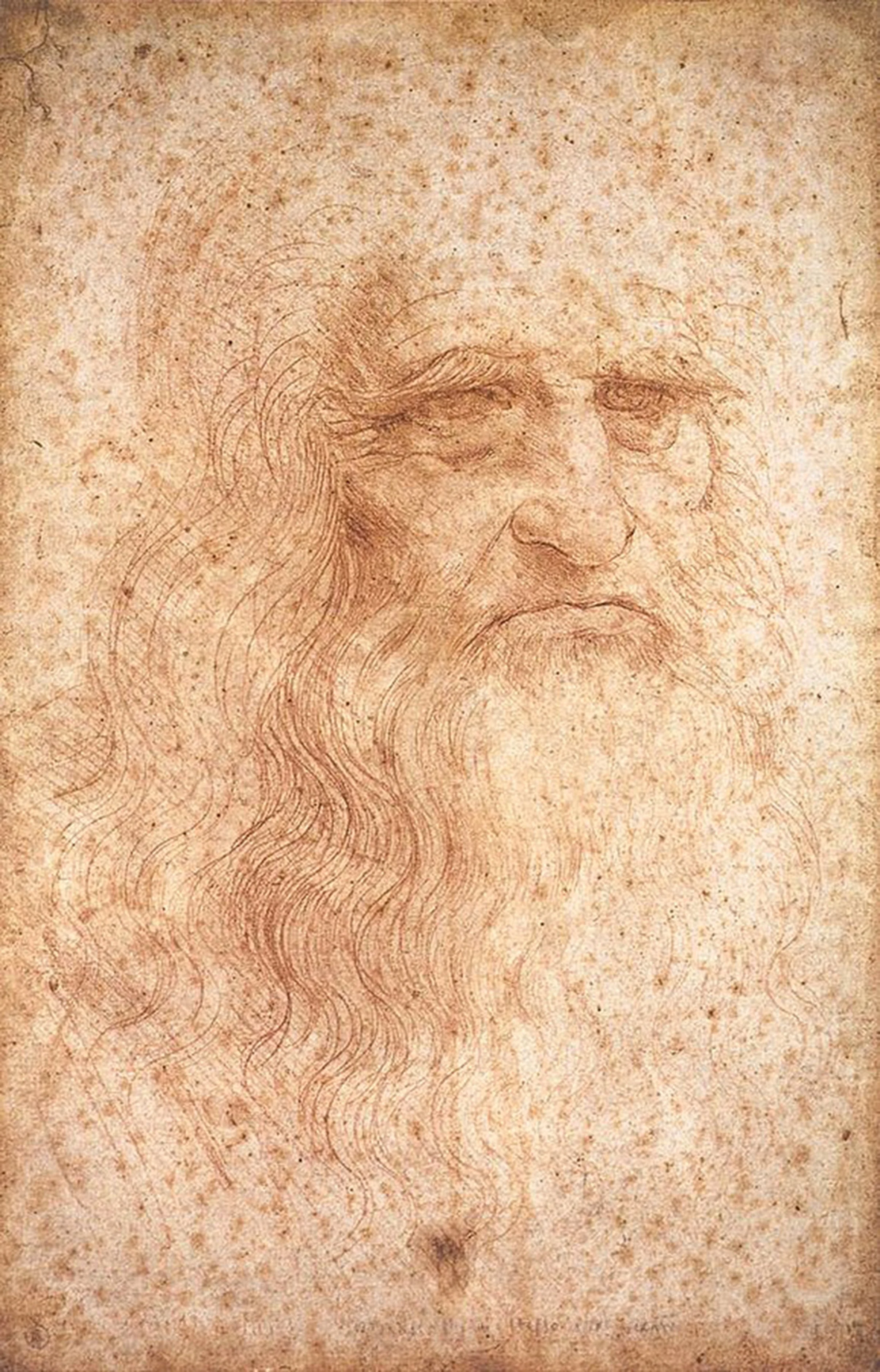
Image from Wikipedia
Image from Wikipedia
Leonardo da Vinci – the Inexhaustible Genius of the Renaissance Between Art, Science, and Vision
A Universal Scholar Who Reassessed the World with the Artist's Eye
Leonardo da Vinci is one of the defining figures in European cultural history: an Italian painter, sculptor, architect, anatomist, mechanic, engineer, and natural philosopher, born on April 15, 1452, near Vinci in Tuscany and died on May 2, 1519, in Amboise. The name "da Vinci" does not refer to a surname but rather to his origin from Vinci – a detail that makes the close connection between biography and identity visible even in the name. His life story exemplifies the dawn of Renaissance humanism, where art, observation of nature, and technical invention form a new unity. (en.wikipedia.org)
Early Years: Training, Observation, and Entry into the Great Art World
Leonardo grew up on his father's estate and received the common education of the time in reading, writing, and arithmetic; he learned Latin independently later. This unusual learning biography shaped a perspective that was defined less by scholarly tradition and more by direct observation. From an early age, he combined artistic talent with an uncompromising curiosity about the world, fundamentally influencing his later work in painting, anatomy, and engineering. (britannica.com)
His apprenticeship in the environment of Andrea del Verrocchio opened up access to the Florentine workshop culture of the High Renaissance. There emerged that blend of craftsmanship precision, drawing discipline, and intellectual openness that later set Leonardo apart from many of his contemporaries. Even in these early years, it became evident that he was not merely a painter, but a thinker in images. (britannica.com)
The Breakthrough in Milan: Art as a Stage for Invention
Leonardo experienced a decisive career boost in Milan, where he worked from about 1482 to 1499. It was there that some of his most famous works and projects were created, including the Madonna of the Rocks and the monumental Last Supper for Santa Maria delle Grazie. At the same time, he served as a consultant, stage artist, and engineer, designing festive displays, machines, and monumental equestrian statues. (en.wikipedia.org)
It is this connection between painting and technology that makes Leonardo so extraordinary. His studio work was never purely decorative but always also research: He investigated proportions, movements, light management, and spatial construction with a rigor that resembles methodical studio work. In his art, composition, anatomy, and staging merged into a form of intellectual image production that points far beyond its era. (britannica.com)
The Great Masterpieces: From the Mona Lisa to the Last Supper
Leonardo's fame is based on a relatively small but almost mythically charged number of documented paintings. In particular, The Mona Lisa and The Last Supper rank among the most famous images in the world; both have become visual icons of the Renaissance over the centuries. The Last Supper suffered early damage due to the experimental technique, yet it has remained an object of continuous fascination and restoration. (britannica.com)
His drawings and studies also hold a central position. The Vitruvian Man condenses Leonardo's thinking about proportions, geometry, and bodily knowledge into an image that is still regarded today as a symbol of the connection between art and science. In his anatomical studies, which were based on intensive observation and numerous dissections, he developed a visual understanding of the body that was far ahead of his time. (britannica.com)
Engineer, Anatomist, and Visionary: The Other Face of Genius
Leonardo worked not only as an artist but also as a technical thinker. His codices contain more than 5,000 pages of designs for machines, fortifications, hydraulic projects, and mechanical constructions; as early as 1482, he wrote to the Duke of Milan that he could build war and defense machines. These projects reveal a spirit that not only observed the laws of nature but translated them into constructions. (en.wikipedia.org)
His anatomical interest went far beyond the usual level of a painter. Leonardo examined the human body as a system, comparing skeletons and nature, breathing and tides, microcosm and macrocosm. Here lies his historical singularity: He sees art as a method of gaining knowledge and knowledge as an aesthetic form, making his work a model of an interdisciplinary mindset even today. (britannica.com)
Musical Reception, Cultural Influence, and Modern Interpretations
Leonardo da Vinci is not a musician in the strict sense, yet his cultural impact extends into today's music and media landscape. His name signifies creative universality, composition in a broader sense, and a conception of art that does not separate but rather connects disciplines. This is precisely why he repeatedly appears in exhibitions, documentaries, and artistic projects that question his method of observation and his notion of creativity anew. (britannica.com)
An example of this is the 2024 documentary by Ken Burns, which brought Leonardo back into the public spotlight and received positive reviews. The New York Times described the film as "thorough and engrossing," emphasizing Leonardo's lasting brilliance in the 21st century. Even more than five centuries after his death, he remains a reference figure for disciplines that go beyond mere visual art. (en.wikipedia.org)
Discography, Hits, and Charts: A Special Case Without an Actual Pop Career
Leonardo da Vinci does not have a discography in the musical sense, no hit singles, and no chart placements. The categories typical for modern artists such as albums, tours, and releases cannot be applied to him, as he worked as a Renaissance artist and not as a musician or recording artist. For a serious artist page, this classification is expressly necessary: His "releases" are paintings, drawings, notebooks, and technical studies, not songs or albums. (britannica.com)
This very distinction is historically productive. While pop and music biographies often tell stories through releases and charts, Leonardo's work is organized around workshops, commissions, writings, and artistic innovation. His reception in museums, research, and popular culture somewhat replaces the classical discography: Instead of tracklists, there are masterpieces; instead of tour dates, exhibition stops; and instead of awards, the lasting canonization as the epitome of genius. (britannica.com)
Current Projects and Publications: Posthumous Presence Instead of New Releases
As a historical artist, Leonardo da Vinci naturally has no new projects or publications of his own in the years 2024 and 2025. Nevertheless, his presence remains vibrant, as museums, research, and film productions continuously recontextualize his work. The current relevance thus arises posthumously: through documentaries, exhibitions, scholarly editions, and cultural reinterpretations. (en.wikipedia.org)
Those looking for "current projects" will primarily find the ongoing impact of Leonardo. His drawings, studies, and paintings are still being restored, researched, and exhibited; his ideas remain reference points for art history, the history of technology, and cultural theory. In this sense, Leonardo is less a completed classic than a permanently active resonance chamber of modernity. (britannica.com)
Conclusion: Why Leonardo da Vinci Fascinates to This Day
Leonardo da Vinci fascinates because he dissolved the boundaries between art and science, intuition and analysis, craftsmanship and vision with rare consistency. His biography tells of curiosity, discipline, and artistic willingness to take risks; his work embodies a unique blend of observation, composition, and inventiveness. Those who contemplate Leonardo do not just see the past of the Renaissance, but also a model for creative excellence that continues to inspire today. (britannica.com)
Those who want to experience Leonardo live can do so today in museums, exhibitions, collections, and documentaries, where his images and drawings unfold their full brilliance. It is precisely there that one feels why his name has stood for the absolute measure of creative imagination for centuries. Leonardo da Vinci remains not only a historical artist but also a lasting challenge to our understanding of creativity. (britannica.com)
Official Channels of Leonardo da Vinci:
- Instagram: No official profile found
- Facebook: No official profile found
- YouTube: No official profile found
- Spotify: No official profile found
- TikTok: No official profile found
Sources:
Upcoming Events
Straight to the Heart - Leonardo da Vinci
Leonardo da Vinci's Machines
Leonardo da Vinci's Machines
Leonardo da Vinci's Machines
Leonardo da Vinci's Machines
Leonardo da Vinci's Machines
Leonardo da Vinci's Machines
Leonardo da Vinci's Machines
Leonardo da Vinci's Machines