
Kyle Eastwood
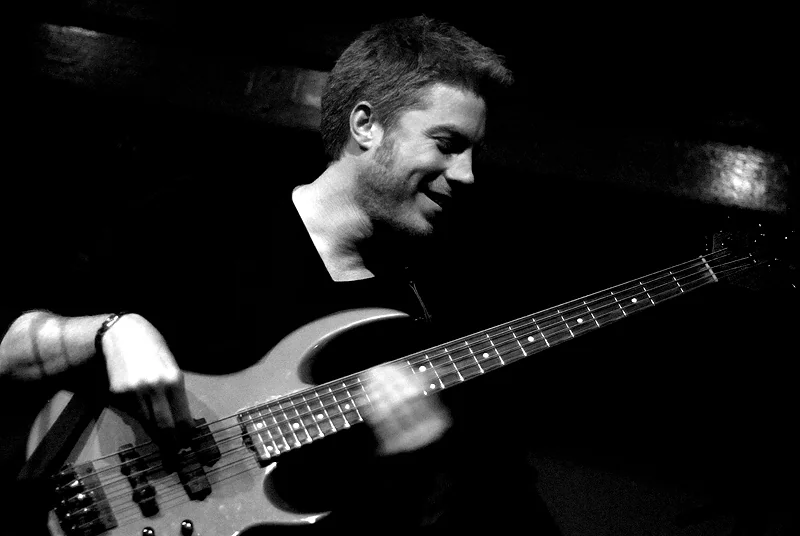
Image from Wikipedia
Image from Wikipedia
Kyle Eastwood – The Jazz Bassist Who Blends Film, Stage, and Sonic Cinema Into His Unique Style
Between Jazz Club, Movie Screen, and European Concert Stage
Kyle Eastwood is one of those musicians whose artistic identity is derived not from a single genre but from a whole sonic biography. The American jazz bassist, electric bassist, and film composer was born on May 19, 1968, in Los Angeles and grew up surrounded by jazz, blues, R&B, and rock ‘n’ roll. His career intertwines the tradition of classic jazz with a strong affinity for film music, orchestral dramaturgy, and a modern, elegant ensemble sound. ([kyleeastwood.com](https://kyleeastwood.com/biography/))
Biography: Growing Up with Groove, Improvisation, and Great Popular Culture
Eastwood's musical environment within his family was formative. On his official website, he describes how his parents Clint Eastwood and Maggie Johnson filled their home with the sounds of Miles Davis, Dave Brubeck, Stan Getz, Ray Charles, Duke Ellington, and Stan Kenton. From a young age, he learned to understand the bass as a musical foundation, and the first significant live experience was attending the Monterey Jazz Festival at the age of nine, where he experienced the Count Basie Big Band sound. This early influence explains why Eastwood's art later effortlessly navigates between warmth, swing, melodic clarity, and cinematic tension. ([kyleeastwood.com](https://kyleeastwood.com/biography/))
His path initially led him through rock bands, performances at legendary Los Angeles venues like The Whisky, The Roxy, and The Troubadour, as well as jazz fusion formations at the Baked Potato. At the same time, he studied jazz bass and music theory with Bunny Brunell before deepening his own jazz quartet work in the early 1990s. This phase laid the foundation for a music career that is equally rooted in technique, stylistic curiosity, and a finely developed stage presence. ([kyleeastwood.com](https://kyleeastwood.com/biography/))
Starting His Career: From the First Recording to an Independent Profile
Eastwood's recording career made a visible start in the late 1990s. With the debut album From There To Here on Sony Music, he opened a path as a solo artist that aimed for originality rather than imitation. His later description as a "world renowned bassist, prolific and eclectic recording artist, international touring bandleader/performer and ASCAP Award winning, Golden Globe nominated film composer" underscores how broad his artistic profile has become. ([kyleeastwood.com](https://kyleeastwood.com/biography/))
This development reveals a musician who uses the acoustic bass not merely as an accompanying instrument but as a narrative center. The official biography emphasizes his love for lyrical hard bop, groove, and sophisticated harmonies. This gives his albums a unique appeal: they sound accessible but never banal; virtuosic but never self-indulgent; modern yet firmly rooted in the jazz tradition. ([kyleeastwood.com](https://kyleeastwood.com/biography/))
Musical Development: From Electro-Cool Jazz to Orchestral Film Scores
The discography displays remarkable stylistic versatility. On Paris Blue, Eastwood embraced sophisticated electro-cool jazz, Now combined groovy jazz with a 1970s aesthetic, and Metropolitain opened the sound to an urban, culturally diverse vocabulary. With Song from The Chateau, a new phase began where the ensemble came more to the forefront, and the band sound became more sensitive, compact, and breathing. ([kyleeastwood.com](https://kyleeastwood.com/discography/))
This evolution culminated in 2019 with Cinematic, an album that translates jazz and film music into a dense, atmospheric form. Eastwood and his longtime band – including Quentin Collins, Brandon Allen, Andrew McCormack, and Chris Higginbottom – explored scores and themes from Lalo Schifrin, Bernard Herrmann, John Williams, Michel Legrand, Henry Mancini, Ennio Morricone, and even Adele. Thus, the music arose not from mere nostalgia but from a precise compositional idea: to reorchestrate familiar motifs, expand them harmonically, and open them up for improvisation. ([kyleeastwood.com](https://kyleeastwood.com/biography/))
Discography: The Key Chapters of a Consistent Catalog
The official website clearly documents the formative solo albums: From There To Here (1998), Paris Blue (2005), Now (2006), Metropolitain (2009), Song from The Chateau (2011), The View From Here (2013), Time Pieces (2015), In Transit (2017), Cinematic (2019), and the upcoming focus titled Symphonic. This chronology tells not only of productivity but of a steady intensification of expression. Each album expands the radius between jazzy chamber music, groove-oriented band work, and cinematic narrative power. ([kyleeastwood.com](https://kyleeastwood.com/discography/))
Particularly interesting is how consistently Eastwood thematically bundles his projects. Eastwood Symphonic is described as a tribute to the film music of his father and announced as a project featuring a 65-piece orchestra, quintet, and a European tour. At the same time, the official discography page notes that this endeavor appears 25 years after his debut and can thus be read as a moments of maturation in his artistic development. ([kyleeastwood.com](https://kyleeastwood.com/))
Film Compositions: The Second Career in the Shadow of Cinema
Eastwood's work as a film composer is not a peripheral aspect but a central part of his authorship. The official biography mentions collaborations with Michael Stevens for Clint Eastwood's Mystic River, Million Dollar Baby, Letters from Iwo Jima, Gran Torino, and Invictus; in addition, there are arrangements for Flags of Our Fathers and Changeling as well as original music for J. Edgar. The film scores page reaffirms these contributions and contextualizes them within a long-standing career shaped by cinema. ([kyleeastwood.com](https://kyleeastwood.com/biography/))
It is here that his unique authority shines through: Eastwood thinks in scenes, tension arcs, and sonic dramaturgy. The experience from jazz, improvisation, and live interaction flows into a compositional style that not only accompanies filmic images but structures them. This makes him a musician whose work goes far beyond the usual separation of jazz albums and soundtracks. ([kyleeastwood.com](https://kyleeastwood.com/biography/))
Critical Reception and Cultural Influence
The specialized press took Eastwood's work seriously early on. All About Jazz wrote about Paris Blue, stating that the album is firmly rooted in jazz tradition while also being fresh and contemporary. JazzTimes highlighted that Eastwood not only makes his mark as a bassist but also sets his own accents as a composer, with further reviews emphasizing the evolution from acoustic jazz to a stylistically broader, strongly independent ensemble sound. This resonance proves that Eastwood is not seen merely as a prominent name but as a serious artist of substance. ([allaboutjazz.com](https://www.allaboutjazz.com/paris-blue-kyle-eastwood-rendezvous-review-by-george-harris?utm_source=openai))
Culturally, Eastwood is interesting because he connects American jazz tradition with European concert culture. His long-term work in France and London, his tours, and his clear proximity to orchestral projects show a musician who understands jazz as an open, dialogical art form. His aesthetic never feels academic; it is melodic, filmic, elegant, and approachable. ([kyleeastwood.com](https://kyleeastwood.com/biography/))
Current Projects and Releases
The official pages list Eastwood Symphonic as the current focal point: a project that gathers orchestral jazz versions of themes from Clint Eastwood's films and aims for a European tour along with a cinematic accompaniment. The Symphonic page lists specific concerts in Europe for 2023 and 2024, including performances in France, Italy, and Luxembourg. A verified new release for 2025 is not clearly indicated in the official sources; the documented focus remains the Symphonic project and its live expansion. ([kyleeastwood.com](https://kyleeastwood.com/symphonic/?utm_source=openai))
Conclusion: Why Kyle Eastwood Remains So Exciting Today
Kyle Eastwood fascinates because he never treats jazz as a museum-style exercise but as a living narrative form. His work combines bass culture, composition, film dramaturgy, and ensemble artistry into a distinctive signature. Those looking for an artist who brings together musical intelligence, stylistic class, and cinematic atmosphere will find in Kyle Eastwood a top-notch name with depth. Those who experience him live will hear a musician who fills the space with calm, precision, and emotional tension. ([kyleeastwood.com](https://kyleeastwood.com/biography/))
Official Channels of Kyle Eastwood:
- Instagram: https://www.instagram.com/kyleeastwood/
- Facebook: https://www.facebook.com/kyle.eastwood.90
- YouTube: No official profile found
- Spotify: https://open.spotify.com/artist/2QUGNfaOw1iDPrXbECsd4I
- TikTok: No official profile found
Sources:
- Kyle Eastwood – Official Website
- Kyle Eastwood – Biography
- Kyle Eastwood – Discography
- Kyle Eastwood – Film Scores
- Kyle Eastwood – Symphonic
- Spotify – Kyle Eastwood
- All About Jazz – Paris Blue Review
- All About Jazz – From There To Here Review
- JazzTimes – Kyle Eastwood: Paris Blue
- Wikipedia: Image and Text Source
Upcoming Events
Eastwood Symphonic