Karel Svoboda
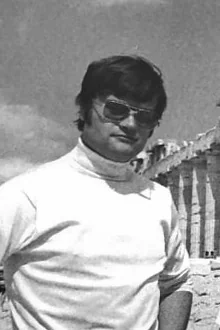
Image from Wikipedia
Image from Wikipedia
Karel Svoboda – Melodies That Shape Generations
The Composer Who Scored Childhoods on TV and Found the Fairy Tale Formula for Cinema
Karel Svoboda (1938–2007) left a lasting imprint on Central Europe's auditory memory with catchy themes, sophisticated arrangements, and an unmistakable sense of drama. Born in Prague, he left his medical studies to fully dedicate himself to music—a decision that continues to color TV evenings and holidays today. As the composer of "The Busy Bee," "Vicky the Viking," "Pinocchio," and "Nils Holgersson," as well as the film score for "Three Hazelnuts for Cinderella," Svoboda united popular melodies with orchestral finesse. His artistic development ranged from beats and theater to major television productions and musical theater successes.
Origins and Early Years: From Pianist to Versatile Composer
Svoboda grew up in Prague, where he began playing the piano at an early age and developed his sensitivity towards melodic lines. In 1963, he joined the rock and beat formation Mefisto as a pianist—a laboratory for rhythm, song forms, and stage experience. At the same time, he composed for the legendary Laterna Magika in Prague, whose multimedia theater expanded his imagination for dramatic music. This phase laid the foundation for his later production aesthetics: catchy themes, clear harmonic language, economical form, and an intuitive sense for the tension curve of a scene.
Breakthrough and Partnerships: Hit Factory for Karel Gott and the Pop Stage
The decisive career boost came in 1969 with "Lady Carneval," written for Karel Gott. The collaboration resulted in a catalog of around 80 songs—a remarkable discography in the pop segment that brought Svoboda's composition, arrangement, and production to the radio. With Gott's charismatic voice, Svoboda honed catchy hooks that were characterized by orchestral interjections, elegant modulations, and careful texture. This phase sharpened his profile as a songwriter with hit potential and made him interesting for TV editors and film productions.
Television and Series: Music for Generations – ZDF, Animation, and Family Programming
In the 1970s and 1980s, Svoboda composed for ZDF over decades, creating themes that became part of collective childhood memories. "The Busy Bee" thrives on a melodic, friendly tonality with clear phrasing, providing immediate recognition. "Vicky the Viking," "Pinocchio," and "Nils Holgersson" utilize similar principles, yet Svoboda varies instrumentation, tempo, and harmonic color to differentiate characters and drama. His title themes are exemplary models of efficient television music: concise, melodically compelling, and highly professional in orchestration and form.
Cinematic Magic: Three Hazelnuts for Cinderella – A Christmas Classic
With the film score for "Three Hazelnuts for Cinderella," Svoboda created a festive musical signature that becomes a winter ritual every year. The waltz character, sparkling string figures, and lyrical main theme connect romantic orchestral tradition with pop sensibility. In the Czech version, the song features Karel Gott, while the German cinema version relies heavily on instrumental storytelling. Performances as film concerts and regular TV broadcasts testify to the enduring cultural resonance of this composition—a prime example of musical dramaturgy that organically connects scene, space, and emotion.
Musical Theater and Major Forms: Dracula, Monte Cristo, Golem
Svoboda's compositional range extends far beyond TV themes: With the musical "Dracula" (Prague, 1995), he established himself as a powerful storyteller for the stage. The score uses symphonic rock colors, distinctive motifs, and vocally satisfying numbers—a sonic architecture that captivated audiences in Prague and international productions. "Monte Cristo" (2000) and "Golem" (2006) showcase his ability to translate literary material into dramatically pointed musical numbers. "Noc na Karlštejně," on the other hand, combines historical atmosphere with folk elegance—a testament to his stylistic versatility.
Style, Composition, and Production: Melody, Form, Emotion
Svoboda's signature is based on melodic clarity, strict form, and colorful orchestration. In production, he favors clear sonic images that foreground voice and main motifs while allowing harmonies and accompanying figures to provide subtle narrative impulses. Characteristic are chromatic passing tones, surprising yet coherent modulations, and rhythmic accents that precisely punctuate scene energy. His music unites popularity and compositional care—a balancing act that exemplifies European entertainment music from the 1970s to the 1990s.
Cultural Influence and Reception: From the Nursery to the Concert Stage
The impact of Svoboda's music spans from living rooms to classrooms to concert halls. Media reports attest to "Three Hazelnuts for Cinderella" achieving cult status as a Christmas classic; live film concerts take his film music into the symphonic realm. The theme song from "The Busy Bee" evolved into an evergreen in German-speaking pop culture, illustrating how children's television carries musical signatures into wider recognition. Critics appreciate the balance between catchy qualities and compositional substance—a reason why reissues, adaptations, and tribute programs continue to find demand to this day.
Discography – Selection and Milestones
Svoboda composed music for nearly 90 film and TV formats; his discography includes soundtracks, musicals, and pop songs. Notable releases include the film music for "Three Hazelnuts for Cinderella" (reissued multiple times on CD), series music such as "The Busy Bee," as well as musical recordings including "Dracula." A recent release highlight is the curated double LP/compilation "Karel Svoboda / Největší hity 1966–2019," which spans from pop songs to iconic TV themes. Additionally, catalog entries in digital stores document the ongoing interest in his work.
Awards, Charts, and Echoes in Popular Culture
In relation to "The Busy Bee," industry-wide awards and plaques underscore its immense popularity; industry and trade sources reference multiple gold certifications in the late 1970s. Adaptations and reinterpretations—from Christmas hits based on the Cinderella melody to contemporary concert and wind orchestra versions—demonstrate the aesthetic elasticity of his themes. Chart notes by individual artists who incorporated Svoboda's melodies complement the image of music supported by radio, television, and stage.
Stage Presence, Working Methods, and Artistic Development
Although Svoboda was active behind the camera, he displayed a strong "stage presence" in a metaphorical sense: His music always acted as a character. In composition, he combined thematic economy with dramatic instinct; in arrangement practice, he relied on clear register guidance and effective tutti climaxes. Over the decades, he refined the integration of pop idiom and symphonic vocabulary—an artistic evolution that keeps his scores timeless while also rooted in their era.
Later Years, Legacy, and Biography
Svoboda continuously worked on film, TV, and musical projects into the 2000s. He passed away on January 28, 2007, in Jevany; his work remains alive in media archives, reissues, and stage formats. Tribute evenings, TV retrospectives, and film concerts keep his compositions present. For the music history of the Czech Republic and the German-speaking world, he is regarded as a key figure in entertainment music whose melodies are understood across cultures.
Current Projects, Reissues, and Concert Formats (2024–2026)
In recent years, curated re-releases of his greatest hits have made his oeuvre accessible to new generations of listeners. Simultaneously, orchestras are touring with live film concerts of "Three Hazelnuts for Cinderella"; theater and city orchestras regularly program suites and adaptations. Concert evenings and thematic galas in the Czech Republic and Germany celebrate Svoboda's signature between film music, musicals, and pop—an indication of the enduring relevance of his musical production.
Conclusion: Why Karel Svoboda Fascinates
Svoboda achieved something rare: music that immediately resonates without losing depth. His discography bridges generations, genres, and media—from children's television to fairy tale films to musicals. Experiencing his compositions live in concert reveals how careful composition, intelligent orchestration, and emotional directness merge into a great whole. The appeal is clear: This music deserves not only to be remembered but to be performed on stage—alive, colorful, and touching.
Official Channels of Karel Svoboda:
- Instagram: No official profile found
- Facebook: No official profile found
- YouTube: No official profile found
- Spotify: No official profile found
- TikTok: No official profile found
Sources:
- Wikipedia (DE) – Karel Svoboda
- Wikipedia (EN) – Karel Svoboda (composer)
- Supraphon – Karel Svoboda / Největší hity 1966–2019 (2025)
- BR-Klassik – “Drei Haselnüsse für Aschenbrödel”: Music & Context
- TV Spielfilm – Music Legends Behind the Cult Song
- Wikipedia (DE) – Biene Maja (Series Page, Title Song)
- Wikipedia (EN) – Die Biene Maja (song)
- Wikipedia (EN) – Dracula (Czech musical)
- Wikipedia (DE) – Drei Haselnüsse für Aschenbrödel
- Warner Classics – Drei Haselnüsse für Aschenbrödel (Release Info)
- Filmorchester Babelsberg – Live Film Concert for Aschenbrödel
- jpc – Soundtrack “Drei Haselnüsse für Aschenbrödel” (CD)
- Märchen im Film – Soundtrack Analysis of Aschenbrödel
- Wikipedia: Image and Text Source
Upcoming Events
Three Hazelnuts for Cinderella – The Musical