Johann Peter Hebel
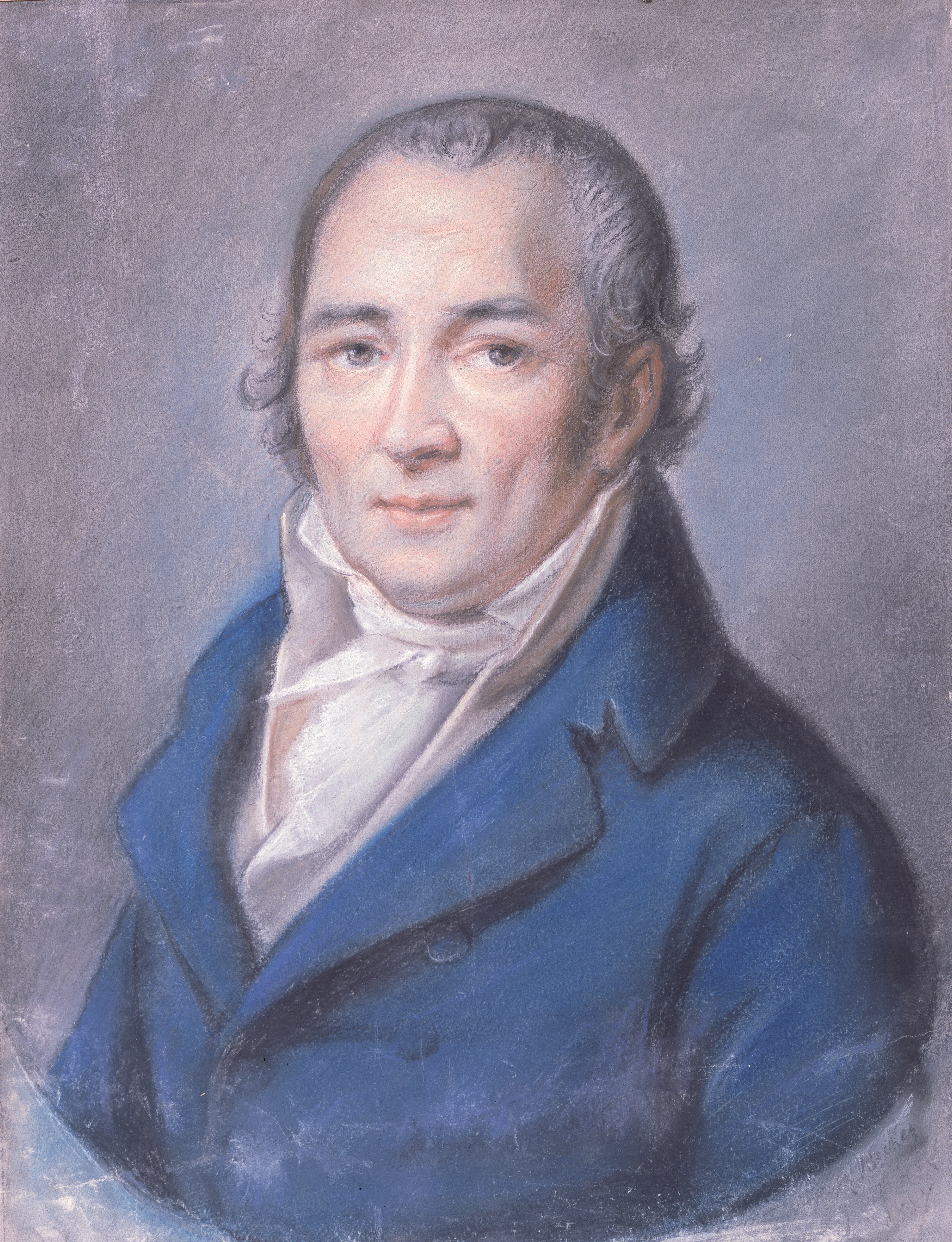
Image from Wikipedia
Image from Wikipedia
Johann Peter Hebel: The Master of the Short Form Between Dialect, Morality, and World Literature
A Writer Who Transformed Everyday Life into Literature of Lasting Brilliance
Johann Peter Hebel was born on May 10, 1760, in Basel and died on September 22, 1826, in Schwetzingen. He grew up in Hausen im Wiesental and Basel, lost both parents at an early age, and found his way to the Karlsruhe Gymnasium thanks to support, which he completed in 1778. He then studied theology, was ordained, and initially worked as a teacher in the Baden Oberland before his career took him to central positions within Baden's educational and church life. (en.wikipedia.org)
Hebel is among those authors whose significance is not confined to a historical period. As a Protestant clergyman, teacher, court deacon, principal, and later prelate, he combined pedagogical authority with literary precision. His texts demonstrate a rare mixture of folk proximity, linguistic finesse, and intellectual sovereignty, which made him effective far beyond the Oberrhein region. (en.wikipedia.org)
Biography: From Basel to the Wiesental and to the Heart of Baden Culture
The early influence of Basel and the Wiesental shaped the entirety of Hebel's work. His homeland was not merely a biographical background for him but a poetic resonance space from which his Alemannic poetry drew strength. This connection of origin, memory, and language made his literature so distinctive and gave it an emotional grounding that endures to this day. (en.wikipedia.org)
In 1791, Hebel was appointed as a teacher at the Karlsruhe Gymnasium, which he took over in 1808. Since 1792, he also served as a court deacon at the court of Margrave Karl Friedrich. In 1819, he rose to the position of prelate of the Baden Lutheran Church and consequently became a member of the first chamber of the Baden State Assembly; in 1821, he became the first prelate of the Protestant State Church in Baden. (en.wikipedia.org)
The Literary Breakthrough: Alemannic Poems as a Stylistically Formative Debut
Hebel's literary breakthrough began with the publication of his Alemannic Poems in 1803. These poems in Alemannic dialect made him a pioneer of Alemannic dialect literature and opened a linguistic level that had rarely been considered a fully-fledged literary medium before. From the regional language form, Hebel drew not folklore but musical precision, laconicism, and dignity. (en.wikipedia.org)
The significance of these dialect texts extends far beyond the regional literary history. Hebel made the language between the Black Forest and Basel capable of literature; German-speaking cultural criticism has rightly seen this as a step toward greater universal comprehensibility. This is precisely where the strength of his style lies: it remains locally rooted while simultaneously opening a view of general human experiences. (deutschlandfunk.de)
Calender Stories: Conciseness, Wit, and Moral Depth
A second center of his work comprises the calendar stories, which Hebel wrote for the Badische Landkalender and the Rheinländischen Hausfreund. As this form was further developed with his involvement, it gained literary independence: from a medium of utility and entertainment, it evolved into an art form with a clear structure, pointed narrative economy, and moral substance. The collection Schatzkästlein des rheinischen Hausfreundes was published in 1811 and compiled many of his most famous texts. (de.wikipedia.org)
The calendar stories showcase Hebel as a master of conciseness. They tell of everyday life, travels, deceptions, surprises, and boundary experiences, without ever coming across as didactic. Texts like Kannitverstan or Unverhofftes Wiedersehen rank among the most quoted prose pieces in German literature and demonstrate how deftly Hebel brings together punchline, rhythm, and human experience. (de.wikipedia.org)
Style and Language: Between Enlightenment, Popular Education, and Literary Art
Hebel's art thrives on linguistic economy. His prose and dialect poems merge clarity with atmosphere, vividness with inner movement. In the tradition of the Enlightenment, he wrote against superstition and for understandability, without reducing his texts to mere moral lessons. This balance between didactic impulse and narrative ease makes his style enduringly readable. (de.wikipedia.org)
As a teacher and theologian, Hebel possessed pronounced rhetorical and pedagogical experience that structured his texts. At the same time, he worked with a keen sense of tone, condensation, and perspective that one might call modern today. The language of his calendar stories is closely tied to life, yet never simplistic; it possesses a literary form power that has been repeatedly highlighted by great readers. (deutsche-biographie.de)
Cultural Influence: Revered by Literary History, Living in Regional Memory
Hebel's legacy is remarkably broad. Goethe, Tolstoy, Gottfried Keller, Hermann Hesse, and Martin Heidegger are among the prominent voices that have honored his works. Marcel Reich-Ranicki included the Schatzkästlein des rheinischen Hausfreundes in his canon of German literature, and contemporary literary critics continually emphasize the beauty and distinctiveness of his prose pieces. (en.wikipedia.org)
At the same time, Hebel remains strongly rooted in his homeland. The annual Hebel Festival in Hausen im Wiesental, the Johann-Peter-Hebel Plaque, and the Johann-Peter-Hebel Prize from the state of Baden-Württemberg keep his legacy present in cultural memory. Even in 2026, the Hebel year in Hausen will be visibly anchored with events around birthday celebrations, a literary museum, and the Hebel Festival. (hausen-im-wiesental.de)
Current Relevance and Late Presence in the Cultural Calendar
Johann Peter Hebel is no longer an author solely for specialized libraries. His texts continue to appear in teaching, anthologies, cultural anniversaries, and public readings, as they remain linguistically precise and humanly relevant. The Hebel year 2026 in Hausen im Wiesental demonstrates how strongly the regional as well as supra-regional memory of him is organized. (hausen-im-wiesental.de)
Literary research also keeps Hebel present, for example, through entries in the Deutsche Biographie and through cultural historical contributions in regional and supra-regional media. His work stands today for a literature that generates great impact from a short form and opens entire worlds of experience in just a few sentences. This is precisely where his lasting fascination lies: Hebel writes small in format but large in echo. (deutsche-biographie.de)
Conclusion: Why Johann Peter Hebel Continues to Fascinate Today
Johann Peter Hebel connects home and world, teaching and poetry, humor and seriousness in a way that has become rare. His Alemannic poems and calendar stories showcase an author who understood language as a living instrument and made literary permanence out of the seemingly small. Those who read Hebel encounter a precise observer of humanity and a stylistically outstanding storyteller. (en.wikipedia.org)
This is precisely why Hebel remains exciting: He is a classic without dust, a clergyman without dogma, an educator without dryness, and a poet with unbroken relevance. His texts invite readers to rediscover the power of the short form and to read German literary history from a fresh perspective. Those who experience Hebel uncover the music, rhythm, and humanity embedded in good language. (deutschlandfunk.de)
Official Channels of Johann Peter Hebel:
- Instagram: No official profile found
- Facebook: No official profile found
- YouTube: No official profile found
- Spotify: No official profile found
- TikTok: No official profile found
Sources:
- Wikipedia – Johann Peter Hebel
- Deutsche Biographie – Hebel, Johann Peter
- Protestant State Church in Baden – Johann Peter Hebel
- Literary Land Baden-Württemberg – Johann Peter Hebel
- Community of Hausen im Wiesental – Hebel Year 2026
- Community of Hausen im Wiesental – Literature Museum Hebelhaus
- Community of Hausen im Wiesental – Hebel Hiking Trail
- Deutschlandfunk – Remarkable Prose Wonders
- Frankfurter Allgemeine Zeitung – Review of Hebel
- Frankfurter Allgemeine Zeitung – Johann Peter Hebel: The Secret of Alemannic Drinkers
- Wikipedia – Schatzkästlein des rheinischen Hausfreundes
- Wikipedia – Calendar Story
Upcoming Events
Commemoration of the 200th Anniversary of Johann Peter Hebel's Death
Commemoration of the 200th Anniversary of Johann Peter Hebel's Death
Commemoration of the 200th Anniversary of Johann Peter Hebel's Death
Into the Heart - Johann Peter Hebel
Johann Peter Hebel on the 200th Anniversary of his Death