
Johann Michael Sailer
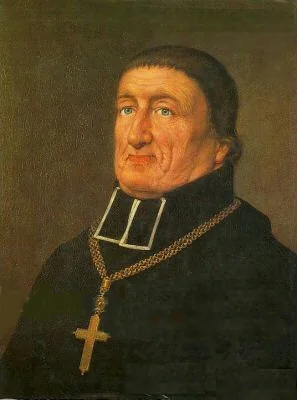
Image from Wikipedia
Image from Wikipedia
Johann Michael Sailer – The Great Catholic Thinker Between Enlightenment, Piety, and Church Reform
A Life Devoted to Theology, Pastoral Care, and the Renewal of Faith
Johann Michael Sailer is one of the most influential Catholic theologians of the late 18th and early 19th centuries. Born on November 17, 1751, in Aresing in Upper Bavaria and died on May 20, 1832, in Regensburg, he shaped a whole era of ecclesiastical renewal as a pastoral theologian, preacher, author, and eventually as the Bishop of Regensburg. His thought combines spiritual clarity with pastoral warmth, making him a key figure of the Catholic Enlightenment in Germany. ([de.wikipedia.org](https://de.wikipedia.org/wiki/Johann_Michael_Sailer?utm_source=openai))
Background and Spiritual Influence
Sailer came from humble beginnings; his father was a poor Catholic shoemaker. This background shaped his sensitivity to the realities of people's lives, which became evident in his later sermons and pastoral theological writings. After attending the village school in Aresing and the Munich gymnasium, he entered the Society of Jesus in 1770, but continued his philosophical and theological studies after the order was suppressed in 1773. This combination of education, spiritual discipline, and experience of upheaval formed a thinker who did not remain abstract but understood faith as a concrete life practice. ([en.wikipedia.org](https://en.wikipedia.org/wiki/Johann_Michael_Sailer?utm_source=openai))
The Path to Recognition as a Theologian
Sailer drew attention to himself early on with writings and academic works. In the 1770s, he published texts that reveal his theological direction, including works on the relationship between reason and biblical meaning as well as on dogmatics. His role as a pastoral theologian became particularly important, as he understood pastoral care not merely as administration but as a spiritual responsibility for the individual. His lectures and sermons earned him great respect in church circles and made him a voice recognized beyond Bavaria. ([deutsche-biographie.de](https://www.deutsche-biographie.de/118604872.html?utm_source=openai))
Pastoral Theology as the Core of His Work
At the heart of Sailer's thought was pastoral theology. He sought to connect faith with the lived reality of people and to draw the church closer to its pastoral mission. His works were received in scholarly and ecclesiastical contexts and testify to a theologian who combined academic rigor with practical orientation. In this way, Sailer became a forerunner of a renewed Catholic theology that did not dissolve into dogmatic stagnation or merely adapt to contemporary trends. ([deutsche-biographie.de](https://www.deutsche-biographie.de/118604872.html?utm_source=openai))
Between Recognition, Tensions, and Church Responsibility
Sailer's career was not without conflict. Sources report tensions with church authorities, skepticism in Rome, and accusations related to his theological environment. At the same time, this reveals the historical explosive power of his contributions: Sailer was not a marginal figure but a man whose positions sparked discussions because they redefined the relationship between faith, reason, piety, and church practice. His appointment as Bishop of Regensburg in 1829 was thus not only a personal honor but also a signal of his ecclesiastical authority. ([deutsche-biographie.de](https://www.deutsche-biographie.de/gnd118604872.html?utm_source=openai))
Bishop of Regensburg: Reform Spirit and Pastoral Care
As Bishop of Regensburg, Sailer set pastoral priorities that went far beyond administrative concerns. He promoted the revival of spiritual life, cared for the education of the clergy, and advocated for a closer connection between the proclamation of faith and practical pastoral care. According to biographical sources, he converted the Obermünster convent into a seminary and undertook numerous pastoral journeys. In doing so, he represented a church style that combined closeness, education, and reform. ([de.wikipedia.org](https://de.wikipedia.org/wiki/Johann_Michael_Sailer?utm_source=openai))
Style, Impact, and Intellectual Influence
Sailer's style is regarded as warm, human, and simultaneously intellectually precise. He addressed not only theologians but also the faithful, as he understood faith as an inner movement of the heart. He is considered an important representative of the Catholic Enlightenment in Germany; a recent study highlights him as a significant contributor to the Catholic Enlightenment. His influence on later intellectuals is also remarkable: even Ludwig van Beethoven is known to have owned several of Sailer's books, demonstrating the breadth of his cultural impact. ([en.wikipedia.org](https://en.wikipedia.org/wiki/Johann_Michael_Sailer?utm_source=openai))
Cultural Influence and Historical Context
Johann Michael Sailer stands at a crossroads in European intellectual history. He embodies the attempt to reconcile Catholic tradition with modern reflection without compromising the essence of faith. This is precisely where his lasting importance lies: Sailer did not conceive of theology as a closed doctrine but as a lively dialogue between scripture, reason, pastoral care, and church practice. Therefore, he remains a central figure in the history of German Catholicism's renewal. ([en.wikipedia.org](https://en.wikipedia.org/wiki/Johann_Michael_Sailer?utm_source=openai))
Reception in Biographies and Research
The sources show how sustainably Sailer was perceived. Already historical reference works and later biographical accounts emphasize his significance for preaching, pastoral theology, and church reforms. Current scholarly and church historical texts revisit his persona and read him as a thinker who productively synthesized reason and faith, education and piety, institution and personal spirituality. This complexity makes him interesting to this day. ([deutsche-biographie.de](https://www.deutsche-biographie.de/gnd118604872.html?utm_source=openai))
Conclusion: Why Johann Michael Sailer Remains Fascinating Today
Johann Michael Sailer fascinates because he combined intellectual depth with human closeness. He was a theologian, reform thinker, preacher, and bishop who did not merely administer his time but helped shape it. Anyone interested in the history of Catholicism, pastoral theology, and the tension between Enlightenment and piety finds in Sailer an exceptional personality. His life's work positions him as one of the great voices in German intellectual and church history – a name to be known not only but also respectfully rediscovered. ([en.wikipedia.org](https://en.wikipedia.org/wiki/Johann_Michael_Sailer?utm_source=openai))
Official Channels of Johann Michael Sailer:
- Instagram: No official profile found
- Facebook: No official profile found
- YouTube: No official profile found
- Spotify: No official profile found
- TikTok: No official profile found
Sources:
- Wikipedia – Johann Michael Sailer
- Wikipedia (in English) – Johann Michael Sailer
- Deutsche Biographie – Johann Michael von Sailer
- Deutsche Biographie – Johann Michael von Sailer (NDH)
- Oxford Academic – Beethoven and Johann Michael Sailer
- bavarikon – Biography of Mr. D. Johann Michael Sailer
- Ecumenical Saints Lexicon – Johann Michael Sailer
- Diocese of Regensburg – Johann Michael Sailer, a Saint of the Turning Point